Boston Mastiff Terrier
Hybrid Breed Description
The Boston Mastiff Terrier is a cross between the Boston Terrier and the English Mastiff. Because each hybrid inherits a unique combination of traits from both parents, we recommend thoroughly researching both breeds before choosing a Boston Mastiff Terrier. Pay special attention to temperament, health issues, and care requirements, as your dog may express characteristics from either parent breed.
Boston Terrier

Boston Terriers are compact, small dogs with a distinctive tuxedo-like appearance that has earned them the nickname 'American Gentleman.' Males typically stand about 17 inches tall at the shoulder while females reach approximately 16 inches. The breed is divided into three weight categories: under 15 pounds, 15 to 20 pounds, and 20 to 25 pounds, allowing for variation within the breed standard. Despite their small stature, Boston Terriers are well-proportioned and sturdy, with broad chests and a square, muscular build that gives them a confident, athletic appearance. The Boston Terrier's head is one of its most distinctive features, being square and rather flat on top with a short, square, broad muzzle that is approximately one-third the length of the skull. As a brachycephalic breed, they have a characteristic 'pushed-in' face with a lower jaw proportionate to the body but a shortened upper jaw. Their large, round, dark eyes are set wide apart and contribute to their alert, intelligent, and appealing expression. The ears are naturally small and erect, positioned near the corners of the skull, resembling 'bat ears' in their upright stance, though some Boston Terriers are born with floppy ears. Boston Terriers have smooth, short coats that lie flat against the body, requiring minimal grooming. Their distinctive coat pattern consists of white markings in specific areas combined with either black, brindle, or seal coloring. According to breed standards, required markings include a white chest, white muzzle band, and a white band between the eyes, with desired markings adding a white collar and white on the forelegs and hind legs. The tail is naturally short and set low on the rump, tapering to a fine point, and docking is forbidden by breed standards. Their compact size, distinctive markings, and expressive features combine to create a breed that is both handsome and instantly recognizable.
Key Characteristics
Boston Terriers possess a delightful temperament characterized by their friendly, affectionate, and gentle nature. Often described as having a 'merry sense of humor,' these dogs bring joy and entertainment to their families with their playful antics and expressive faces. They are highly people-oriented dogs that thrive on human companionship and form strong bonds with their families, often becoming devoted shadows who follow their owners throughout the home. Boston Terriers are known for their loyalty and eagerness to please, making them responsive to training and generally well-mannered house pets. Their sensitivity means they respond best to positive reinforcement training methods and can become fearful or shut down if treated harshly. Despite their terrier heritage, Boston Terriers are typically not aggressive and have a happy-go-lucky personality. They are intelligent and quick learners, though they can display occasional stubbornness, particularly when it comes to obeying commands they know but choose not to follow. Their moderate energy level makes them suitable for various living situations, including apartments, as long as they receive adequate exercise and mental stimulation. Boston Terriers generally get along well with children, other pets, and strangers when properly socialized, though they may be protective of their owners and can display territorial behavior. They are not excessive barkers, which makes them excellent choices for apartment living, though they will bark to alert their family to visitors or unusual occurrences. One notable aspect of the Boston Terrier temperament is their need for social interaction and family involvement. They can suffer from separation anxiety when left alone for extended periods, as they genuinely prefer to be with their people. These dogs are adaptable and versatile, capable of being both playful companions and calm cuddle bugs depending on the situation. While they have energy to burn and enjoy games like fetch and tug-of-war, they are also content to relax with their families after adequate exercise. Their combination of intelligence, affection, moderate energy, and adaptability makes Boston Terriers excellent companions for families, singles, and seniors alike, provided they receive the attention and companionship they need to thrive.
Boston Terriers have an average lifespan of 11 to 13 years, though with proper care some individuals may live to 15 years or beyond. As a brachycephalic breed, Boston Terriers face unique health challenges related to their flat face and shortened airways. Brachycephalic Airway Syndrome is the most significant health concern, causing breathing difficulties, snoring, wheezing, and potential overheating, especially during hot weather or vigorous exercise. This condition results from narrowed nostrils, an elongated soft palate, and narrow airways, which can combine to create serious respiratory issues. Owners must be vigilant about preventing overexertion and keeping their Boston Terriers cool, particularly in warm or humid conditions. Eye problems are common in Boston Terriers due to their prominent, bulging eyes and shallow eye sockets. The breed is susceptible to cataracts, which cause cloudy vision and potential blindness; corneal ulcers, which cause severe pain and can lead to vision loss if untreated; glaucoma, resulting in increased eye pressure that can damage the optic nerve; and cherry eye, a prolapsed gland of the third eyelid that often requires surgical intervention. Their large eyes are also more prone to injuries, making regular veterinary eye examinations essential. Patellar luxation, where the kneecap slips out of place, is another common condition that can cause lameness and discomfort, potentially leading to arthritis if left untreated. Additional health concerns include deafness, which can be congenital in some Boston Terriers; various allergies manifesting as skin irritation, itching, or digestive issues; and heart conditions such as mitral valve disease. The breed's unique skull structure also predisposes them to hemivertebrae, spinal bone deformities that can cause neurological problems. Due to their large shoulders relative to smaller hind quarters, Boston Terriers often require cesarean sections for safe delivery of puppies. Maintaining a healthy weight is crucial for Boston Terriers to minimize stress on their joints and respiratory system. Regular veterinary check-ups, dental care, proper diet, and avoiding extreme temperatures are essential for managing these health concerns and ensuring Boston Terriers live long, comfortable lives.
English Mastiff
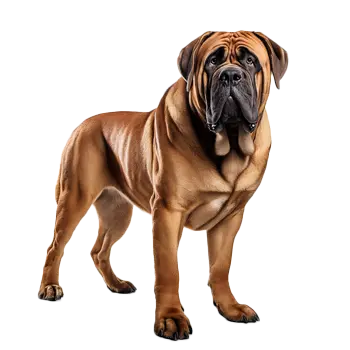
The English Mastiff is one of the largest and heaviest dog breeds in existence, with males standing at least 30 to 31 inches at the shoulder and weighing between 160 to 230 pounds, while females measure 27.5 to 30 inches tall and weigh 120 to 170 pounds. Some individuals can exceed these measurements, with the heaviest documented Mastiff weighing an astounding 343 pounds. Despite their massive size, well-conditioned Mastiffs move with surprising grace, displaying a powerful yet smooth gait. Their sheer physical presence is imposing and commands attention, making them natural guardians whose size alone can deter potential threats. The Mastiff's head is one of its most distinctive features, being massive, heavy, and square with a well-marked stop between the eyes and a short, broad muzzle that should be approximately half the length of the skull. Their expression conveys dignity and nobility through medium-sized, dark brown to hazel eyes set wide apart. A characteristic black mask covers the eyes, ears, and nose, creating a striking contrast against their coat. The ears are small, V-shaped, and dark in color, lying flat against the cheeks. The body is massive, powerful, and muscular with a broad, deep chest and straight, strong back. The tail is set high on the rump with a wide base, tapering to a point and reaching to the hocks. The Mastiff's coat is short, dense, and straight with a coarse outer layer and a close-fitting texture. Coat colors are limited to shades of fawn, apricot, and brindle, all with the distinctive dark facial mask. Despite having a short coat, Mastiffs shed moderately year-round with heavier shedding during seasonal changes. Their wrinkled face, drooping jowls, and substantial build contribute to their characteristic appearance of grandeur and dignity. The overall impression is one of massive strength combined with a somewhat clumsy but endearing gait that many owners find charming.
Key Characteristics
English Mastiffs are renowned for their gentle, even-tempered, and docile nature, earning them the well-deserved title of 'gentle giants.' Despite their imposing size and historical role as guard dogs, modern Mastiffs are exceptionally calm, patient, and affectionate with their families. They form deep, loyal bonds with their people and display remarkable patience, particularly with children, making them excellent family companions. Mastiffs are naturally protective of their loved ones and territory but typically express this through quiet vigilance rather than aggression, often simply positioning themselves between their family and perceived threats or holding intruders at bay rather than attacking. The breed's calm demeanor makes them well-suited for indoor living despite their size, as they tend to be relatively lazy and content to lounge around the house. However, this should not be mistaken for lack of watchfulness, as Mastiffs remain alert to their surroundings and will spring into action when they perceive genuine threats. They are not excessive barkers, preferring to act as silent guardians, though they will vocalize to alert their owners to unusual occurrences. Mastiffs are sensitive dogs that respond poorly to harsh training methods, thriving instead on firm but gentle, patient guidance. Early socialization is crucial to prevent their natural reserve around strangers from developing into fearfulness or excessive shyness. One important characteristic of the Mastiff temperament is their need for human companionship and family integration. They are happiest when included in daily family activities and prefer to be near their loved ones. Despite their giant size, many Mastiffs seem unaware of their bulk and may attempt to be lap dogs or lean heavily against their owners for affection. They generally get along well with other pets and children when properly socialized, though supervision is important given their size and the potential for accidental knockovers. The combination of their protective instincts, gentle nature, loyalty, and calm disposition makes English Mastiffs wonderful companions for families who can provide adequate space, proper training, and the companionship these devoted dogs crave.
English Mastiffs have a shorter lifespan than many breeds, typically living 6 to 10 years, which is common among giant breed dogs. Their large size predisposes them to several significant health concerns that owners must be prepared to manage. Hip dysplasia is one of the most common conditions affecting Mastiffs, occurring when the hip joint fails to develop properly, leading to rubbing of bones, inflammation, pain, and eventually arthritis. Maintaining a healthy weight and avoiding excessive jumping during growth periods can help minimize the impact of this hereditary condition. Elbow dysplasia can also occur, causing similar joint discomfort and mobility issues. Cancer is a major health concern for English Mastiffs, with certain types being particularly prevalent in the breed. Osteosarcoma and mast cell tumors are among the most common cancers affecting Mastiffs, making regular veterinary check-ups and early detection crucial for improving treatment outcomes. Degenerative myelopathy is a progressive neurological disease that leads to hind limb weakness and eventual paralysis. While this condition has no cure, supportive care and physical therapy can help maintain quality of life for affected dogs. Bloat, also known as gastric dilatation and volvulus, is a life-threatening emergency condition to which large, deep-chested breeds like Mastiffs are particularly susceptible. Additional health considerations include epilepsy, which can cause seizures; various allergies that may manifest as skin or environmental reactions; and eye disorders such as ectropion, where the eyelid rolls outward away from the eye. Due to their facial structure, Mastiffs are also prone to skin fold dermatitis in their wrinkles, requiring regular cleaning of facial folds to prevent bacterial and fungal infections. Their heavy drooling is another characteristic that requires management. Proper nutrition during the rapid growth phase is critical, as growing too quickly can exacerbate joint problems. Regular veterinary care, weight management, appropriate exercise without overexertion, and attention to their specific health needs are essential for helping English Mastiffs live the longest, healthiest lives possible despite their relatively short lifespan.
Important to Remember
Each hybrid dog is unique and may inherit any combination of traits from either parent breed. The information above represents the characteristics of the purebred parent breeds. Your Boston Mastiff Terrier may favor one parent over the other or display a blend of both. We strongly encourage you to read the complete breed profiles for both the Boston Terrier and English Mastiff to fully understand the range of possible temperaments, health concerns, and care requirements.