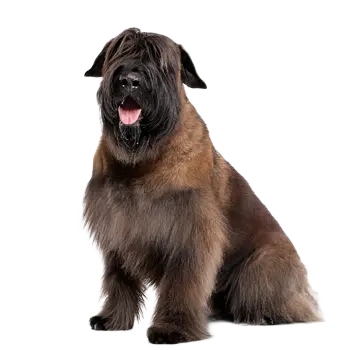
The Vlaamse Koehond is a large, powerfully built dog whose physical impression is one of concentrated strength held in a compact frame. This is not a dog that sprawls or wastes space; every part of it is dense, functional, and purposeful. The overall silhouette is square, with a body length roughly equal to the height at the withers, giving the dog a collected, ready appearance that reflects its origins as a working animal expected to shift cattle, pull carts, and endure long days in the field without complaint.
The head is the breed's most visually distinctive feature and the element most immediately associated with the Vlaamse Koehond in the minds of those who know it. It is large in proportion to the body, flat-skulled, and strongly made. The beard and mustache are thick and full, covering the muzzle and lower jaw in a mass of coarse hair that gives the dog its most recognizable look. The expression conveyed through this heavily adorned face is one of serious, watchful intelligence - not soft, not aggressive, but deeply attentive. The eyes are dark, oval, and set level beneath a flat forehead. Dark eye rims are preferred, as light or unpigmented rims undermine the characteristic expression. Ears, when cropped, stand erect and add to the alert, forward-focused expression of the breed; natural ears are triangular and fold close to the head.
The neck is round, well-muscled, and clean, blending into powerful shoulders without any suggestion of weakness or slackness. The shoulder blades are long and angled, providing the leverage that contributes to the breed's free, powerful movement. The chest is broad and deep, extending to the elbow, with well-sprung ribs that give adequate room for heart and lung capacity. The back is short, broad, and well-muscled, a requirement for a dog expected to push and move substantial livestock. The loin is short and firm. The hindquarters are powerful, with broad, muscular thighs and well-bent stifles that provide the driving force behind the breed's working movement.
Size in males ranges from 24.5 to 27.5 inches at the withers, with a weight range of 75 to 110 pounds. Females are somewhat smaller, typically 23 to 26 inches and 60 to 80 pounds. These are substantial numbers, and first-time owners frequently underestimate how much physical presence the Vlaamse Koehond commands in person. The breed's dense double coat and substantial bone contribute to an impression of mass that photographs do not fully convey. A well-conditioned male Bouvier in full coat is a genuinely imposing animal.
The coat demands its own extended description because it is both a functional and an aesthetic defining feature of the Vlaamse Koehond. The outer coat is dry, rough, and harsh to the touch - deliberately so. The texture is not a flaw but a feature, designed to shed moisture, resist cold, and protect the dog from the physical contact involved in working closely with cattle. The undercoat is dense and fine, providing insulation. Together these layers create a coat that looks rough but functions as effective weather protection. The coat stands away from the body slightly, never lying flat, and should not be silky or woolly in texture. The facial coat forms the beard and mustache. The accepted colors are fawn, black, gray, brindle, and pepper and salt. White or chocolate are disqualifying in the show ring.
The tail is traditionally docked short in countries where docking is permitted. In countries where docking is prohibited, the natural tail is saber-shaped, carried level with the topline in motion. The feet are round and compact, with thick, hard pads and well-arched toes. Movement is free, powerful, and ground-covering, with a strong drive from the hindquarters and good reach from the front. The overall movement impression is of a dog capable of sustained work - functional endurance in a compact, powerful package.
Affectionate With Family
★★★★★
The Vlaamse Koehond is deeply devoted to its family and expresses affection with quiet dignity rather than exuberance. Within the household it trusts, this breed is warm, steady, and entirely committed.
Good With Young Children
★★★★☆
The Bouvier is patient and protective with children and tends to watch over them with the same attentiveness it brings to everything. Its size warrants supervision around very small children.
Good With Other Dogs
★★★☆☆
The Vlaamse Koehond is manageable with other dogs when well socialized, though the breed's natural dominance can create friction with similarly assertive dogs, particularly of the same sex.
Shedding Level
★★★★☆
The double coat sheds consistently, with loose hair tending to trap in the undercoat rather than falling freely. Regular brushing is necessary to manage accumulation and prevent matting.
Coat Grooming Frequency
★★★★☆
The rough double coat requires weekly brushing, regular beard cleaning, and trimming every eight to twelve weeks. This is a breed with genuine grooming demands that cannot be neglected without consequences.
Drooling Level
★★☆☆☆
The Vlaamse Koehond produces modest drool, particularly after drinking, which collects in the beard. The beard itself requires regular cleaning to prevent odor and skin irritation.
Coat Type
★★★★☆
The coat is rough, harsh, and dense with a substantial undercoat - a functional double coat designed for weather protection during working days in the cold, wet Flemish climate.
Openness To Strangers
★★☆☆☆
The breed is naturally aloof and reserved with strangers, assessing new people at its own pace rather than greeting them immediately. This reserve is a breed characteristic, not a flaw.
Playfulness Level
★★★☆☆
The Vlaamse Koehond is playful with its family and enjoys interactive activity, though it approaches play with the same serious engagement it brings to work rather than frivolous abandon.
Watchdog/Protective Nature
★★★★★
The protective instinct in this breed is deep and innate, requiring no development through training. The Vlaamse Koehond monitors its territory and its people with calm, unwavering vigilance.
Adaptability Level
★★★☆☆
The breed adapts to different living environments provided its exercise and mental engagement needs are consistently met. The exercise requirement is the non-negotiable variable in any living situation.
Trainability Level
★★★★☆
The Vlaamse Koehond is highly capable of learning but brings an independent judgment to training that requires consistent, confident leadership. The breed learns quickly when engaged and led well.