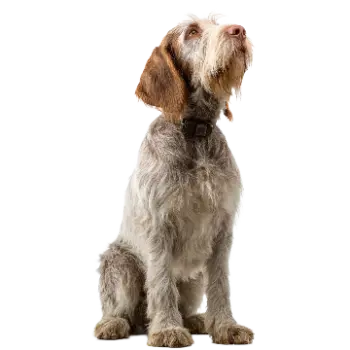
The Spinone Italiano is known by several names that reflect its Italian heritage and hunting capabilities. In its native Italy, the breed is simply called Spinone, which derives from the Italian word "spino" meaning thorn bush, a reference to the rough terrain where these dogs historically worked. The breed is also referred to as the Italian Griffon, particularly in historical texts, highlighting its wirehaired coat texture. Some sources call it the Italian Pointer or Italian Pointing Dog, which accurately describes its primary function in the field. The plural form in Italian is Spinoni Italiani. Occasionally, you may encounter the name Italian Coarsehaired Pointer or Italian Wirehaired Pointer, emphasizing the breed's distinctive rough coat texture that protects it during hunting. In some European countries, the breed may be referred to simply as the Italian Pointing Dog or Italian Wireheaired Pointing Dog to distinguish it from other continental pointing breeds.
Quick Facts
Other Names
Spinone Italiano Description
The Spinone Italiano presents a robust and substantial appearance, characterized by its square build and powerful, yet elegant movement. This versatile hunting dog displays a distinctive wiry coat that provides excellent protection in rough terrain and harsh weather. The breed's expression is uniquely gentle and wise, with soft, ochre-colored eyes that convey intelligence and patience. The Spinone's overall structure reflects centuries of development as an all-purpose gun dog, capable of working in water, marshland, and dense brush. Despite its sturdy frame, the breed moves with a relaxed trot that conserves energy during long days in the field.
Spinone Italiano Standard By Organization
American Kennel Club (AKC)
General Appearance: A large, muscular dog with a solid bone structure. Square in outline. The Spinone is a versatile hunting dog, an excellent retriever by nature with a close-working pointing and setting ability. The Spinone is docile, patient and intelligent. Naturally sociable, the Spinone is neither aggressive nor shy. Resistance to fatigue and an aptitude for working on varying terrain are essential characteristics. Head: Conveys the breed's intelligence and gentleness. Long. The planes of the skull and muzzle are divergent, producing a distinctive profile. Eyes: Large, well-opened, set well apart. Color: ochre, to match the coat. Eye rims: flesh colored. Ears: Triangular shape, set level with the eyes. Carried hanging down, close to the cheeks. Body: The body is strong, robust and well-muscled. The length of the body is approximately equal to the height at the withers, giving a square outline to the body. Tail: Follows the line of the croup; thick at the base. Coat: Dense and stiff, lying somewhat flat. Length: 1 1/2 to 2 1/2 inches on the body; shorter on the muzzle, head, ears, front of legs and feet. Color: Solid white, white and orange, orange roan with or without orange markings, white with brown markings, or brown roan with or without brown markings.
Fédération Cynologique Internationale (FCI)
General Appearance: A sturdy dog of vigorous construction. His muscular frame and strong bone structure make him suited to trotting, his preferred and most characteristic gait. His expression is gentle and his bearing patient and benign. Important Proportions: His is a mesomorphic, sub-longilineal dog, whose body fits into a square. Height at withers equal to length from point of shoulder to point of buttock. Length of head equals 2/5 of height at withers. Head: Long. The upper longitudinal axes of the skull and muzzle are diverging. Eyes: Large, well open, the iris is ochre colored, darker or lighter according to coat color. Ears: Practically triangular, carried hanging and close to cheeks. Neck: Strong, short and well muscled, clearly separated from the nape. Body: The length of the trunk, measured from the point of the shoulder to the point of the buttock is equal or only just less than the height at the withers. Tail: Thick at the root, carried horizontally or down. Gait: The trot is the preferred gait, lively, long reaching and vigorous. Coat: Tough, thick and close-lying. Length on body 4 to 6 cm on the back and flanks; shorter on muzzle, head, ears, front side of forelegs and on feet. Color: Pure white, white with orange markings, white speckled with orange, white with brown markings, white speckled with brown or brown roan.
United Kennel Club (UKC)
General Appearance: The Spinone Italiano is a versatile hunting dog with a close-working pointing/setting style. The breed is suited to work on all types of terrain and is an excellent retriever by nature. The Spinone is an ancient Italian breed whose exact origin is uncertain. The breed is docile, patient, intelligent and a loyal companion. Naturally sociable, the Spinone is neither shy nor aggressive. The Spinone is robust and vigorous, with powerful bone and well-developed muscles. Its preferred gait is a strong, driving trot. Head: Long, with muzzle and skull parallel planes. Eyes: Large, well-opened, set far apart. Rounded in shape. Color varying with coat color, from ochre to darker shades. Ears: Long, triangular, hanging flat along the cheeks with very little erectile power. Neck: Strong, well muscled, short and well set on the shoulders, clearly separated from nape. Body: Body length should equal or only slightly exceed the height at the withers. Withers well defined. Tail: Thick at the base. Customarily docked to a length of 5 1/2 to 8 inches. Coat: Harsh, dense and slightly wiry but not bristly. Length of 1 1/2 to 2 1/2 inches on the body. Longer, softer furnishings on the brows, lips, and cheeks. Color: Solid white, white and orange, white with orange spots or roan, white with chestnut markings, or chestnut roan.
Other Organizations
The Kennel Club (UK) recognizes the Spinone Italiano under the Gundog Group with standards closely aligned to FCI guidelines, emphasizing the breed's function as a versatile continental pointing dog. The Canadian Kennel Club follows similar standards to the AKC, placing the breed in the Sporting Group. The Australian National Kennel Council and New Zealand Kennel Club also recognize the Spinone under the Gundog Group. The Club Italiano Spinone serves as the Italian breed parent club and works closely with FCI to maintain breed standards. Most international registries emphasize the breed's original working purpose, distinctive wiry coat, and characteristic gentle expression as defining features that must be preserved.
Spinone Italiano History
The Spinone Italiano ranks among Europe's most ancient pointing breeds, with documented evidence suggesting origins in the Piedmont region of northwestern Italy dating back to the Renaissance period or earlier. Some breed historians trace the Spinone's ancestry to coarse-haired hunting dogs present in Italy during the Roman Empire, though concrete documentation from this era remains sparse. The breed's name derives from the Italian word "spino," referring to the thorny bushes where these rugged dogs worked, their wire coats providing essential protection against harsh vegetation.
During the 15th and 16th centuries, Italian nobility prized the Spinone as a versatile hunting companion capable of working in marshlands, mountains, and dense underbrush. The breed excelled at pointing and retrieving both upland game and waterfowl, demonstrating remarkable endurance and adaptability. Frescoes and paintings from this period occasionally depict wire-coated hunting dogs resembling the modern Spinone, suggesting the breed's physical type has remained relatively consistent over centuries. Italian aristocrats developed the breed to hunt in the challenging terrain of the Piedmont and Lombardy regions, where the dog's methodical working style and powerful build proved invaluable.
The breed experienced population decline during both World Wars, nearly facing extinction by the mid-20th century. Dedicated Italian breeders, recognizing the cultural and practical value of the Spinone, initiated recovery efforts after World War II, carefully rebuilding the breed while maintaining its working characteristics and distinctive temperament. The Club Italiano Spinone, founded in 1950, played a crucial role in standardizing the breed and promoting proper breeding practices. Through selective breeding programs focused on preserving the Spinone's versatile hunting ability, sound temperament, and characteristic physical traits, these preservationists successfully revived the breed.
International recognition gradually followed as the breed's reputation spread beyond Italy. The Fédération Cynologique Internationale officially recognized the Spinone Italiano in the 20th century, classifying it among the continental pointing breeds. The breed entered various European countries during the latter half of the 20th century, gaining admirers for its gentle disposition combined with excellent working ability. The Spinone arrived in North America during the 1980s, initially attracting hunters who appreciated the breed's versatile skills and biddable nature. The American Kennel Club granted full recognition in 2000, admitting the breed to the Sporting Group. The United Kennel Club had recognized the breed earlier, acknowledging its place among gun dogs.
Today's Spinone Italiano continues to serve as both a capable hunting companion and devoted family dog. While the breed maintains its working heritage in field trials and hunting tests, many Spinoni now excel in companion roles, participating in various dog sports and activities. The breed remains relatively uncommon outside Italy, valued by those who appreciate its unique combination of hunting prowess, gentle temperament, and distinctive appearance. Modern breeders emphasize health testing and preservation of working ability alongside conformation to breed standards, ensuring the Spinone's continued viability as a functional sporting breed that retains the characteristics developed over centuries of selection for practical hunting work in challenging Italian terrain.
Spinone Italiano Function
The Spinone Italiano was developed as a versatile gun dog capable of performing multiple hunting tasks across diverse terrain. The breed's primary function involves locating upland game birds through scent detection, pointing the game's location for the hunter, and retrieving shot birds on both land and water. Unlike some specialist pointing breeds developed for speed and range, the Spinone works at a moderate pace, maintaining close contact with the hunter while methodically covering ground. This working style makes the breed particularly valuable for hunters who prefer a dog that remains within gun range rather than casting out at great distances.
The breed's physical construction reflects its original purpose. The wire coat provides protection against thorny vegetation, cold water, and harsh weather conditions common in Italian marshlands and mountain regions. The Spinone's substantial bone structure and muscular build enable it to push through dense underbrush and swim in challenging water conditions. The breed's webbed feet assist with swimming and navigating marshy terrain. The distinctive beard and furnishings around the face help protect sensitive areas during work in rough cover. The breed's moderate angulation and square build promote endurance during long hunting days rather than sprinting speed.
In the field, the Spinone demonstrates a natural pointing instinct, freezing in position when detecting game scent to indicate the bird's location. The breed typically exhibits a close-working pattern, rarely ranging beyond effective gun range. After the shot, the Spinone retrieves downed game with a soft mouth, returning birds undamaged to the hunter. The breed's willingness to enter water and retrieve from aquatic environments makes it valuable for waterfowl hunting. The Spinone's patient, methodical approach to hunting work differentiates it from more intense or driven pointing breeds, making it particularly suitable for hunters who value a controllable, steady working companion.
Beyond hunting, the Spinone Italiano excels in various dog sports and activities that utilize its natural abilities. The breed competes successfully in hunt tests and field trials, demonstrating its continued relevance as a working gun dog. Many Spinoni participate in tracking activities, where their excellent scenting ability proves valuable. The breed's trainability and willingness to work with handlers make it suitable for other activities including obedience competition, rally, and agility, though the latter may be limited by the breed's substantial build. Some Spinoni serve as therapy dogs, where their gentle, patient temperament and impressive appearance provide comfort to people in various settings. The breed's versatility and adaptable nature allow it to transition successfully from traditional hunting work to modern companion and sport dog roles while retaining the working characteristics that defined the breed's original purpose in the challenging terrain of Italy.
Spinone Italiano Behavior
The Spinone Italiano exhibits a behavioral profile characterized by patience, gentleness, and steady temperament. Unlike some high-strung sporting breeds, the Spinone displays a calm demeanor in the home, often described as having an "old soul" quality. The breed forms strong attachments to family members and thrives on companionship, preferring to remain near people rather than seeking independence. This social orientation makes the Spinone poorly suited to prolonged isolation or outdoor-only living arrangements. When exercise needs are met, the breed typically demonstrates relaxed indoor behavior, content to observe household activities from a comfortable resting spot.
The Spinone's intelligence manifests in problem-solving ability and quick learning, though the breed may exhibit independent thinking inherited from centuries of hunting work that required decision-making without constant handler direction. Training approaches emphasizing positive reinforcement and clear communication produce excellent results, while harsh corrections often prove counterproductive with this sensitive breed. The Spinone responds well to consistency and appreciates understanding what behaviors earn approval. Early socialization proves particularly important, exposing puppies to various people, animals, environments, and experiences to develop confidence and appropriate responses to novel situations.
With proper outlets for physical and mental energy, the Spinone demonstrates stable, predictable behavior. Insufficient exercise or mental stimulation may lead to undesirable behaviors including excessive barking, destructive chewing, or hyperactivity. The breed benefits from daily exercise opportunities including extended walks, hiking, swimming, or participation in dog sports. The Spinone's moderate energy level makes it more manageable than some sporting breeds, though prospective owners should understand that "moderate" still indicates substantial exercise requirements compared to many companion breeds. Mental stimulation through training, puzzle toys, or scent work helps maintain the Spinone's psychological wellbeing.
The breed typically displays friendly or neutral reactions to strangers after proper introduction, though individual dogs vary in their openness to unfamiliar people. The Spinone serves as an alert watchdog, announcing visitors through barking, but the breed lacks strong guarding instincts and should not be expected to provide protection beyond alarm barking. With other dogs, the Spinone generally exhibits sociable behavior, particularly when socialization begins early. The breed's hunting heritage means prey drive toward small animals may surface, requiring supervision around cats, small pets, or unfamiliar animals. Most Spinoni coexist peacefully with household pets when raised together. The breed's gentle nature and tolerance for handling make it generally excellent with children, though the Spinone's substantial size requires supervision around very young children who might be accidentally knocked over during enthusiastic greetings or play.
Spinone Italiano Family Dynamics
The Spinone Italiano integrates beautifully into family life, displaying affectionate devotion to all household members. The breed's patient, gentle temperament makes it particularly well-suited for families seeking a large sporting dog with a calm indoor presence. The Spinone typically bonds equally with all family members rather than attaching exclusively to one person, though individual dogs may show preferences. This breed thrives in homes where it receives consistent companionship and inclusion in family activities, suffering when relegated to isolated outdoor living or experiencing prolonged periods alone. Prospective families should understand the Spinone's need for human interaction as fundamental to the breed's wellbeing.
With children, the Spinone demonstrates remarkable tolerance and gentle behavior. The breed's patient nature allows it to withstand the exuberance of young children, though supervision remains important to prevent accidental knocking over of small kids by the enthusiastic dog. The Spinone often forms particularly close bonds with children who participate in the dog's care and activities. Teaching children appropriate interaction with dogs and ensuring the Spinone has a retreat space when needing rest promotes harmonious relationships. The breed's size requires that very young children learn proper handling and respect for the dog's space. Many families find the Spinone an ideal companion for older children who can participate in dog sports, training, or outdoor activities.
The Spinone adapts to various household configurations, functioning well in multi-dog homes when properly introduced. The breed's generally amiable nature toward other dogs facilitates smooth integration into households with existing pets. Introduction protocols emphasizing gradual, positive interactions help establish peaceful coexistence. The Spinone's hunting background means supervision is advisable around small pets including cats, rabbits, or birds, particularly during initial introductions. However, many Spinoni successfully live with cats and other small animals when raised together from puppyhood, learning appropriate behavior through consistent management and training.
Space considerations significantly impact the Spinone's suitability for different living situations. While the breed can adapt to various home environments, adequate space for comfortable movement benefits this substantial dog. Homes with securely fenced yards provide ideal opportunities for the Spinone to stretch its legs and explore outdoors, though the breed should not live exclusively outside. Urban living is feasible when owners commit to providing sufficient exercise through walks, park visits, or other outdoor activities. The Spinone's moderate barking tendency and generally calm indoor demeanor make apartment living possible, though the breed's size and exercise needs mean rural or suburban settings with yard access typically prove more practical. Regardless of living situation, the Spinone requires integration into family life, access to comfortable indoor resting areas, and regular opportunities for physical activity and mental engagement. Families prepared to include a large, hairy companion in their daily routines while meeting exercise and grooming requirements will find the Spinone Italiano a devoted, rewarding family member.
Spinone Italiano Health
The Spinone Italiano generally enjoys good health as a breed, with many dogs living active lives well into their senior years. Responsible breeders conduct health testing on breeding stock to reduce the incidence of genetic conditions. Prospective owners should inquire about health clearances when selecting a puppy and maintain regular veterinary care throughout the dog's life. Like all large breeds, the Spinone requires attention to proper nutrition, weight management, and exercise to support musculoskeletal health and overall wellbeing.
Common Health Issues
- Hip Dysplasia: A developmental condition where the hip joint forms improperly, potentially leading to arthritis and mobility issues. Reputable breeders screen breeding stock through radiographic evaluation and certification by organizations like the Orthopedic Foundation for Animals. Maintaining appropriate body weight and providing controlled exercise during puppyhood helps support proper joint development.
- Elbow Dysplasia: A developmental disorder involving abnormal formation of the elbow joint, potentially causing lameness and arthritis. Screening protocols similar to hip evaluation help identify affected dogs. Weight management and appropriate exercise during growth stages support joint health.
- Cerebellar Ataxia: A neurological condition affecting coordination and balance that may appear in young dogs. Research into the genetic basis of this condition continues, with some breeders conducting DNA testing when available. Affected dogs typically show progressive loss of coordination, though severity varies.
- Gastric Dilatation-Volvulus (Bloat): A life-threatening emergency where the stomach fills with gas and potentially twists. Large, deep-chested breeds including the Spinone face elevated risk. Prevention strategies include feeding multiple smaller meals daily, avoiding exercise immediately before and after meals, and using slow-feed bowls. Owners should recognize symptoms including unproductive retching, restlessness, and distended abdomen, seeking immediate veterinary care if bloat is suspected.
- Ear Infections: The Spinone's pendulous ears create a warm, moist environment conducive to bacterial or yeast growth. Regular ear inspection and cleaning help prevent infections. Dogs showing head shaking, odor, or discharge require veterinary evaluation.
Recommended Health Testing
- Hip Evaluation: Radiographic screening through OFA, PennHIP, or equivalent organizations to assess hip joint formation. Breeders should provide documentation that both parents received satisfactory hip scores before breeding.
- Elbow Evaluation: Radiographic assessment of elbow joint development through OFA or equivalent registry. Breeding dogs should demonstrate normal elbow formation.
- Ophthalmologist Evaluation: Annual examination by a board-certified veterinary ophthalmologist to screen for inherited eye conditions. The Canine Eye Registration Foundation maintains a database of examination results.
- Cardiac Evaluation: Examination by a veterinary cardiologist to detect congenital heart conditions. While not universally required, some breeders include cardiac clearances in health testing protocols.
- Thyroid Function Testing: Blood work evaluating thyroid hormone levels to identify thyroid dysfunction. The OFA maintains a thyroid registry for breeding dogs.
Major Spinone Italiano Specific Rescues
If you're looking to adopt a Spinone Italiano, consider contacting these breed-specific rescue organizations:
The official rescue network of the Spinone Club of America coordinates placement of Spinoni in need throughout the United States. This organization works with breed enthusiasts and volunteers across the country to evaluate, rehabilitate, and rehome Spinone Italiano dogs, ensuring appropriate matches between dogs and adoptive families.
Visit WebsitePetfinder maintains a comprehensive database of adoptable dogs across North America, including Spinone Italiano and similar breeds. This searchable platform allows prospective adopters to filter by breed, location, age, and other criteria to find available Spinoni from shelters and rescue organizations nationwide.
Visit WebsiteMany regional all-breed rescue organizations occasionally have Spinone Italiano or similar versatile hunting breeds available for adoption. Contact local sporting dog or all-breed rescues in your area to inquire about Spinoni or to be placed on a notification list when one becomes available for adoption.
Visit Website"Don't Shop... Please Adopt" - There are many wonderful Spinone Italiano waiting for their forever homes. Due to the changing nature of rescue organizations, please verify website functionality before contacting.