SFT

Smooth Fox Terrier

Quick Facts

🐕 Breed Group
Terrier Group
📏 Size Category
Small to Medium
📏 Height
Males: Up to 15.5 inches, Females: 13 - 15 inches
⚖️ Weight
Males: 17 - 19 lbs, Females: 15 - 17 lbs
⏱️ Life Expectancy
12 - 15 years
🧣 Coat Type
Short, smooth, flat, hard, and dense
🎨 Coat Colors
Predominantly white with black, tan, or black and tan markings
😀 Temperament
Energetic, bold, intelligent, playful, alert
🏃 Exercise Needs
High
🎓 Training Difficulty
Moderate - intelligent but independent
👶 Good with Children
Yes, with supervision for young children
🐾 Good with Other Pets
Requires careful management; strong prey drive

Other Names & Breed Recognition

SFT is the shorthand abbreviation that experienced terrier enthusiasts and breed fanciers use when referring to the Smooth Fox Terrier, one of the oldest and most recognizable terrier breeds in the world. The abbreviation appears routinely in breed club communications, show catalogs, online forums, and veterinary literature as a convenient shorthand for a breed whose full name is straightforward but somewhat lengthy in casual discussion. For anyone who encounters SFT in a breed listing or conversation and wants to know what it refers to, the answer is simple: it is the Smooth Fox Terrier, a small, athletic, predominantly white terrier developed in England for fox bolting and vermin control.

The Smooth Fox Terrier has a close but genetically distinct relationship with the Wire Fox Terrier, and understanding the distinction matters when interpreting the SFT abbreviation. For nearly a century, the American Kennel Club treated both coat varieties as a single breed called the Fox Terrier. It was not until 1984 that the AKC officially separated the Smooth and Wire varieties into distinct breeds with independent standards. The abbreviation SFT emerged in part to clearly distinguish the smooth-coated variety from its wire-haired relative, which is sometimes abbreviated WFT. In breed circles, this distinction is meaningful because the two breeds, while similar in structure and temperament, have different ancestral lines and are judged separately in the show ring.

Other names for this breed are less common but worth noting. Foxie is an informal nickname used affectionately by owners. Short Hair Fox Terrier appears occasionally in older literature. In its earliest days, the breed was simply called the English Terrier or Fox Terrier without any coat distinction. The formal registry name across all major kennel clubs is Smooth Fox Terrier, and SFT is the universally recognized abbreviation.

The breed is classified in the Terrier Group by the AKC, the Kennel Club in the United Kingdom, and the UKC. The FCI places it in Group 3, Section 1, Large and Medium-Sized Terriers. The AKC recognized the breed in 1885, making the American Fox Terrier Club one of the first specialty clubs admitted to AKC membership. The Kennel Club in the UK has recognized the breed since the 1870s, when the first Fox Terrier standard was written in 1876.

SFT Organizations & Standards

The Smooth Fox Terrier's breed standard has a longer documented history than most terrier breeds, with the first written standard established in England in 1876 by the Fox Terrier Club. That original document set the template for what the breed should look like and how it should move, and its influence is still visible in every modern standard that governs the breed today. The Fox Terrier Club remains the breed's primary steward in the United Kingdom, and its standard defines the Smooth Fox Terrier as a balanced, symmetrical, well-built dog standing on short legs and covering a lot of ground.

The American Fox Terrier Club, founded in 1885, was one of the first breed-specific clubs admitted to AKC membership and continues to serve as the parent club for both Smooth and Wire Fox Terriers in the United States. The AKC standard calls for a dog not exceeding 15.5 inches at the shoulder, with males weighing approximately 18 pounds and females slightly less. The standard emphasizes a flat, moderately narrow skull tapering to a strong muzzle, creating the distinctive V-shaped head that is one of the breed's hallmarks. Movement should be straight and true, with good reach in front and drive from behind, reflecting the breed's original need for speed and stamina in the hunting field.

The FCI recognizes the Smooth Fox Terrier under Group 3, Section 1, among the Large and Medium-Sized Terriers. The FCI standard closely follows the British original, maintaining the same emphasis on balance, bone quality, and the short-backed, square-proportioned build that distinguishes the breed from longer-bodied terrier types. The UKC places the breed in its Terrier Group and publishes a standard consistent with the AKC and FCI documents.

Health testing recommendations from the parent club are focused on the breed's documented vulnerabilities. The AKC's breed page lists patella evaluation and cardiac examination as the recommended health tests from the national breed club. There is no formal CHIC program requirement published for the Smooth Fox Terrier, but responsible breeders commonly pursue patellar evaluation, cardiac auscultation, and ophthalmologic examination given the breed's documented susceptibility to lens luxation and cataracts. DNA testing for primary lens luxation is available and widely used by conscientious breeders, as the condition is inherited and can cause acute pain and vision loss if undetected.

Kennel Club Recognition

  • American Kennel Club (AKC): Recognized in 1885, Terrier Group
  • United Kennel Club (UKC): Recognized, Terrier
  • Canadian Kennel Club (CKC): Recognized, Terrier
  • FCI: Recognized, Group 3
  • The Kennel Club (UK): Recognized, Terrier

SFT Physical Description

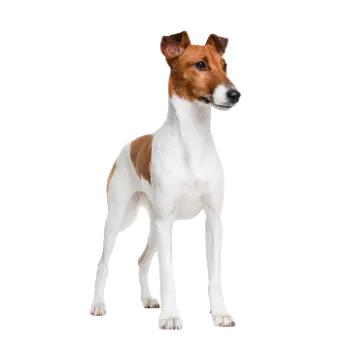
The SFT is a compact, athletic terrier built along clean, balanced lines that communicate speed, agility, and readiness for action. Standing no more than 15.5 inches at the shoulder and weighing between 15 and 18 pounds, this is a small dog with a decidedly big presence. The overall outline is square and symmetrical, with the length of the body from the point of the shoulder to the buttocks approximately equal to the height at the withers. Everything about the SFT's structure serves a functional purpose rooted in its heritage as a dog that needed to keep pace with mounted hunters and then go to ground after foxes.

The head is the breed's signature feature. It is flat and moderately narrow, tapering gradually from the ears toward the eyes and then again from the eyes to the muzzle, creating the V-shaped profile that distinguishes the Smooth Fox Terrier from nearly every other terrier breed. The skull and muzzle are roughly equal in length, and the stop is slight rather than pronounced. The jaws are strong and muscular, equipped with a complete scissors bite that reflects the breed's need to grip and hold quarry underground. The nose is black. The eyes are small, moderately deep-set, and dark in color, with an expression that is keen, alert, and full of intelligence. The ears are small, V-shaped, and fold forward close to the cheeks, dropping neatly toward the outer corner of the eye.

The neck is clean, muscular, and of moderate length, widening gradually as it approaches well-laid shoulders. The chest is deep but not overly broad, providing ample room for heart and lungs without the width that would hinder a dog working in tight underground passages. The ribs are well-sprung in the rear portion of the ribcage and carried well back. The topline is short and level, the hallmark of a breed built for power and quickness rather than ground-covering stride. The loin is strong and slightly arched, connecting to powerful, well-muscled hindquarters that provide the explosive drive needed for both pursuit above ground and maneuvering in confined spaces below it.

The forelegs are straight when viewed from any angle, with strong bone and short, upright pasterns. The feet are round, compact, and well-padded. The hindquarters are strong and muscular with well-bent stifles and short, perpendicular hocks that contribute to the breed's characteristic driving gait. Movement is straight, true, and effortless, with good reach in front and strong drive from behind. The SFT covers ground with an easy, ground-eating stride that belies its small size.

The tail is traditionally docked in countries where the practice remains legal, set high and carried upright but not curled over the back. Where docking is prohibited, the natural tail is moderately long and carried high with a jaunty carriage.

The coat is the feature that gives the SFT its name and sets it apart from the Wire Fox Terrier. It is short, flat, smooth, hard, and dense, lying close to the body and covering the belly and inner thighs. The predominant color is white, with markings in black, tan, or black and tan. Brindle, red, and liver markings are not acceptable under the breed standard. The white base color was deliberately selected during the breed's development so that hunters could easily distinguish the dog from the fox during a hunt, and it remains one of the breed's most identifiable visual features.

Affectionate With Family
The SFT bonds tightly to its household and craves constant involvement in family activities. This breed demonstrates its affection through energetic engagement and a persistent desire to be wherever its people are.
Good With Young Children
Energetic and playful with children who understand how to interact respectfully with a dog. The SFT may snap if handled too roughly, so supervision with very young children is recommended.
Good With Other Dogs
Same-sex dog aggression is a well-documented breed trait, and the SFT will not back down from confrontations with much larger dogs. Careful introductions and management are essential.
Shedding Level
The smooth coat sheds moderately year-round with heavier shedding twice a year during seasonal changes. Regular brushing helps manage loose hair.
Coat Grooming Frequency
The short, flat coat requires only weekly brushing and occasional bathing. This is one of the lowest-maintenance coats among terrier breeds.
Drooling Level
The SFT is not a drooler. Its clean, tight lip structure means household fabrics and furniture remain free of saliva.
Coat Type
Short, smooth, hard, and flat-lying, the SFT's coat is dense enough to provide weather protection while remaining sleek and easy to maintain.
Openness To Strangers
Initially alert and watchful around unfamiliar people, the SFT typically warms up after a brief assessment period. The breed is confident rather than shy in new social situations.
Playfulness Level
Few breeds match the SFT's sheer enthusiasm for play. This terrier approaches games with tireless energy and inventive enthusiasm well into adulthood.
Watchdog/Protective Nature
The SFT is a vigilant and vocal watchdog that will alert its household to any unusual activity or approaching stranger with sharp, insistent barking.
Adaptability Level
Adaptable to various living situations if exercise needs are met, though a home with a secure yard is strongly preferred. Apartment living is possible but demanding.
Trainability Level
Quick to learn and capable of mastering complex tricks, though the SFT's independent terrier streak means it sometimes chooses whether to comply based on its own assessment of the situation.

SFT History & Development

The abbreviation SFT is relatively modern, but the breed it represents has roots stretching back centuries in England's sporting tradition. Understanding why the abbreviation exists requires understanding the breed's history and its long, sometimes confusing entanglement with the Wire Fox Terrier, a distinction that makes a clear shorthand genuinely useful.

The Smooth Fox Terrier's origins lie in the English countryside of the eighteenth century, where farmers and landed gentry alike needed small, tenacious dogs capable of pursuing foxes underground and dispatching vermin on the farm. Before the breed had any formal identity, any small, agile terrier that could bolt a fox from its den during a hunt was simply called a fox terrier. It was not until the mid-nineteenth century that breeders began to formalize type and distinguish between the smooth-coated and rough-coated varieties working in the field. The Smooth Fox Terrier is believed to descend from smooth-coated black and tan terriers, with crosses to the Bull Terrier, Beagle, and Greyhound contributing to its speed, tenacity, and scenting ability.

The first breed standard was written in 1876, the same year the Fox Terrier Club was formed in England. This was a landmark moment because it gave the breed a defined identity separate from the general category of working terriers. The American Fox Terrier Club followed in 1885 and became one of the first specialty clubs to join the American Kennel Club. For the next century, both smooth and wire varieties were registered and shown as a single breed with two coat types.

The abbreviation SFT gained currency precisely because this dual classification created confusion. When fanciers, judges, and breeders needed to specify which variety they were discussing, shorthand became necessary. SFT for the smooth and WFT for the wire became standard in correspondence, catalog listings, and breed discussions. The AKC's decision to officially separate the two breeds in 1984 formalized what the abbreviation had already made practical.

The breed's cultural footprint extends beyond the hunting field. The Smooth Fox Terrier achieved lasting fame as the model for the painting that became the RCA Victor trademark, depicting a terrier peering into the horn of a phonograph. The breed was also a popular circus and performance dog, its intelligence and eagerness to learn tricks making it a natural entertainer. These roles helped keep the SFT in the public eye even as its working function diminished with the decline of traditional fox hunting. Today the breed is less common than it once was, particularly in urban settings where its high energy and strong prey drive can be challenging. But among terrier enthusiasts, the SFT remains a respected and admired breed, and the abbreviation continues to carry the full weight of that history in three compact letters.

SFT Temperament & Personality

The SFT's temperament is pure terrier distilled into a compact, high-octane package. This is a breed that was developed to work independently underground, making split-second decisions in dark, confined spaces while facing an adversary that could fight back. That heritage produced a dog with extraordinary boldness, intense focus, and an unshakeable confidence that can be both endearing and exasperating depending on whether its energy is properly channeled.

Intelligence in the Smooth Fox Terrier is quick and reactive rather than contemplative. These dogs assess situations rapidly and act on their conclusions with minimal hesitation. In a training context, this means a dog that picks up new commands with impressive speed but also grows bored with repetition and will invent its own entertainment if not sufficiently engaged. The SFT's intelligence is also closely linked to its problem-solving ability, which manifests practically as an uncanny talent for finding escape routes, opening gates, and accessing food that its owner believed was securely stored.

The breed's relationship with its family is affectionate and genuinely devoted. SFTs bond strongly to their people and thrive on interaction, attention, and inclusion in household activities. They are not aloof or independent in the way some terrier breeds can be. This is a dog that wants to be where you are and doing what you are doing, preferably at high speed. With children, the SFT is typically enthusiastic and playful, regarding kids as ideal companions for the kind of energetic games the breed loves. However, the SFT has a low tolerance for being handled roughly or having its resources taken, so supervision with young children who have not yet learned boundaries is important.

With strangers, the breed is alert and initially reserved. The SFT is a natural watchdog that will announce visitors with sharp, persistent barking. Once introduced and satisfied that a newcomer poses no threat, most SFTs warm up reasonably quickly, though they rarely become indiscriminately friendly. The breed's wariness of strangers is measured rather than fearful, reflecting confidence rather than anxiety.

Where the SFT's temperament can become genuinely challenging is in its interactions with other dogs. This breed has a well-documented tendency toward dog-directed aggression, particularly with dogs of the same sex. The SFT will not back down from a confrontation with a much larger dog and has no realistic assessment of its own size in conflict situations. This is not a breed that does well at off-leash dog parks or in households with multiple same-sex dogs unless very carefully managed. Prey drive is equally intense. The SFT was bred to pursue and kill small animals, and that instinct remains fully intact. Squirrels, rabbits, cats, and any other small creature that runs will trigger an immediate, focused chase response that no amount of recall training is likely to override in the moment.

When the SFT's exercise and mental stimulation needs are not met, the resulting behavioral fallout is dramatic and predictable. Destructive chewing, incessant barking, digging that can excavate a yard in hours, and general hyperactive restlessness are all common complaints from owners who underestimated the breed's energy requirements. These are not signs of a difficult dog but of a working terrier whose brain and body have not been given adequate occupation.

SFT Family Life & Living Requirements

The SFT's compact size might suggest it is well-suited to apartment living, and technically it can adapt to smaller spaces, but only if its substantial exercise needs are met with unfailing consistency. This is not a dog whose energy can be managed with a short walk around the block. The SFT needs vigorous daily activity, and without it, apartment walls become targets for the destructive restlessness that under-exercised terriers are famous for. A home with a securely fenced yard is the more practical arrangement, though that fence needs to be escape-proof since the SFT is both an accomplished digger and a surprisingly capable jumper for its size.

The breed does well with families that lead active lives and can include the dog in their daily routines. SFTs are social dogs that dislike being left alone for long periods, and separation anxiety can develop if the dog is routinely isolated. They want to be part of the household's rhythm, whether that means joining a hike, supervising yard work, or simply being in the same room while their family goes about evening activities.

With children, the SFT is generally a spirited and willing playmate. The breed's energy level and love of games make it a natural match for kids who enjoy active, outdoor play. However, the SFT's terrier temperament includes a willingness to snap if provoked by rough handling, ear pulling, or attempts to take away a prized toy or food resource. Teaching children to respect the dog's boundaries is essential, and interactions between the dog and very young children should always be supervised.

The SFT's relationship with other household pets requires honest assessment. Same-sex dog aggression is a documented breed characteristic, and introducing an SFT into a home with an existing dog of the same sex requires careful, gradual management. With opposite-sex dogs, the breed typically coexists more peacefully. Cats and other small pets are a genuine risk unless the SFT was raised with them from puppyhood, and even then the prey drive may surface unpredictably. Small animals like rabbits, hamsters, and birds should be kept securely separated at all times.

SFT Training & Exercise Needs

Training an SFT is an exercise in balancing the breed's sharp intelligence against its equally sharp independence. This is a dog that can learn virtually anything you want to teach it, and it will do so with speed that impresses even experienced trainers. The challenge is not the learning but the compliance. The SFT has its own ideas about whether a given command is worth following at any particular moment, and it will test boundaries with a cheerful persistence that requires firm, consistent, and patient handling.

Positive reinforcement is the most effective training approach for this breed. The SFT responds well to food rewards, play, and praise, but it responds poorly to harsh corrections, which tend to produce either stubbornness or anxiety rather than cooperation. Training sessions should be kept short and varied, since the SFT's quick mind will disengage from repetitive drills within minutes. Introducing new challenges, rotating exercises, and incorporating play into training keeps the dog mentally invested and willing to participate.

The breed has a strong aptitude for trick training, a skill that was historically put to professional use in circus and stage performances. This talent for learning complex sequences makes the SFT an excellent candidate for canine sports including agility, flyball, earthdog trials, and rally obedience. These structured activities channel the breed's energy and intelligence into productive outlets while strengthening the bond between dog and handler.

Exercise needs are substantial for a dog of this size. One to two hours of daily physical activity is a reasonable baseline, combining structured walks or runs with opportunities for off-leash play in securely enclosed areas. The emphasis on secure enclosures is not optional. The SFT's prey drive is intense and immediate, and a squirrel or rabbit sighting will override recall training in virtually every case. Leash walking in unenclosed areas is mandatory for this breed. Beyond physical exercise, mental stimulation through puzzle toys, scent work, and interactive games is essential to prevent the boredom-driven behavioral problems that make under-exercised SFTs so destructive. A tired SFT is a well-behaved SFT, but achieving that state requires genuine effort from the owner.

SFT Health Concerns

The SFT is a generally healthy breed with a lifespan that typically ranges from 12 to 15 years, but it does carry predispositions to several specific conditions that prospective owners should understand before committing to the breed.

Congenital deafness occurs in the breed, linked to the predominantly white coat pattern. Puppies can be tested via brainstem auditory evoked response testing after four weeks of age. Cardiac concerns include mitral valve disease, and the parent club recommends cardiac examination as part of routine health screening for breeding stock. Wobbler syndrome, a neurological condition involving spinal cord compression in the cervical vertebrae, has been reported in the breed and manifests as an unsteady, wobbly gait particularly in the hindquarters.

Common Health Issues

  • Primary lens luxation - An inherited condition where the fibers holding the eye's lens in position deteriorate, allowing the lens to dislocate and potentially causing acute glaucoma that requires emergency veterinary treatment. DNA testing is available.
  • Cataracts - A progressive clouding of the eye lens that impairs vision and is common in older Smooth Fox Terriers, sometimes requiring surgical removal to restore sight.
  • Glaucoma - Increased intraocular pressure that can occur secondary to lens luxation or independently, causing severe pain and rapid vision loss without prompt treatment.
  • Patellar luxation - A condition where the kneecap slides out of its normal position in the femoral groove, causing intermittent lameness and a characteristic skipping gait that may require surgical correction in severe cases.
  • Legg-Calve-Perthes disease - A degenerative condition affecting the femoral head in young dogs under one year of age, caused by compromised blood supply to the hip joint and often requiring surgical intervention.
  • Congenital deafness - Present from birth and linked to the breed's predominantly white coat pattern, diagnosable through brainstem auditory evoked response testing in puppies older than four weeks.
  • Mitral valve disease - A progressive cardiac condition where the mitral valve deteriorates over time, potentially leading to heart murmur and eventual congestive heart failure in affected dogs.
  • Wobbler syndrome - A neurological condition caused by compression of the spinal cord in the cervical vertebrae, producing an unsteady gait and coordination problems particularly in the hindquarters.

Preventive Care & Health Monitoring

  • Primary lens luxation DNA testing of all breeding stock before mating to identify carriers and affected individuals - Preventing the production of puppies at risk for this painful inherited eye condition.
  • Annual patella evaluation by a veterinarian to monitor for kneecap luxation - One of the breed's most common orthopedic issues, with early detection allowing for conservative management before surgical intervention becomes necessary.
  • Cardiac examination including auscultation as recommended by the parent club to screen for mitral valve disease and other cardiac abnormalities in both breeding stock and companion animals. - Cardiac examination including auscultation as recommended by the parent club to screen for mitral valve disease and other cardiac abnormalities in both breeding stock and companion animals.
  • Regular ophthalmologic examination to monitor for cataracts - Glaucoma, and other ocular conditions that the breed is predisposed to, ideally performed annually by a board-certified veterinary ophthalmologist.
  • BAER testing of puppies from predominantly white litters to identify congenital deafness early - Allowing appropriate placement and training adjustments for affected individuals.
  • Dental care including tooth brushing at least three times weekly and periodic professional cleanings - As the breed is particularly susceptible to periodontal disease that can affect systemic health.

SFT Grooming & Maintenance

The SFT's smooth, short coat is one of the breed's practical advantages and one of the reasons it earned the "gentleman of the terrier world" reputation. Grooming requirements are minimal compared to the Wire Fox Terrier, which needs regular hand-stripping to maintain proper coat texture. The Smooth Fox Terrier's coat lies flat against the body, is hard and dense to the touch, and requires only basic maintenance to stay clean and healthy.

Weekly brushing with a firm bristle brush or rubber grooming mitt is sufficient for routine coat care. This removes loose hair, distributes natural oils, and keeps the coat looking sleek. The breed does shed, with heavier shedding occurring twice a year during seasonal coat changes. During these periods, more frequent brushing helps manage the volume of loose hair. Bathing should be done only as needed, typically when the dog has gotten into something messy, since the coat's natural oils help repel dirt and maintain its characteristic smooth appearance.

The SFT's teeth deserve particular attention. The breed is prone to dental disease, and regular tooth brushing at least three times per week is recommended to prevent tartar accumulation and the gum inflammation that leads to periodontal disease. Dental chews and professional veterinary cleanings supplement home care but do not replace it. Neglecting dental hygiene in this breed can lead to painful infections, tooth loss, and systemic health consequences as bacteria from diseased gums enter the bloodstream.

Nail trimming should be performed regularly, especially for dogs that exercise primarily on soft surfaces where natural wear does not keep nails short. Overgrown nails can affect the dog's gait and cause discomfort. Ear care is straightforward given the breed's small, folded ears, but a weekly check for wax buildup, debris, or signs of infection is good practice. The overall grooming commitment for an SFT is modest, making it a practical choice for owners who want a clean, neat-looking dog without the time investment that longer-coated or hand-stripped breeds demand.