Peruvian Inca Orchid

Peruvian Inca Orchid

Quick Facts

🐕 Breed Group
Non-Sporting Group
📏 Size Category
Small to Large (three size varieties)
📏 Height
Males: 9-25 inches (varies by size variety), Females: 9-25 inches (varies by size variety)
⚖️ Weight
Males: 8-55 pounds (varies by size variety), Females: 8-50 pounds (varies by size variety)
⏱️ Life Expectancy
12-14 years
🧣 Coat Type
Hairless (smooth skin with minimal hair tufts) or coated (short to medium, single coat)
🎨 Coat Colors
Any color or combination; skin tones include chocolate, gray, copper, mottled; coated variety any color accepted
😀 Temperament
Loyal, Alert, Sensitive, Affectionate, Reserved, Agile
🏃 Exercise Needs
Moderate
🎓 Training Difficulty
Moderate
👶 Good with Children
Good with older children
🐾 Good with Other Pets
Good when raised together

Other Names & Breed Recognition

The Peruvian Inca Orchid goes by a remarkable number of names that reflect its ancient history, its geographic identity, and the various cultural contexts through which it has been known. In its home country of Peru the breed is most commonly called Viringo or Perro Peruano sin Pelo - the Peruvian dog without hair. The Quechua language, spoken by the Inca and still widely used in Peru, used the term Kaclla for the breed. During the colonial period Spanish speakers called it Perro Calato - naked dog - and also Perro Chino, a name whose origin is debated. Some sources suggest chino derives from the Quechua word for woman or person rather than indicating any Chinese connection. The breed has also been called Perro de Sechura, Perro Chimu reflecting its connection to the Chimu culture, and Vitilingo.

The name Peruvian Inca Orchid was created by a North American importer named Jack Walklin in the 1960s, who reportedly encountered the dogs standing among orchid flowers and gave them this evocative name. It is not a name used in Peru itself and has no historical basis, but it became the standard designation for the breed in the English-speaking dog fancy and is now the official name recognized by the AKC.

Registry recognition for the breed reflects its unusual status as both an ancient Peruvian cultural treasure and a rare breed outside its home country. The FCI recognized the Peruvian Hairless Dog in 1955, assigning it to Group 5, Section 7 - the primitive type sighthound category that also includes the Basenji, Pharaoh Hound, and Ibizan Hound. The FCI maintains two related but distinct entries: the Peruvian Hairless Dog registered through the Real Sociedad Canina del Peru, and the Peruvian Inca Orchid registered through the AKC. The AKC granted full recognition to the Peruvian Inca Orchid in 2011, placing it in the Non-Sporting Group - an AKC classification that reflects the practical difficulty of placing a breed that spans three sizes and two coat varieties into the Hound, Toy, or Sporting classifications more naturally.

The United Kennel Club places the breed in its Sighthound and Pariah Group, which better captures the breed's functional heritage than the Non-Sporting designation. The Kennel Club in the United Kingdom and the Canadian Kennel Club do not currently recognize the breed, reflecting its rarity outside the Americas and its primary concentration within Peru and among specialist enthusiasts in North America and Europe.

Peru declared the Peruvian Hairless Dog part of its national heritage in 2001, and subsequent legislation has required that pairs of the dogs be maintained at archaeological sites throughout the country. This is an extraordinary cultural designation - the breed is essentially treated as a living monument.

Peruvian Inca Orchid Organizations & Standards

The Peruvian Inca Orchid Club of America serves as the AKC parent club for the breed in the United States, maintaining the breed standard, coordinating specialty shows, and providing educational resources for breeders and owners. In Peru, the Real Sociedad Canina del Peru oversees the breed under the FCI framework, and the breed's primary health and breeding oversight occurs within the Peruvian kennel club system where the breed has its deepest roots and largest population.

The AKC breed standard for the Peruvian Inca Orchid describes a sighthound of elegant, slim conformation that expresses speed, strength, and harmony without coarseness. Three distinct size varieties are recognized within a single breed: the Small at 9.75 to 15.75 inches at the withers, the Medium at 15.75 to 19.75 inches, and the Large at 19.75 to 25.75 inches. Weight corresponds to size proportionally. Both hairless and coated varieties are recognized within all three sizes, and coated and hairless puppies can and do appear in the same litter - the coated variety is described in the standard as genetically important to the breed's makeup and is not a fault.

The standard's most fundamental description is of a dog defined by the absence of hair in the hairless variety. Incomplete dentition - missing premolars and sometimes molars - is specifically noted as normal for the hairless variety and is not penalized. The coated variety is expected to have full dentition. This explicit accommodation of hypodontia in the standard reflects an honest acknowledgment that the hairlessness gene is genetically linked to dental abnormality, a biological reality that the standard addresses rather than ignores.

The AKC standard describes the temperament as noble and affectionate at home with those close to the dog, while simultaneously lively, alert, and wary with strangers. This dual nature - devoted companion within the family circle, cautious with outsiders - is characteristic of the breed and informs its training and socialization requirements.

For health testing, the breed does not yet have a comprehensive CHIC program through OFA. Responsible breeders conduct eye examinations, evaluate hips in the larger size varieties, and may utilize available DNA tests for progressive rod-cone degeneration and degenerative myelopathy. The sensitivity of hairless sighthounds to barbiturate anesthetics should be disclosed to any veterinarian before any surgical procedure - thiopental and other thiobarbiturates are contraindicated in this breed and the information should be part of every PIO's medical record.

The Peruvian Inca Orchid Club of America hosts a national specialty annually and works to increase awareness of the breed among potential owners and veterinarians who may be unfamiliar with its specific management and anesthetic requirements. The club's breeder referral program is the recommended starting point for anyone seeking a responsibly bred puppy, as the breed's rarity means that puppy mill and casual backyard breeder sources are unfortunately present in the supply chain. Given the specialized care requirements of the hairless variety, sourcing from a knowledgeable, ethical breeder who can provide guidance on skin care, dental management, and the breed's unique health needs is genuinely important for the long-term welfare of the dog.

Kennel Club Recognition

  • American Kennel Club (AKC): Recognized in 2011, Non-Sporting Group
  • United Kennel Club (UKC): Recognized, Sighthound and Pariah Group
  • FCI: Recognized, Group 5

Peruvian Inca Orchid Physical Description

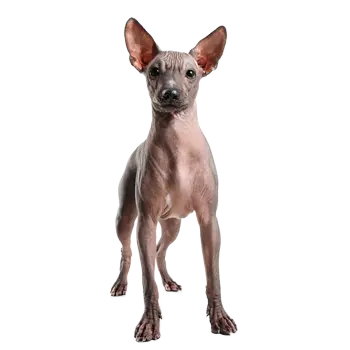
The Peruvian Inca Orchid presents an appearance that is simultaneously ancient and startling to eyes accustomed to coated breeds. The overall silhouette is that of a lean, elegant sighthound - long-legged relative to body depth, narrow through the body, deep-chested, with a tucked-up abdomen. The first thing most people notice is the skin itself: smooth, warm to the touch in the hairless variety, and available in an extraordinary range of colors including solid chocolate brown, elephant gray, copper, and various mottled combinations of these with pink. The skin should be soft and supple in a well-maintained dog, not rough or cracked.

The head is narrow and elongated, clearly wedge-shaped when viewed from above, with a flat skull and a muzzle that is approximately the same length as the skull. The stop is slight. The lips are tight and relatively thin, giving the face a clean, lean profile. Incomplete dentition in the hairless variety - most commonly missing premolars - is genetically normal and expected. The coated variety should have full dentition. The nose leather ranges in color from dark brown to pink, harmonizing with the skin color.

The eyes are almond-shaped, medium-sized, and carry an alert, intelligent expression. The color varies from dark brown through amber to yellow, and must harmonize with the skin color. Both eyes must be the same color. Albinism disqualifies. The eyes of some hairless individuals tend to squint in direct sunlight due to skin sensitivity around the eye area.

The ears are large and prominent - one of the breed's most visually striking features. In the hairless variety the ears are upright and fully erect when the dog is alert, rotating independently to track sounds with sighthound efficiency. At rest they may lay to the sides. In the coated variety the ear carriage is typically rose-ear style, folding back along the skull, covered in coat. The ear leather is thin and the ears are mobile and expressive.

The neck is long, lean, and lightly muscled, flowing into well-laid shoulders. The topline is essentially level with a slight arch over the loin. The chest is deep and narrow, with well-sprung ribs that are visible beneath the skin in the hairless variety. The tucked-up abdomen, visible in the hairless dog, gives the classic sighthound outline. The tail is long and fine, tapering to a tip, with perhaps a few wisps of hair at the end in the hairless variety.

The legs are long and fine-boned with a natural elegance of line. The feet are compact with well-arched toes. Movement is light, springy, and covers ground efficiently - a smooth trot with good reach in front and drive behind, reflecting the sighthound construction. Speed when motivated is notable, and PIOs can cover ground at impressive pace despite their elegant appearance.

The hairless variety may carry short hair tufts on the forehead forming what owners call the kiss spot, on the lower tail, and on the feet. Shaving or removing these hair remnants is explicitly prohibited in the standard. The skin surface in the hairless variety may show variations in pigment across different areas of the body, and this mottling and variation is normal and accepted. The three size varieties are the same breed with the same conformation requirements - the differences are scale, not type. Sexual dimorphism is present but subtle: males in the larger varieties tend to be slightly heavier-framed and broader through the chest and head.

The overall physical experience of the hairless PIO is quite unlike that of any coated breed. The warmth that radiates from the skin makes contact with the dog immediately noticeable and appealing in cool weather. Some dogs have skin that is almost entirely pigmented, giving a rich, even appearance. Others carry extensive pink mottling that creates a patterned look unique to this breed. In all cases the skin should feel clean and smooth to the touch, free of roughness or cracking. The coated variety presents as a more conventional-looking dog but still carries the lean sighthound outline and the alert, intelligent expression that identifies the breed regardless of coat status.

One of the more striking aspects of the PIO's physical presence is how different the hairless and coated varieties look side by side, despite being the same breed. The hairless dog's visible musculature, exposed skin pigment, and prominent ear carriage give it an otherworldly appearance that draws immediate attention. The coated dog, with its short fur and rose ears, looks more like a conventional lean sporting dog. Both are correct for the breed, and both can appear in the same litter, making the PIO one of the more visually variable purebreds in the entire dog fancy.

Affectionate With Family
Peruvian Inca Orchids are deeply devoted to their families and form intense bonds with their household. They seek physical closeness with trusted people and the warmth of their hairless skin makes them genuinely appealing companions.
Good With Young Children
The PIO can be good with children when raised with them and when children are old enough to interact respectfully. The breed's sensitive nature and thin skin make rough or unpredictable handling a real concern.
Good With Other Dogs
With proper socialization, PIOs generally coexist well with other dogs, particularly those of similar size and energy. As sighthounds they may have a prey chase response to small animals running.
Shedding Level
The hairless variety sheds essentially nothing and is frequently sought by allergy sufferers. The coated variety sheds minimally from its single, short coat. Neither variety approaches the shedding level of a double-coated breed.
Coat Grooming Frequency
The hairless variety requires regular skin moisturizing, sunscreen before outdoor exposure, and gentle bathing - different maintenance needs than a coated dog but genuine ones. The coated variety needs only occasional brushing.
Drooling Level
Peruvian Inca Orchids are clean, dry-mouthed dogs with essentially no drooling tendency.
Coat Type
The hairless variety has smooth, warm skin with only minor hair tufts on the head, lower tail, and feet. The coated variety has a short to medium single coat with no undercoat - neither variety is demanding to maintain.
Openness To Strangers
The PIO standard describes the breed as wary with strangers, and this is accurate. These dogs take their time assessing new people and do not welcome uninvited handling from people they do not know.
Playfulness Level
Active and athletic in short bursts, the PIO enjoys play and can be fast and agile when motivated. It matures into a composed companion that is playful with trusted household members without being relentlessly demanding.
Watchdog/Protective Nature
Alert and naturally attentive to its environment, the PIO will notice and announce changes. The breed's historical role included guarding as well as hunting, and that watchfulness persists in the modern dog.
Adaptability Level
PIOs adapt reasonably well to various living situations including apartments if exercised adequately, but climate management is a real constraint - this breed needs protection from both heat and cold.
Trainability Level
Intelligent and quick to learn, but the PIO has the sighthound's characteristic independence and can be selective about compliance. Short, engaging training sessions with positive reinforcement work best.

Peruvian Inca Orchid History & Development

The Peruvian Inca Orchid is among the oldest documented dog breeds in existence. Ceramic vessels and textiles depicting hairless dogs with unmistakable similarity to the modern breed have been found in the archaeological record of Peru's northern coastal cultures - particularly the Moche, Chimu, and Vicus - dating to approximately 750 AD. These are not simple impressionistic dog images but detailed representations suggesting a specific, recognized type. The breed existed as a stable type well before the Inca Empire itself rose to prominence, and its archaeological presence indicates it was culturally significant across multiple pre-Columbian civilizations.

The Inca, who encountered the breed as they expanded across the Andean and coastal regions, kept hairless dogs in the imperial court and attributed spiritual significance to them. The hairless body, which feels warm to the touch, contributed to beliefs that these dogs possessed healing powers and could transfer warmth to people suffering from arthritis, abdominal pain, and other ailments. This belief in the therapeutic warmth of the breed persists in some traditional communities in Peru today.

Spanish colonizers arriving in the sixteenth century classified the hairless dogs among six types of dogs they encountered in the Inca Empire. The colonial period brought enormous disruption to Peruvian indigenous culture, and the Peruvian hairless dog came close to extinction as traditional communities were disrupted and European breed types were introduced. The breed survived primarily in rural coastal communities where it continued to function as a companion, a watchdog, and a small-game hunter whose exceptional vision served its original sighthound role.

FCI recognition in 1955 established the breed in the international registry system and provided a framework for its preservation. American interest in the breed developed slowly; the name Peruvian Inca Orchid was introduced by an importer in the 1960s and became the standard English designation. The AKC tracked the breed through its Foundation Stock Service before granting full recognition in 2011. Peru's declaration of the breed as national heritage in 2001 and the subsequent law requiring hairless dogs to be maintained at archaeological sites gave the breed an unprecedented cultural protection.

The modern breed exists in two clear populations with some overlap: the population maintained in Peru under FCI registration, and the AKC-registered population in North America whose foundation traces to thirteen dogs imported in the early twentieth century. Both populations are small by the standards of popular breeds, and the Peruvian Inca Orchid remains genuinely rare outside Peru. Locating a responsible breeder requires patience and research, and importation from Peru is not uncommon among committed North American fanciers.

The breed's cultural significance in Peru has grown rather than diminished in modern times. The requirement that archaeological sites maintain pairs of the dogs has created a population of PIOs living in Machu Picchu and other major historical sites, where they are encountered by millions of tourists annually. This visibility has helped sustain popular interest in the breed within Peru and introduced international visitors to a living piece of pre-Columbian history. The combination of official heritage status and practical conservation through maintained populations at sites is an unusual model that has served the breed's long-term survival well. For a breed that came close to extinction during the colonial period, the modern Peruvian Inca Orchid is in a position of genuine cultural security in its home country - legally protected, nationally celebrated, and present at the archaeological sites that testify to its ancient continuity.

Peruvian Inca Orchid Temperament & Personality

The Peruvian Inca Orchid is a breed that rewards patience and penalizes rushing. It is not the breed for someone who wants a dog that is immediately warm with everyone it meets, or one that accepts handling from strangers without question. Within its family circle the PIO is deeply affectionate, closely bonded, and genuinely warm - it seeks physical contact with trusted people and is content being close. With strangers that relationship simply does not exist, and the dog makes that clear through cautious withdrawal or watchful distance rather than aggression.

The reserve with strangers is rooted in the breed's history. For most of its documented existence the PIO has been the dog of specific households or communities - a tight bond with defined people, watchfulness toward outsiders. That behavioral heritage is remarkably persistent. Socialization during puppyhood substantially improves the breadth of people the dog will accept, but it does not eliminate the underlying wariness. The well-socialized PIO is composed and tolerant with unfamiliar people. The under-socialized one is fearful. Neither is indiscriminately friendly.

Intelligence is genuine and practically expressed. PIOs learn quickly when training is structured to hold their interest, and they are capable of impressive performance in agility, obedience, and rally when properly motivated. The sighthound independence is also present - they are thinkers who will assess whether a requested behavior is worth the effort, and they will find training that is repetitive or poorly rewarded unworthy of sustained attention. Short sessions, high-value rewards, and genuine engagement with the dog's perspective produce the best results.

Energy and drive are moderate. The PIO is not a relentlessly active breed in the house - it tends to be composed and settled indoors between exercise periods. Outside, it is fast, agile, and eager to run. The sighthound chase drive for small animals that move quickly is present and should be managed through recall training and realistic assessment of off-leash reliability in unfenced areas. A PIO that has spotted something to chase will cover ground at speed before most owners can react.

Sensitivity is one of the most commonly described temperament characteristics. These dogs are attuned to household mood and dynamics in a way that can be charming or challenging depending on the owner's style. They respond poorly to harsh handling, loud confrontational training, or environments with chronic high stress. They respond well to calm, consistent management and owners who take the time to build trust through genuine attention to the dog's signals. The thin skin of the hairless variety also means that physical handling - even well-intentioned - needs to be gentle to avoid causing discomfort or minor injury.

The watchdog instinct is well-developed and practically useful. PIOs notice changes in their environment and alert to them, and their wariness with strangers makes them reliable reporters of activity outside the family. This is not aggressive guarding but attentive vigilance, and it is one of the breed's genuinely useful traits for a companion dog in an urban environment.

Who this breed is right for deserves honest consideration. The PIO is an excellent match for someone patient, experienced with dogs, willing to invest time in socialization, and genuinely interested in the breed's unusual characteristics. It is not right for someone who wants a dog that makes friends with every person it meets, one that tolerates rough or unpredictable handling, or one that can manage without daily climate protection in cold or sunny conditions. The owners who love this breed tend to be genuinely devoted to it - the combination of ancient heritage, striking appearance, and the depth of the bond the PIO offers its trusted people creates a loyalty in both directions.

Peruvian Inca Orchid Family Life & Living Requirements

The Peruvian Inca Orchid is a manageable companion in a variety of living situations, including apartments, as long as climate management and daily exercise needs are addressed. It does not require a yard, does not have the high-energy outdoor requirement of working breeds, and can be content with regular leash walks and indoor play. What it cannot manage is temperature extremes without assistance from its owner.

For the hairless variety, cold weather is a genuine management challenge. Without a coat, the dog loses heat rapidly in cool conditions and becomes uncomfortable - not merely chilly, but physically at risk if exposed to cold without protection. A well-fitted dog sweater or jacket is not optional for outdoor exposure below approximately 60 degrees Fahrenheit. Many PIO owners maintain a wardrobe of dog clothing as a functional necessity, not a fashion statement. Conversely, the hairless skin is highly vulnerable to sun exposure - prolonged outdoor time in direct sunlight without sunscreen applied to the skin results in sunburn that causes real discomfort and long-term skin damage. Managing these requirements is part of daily life with a hairless PIO.

Exercise needs are moderate. A daily walk of thirty minutes and some additional play opportunity satisfies most PIOs in the companion role. The breed is athletic enough to enjoy agility and lure coursing if the owner pursues those activities, but it is not a breed that demands two hours of hard exercise to settle. The exercise should be in a secured area or on leash, given the breed's sighthound chase drive and the speed at which it can disappear when something catches its attention.

Families with children should be thoughtful about the match. The PIO's sensitive skin and reserved nature with unfamiliar handling make it a better fit with older children who can interact calmly and respectfully than with young children who approach dogs unpredictably. Teaching children how to approach and handle the dog before giving them unsupervised access is worthwhile. The breed is not aggressive, but it will remove itself from situations it finds uncomfortable, and forcing it to remain in uncomfortable interactions is counterproductive.

With other household pets, PIOs raised alongside them generally coexist peacefully. The sighthound prey drive means that small pets - particularly rodents, birds, or cats that run - may trigger a chase response that requires management. Introductions should be gradual, with the PIO on leash until the dynamic between the animals is well established.

The overall lifestyle commitment for a PIO owner includes daily skin management for the hairless variety, climate-appropriate protective clothing in cold and sun protection outdoors, dental care that goes beyond what most dog owners practice, and the social management of a dog that does not automatically accept strangers. These are not burdens for the right owner - they are simply the practical realities of the breed. People who choose the PIO knowing what is involved generally find the breed enormously rewarding. People who acquire one without understanding these requirements often find the management challenges unexpectedly demanding.

Peruvian Inca Orchid Training & Exercise Needs

Training a Peruvian Inca Orchid requires understanding what motivates sighthound intelligence, which is fundamentally different from herding or retriever intelligence. A Border Collie wants to complete tasks correctly because task completion satisfies it. A PIO wants to understand what is happening and will engage when the activity is interesting and rewarding. This is not stubbornness - it is a different motivational structure, and training that respects it produces cooperative dogs while training that ignores it produces frustration on both ends of the leash.

Socialization is the most important investment in a PIO puppy's future. The breed's natural wariness with strangers means that a puppy who does not have broad, positive exposure during the eight-to-sixteen-week window will develop into an adult that is genuinely difficult in public. The goal of socialization is to build a wide library of safe experiences so that new situations are assessed through a framework of prior positive encounters rather than defaulting to fear or avoidance. This requires deliberate, daily effort during the puppy period.

Basic obedience training is most effective in short sessions - three to eight minutes - with high-value food rewards and genuine engagement rather than mechanical repetition. PIOs learn quickly enough that extending a session past the dog's interest produces diminishing returns. End on a successful response and resume another time. Commands learned through consistent, rewarding sessions are retained reliably.

The recall is the most critical safety skill for any sighthound and requires proofing against real-world distractions. A PIO that spots a rabbit, a squirrel, or a running child will act on that visual stimulus faster than most owners can intervene. Building a recall that overrides a sighted prey target requires extensive training in progressively distracting environments, and the reality for most PIO owners is that off-leash access should be limited to securely fenced areas where a missed recall is not dangerous.

The breed competes successfully in agility, obedience, rally, and lure coursing, and participation in one of these activities provides valuable mental engagement and physical exercise beyond the daily walk. Nose work and tracking also work well for the PIO's intelligence type, despite the breed's visual hunting orientation - the engagement with problem-solving is what matters, not the sensory modality. An owner who pursues a dog sport with their PIO will have a noticeably more settled and engaged companion than one who limits activity to leash walks.

Harsh corrections, repeated drilling, and raised voices are counterproductive with this sensitive breed. The dog will disengage. Patience, consistency, and treating training as a cooperative activity rather than a compliance exercise produces the best results and builds the trust relationship that is central to getting reliable behavior from a PIO.

Exercise for the PIO should always be with attention to temperature conditions. The hairless variety cannot exercise comfortably in cold weather without protective clothing, and overheating in hot weather is also a concern given the lack of coat insulation regulation. Morning and evening exercise sessions in warm climates keep the dog comfortable. The moderate exercise requirement means that a committed owner in almost any housing situation can meet the breed's needs - what matters is consistency and appropriate environmental management, not raw square footage.

Peruvian Inca Orchid Health Concerns

The Peruvian Inca Orchid is generally a healthy and long-lived breed, with lifespans documented in the range of 12 to 14 years. However, several health concerns specific to the breed's unique characteristics deserve attention from owners and breeders.

Responsible breeders conduct eye examinations and, in the larger size varieties, hip evaluations. DNA testing for progressive rod-cone degeneration and degenerative myelopathy is available and recommended for breeding stock.

Common Health Issues

  • Hypodontia - Incomplete Dentition, : Missing premolars and sometimes molars in the hairless variety is genetically linked to the hairlessness gene and considered normal for the breed. Remaining teeth require more careful monitoring and hygiene.
  • Skin Conditions - Hairless Variety, : Sunburn, dryness, comedones, and vulnerability to cuts and abrasion are ongoing concerns for hairless dogs whose skin lacks the protection of a coat. Daily moisturizing and sunscreen application are required management.
  • Epilepsy: Recurrent seizures are documented in the breed - Typically beginning in young to middle-aged adults. Long-term management with anticonvulsant medication is usually effective in maintaining quality of life.
  • Inflammatory Bowel Disease - IBD, : Chronic gastrointestinal disruption including altered stool, vomiting, weight loss, and bloating is reported in the breed. Dietary management with highly digestible foods is the primary approach.
  • Barbiturate Anesthetic Sensitivity: As a sighthound - The PIO cannot safely receive thiobarbiturate anesthetics including thiopental. This must be communicated to all veterinarians before any surgical or dental procedure.

Preventive Care & Health Monitoring

  • Daily sunscreen application to exposed skin of the hairless variety before outdoor sun exposure - Using a pet-safe or fragrance-free sensitive-skin product.
  • Regular moisturizing of hairless skin to maintain suppleness and prevent cracking - With exfoliating treatment of comedone-prone areas during bathing.
  • Diligent dental hygiene including daily tooth brushing and regular professional cleanings - Given the increased dental disease risk associated with missing teeth.
  • Eye examination by a veterinary ophthalmologist and hip evaluation in larger size varieties - With DNA testing for progressive rod-cone degeneration and degenerative myelopathy for breeding stock.
  • Anesthetic safety documentation - Ensuring every veterinarian treating the dog has written notice of sighthound barbiturate sensitivity on the permanent medical record.

Peruvian Inca Orchid Grooming & Maintenance

The grooming needs of the Peruvian Inca Orchid vary significantly between the hairless and coated varieties. The coated variety is straightforward: a short to medium single coat with no undercoat that requires only occasional brushing with a soft bristle brush, bathing every four to six weeks, and standard nail and ear care. The coated PIO is among the lower-maintenance dogs in the Non-Sporting Group.

The hairless variety is an entirely different experience. The exposed skin requires dedicated care that has no equivalent in managing a coated breed. At minimum, the skin should be gently cleaned with a mild, skin-safe shampoo during regular bathing - every two to four weeks, or as needed - and thoroughly moisturized afterward with an appropriate lotion or oil. The goal is skin that is soft and supple without being artificially softened to the point of fragility. Show dogs are scrubbed with exfoliating products to maintain flawless skin presentation; pet owners do not need to approach that level of care, but basic moisturizing is not optional if the skin is to remain healthy.

Sunscreen is required before any outdoor exposure in direct sunlight. Use a pet-safe sunscreen or a fragrance-free human sunscreen formulated for sensitive skin, applied to all exposed skin surfaces before the dog goes outside. The lighter-skinned areas - pink patches, the face, the belly - burn fastest. This is not a once-a-summer concern but a daily management requirement in sunny climates during peak sun hours.

Comedones - blackheads - develop in some hairless individuals, particularly in areas of friction like the underarms and groin. Gentle exfoliation during bathing and keeping these areas clean and dry manages them. Severe or inflamed comedones warrant a veterinary visit to rule out a more complex skin condition.

Ear care requires weekly inspection and cleaning. The large upright ears of the hairless variety have good airflow and are less prone to infection than pendant ears, but debris accumulates and regular inspection prevents problems. Dental care is particularly important in this breed given the hypodontia - daily tooth brushing with a dog-specific toothpaste and regular professional dental cleanings are the standard of care. Nails require trimming every three to four weeks. The feet should be checked periodically as the hairless skin on the paw pads can dry and crack in the same way as the body skin.