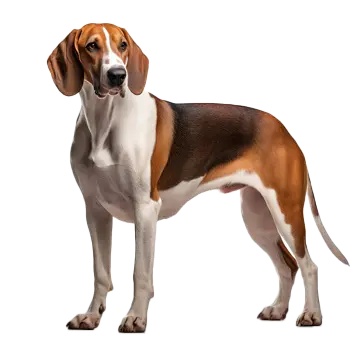
Foxhound

English Foxhound
Gallery coming soon

Furry Critter Network Etsy Shop

Quick Facts

🐕 Breed Group
Hound
📏 Size Category
Medium to Large
📏 Height
22-27 inches (Males 23-25 inches, Females 21-24 inches)
⚖️ Weight
55-75 pounds
⏱️ Life Expectancy
10-12 years
🧥 Coat Type
Short, dense, hard, and glossy
🎨 Coat Colors
Any hound color combination including black, tan, white, tricolor, bicolor
😀 Temperament
Gentle, friendly, patient, sociable, easygoing
🏃 Exercise Needs
Very High - requires extensive daily exercise
🎓 Training Difficulty
Moderate - independent hound nature requires patience
👶 Good with Children
Excellent - gentle and patient with children
🐾 Good with Other Pets
Excellent - bred to work in packs, very sociable with other dogs

Other Names & Breed Recognition

The Foxhound, officially registered as the English Foxhound, has maintained a relatively consistent nomenclature throughout its long history, with the "English" prefix serving primarily to distinguish it from its American cousin developed in colonial America. Within the fox hunting community in Great Britain, these dogs are often referred to simply as "Foxhounds" without need for the national designator, as their British origins are universally understood among traditional hunting enthusiasts. The term "English Hound" appears occasionally in historical texts and informal discussions, though it never achieved widespread formal adoption.

In areas where multiple foxhound varieties coexist, including the United States where both English and American Foxhounds are present, the full "English Foxhound" designation becomes essential for clarity and prevents confusion between the distinct breeds. The American Foxhound, while descended from English stock imported during the colonial period, evolved into a separate breed with different physical characteristics and is generally lighter, taller, and built for different hunting terrain than its English ancestor. Some hunters and breed enthusiasts use the informal shortened term "EFH" when discussing the breed in written communications, particularly in online forums and breed-specific publications.

Historically, before breed standards and formal classifications existed, any pack hound used for fox hunting in England might have been called a foxhound regardless of specific type or breeding. This created considerable confusion in early records, as the term encompassed various hound types including what would later be recognized as distinct breeds. The establishment of formal studbooks and breed standards during the 19th century helped clarify nomenclature and establish the English Foxhound as a specific, defined breed rather than a generic hunting hound type.

Within the breed itself, enthusiasts recognize several subtypes that have evolved through regional breeding preferences and specific hunting terrain requirements. The "Old English" type represents a heavier, more substantial hound with greater endurance and determination, preferred for hunting in challenging terrain. The "Modern English" foxhound is typically lighter in frame, faster, and more refined in appearance, reflecting breeding priorities that emphasized speed alongside stamina. Fell Foxhounds and Hill Foxhounds represent specialized varieties adapted to mountainous terrain in regions like the Lake District and Northumberland, bred for exceptional agility and durability over extremely rough ground.

The English Foxhound enjoys official recognition from all major international kennel clubs, cementing its status as a globally acknowledged purebred dog despite its relative rarity outside hunting circles. The American Kennel Club recognized the breed in 1909, making it one of the earlier hound breeds to receive official AKC registration. However, despite this long-standing recognition, the English Foxhound remains among the least commonly registered breeds with the AKC, reflecting its continued primary use as a working pack hound rather than a companion animal or show dog in most of the United States.

The United Kennel Club maintains breed standards for the English Foxhound that emphasize working ability and functional soundness alongside conformational correctness. The UKC's recognition acknowledges the breed's hunting heritage and the importance of preserving traits essential for the foxhound's original purpose even as fewer dogs actively participate in traditional fox hunts in modern times. The Canadian Kennel Club similarly registers English Foxhounds, with Canadian breeders maintaining small but dedicated populations primarily focused on maintaining traditional hunting lines and characteristics.

Foxhound Organizations & Standards

The English Foxhound's breed standards across various kennel clubs emphasize the dog's historical function as a pack hunting hound capable of pursuing foxes across challenging terrain for extended periods. These standards prioritize stamina, soundness, correct structure for efficient movement, and the gentle, cooperative temperament necessary for living and working in large pack groups. Each organization's standard serves as a blueprint describing the ideal specimen while allowing judges and breeders to evaluate dogs against this consistent benchmark.

The American Kennel Club's breed standard for the English Foxhound describes a substantial, well-balanced hound built for endurance rather than explosive speed. The AKC standard calls for males standing 23 to 25 inches at the withers and females measuring 21 to 24 inches, with weight proportionate to height and bone substance, typically ranging from 55 to 75 pounds. The standard emphasizes the importance of proper bone structure, straight front legs described as "straight as gateposts," strong hindquarters providing drive, and a level topline maintained during movement. The head should be of good length with a pronounced brow, wide skull, and low-set ears that hang close to the cheeks.

According to AKC specifications, the English Foxhound's chest must be very deep, with good spring of rib providing lung capacity for sustained exertion. The breed standard notes that a hound measuring 24 inches at the shoulder should have a chest girth of approximately 31 inches, demonstrating the exceptional heart and lung room necessary for the breed's demanding work. Movement should be free and effortless, covering ground efficiently with good reach and drive, maintaining balance and coordination even after hours of work. The coat must be short, dense, hard, and glossy, providing weather protection without requiring extensive grooming maintenance.

The United Kennel Club's breed standard aligns closely with AKC specifications while placing additional emphasis on the English Foxhound's working capabilities and pack behavior. The UKC standard specifically addresses the importance of correct scenting ability, vocal quality during pursuit, and the mental characteristics that allow these dogs to work cooperatively in large groups without conflict. UKC judges evaluate not only physical structure but also temperament, movement efficiency, and overall indication of working ability when assessing English Foxhounds in the show ring.

The Canadian Kennel Club recognizes the English Foxhound within its Hound Group, maintaining standards nearly identical to those established by the AKC given the close connections between American and Canadian dog fancy communities. Canadian breeders have historically imported dogs from both British and American lines, creating bloodlines that combine characteristics from both breeding traditions. The CKC standard preserves the essential qualities that define the breed while acknowledging slight variations in type that exist among different breeding programs focused on working ability versus conformation showing.

The Fédération Cynologique Internationale, governing body for dog breeds across most of Europe and many other countries worldwide, classifies the English Foxhound in Group 6 (Scent Hounds and Related Breeds), Section 1.1 (Large-sized Hounds). The FCI standard, developed in consultation with the breed's country of origin, emphasizes traditional type and the characteristics that made English Foxhounds successful hunting dogs throughout centuries of selective breeding. FCI judges particularly value correct hound type, proper proportions, efficient movement, and temperament suitable for pack work when evaluating specimens in international competition.

The Kennel Club of the United Kingdom, as the breed's founding registry and governing body in its country of origin, maintains the historical standard from which all other international standards derive. British breed standards tend to emphasize classic hound type and traditional characteristics that defined the English Foxhound during its development over several centuries. The UK standard places particular importance on the breed's working heritage, with many British Foxhounds still maintained in traditional hunting packs rather than as companion animals or show dogs. The Kennel Club works closely with the British Masters of Foxhounds Association, which has maintained detailed studbooks documenting English Foxhound pedigrees since approximately 1800.

The Masters of Foxhounds Association in both Britain and America serves as the primary organization overseeing working Foxhound packs and maintaining breed purity through careful pedigree documentation. These organizations function somewhat independently of show-oriented kennel clubs, focusing on breeding practices that preserve hunting ability, stamina, nose, cry, and pack behavior. The MFHA maintains extensive records dating back centuries, with some individual hound lines traceable through dozens of generations. Their standards emphasize functional characteristics essential for successful fox hunting rather than purely aesthetic qualities, though the two approaches generally complement rather than contradict each other since proper structure enhances working ability.

Kennel Club Recognition

  • American Kennel Club (AKC): Recognized in 1909 in the Hound Group; one of the least commonly registered breeds despite long recognition history
  • United Kennel Club (UKC): Recognized in the Hound Group with emphasis on working ability and pack behavior
  • Canadian Kennel Club (CKC): Recognized in the Hound Group with standards aligned with AKC specifications
  • Fédération Cynologique Internationale (FCI): Recognized in Group 6, Section 1.1 (Large-sized Hounds) with UK as country of origin
  • The Kennel Club (UK): Long-standing recognition as country of origin; works closely with Masters of Foxhounds Association

Foxhound Physical Description

The Foxhound presents as a substantial, athletic hound built for endurance and stamina rather than explosive speed, combining power with grace in a balanced, functional package. Every aspect of the breed's physical structure reflects centuries of selective breeding for dogs capable of maintaining a steady gallop for hours while navigating varied terrain in pursuit of foxes. The overall impression should be one of strength, substance, and tireless energy, never appearing racy or delicate despite the breed's considerable athleticism and agility.

The Foxhound's head is characterized by good length without excessive coarseness, creating an expression that balances nobility with keen intelligence. The skull is broad and full with a well-defined stop where forehead and muzzle meet. The length of skull from occiput to stop approximately equals the length of foreface from stop to nose tip, creating balanced proportions that contribute to both attractive appearance and functional scenting capability. The muzzle itself is strong and square, never appearing snipy or weak, with wide-open nostrils that facilitate efficient scent detection during hunting work.

The breed's eyes are medium-sized and set well apart, typically brown in color though lighter eyes sometimes appear in lighter-coated individuals. The eye expression should convey gentle intelligence and soft demeanor, never appearing hard or aggressive. Eye placement provides good binocular vision for judging terrain and distances during pursuit. The ears are set moderately low and hang close to the cheeks with rounded tips, described as "pendant" in breed terminology. Ear leather is moderately thin and velvety in texture, and the ears frame the face attractively when the dog is alert or attentive.

The Foxhound's neck is long, clean, and muscular, rising strongly from well-laid shoulders and flowing smoothly into a level back. Adequate neck length allows the dog to carry its nose close to the ground during scenting work while maintaining the stamina necessary for holding the head in this position for extended periods. The throat is clean without excessive loose skin or dewlap, maintaining the neat appearance characteristic of efficient working hounds. The shoulders are long and well laid back at approximately 45 degrees, allowing for the extended reach and efficient, ground-covering stride essential for tireless pursuit across country.

The body structure emphasizes depth and substance over length, creating a compact, powerful physique capable of sustained exertion. The chest is exceptionally deep, extending to or below the elbow level, with good spring of rib that provides maximum heart and lung capacity without creating a barrel-shaped appearance that would limit mobility. The ribs are well-sprung in their upper portions, then taper gradually toward the sternum, creating the oval cross-section preferred in endurance athletes. The back is short, muscular, and perfectly level, supported by a strong loin that transfers power from the hindquarters forward during movement.

The Foxhound's legs are its most distinctive feature, famously described in breed standards as "straight as gateposts" to emphasize their remarkable straightness and strength. Front legs are perfectly straight when viewed from any angle, with strong, substantial bone that provides support without appearing heavy or coarse. Pasterns are short and upright, contributing to the sturdy, shock-absorbing structure necessary for navigating rough terrain during long hunts. The feet are round and cat-like with well-arched toes and thick, durable pads that cushion impact and provide traction across various surfaces.

The hindquarters provide the driving power that propels the Foxhound forward with tireless efficiency. The pelvis slopes at approximately 30 degrees from horizontal, creating proper angulation for powerful thrust. The thighs are long, broad, and heavily muscled, while the hocks are well let down and perpendicular when viewed from the side. The stifle joint shows moderate angulation that provides flexibility and shock absorption without creating excessive bend that would sacrifice efficiency. The second thighs are well-developed, contributing to the smooth, powerful movement characteristic of a well-constructed Foxhound in action.

The tail, called the "stern" in hound terminology, is set high and carried gaily upward with slight forward curve, never curling over the back. The tail is thick at the base and tapers gradually to a point, covered with slightly longer hair on the underside creating a subtle brush appearance. Proper tail carriage reflects the breed's confident, cheerful temperament and adds to the overall balanced outline. During hunting, the upright tail provides a visible marker that allows mounted hunters to track the pack's location even across undulating terrain or through heavy cover.

The Foxhound's coat represents one of its most practical features, consisting of short, hard, dense hair with natural gloss that sheds water and dirt effectively. The coat provides adequate weather protection for dogs spending long hours outdoors in various conditions without requiring the grooming maintenance that longer or softer coats demand. Hair covers the entire body uniformly, including belly and inner thighs. The breed appears in virtually any color combination considered traditional for hounds, with tricolor (black saddle, tan markings, white base), bicolor variations, and various mixed patterns all acceptable and equally correct according to breed standards.

Affectionate with Family
The Foxhound demonstrates warm affection toward family members while maintaining the somewhat independent nature typical of hounds. They enjoy human companionship and form strong bonds with their people, though they may not demand constant attention the way some breeds do. Their gentle, patient temperament makes them pleasant household companions who appreciate family time without being overly clingy or demanding.
Good with Young Children
Foxhounds are exceptionally patient and gentle with children, making them outstanding family dogs for households with youngsters. Their calm, tolerant temperament means they handle enthusiastic play and accidental roughness with remarkable grace. The breed's substantial size provides durability for active play, while their sweet disposition ensures they remain gentle and appropriate with even very young children during interactions.
Good with Other Dogs
The Foxhound excels at living with other dogs, having been specifically bred for centuries to work cooperatively in large hunting packs. They naturally understand canine social structures and communication, making them excellent multi-dog household members. Their sociable nature means they actively enjoy other dogs' company and may actually prefer having canine companions over being an only dog in the household.
Shedding Level
Foxhounds shed moderately throughout the year, with their short, dense coat releasing hair regularly but manageably. Seasonal shedding increases somewhat during spring and fall when the coat adjusts to temperature changes. Regular brushing helps control loose hair and keeps shedding manageable, though owners should expect some amount of dog hair on furniture and clothing as part of life with this breed.
Coat Grooming Frequency
The Foxhound's short, hard coat requires minimal grooming maintenance, making this breed appealingly low-maintenance for busy owners. Weekly brushing with a firm brush removes loose hair and distributes natural oils, while occasional baths keep the dog clean and fresh. The breed's naturally weather-resistant coat stays relatively clean and requires far less grooming attention than many other breeds.
Drooling Level
Foxhounds drool minimally compared to many other hound breeds, maintaining a relatively tidy appearance throughout daily activities. While some minor drooling may occur during eating or drinking, they do not produce the copious saliva characteristic of breeds like Bloodhounds or Basset Hounds. This makes them appropriate for owners who prefer cleaner, less messy dogs in their homes.
Coat Type
The Foxhound possesses a single-layer coat that is short, hard, dense, and naturally glossy. The coat lies flat against the body and provides adequate weather protection without the bulk or maintenance requirements of double-coated breeds. This efficient coat type evolved through generations of selective breeding for dogs who would spend long hours outdoors in various weather conditions during hunts.
Openness to Strangers
Foxhounds generally display friendly curiosity toward strangers, approaching new people with gentle interest rather than fear or aggression. Their pack hound heritage means they evolved to work alongside various handlers and accept new people regularly. While they may announce visitors with their distinctive baying voice, they quickly warm to newcomers and often seek friendly interaction once initial introductions are made.
Playfulness Level
Foxhounds maintain a playful spirit throughout their lives, enjoying interactive games and outdoor activities with family members. While perhaps not quite as intensely playful as some terrier or working breeds, they appreciate chase games, outdoor adventures, and activities that engage their natural scenting abilities. Their playfulness manifests more in enthusiastic outdoor romps than constant indoor antics, reflecting their heritage as working hunting dogs.
Watchdog/Protective Nature
Foxhounds serve adequately as watchdogs, alerting their families to approaching visitors or unusual occurrences with their powerful, melodious baying voice. However, their naturally friendly temperament and lack of guarding instincts mean they do not function as protective guard dogs. They will announce activity but then typically greet newcomers warmly rather than displaying suspicious or protective behavior toward strangers.
Adaptability Level
Foxhounds adapt moderately well to various situations but truly thrive in rural or suburban settings with substantial space for exercise. Their substantial exercise needs and tendency toward vocal behavior make urban apartment living challenging for both dog and owner. They adjust better to homes with securely fenced yards where they can run freely and express natural behaviors without disturbing neighbors or feeling confined.
Trainability Level
Training a Foxhound requires patience and persistence due to their typical hound independence and single-minded focus when following interesting scents. While intelligent and capable of learning, they may not respond with the eager-to-please attitude of breeds like Golden Retrievers or Border Collies. Positive reinforcement methods work best, and owners should maintain realistic expectations about recall reliability and off-leash behavior given the breed's powerful scenting instincts.

Foxhound History & Development

The Foxhound's origins extend deep into English history, with recognizable ancestors traceable to at least the 13th century when Norman aristocracy brought their enthusiasm for hunting to Britain and began developing specialized dogs for pursuing various game animals. The specific development of hounds optimized for fox hunting gained momentum during the 16th and 17th centuries as fox hunting evolved from practical pest control into an elaborate sport practiced by landed gentry and aristocracy. These early hunters recognized the need for dogs combining exceptional scenting ability with the stamina to maintain pursuit for hours across challenging countryside.

The creation of the English Foxhound involved carefully planned crosses of several distinct hound types, each contributing specific desirable characteristics to the emerging breed. Bloodhounds provided extraordinary scenting ability and the deep, melodious voice valued in hunting hounds. Greyhounds contributed speed, agility, and the graceful build that allows efficient movement. Deerhounds and Staghounds added stamina and the ability to maintain sustained effort across long distances. Later breeding incorporated Bulldog blood to enhance courage and determination, while Fox Terrier crosses may have influenced tenacity and the ability to work in challenging underground situations when foxes went to ground.

By the mid-1700s, the English Foxhound had developed into a recognizable, consistent type that bred true for essential characteristics. Regional variations emerged as individual hunt establishments bred their own packs to suit local terrain and hunting conditions, but all shared fundamental traits of stamina, scenting ability, pack behavior, and the physical structure necessary for efficient cross-country pursuit. The British Masters of Foxhounds Association, formed to oversee pack breeding and maintain pedigree records, began keeping detailed studbooks around 1800. These records represent some of the oldest continuous pedigree documentation in the dog world, with some individual hound lines traceable through more than 240 years of carefully documented breeding.

Fox hunting during the 18th and 19th centuries represented far more than simple sport for British aristocracy and gentry. The elaborate rituals, specialized terminology, distinctive clothing, and complex protocols surrounding the hunt formed an essential part of upper-class social life and identity. The Foxhounds themselves occupied central positions in this cultural phenomenon, with wealthy hunt masters investing enormous resources in breeding, maintaining, and training packs that might number 50 or more individual dogs. These hounds lived in specialized kennel facilities managed by professional huntsmen who devoted their lives to breeding, training, and working these dogs in traditional fox hunts.

The breeding of English Foxhounds became increasingly sophisticated during the 19th century as breeders applied emerging principles of genetics and inheritance to produce dogs with desired characteristics. Careful record-keeping allowed breeders to identify successful bloodlines and make informed breeding decisions based on documented performance across multiple generations. The establishment of formal breed standards during the 1870s provided additional structure to breeding programs, describing ideal physical and temperamental characteristics that breeders should strive to reproduce. However, working ability always remained paramount, with conformational beauty valued primarily insofar as it reflected proper functional structure.

The export of English Foxhounds to colonial America began in the early 18th century, with Lord Fairfax bringing the first documented pack to Virginia in 1738. These imported hounds formed the foundation for what would eventually become the American Foxhound, though American breeders modified the English type by crossing with French hounds and other breeds to create a dog better suited to American hunting conditions and game. George Washington himself maintained a pack of foxhounds at Mount Vernon and took active interest in breeding programs, importing English hounds and experimenting with crosses to develop American lines. The divergence between English and American types became sufficiently pronounced that the two are now recognized as distinct breeds despite their shared ancestry.

Traditional fox hunting in Britain reached its zenith during the Victorian and Edwardian eras, when hundreds of organized hunts maintained packs of English Foxhounds and conducted elaborate mounted hunts across the countryside following ancient traditions and rituals. The sport faced increasing criticism during the 20th century from animal welfare advocates concerned about the ethics of chasing foxes for sport, leading to growing social tensions between hunting supporters and opponents. The passage of the Hunting Act 2004 effectively banned traditional fox hunting with dogs in England and Wales, though modified drag hunting using artificial scent trails allows packs of Foxhounds to continue operating within legal frameworks.

Despite the dramatic decline in traditional fox hunting, the English Foxhound breed has survived through the dedication of hunt supporters, breeders committed to preserving historic bloodlines, and the dogs' transition to alternative roles. Many packs now participate in drag hunting or trail hunting, following artificially laid scents across country in exercises that provide the thrill of the chase without actual pursuit of live quarry. Some English Foxhounds have found new roles as family companions, though their substantial exercise requirements and pack-oriented nature make them challenging pets for typical suburban households. The breed's future depends on continued dedication from those who value its rich history and unique characteristics.

The English Foxhound was officially recognized by the American Kennel Club in 1909, though registrations have remained consistently low throughout the breed's history in the AKC studbook. The breed ranks among the least commonly registered of all AKC-recognized breeds, reflecting its continued primary use as a working pack hound rather than a companion animal or show dog. Most English Foxhounds in America live in organized hunting packs rather than individual pet homes, maintaining the breed's traditional lifestyle and purpose even as fox hunting itself has declined. The limited pet population means relatively few people have personal experience with the breed, contributing to its lack of visibility despite its long history and significant cultural importance in British sporting traditions.

Today's English Foxhound represents the living continuation of centuries of selective breeding for specific working purposes, making it one of the most historically significant and functionally preserved breeds in the dog world. While no longer as numerous or culturally prominent as during its Victorian heyday, the breed maintains populations in both Britain and North America through the efforts of devoted hunt clubs and breeders committed to preserving traditional type and working ability. The English Foxhound stands as a testament to the partnership between humans and dogs in field sports, embodying qualities developed over generations to create the ultimate endurance hunting hound.

Foxhound Temperament & Personality

The Foxhound possesses one of the gentlest, most easygoing temperaments found in any dog breed, combining friendly sociability with the somewhat independent nature typical of scent hounds. Centuries of selective breeding for dogs capable of living harmoniously in large pack groups produced hounds with exceptionally even dispositions, minimal aggression, and natural ability to cooperate with both canine and human companions. This gentle nature makes the English Foxhound a delightful family companion for households prepared to meet the breed's substantial exercise requirements and accept their independent streak.

The breed's most notable personality characteristic is their profound sociability with other dogs, developed through generations of pack living where cooperation and peaceful coexistence were essential for successful hunting and harmonious kennel life. Foxhounds naturally understand and respect canine social hierarchies, communicate clearly through body language and vocalization, and enjoy the company of other dogs to a degree unusual even among typically social breeds. Many Foxhounds actually prefer having canine companions over being an only dog, and households with multiple dogs often find that Foxhounds integrate seamlessly into existing pack structures. Their pack mentality means they rarely display the territorial aggression or resource guarding common in some breeds, instead sharing space, food, and attention with remarkable grace.

With human family members, Foxhounds demonstrate warm affection while maintaining the somewhat independent nature characteristic of hounds bred for autonomous decision-making during hunts. They form strong attachments to their people and enjoy family companionship, but they are not typically clingy or demanding dogs requiring constant attention and physical contact. This balanced temperament appeals to people who want an affectionate companion without the intensity of breeds that must be involved in every moment of their owner's lives. Foxhounds are content to rest quietly near family members, ready to participate in activities when invited but equally comfortable occupying themselves when humans are busy with other tasks.

The breed's patience and gentleness with children ranks among the highest in the dog world, making Foxhounds excellent family dogs for households with youngsters of all ages. Their substantial size provides durability for enthusiastic play, while their tolerant nature means they handle accidental roughness or childish mistakes with remarkable grace. Foxhounds rarely snap or show irritation with children, instead simply moving away from situations they find uncomfortable rather than reacting defensively. Their playful side emerges during outdoor activities, where they happily participate in games of chase or fetch, though they lack the intense retrieve drive of sporting breeds and may lose interest if games become too repetitive.

Intelligence in the Foxhound manifests differently than in breeds like Border Collies or Poodles who demonstrate eager-to-please trainability and rapid learning of novel commands. Foxhound intelligence shows itself in problem-solving related to tracking and scenting, memory for terrain and travel routes, and the independent judgment necessary for making decisions during hunts when separated from handlers. This practical intelligence served the breed well in its original function but can frustrate owners expecting obedient response to commands, as Foxhounds possess strong opinions about the relative importance of human directions versus fascinating scents encountered during walks. They are perfectly capable of learning and following commands but may question the relevance of obedience when their powerful nose detects something demanding investigation.

The breed's vocal nature represents both an endearing characteristic and a potential challenge for some living situations. Foxhounds possess a distinctive baying voice developed over centuries to communicate their location and progress during hunts, allowing mounted hunters to track the pack across hills and through woodlands. This deep, melodious howl or bay is hauntingly beautiful when heard echoing across countryside but may not delight urban or suburban neighbors when the dog vocalizes at dawn or during the night. Foxhounds will bay when excited, when they detect interesting scents, when seeking attention, and sometimes seemingly for the pure joy of exercising their powerful voices. Owners must accept this vocal tendency as an integral part of Foxhound nature, though training can help manage excessive barking or howling.

With strangers, Foxhounds typically display friendly curiosity rather than suspicion or aggression. Their pack heritage means they evolved to work with various handlers and accept new people regularly, producing dogs comfortable meeting unfamiliar humans. While some initial reserve is normal, most Foxhounds quickly warm to visitors and may seek friendly interaction once brief introductions are completed. This friendly nature makes them poor guard dogs despite their impressive size and powerful bark, as they lack the protective instincts and territorial behavior necessary for property protection. They will alert to approaching visitors but then typically greet these same people as potential new friends rather than threats.

The Foxhound's prey drive toward small animals reflects their hunting heritage and powerful scenting ability. While bred specifically for pursuing foxes rather than killing small game, most Foxhounds show considerable interest in cats, rabbits, squirrels, and other small creatures that trigger their chase instinct. Individual dogs vary in the intensity of their prey drive, with some capable of living peacefully with household cats and others remaining dangerously focused on small animals. Early socialization with cats and other small pets provides the best chance for peaceful coexistence, though Foxhounds should always be supervised around small animals and never fully trusted with outdoor wildlife or neighborhood pets.

Foxhound Family Life & Living Requirements

The Foxhound's substantial exercise requirements and pack-oriented nature make them best suited to rural or suburban homes with considerable space for daily activity rather than urban apartments or small living quarters. These athletic dogs need room to run, explore, and engage in the vigorous physical activity essential for maintaining both physical health and behavioral balance. Access to a large, securely fenced yard provides ideal conditions for a Foxhound to expend energy throughout the day, though supervised exercise and structured activities remain necessary beyond simply releasing the dog into the yard.

Fencing requirements for Foxhounds deserve special emphasis, as these powerful, athletic hounds can jump impressive heights when motivated by interesting scents or prey animals. Six-foot fencing represents the recommended minimum, though some particularly athletic individuals may clear even this height when sufficiently determined. The fence must also prevent digging underneath, as Foxhounds may attempt to tunnel under barriers when they cannot go over them. Electronic containment systems prove inadequate for most Foxhounds, as the breed's powerful drive to follow scents often overrides any concern about correction when they detect something irresistibly interesting beyond the boundary.

The Foxhound's exercise needs are substantial and absolutely non-negotiable for owners hoping to maintain a well-behaved, healthy dog. Adult Foxhounds require at minimum two hours of vigorous daily exercise, though many individuals happily participate in three or more hours of activity without tiring. Appropriate exercise includes long walks or jogs where the dog maintains a steady pace for extended periods, opportunities for free running in safely enclosed spaces, hiking across varied terrain, and participation in canine sports that engage both body and mind. These dogs were bred to gallop for hours while pursuing quarry, and modern Foxhounds retain this exceptional stamina that far exceeds what typical pet dogs require or tolerate.

Insufficient exercise inevitably leads to problem behaviors in Foxhounds, as the breed's powerful energy and drive must find outlets somewhere. Under-exercised dogs may become destructive chewers, excessive barkers or howlers, escape artists constantly seeking ways to leave their confinement, or generally hyperactive and unmanageable indoors. Behavioral issues often resolve dramatically simply by increasing daily exercise to levels that genuinely tire the dog both physically and mentally. Potential owners must honestly assess whether their lifestyle permits the time commitment necessary for properly exercising a Foxhound before bringing one of these demanding dogs into their homes.

Mental stimulation proves nearly as important as physical exercise for maintaining a satisfied, well-behaved Foxhound. These intelligent hounds need activities that engage their powerful scenting abilities and problem-solving capacity, preventing the boredom that leads to unwanted behaviors. Scent work activities that allow the dog to follow trails and locate hidden objects provide ideal mental challenges while honoring the breed's hunting heritage. Puzzle toys, training sessions, new hiking trails that offer novel smells and experiences, and participation in organized activities like tracking tests all help keep a Foxhound's mind engaged and satisfied.

The Foxhound's pack mentality makes them generally happier in multi-dog households than as only dogs, provided the other dogs possess compatible temperaments and energy levels. They naturally enjoy canine companionship and may form particularly close bonds with another Foxhound or similarly athletic, playful dog who can match their exercise needs and play style. However, the costs and logistics of maintaining multiple large dogs require careful consideration, as food, veterinary care, and management responsibilities multiply with each additional animal. Single-dog households can certainly provide happy homes for Foxhounds, but owners should ensure they can offer sufficient human interaction and structured activities to compensate for the lack of canine companionship.

Indoor behavior of properly exercised Foxhounds tends to be remarkably calm and settled, with many individuals spending much of their indoor time resting quietly after outdoor adventures. Their generally clean habits and lack of excessive drooling make them pleasant house dogs despite their size, and most are careful about navigating indoor spaces without knocking over furniture or creating chaos. However, Foxhounds left alone for extended periods or not provided adequate outdoor time may become restless and destructive, chewing furniture, scratching at doors, or creating other havoc out of boredom and pent-up energy.

Housetraining Foxhounds typically proceeds smoothly when owners establish consistent routines and provide frequent opportunities for outdoor elimination. The breed's kennel background means they instinctively avoid soiling their living spaces and generally learn household bathroom rules readily. Establishing a regular schedule, taking the dog out after meals and sleep periods, and offering enthusiastic praise for correct behavior all facilitate rapid housetraining. Crate training can assist the process, as Foxhounds typically view their crates as comfortable dens and avoid eliminating in these spaces.

The breed's vocal nature requires consideration for anyone living in close proximity to neighbors or in areas with noise restrictions. Foxhounds will bay when excited, when alerting to interesting scents or sounds, when seeking attention, and sometimes seemingly for the pure enjoyment of using their powerful voices. This melodious baying is part of the breed's essential character and cannot be completely eliminated through training, though owners can work to manage excessive vocalization and teach the dog appropriate times and situations for using their voice. Prospective owners in urban or suburban settings should carefully consider whether they and their neighbors can accept regular hound song as part of life with this breed.

Foxhound Training & Exercise Needs

Training a Foxhound requires patience, persistence, and realistic expectations about what level of obedience can be achieved with a breed developed for independent decision-making during hunts rather than eager-to-please responsiveness to human direction. These intelligent hounds are perfectly capable of learning commands and following instructions, but they possess strong opinions about the relative importance of obedience versus following fascinating scents or pursuing interesting wildlife. Successful training approaches acknowledge the breed's independent nature while establishing consistent expectations and using positive reinforcement methods that motivate the dog to cooperate.

Positive reinforcement training methods work far more effectively with Foxhounds than traditional correction-based approaches that may damage the human-dog relationship and create resistance rather than compliance. These sensitive hounds respond well to food rewards, praise, and play as motivation for desired behaviors, though food typically proves the most powerful training tool. Training sessions should be kept relatively short to maintain the dog's interest, as Foxhounds may become bored with excessive repetition of the same exercises. Varying training activities, incorporating games and play, and training in different locations all help keep sessions engaging and productive.

Early socialization is essential for developing a well-adjusted Foxhound comfortable in various situations and with different people and animals. Puppies should be exposed to numerous experiences during their critical developmental period between 8 and 16 weeks of age, including meeting friendly strangers, encountering other dogs, visiting new environments, hearing various sounds, and navigating different surfaces. Puppy kindergarten classes provide structured socialization opportunities while introducing basic obedience concepts. Ongoing socialization throughout the dog's life helps maintain and reinforce these early lessons, ensuring the Foxhound remains confident and appropriate in diverse situations.

Basic obedience training should begin as soon as a Foxhound puppy enters the home, teaching fundamental commands including sit, down, stay, come, and walking politely on leash. These skills provide essential tools for managing the dog in daily life and establish communication patterns between owner and dog. Foxhounds learn these basic commands readily when training is conducted consistently with clear expectations and generous rewards. However, generalizing commands to different locations and situations requires additional practice, as hounds may assume that "sit" at home differs from "sit" at the park or "sit" when distracted by interesting smells.

Recall training deserves special emphasis and extensive practice due to the Foxhound's powerful scenting instinct and tendency to ignore commands when following interesting trails. Building reliable recall requires thousands of successful repetitions in gradually increasing levels of distraction, always ensuring the dog succeeds at each level before advancing to more challenging scenarios. High-value food rewards, enthusiastic praise, and positive associations with returning to the handler all contribute to developing better recall reliability. However, owners must maintain realistic expectations and recognize that no amount of training completely overrides centuries of breeding for independent pursuit of scents. Foxhounds should only be off-leash in securely fenced areas where escape is impossible and wildlife encounters are unlikely.

Leash training Foxhounds requires dedicated effort, as these powerful dogs naturally pull toward interesting scents and may drag inattentive handlers. Teaching loose-leash walking involves rewarding the dog for maintaining slack in the leash while stopping forward progress whenever the dog pulls ahead. This approach requires consistency and patience, as Foxhounds must learn that pulling prevents them from reaching their desired destination while walking politely allows forward progress. Many owners find front-clip harnesses or head halters helpful tools for managing pulling behavior while teaching appropriate leash manners.

The breed's powerful scenting ability and hunting heritage make them natural candidates for scent work activities including tracking, nose work, and barn hunt competitions. These activities allow Foxhounds to use their extraordinary noses in structured environments while providing the mental and physical stimulation they require. Many Foxhounds excel at these pursuits with minimal training, as the work taps directly into instincts developed over centuries. Participation in scent sports provides appropriate outlets for the dog's natural abilities while strengthening the human-dog bond through cooperative activity.

Daily exercise requirements for Foxhounds are substantial and must be met regardless of weather, owner convenience, or other factors that might tempt people to skip workouts with less demanding breeds. Adult Foxhounds need at minimum two hours of vigorous activity daily, split between morning and evening sessions to prevent long periods of inactivity. Appropriate exercise includes long walks or jogs at a steady pace, hiking across varied terrain, free running in safely enclosed spaces, and participation in canine sports. These dogs possess remarkable endurance that allows them to exercise for hours without tiring, and they thrive when given opportunities to use their athletic capabilities fully.

Structured activities beyond simple walking provide valuable variety in the Foxhound's exercise routine while engaging both body and mind. Participation in organized dog sports including agility, rally obedience, dock diving, and lure coursing all suit the breed's athleticism and provide structured outlets for energy. While Foxhounds may not achieve the same competitive success as breeds specifically developed for these sports, they enjoy the activities and benefit from the physical and mental challenges. The social aspects of training classes and competition events also appeal to the Foxhound's naturally friendly temperament.

Managing the Foxhound's powerful prey drive requires ongoing attention and appropriate outlets for the instinct to pursue moving creatures. While training cannot eliminate the fundamental drive to chase small animals, owners can teach impulse control and reliable response to commands even when the dog is excited. Activities like lure coursing, which allows dogs to chase an artificial lure, provide safe outlets for the chase instinct. Owners must remain vigilant during walks and outdoor activities, keeping the dog leashed unless in secure areas where wildlife encounters are controlled. Teaching a strong "leave it" command helps in situations where the dog notices but has not yet pursued prey animals.

Foxhound Health Concerns

The Foxhound generally enjoys robust health and good longevity, with typical lifespans ranging from 10 to 12 years when provided with proper care, nutrition, and preventive veterinary attention. The breed benefits from centuries of selective breeding that emphasized working soundness and stamina, helping maintain relatively healthy genetic lines free from some of the health issues affecting breeds subjected to more extreme selection for appearance or other non-functional characteristics. However, like all purebred dogs, Foxhounds can be predisposed to certain conditions that responsible owners should understand and monitor throughout the dog's life.

Common Health Issues

  • Hip dysplasia affects some Foxhounds when the hip joint develops abnormally, causing the ball and socket to fit improperly and leading to arthritis, pain, and mobility problems over time.
  • Gastric dilatation-volvulus, commonly called bloat, represents an acute, life-threatening emergency affecting deep-chested dogs like Foxhounds when the stomach fills with gas and potentially twists on itself, cutting off blood supply.
  • Thyroid disorders including hypothyroidism may affect Foxhounds when the thyroid gland produces insufficient hormones, causing weight gain, lethargy, coat changes, and various metabolic disturbances.
  • This condition is manageable through daily thyroid hormone supplementation once properly diagnosed through blood testing.
  • Epilepsy occurs in some Foxhound lines, causing recurrent seizures that range from brief, mild episodes to severe, prolonged convulsions requiring emergency veterinary care.
  • While frightening to witness, most seizures are manageable through appropriate anticonvulsant medication once the condition is properly diagnosed and treatment protocols established.

Preventive Care & Health Monitoring

  • Early detection through routine blood work allows for dietary and medical management that can slow disease progression and maintain quality of life.
  • Regular veterinary check-ups performed twice annually allow for early detection of developing health problems before they progress to more serious stages requiring intensive intervention.
  • Vaccinations administered according to veterinarian recommendations protect Foxhounds from serious infectious diseases including distemper, parvovirus, hepatitis, leptospirosis, and rabies.
  • Core vaccines are essential for all dogs, while non-core vaccines may be recommended based on individual lifestyle, geographic location, and specific exposure risks.

Weight management through appropriate feeding and regular exercise prevents obesity-related health complications including diabetes, joint stress, heart disease, respiratory problems, and reduced lifespan. Foxhounds are naturally athletic dogs who typically maintain appropriate body condition easily when fed quality nutrition in controlled portions and provided sufficient daily exercise, though monitoring body condition and adjusting food intake as needed prevents gradual weight gain as dogs age or activity levels change.

Foxhound Grooming & Maintenance

The Foxhound's short, dense coat represents one of the breed's most practical and low-maintenance characteristics, requiring minimal grooming effort compared to many other purebred dogs. The hard, glossy coat was deliberately developed through centuries of breeding to provide weather protection while remaining easy to maintain for dogs living in kennel groups and working regularly outdoors. This practical coat sheds dirt and mud effectively, dries quickly after becoming wet, and retains a healthy appearance with basic regular care rather than elaborate grooming procedures.

Weekly brushing with a firm natural bristle brush or rubber curry brush constitutes the primary grooming requirement for maintaining a Foxhound's coat in excellent condition. The brushing process removes loose dead hair, distributes natural skin oils along hair shafts to enhance shine and condition, and provides opportunities to check the dog's body for any abnormalities including lumps, cuts, ticks, or skin irritation. Most Foxhounds tolerate and often enjoy brushing sessions, particularly when introduced to the routine during puppyhood as pleasant bonding time accompanied by treats and praise.

Shedding occurs year-round at moderate levels, with the Foxhound's short coat releasing hair continuously but manageably throughout all seasons. While not excessive compared to heavily shedding breeds, the constant hair release means that owners should expect some amount of dog hair on furniture, clothing, and floors as a normal part of life with this breed. Regular brushing helps manage shedding by removing loose hair before it falls naturally, reducing the amount that ends up scattered throughout the house. During seasonal coat changes in spring and fall, shedding may increase somewhat, warranting more frequent brushing to help the process along.

Bathing requirements for Foxhounds are minimal, with most dogs only requiring bathing when they become particularly dirty or develop the distinctive doggy odor that affects some individuals more than others. The breed's coat naturally repels dirt and resists holding odors, so frequent bathing is unnecessary and may strip beneficial oils from skin and coat. When bathing is needed, a mild dog shampoo works well, followed by thorough rinsing to remove all product residue that might irritate the skin. Many Foxhounds tolerate bathing calmly, especially when the process is introduced positively during puppyhood and conducted in a matter-of-fact manner.

Nail care requires regular attention, as the Foxhound's nails grow continuously and can cause discomfort or gait problems if allowed to become overly long. Dogs who exercise regularly on hard surfaces like pavement naturally wear down their nails somewhat, but most still require trimming every three to four weeks. The process involves removing the sharp tip of each nail without cutting into the quick, the blood vessel running through the nail's center. Pet owners can learn to trim their dog's nails themselves using either guillotine-style or scissor-style clippers, or they can arrange for groomer or veterinary staff to perform this task. Introducing nail handling during puppyhood helps the dog learn to tolerate this necessary maintenance calmly.

Ear care assumes particular importance for Foxhounds due to their pendant ear carriage that limits air circulation within the ear canal, creating conditions favorable for bacterial and yeast infections if moisture accumulates. Weekly ear inspections should check for redness, swelling, discharge, or unpleasant odor indicating possible infection. Healthy ears appear pink, clean, with minimal wax buildup and no foul smell. Cleaning, when necessary, involves using veterinarian-recommended ear cleaning solution applied to cotton balls to gently wipe visible portions of the ear flap and outer canal. Objects should never be inserted deeply into the ear canal where damage could occur. Foxhounds who swim frequently or live in humid climates may require more frequent ear cleaning and should be monitored closely for signs of infection.

Dental care represents one of the most important yet frequently neglected aspects of dog grooming, directly impacting overall health and longevity. Daily tooth brushing using canine toothpaste and a soft brush or finger brush helps prevent plaque and tartar accumulation that leads to periodontal disease, tooth loss, and potentially serious systemic infections affecting heart, liver, and kidneys. Most Foxhounds tolerate tooth brushing when the routine is introduced gradually during puppyhood, beginning with simply lifting lips to examine teeth, progressing to rubbing teeth with a finger, and finally introducing the toothbrush. Dental chews and toys designed to promote oral health supplement but cannot replace regular home dental care. Professional cleanings performed under anesthesia by veterinarians may be necessary periodically to address tartar buildup that cannot be removed through brushing alone.