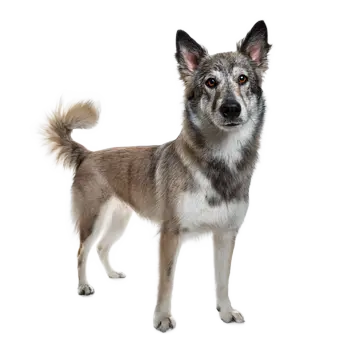
Chien Norvegien De Macareau

Norwegian Lundehund
Gallery coming soon

Furry Critter Network Etsy Shop

Quick Facts

🐕 Breed Group
Non-Sporting
📏 Size Category
Small
📏 Height
12-15 inches
⚖️ Weight
13-15 pounds
⏱️ Life Expectancy
12-15 years
🧥 Coat Type
Dense double coat
🎨 Coat Colors
Fallow, Reddish-brown, Tan, White with red markings, Black markings, Gray
😀 Temperament
Alert, Loyal, Energetic, Protective, Independent
🏃 Exercise Needs
Moderate to High
🎓 Training Difficulty
Moderate (independent)
👶 Good with Children
Yes
🐾 Good with Other Pets
Yes, with socialization

Other Names & Breed Recognition

The Chien Norvegien De Macareau carries a name that translates directly to Norwegian Puffin Dog in French, reflecting both its geographical origins and its original purpose. This rare breed has accumulated various names throughout its history, each illuminating aspects of its unique heritage and the critical role it played in the economy and survival of remote Norwegian island communities.

The name Chien Norvegien De Macareau represents the French designation for this breed, with macareau being the French word for puffin. This name directly corresponds to the breed's Norwegian name, Lundehund, which combines lunde (the Norwegian word for puffin) with hund (meaning dog). Both names emphasize the breed's historical function as a specialized puffin hunter, a role that shaped every aspect of its physical development and temperament.

The puffin dog designation appears in various languages and forms throughout breed literature. In English, the breed is commonly called the Norwegian Puffin Dog alongside its formal registered name of Norwegian Lundehund. This descriptive name immediately conveys the breed's purpose to those unfamiliar with Norwegian terminology, helping explain why such an unusual dog with extraordinary physical adaptations came to exist.

Historical records from the Lofoten Islands, where the breed originated and was preserved, sometimes refer to these dogs simply as the birds' dogs or cliff dogs in local dialects. These informal names reflected the dogs' working partnership with islanders who depended on puffin hunting for survival. The birds and their eggs provided essential food and trade goods for communities where harsh conditions limited other food sources.

The breed's extreme rarity throughout most of its modern history has affected its recognition and naming conventions internationally. For many decades, so few individuals existed that the breed remained virtually unknown outside Norway. Even within Scandinavia, the Chien Norvegien De Macareau was considered nearly extinct multiple times during the 20th century, limiting opportunities for widespread recognition or standardized naming.

The Norwegian Kennel Club officially recognized the breed in the 1940s, establishing formal breed standards and registration protocols that helped coordinate preservation efforts. This recognition provided a foundation for rebuilding the breed from the handful of surviving dogs and created official documentation of breed characteristics for future generations.

International recognition came much later for this rare breed. The American Kennel Club granted full recognition to the Norwegian Lundehund in 2011, making it one of the newest breeds in AKC history despite being among the oldest in actual existence. Prior to full recognition, the breed had been eligible to compete in AKC events through the Foundation Stock Service and Miscellaneous Class.

The United Kennel Club recognizes the breed under its official name, providing alternative competition venues and registration services for owners. The Canadian Kennel Club and other national registries also recognize the breed, enabling international exchange of breeding stock and competitive opportunities.

The Federation Cynologique Internationale classifies the Chien Norvegien De Macareau in Group 5 (Spitz and Primitive Types), Section 2 (Nordic Hunting Dogs). This classification reflects the breed's origins as a specialized hunting dog in the Nordic region and its place within the Spitz family of breeds that share certain physical characteristics including erect ears, curled tails, and double coats adapted to cold climates.

Breed clubs dedicated to the Chien Norvegien De Macareau exist in Norway, the United States, and other countries where the breed has established a presence. The Norwegian Lundehund Association of America serves as the parent club for the breed in the United States, working to promote responsible breeding, educate owners, and preserve the breed's unique characteristics. The Norsk Lundehund Klubb in Norway coordinates preservation efforts in the breed's homeland.

Chien Norvegien De Macareau Organizations & Standards

The Chien Norvegien De Macareau benefits from dedicated breed organizations and carefully developed standards that guide preservation efforts for one of the world's rarest dog breeds. These structures are particularly important for this breed, given its extremely limited gene pool and the unique physical characteristics that must be maintained for the breed to retain its distinctive identity.

The American Kennel Club granted the Norwegian Lundehund full recognition in 2011, placing it in the Non-Sporting Group. This recognition marked a significant milestone for a breed that had struggled to survive throughout the 20th century and represented the culmination of efforts by American breed enthusiasts to establish the breed in the United States. Prior to full recognition, the breed progressed through the AKC's Foundation Stock Service and Miscellaneous Class.

The AKC breed standard describes the Chien Norvegien De Macareau as a small, rectangular Spitz breed with unique characteristics that distinguish it from all other breeds. The standard emphasizes the breed's essential physical traits, including its polydactyl feet with a minimum of six toes on each foot, its flexible neck capable of bending backward to touch the spine, and its ears that can fold shut to protect the ear canal.

The standard specifies that males should stand between 13 and 15 inches at the withers, while females are slightly smaller at 12 to 14 inches. Weight should be proportional to height, typically ranging from 13 to 15 pounds for a properly conditioned adult. The breed should present a rectangular outline when viewed from the side, slightly longer than tall, with moderate bone and good muscular development.

Coat standards describe a dense, rough outer coat with a soft undercoat providing insulation appropriate for the breed's Arctic origins. Acceptable colors include fallow, reddish-brown, and tan with black hair tips, often with white markings, or white with red or dark markings. The coat changes seasonally, with fuller development in winter months.

The United Kennel Club recognizes the breed and maintains standards that align with other major registries while reflecting UKC's focus on functional, working-type dogs. UKC recognition provides alternative competitive venues for breed enthusiasts and supports the breed's development in North America.

The Canadian Kennel Club recognizes the Chien Norvegien De Macareau, enabling Canadian breeders to register dogs and participate in conformation and other events. Cross-border cooperation between American and Canadian breed clubs helps coordinate breeding efforts across North America.

The Federation Cynologique Internationale classifies the breed in Group 5, Section 2, among Nordic Hunting Dogs. The FCI standard serves as the reference document for breed clubs throughout Europe and other regions where FCI member organizations operate. This international standard helps maintain consistency in breeding goals across different countries and facilitates exchange of breeding stock.

The Norwegian Kennel Club holds particular significance for this breed, having provided official recognition in the 1940s when the breed teetered on the brink of extinction. Norwegian breed standards reflect the traditional understanding of breed type passed down through generations of Lundehund fanciers in the Lofoten Islands and elsewhere in Norway.

The Norsk Lundehund Klubb serves as the parent club for the breed in Norway and coordinates preservation efforts including the breed's ongoing outcross project. This project, undertaken in cooperation with the Norwegian Kennel Club and international partners, aims to increase genetic diversity by carefully introducing genes from related breeds while maintaining essential Lundehund characteristics.

The Norwegian Lundehund Association of America functions as the parent club in the United States, working with the AKC to maintain breed standards and promote responsible ownership. The club provides breeder referrals, educational resources, and support for owners navigating the unique challenges of this rare breed. Regional Lundehund clubs in various areas organize events and provide local community for breed enthusiasts.

Breed standards universally emphasize preserving the Chien Norvegien De Macareau's unique physical traits that enabled its original function. The six-toed feet, flexible joints, and foldable ears are not merely interesting curiosities but essential breed characteristics that define the breed's identity and must be maintained through careful breeding selection.

Kennel Club Recognition

Chien Norvegien De Macareau Physical Description

The Chien Norvegien De Macareau possesses one of the most extraordinary collections of physical adaptations found in any domestic dog breed. These unique characteristics evolved over centuries to enable the breed to perform its specialized function of hunting puffins in the treacherous cliff environments of Norway's remote islands. Understanding these remarkable features helps explain why this breed appears and moves unlike any other.

Standing between 12 and 15 inches at the shoulder and weighing between 13 and 15 pounds, the Chien Norvegien De Macareau is a small, rectangular Spitz-type dog that appears well-balanced and athletic despite its modest size. The body is slightly longer than tall when measured from point of shoulder to point of buttock compared to height at withers. Despite the small stature, these dogs possess surprising strength and endurance that reflects their demanding working heritage.

The breed's most famous feature is its polydactyl feet, each bearing at least six fully developed, muscled, and jointed toes compared to the standard five toes on front feet and four on rear feet found in most dog breeds. These extra toes provide exceptional grip and traction on slippery, rocky surfaces, enabling the dogs to navigate treacherous cliff faces where puffins nested. The feet appear larger and more snowshoe-like than typical dog feet due to this extra digit structure. The elongated rear footpads further enhance the breed's climbing abilities.

Equally remarkable is the Chien Norvegien De Macareau's neck flexibility, described as elastic in breed standards. These dogs can bend their heads backward to touch their spines, a capability shared with only the New Guinea Singing Dog, Bornean Dingo, and Australian Dingo. This extraordinary range of motion allowed the dogs to turn around in narrow cliff crevices and tunnels where puffins nested, essential for navigating the tight spaces they entered during hunting.

The shoulder flexibility of this breed similarly exceeds normal canine range of motion. The Chien Norvegien De Macareau can extend its forelegs flat to the side at a 90-degree horizontal angle to the body, much like human arms. This adaptation helped the dogs hug cliff faces during climbing and squeeze through narrow openings in rocky terrain. The overall joint flexibility throughout the body enables movements impossible for most other breeds.

The ears of the Chien Norvegien De Macareau demonstrate yet another unique adaptation. These pricked, triangular ears can fold shut by bending forward or backward, creating a near-tight seal that protects the ear canal from dirt, debris, and water. This ability protected the dogs' hearing during their work in dusty rock crevices and sea caves where debris constantly threatened to enter the ear canal. The ears are medium-sized and set high on the head.

The head is wedge-shaped with a slightly domed skull and moderate stop. The muzzle is medium-length and tapers slightly toward the nose. The eyes are medium-sized, almond-shaped, and yellowish-brown to brown in color, conveying an alert, intelligent expression. The nose and lips should be dark, providing a contrast to the lighter coat colors typical of the breed.

The Chien Norvegien De Macareau's coat consists of a dense, rough outer layer over a soft, thick undercoat. This double coat provides insulation against the harsh Arctic climate of the breed's origin. The coat lies relatively close to the body, with shorter hair on the head and front of the legs and thicker growth around the neck (particularly in males) and the back of the thighs. Typical coloring includes fallow, reddish-brown, or tan with black hair tips and white markings, or white with darker markings.

The tail is set high and carried in a ring or loosely curled over the back when the dog is alert or moving. The tail carriage is typical of Spitz breeds and contributes to the breed's alert, confident appearance. When relaxed, the tail may hang in a slight curve.

Movement should be light, elastic, and effortless, reflecting the breed's agility and athletic heritage. The unique joint flexibility allows for an unusually fluid range of motion during movement. The gait should appear smooth and efficient, covering ground easily without wasted effort.

A notable anatomical peculiarity connects this breed to ancient dogs: some Chien Norvegien De Macareau individuals are missing one tooth on either side of their jaw, a trait shared with the now-extinct Varanger dog. This dental anomaly, along with other primitive characteristics, suggests the breed's ancient lineage and relatively unchanged nature over centuries of development.

Affection Level
The Chien Norvegien De Macareau forms strong bonds with family members and shows genuine affection to those within its trusted circle. These dogs enjoy spending time with their people and can be surprisingly cuddly despite their independent working heritage.
Good With Children
Chien Norvegien De Macareau dogs generally get along well with children when properly socialized. Their playful nature and moderate size make them good companions for families, though supervision is recommended with younger children who may not yet understand gentle handling.
Good With Other Dogs
When properly socialized, the Chien Norvegien De Macareau typically gets along well with other dogs. Their friendly, non-aggressive nature allows them to integrate well into multi-dog households, though early introductions help establish positive relationships.
Shedding Level
The Chien Norvegien De Macareau has a dense double coat that sheds moderately throughout the year and heavily during seasonal coat changes. Regular brushing helps manage loose hair, but owners should expect significant shedding especially in spring and fall.
Grooming Needs
Grooming requirements are moderate for this breed. Regular brushing several times weekly maintains coat health, with increased frequency during heavy shedding periods. The coat is relatively easy to care for and does not require professional trimming.
Drooling Level
The Chien Norvegien De Macareau is a very clean breed with minimal drooling. Their neat habits and dry mouths make them pleasant household companions who do not leave saliva trails on furniture or floors.
Coat Length
This breed has a medium-length double coat with a harsh, dense outer layer and a soft, thick undercoat. The coat is shorter on the head and front of the legs, becoming thicker around the neck and the back of the thighs for protection against harsh weather.
Openness To Strangers
Chien Norvegien De Macareau dogs may be initially reserved with unfamiliar people, taking time to assess strangers before warming up. Proper socialization helps them become more comfortable with new people, though they may always maintain some natural caution.
Playfulness
This breed possesses an enthusiastic, playful spirit that delights families. Chien Norvegien De Macareau dogs enjoy interactive games, outdoor adventures, and activities that challenge both body and mind, maintaining their youthful exuberance throughout their lives.
Protective Nature
While not aggressive, the Chien Norvegien De Macareau displays appropriate alertness and will notify owners of unusual activity or visitors. Their watchful nature makes them effective alarm dogs, though they are too friendly to serve as serious protection dogs.
Trainability
Intelligent but independent, this breed can be challenging to train due to its history of working autonomously. Positive reinforcement, patience, and creative approaches work best, as these clever dogs may choose to ignore commands they find pointless.
Energy Level
The Chien Norvegien De Macareau is an active, energetic breed that requires regular exercise and mental stimulation. They thrive with daily activity including walks, hikes, and play sessions that satisfy their need for physical and mental engagement.

Chien Norvegien De Macareau History & Development

The Chien Norvegien De Macareau possesses one of the most fascinating and precarious histories of any dog breed, having survived repeated brushes with extinction to become one of the rarest breeds recognized by major kennel clubs today. The breed's story is inextricably linked to the remote Lofoten Islands of Norway and the puffin hunting tradition that sustained human communities in this harsh Arctic environment for centuries.

The exact origins of the Chien Norvegien De Macareau remain uncertain, though written records referencing the breed date back to the early 1400s, and the breed is thought to be considerably older. No one knows precisely how long these unique dogs have inhabited the remote islands of northern Norway, but archaeological and genetic evidence suggests they represent an ancient, relatively unchanged lineage. The breed's primitive characteristics and genetic distinctiveness indicate it may be among the oldest domestic dog breeds still in existence.

The breed developed on the Lofoten Islands, an archipelago off the northwestern coast of Norway above the Arctic Circle. In this harsh environment, resources were scarce and inhabitants depended heavily on what the sea and cliffs could provide. Puffins nested in enormous colonies on steep cliff faces, building their nests in narrow rocky crevices inaccessible to humans. These birds and their eggs represented essential food sources and trade commodities for island communities.

The Chien Norvegien De Macareau evolved specifically to retrieve puffins and eggs from these inaccessible nesting sites. Every one of the breed's remarkable physical adaptations served this specialized function. The six-toed feet provided grip on slippery rocks, the flexible neck allowed turning in tight spaces, the foldable ears protected hearing in dusty tunnels, and the extraordinary joint flexibility enabled navigation through narrow cliff passages. No other dog could perform this crucial work.

For centuries, these dogs were highly valued working partners. Households often kept multiple Chien Norvegien De Macareau dogs, sometimes as many as a dozen, for puffin hunting expeditions. The best dogs could retrieve up to 80 birds per day. Nothing went to waste: fresh meat that couldn't be consumed immediately was salted and preserved for winter, puffin down was used for quilts and pillows, and leftovers were fed to the dogs themselves. The breed's value was considerable, with good dogs reportedly worth more than a cow.

The breed's fortunes changed dramatically when new puffin hunting methods emerged. The introduction of nets made capturing puffins faster and easier than sending dogs into cliff crevices. Combined with government taxes on dog ownership, these developments made keeping specialized puffin dogs economically unfeasible for most families. By around 1900, the breed survived primarily in the isolated village of Mostad on the island of Vaeroy, where traditional methods persisted longer than elsewhere.

The 20th century brought repeated extinction threats to the Chien Norvegien De Macareau. When puffins became a protected species under Norwegian law, the breed's traditional function disappeared entirely. The dogs that had been essential working partners for centuries suddenly became unemployed oddities with no purpose. Their numbers dwindled to the edge of oblivion.

World War II and its aftermath delivered devastating blows to the surviving population. A canine distemper outbreak struck Vaeroy and surrounding islands, reducing the breed's population to just two dogs. Dedicated breeders worked to rebuild from this tiny foundation, but in 1963, another distemper outbreak decimated the population again. This time, only six dogs survived: one on Vaeroy and five in Hamar in eastern Norway, all five of which came from the same mother.

This catastrophic bottleneck created the genetic challenges that continue to affect the breed today. Every living Chien Norvegien De Macareau descends from these six survivors, with four of them providing most of the genetic contribution to subsequent generations. The lack of genetic diversity has had lasting consequences for breed health and fertility.

Eleanor Christie, a Norwegian breeder, played a crucial role in saving the breed during its darkest hours. Working with the surviving dogs and following strict breeding guidelines developed by Swedish geneticist Per-Erik Sundgren, Christie and other dedicated fanciers slowly rebuilt the population. The Norsk Lundehund Klubb was established to coordinate preservation efforts and maintain breeding records.

Despite these heroic efforts, the Chien Norvegien De Macareau remains one of the world's rarest breeds. Current estimates suggest approximately 1,500 dogs exist worldwide as of recent counts, with about 900 in Norway. The American Kennel Club ranks the breed 197th out of 197 recognized breeds based on registration numbers, reflecting its extreme rarity even among dedicated dog fanciers.

Modern preservation efforts include an outcross project coordinated by the Norwegian Lundehund club in cooperation with the Norwegian Kennel Club and international partners. This program carefully introduces genetic material from three related breeds: the Norwegian Buhund, Icelandic Sheepdog, and Norrbottenspets. These breeds share geographic proximity and some characteristics with the Chien Norvegien De Macareau, making them suitable sources for expanding the gene pool while maintaining essential breed characteristics.

The breed's journey from essential working dog to near extinction to rare companion breed represents one of the most dramatic preservation stories in canine history. Today's Chien Norvegien De Macareau no longer hunts puffins but serves as a living link to Norway's cultural heritage and a testament to what dedicated breeders can accomplish against seemingly impossible odds.

Chien Norvegien De Macareau Temperament & Personality

The Chien Norvegien De Macareau possesses a temperament shaped by centuries of working independently in challenging environments, resulting in a personality that combines loyalty and affection with notable independence and problem-solving ability. Understanding this breed's character helps owners appreciate both its charms and its challenges while building successful relationships with these rare and remarkable dogs.

The breed's working heritage profoundly influences its modern personality. For centuries, these dogs were expected to enter treacherous cliff environments, navigate independently to locate puffin nests, solve problems without human guidance, and make decisions that affected their success and survival. This history produced dogs that think for themselves and may not always defer to human direction. Owners describe the Chien Norvegien De Macareau as having an almost catlike temperament: clean, agile, independent, and sometimes mischievous.

Despite their independence, Chien Norvegien De Macareau dogs form strong bonds with their families and show genuine affection to those they trust. They enjoy spending time with their people and can be surprisingly cuddly when in the mood. Their loyalty runs deep, and they typically become devoted companions who take pleasure in family activities and shared adventures. The key is earning their trust through fair, consistent treatment.

Alert and watchful, the Chien Norvegien De Macareau makes an effective alarm dog despite its small size. These dogs notice unusual sounds or activities and will alert their families to potential concerns. Their protective instincts are present but measured; they are more likely to bark warnings than to display aggressive behavior. This alertness, combined with their naturally cautious approach to strangers, means they typically take time to warm up to unfamiliar people.

The breed's intelligence is immediately apparent to anyone who spends time with a Chien Norvegien De Macareau. These dogs are clever problem-solvers who enjoy mental challenges and can figure out solutions that impress their owners. However, this intelligence combined with their independent nature means they may choose to ignore commands they find pointless or decide to pursue their own agendas when owners are not paying attention.

Playfulness characterizes the Chien Norvegien De Macareau's approach to life. These dogs enjoy interactive games, outdoor adventures, and activities that challenge both body and mind. They maintain their youthful enthusiasm well into adulthood and can be entertaining companions who bring joy to their families. Their playful nature makes them good matches for active families who enjoy participating in their dog's activities.

The breed's relationship with children is generally positive when dogs are properly socialized and children understand appropriate interaction. Chien Norvegien De Macareau dogs can be wonderful playmates for children who treat them with respect. Their moderate size makes them suitable for family life, though very young children should be supervised to ensure interactions remain safe and positive for both parties.

With other dogs, the Chien Norvegien De Macareau typically displays a friendly, non-aggressive attitude. When properly socialized, they integrate well into multi-dog households and enjoy canine companionship. Their working heritage did not involve competition with other dogs, so they lack the same-sex aggression that characterizes some breeds with fighting or guarding backgrounds.

The breed's curiosity and problem-solving abilities can sometimes create challenges. These dogs are known as escape artists who can find ways out of seemingly secure enclosures. Their unique physical abilities, including extraordinary flexibility and dexterous feet, enable them to accomplish escapes that would be impossible for other breeds. Secure containment requires anticipating their capabilities and eliminating potential escape routes.

Digging represents another behavioral tendency inherited from the breed's working past. Dogs that excavated puffin burrows retain strong digging instincts that may express themselves in gardens, yards, or even indoor carpets and furniture. Providing appropriate outlets for this behavior helps redirect the instinct constructively.

Sensitivity characterizes the Chien Norvegien De Macareau's emotional makeup. These dogs respond poorly to harsh treatment, raised voices, or confrontational handling. They thrive with patient, positive approaches that build trust rather than create fear or resentment. Once trust is damaged, it can be difficult to rebuild, making gentle handling essential from the beginning.

The Chien Norvegien De Macareau requires significant mental stimulation to remain content. Bored dogs may develop problematic behaviors including excessive barking, destructive chewing, or escape attempts. Puzzle toys, training sessions, nose work, and other mentally engaging activities help satisfy this breed's need for cognitive challenges. An engaged Chien Norvegien De Macareau is a happy Chien Norvegien De Macareau.

Chien Norvegien De Macareau Family Life & Living Requirements

Integrating a Chien Norvegien De Macareau into family life requires understanding this rare breed's specific needs and ensuring the household can provide appropriate environments and activities. These unique dogs can become wonderful family companions when their physical, mental, and social requirements are met, but their rarity and particular characteristics demand thoughtful consideration before acquisition.

The Chien Norvegien De Macareau's moderate size makes it adaptable to various living situations, including apartments, provided its exercise and mental stimulation needs are met. These are active dogs that require regular activity, but they do not need enormous yards or rural acreage to thrive. What they do need is committed owners who will provide daily exercise, mental challenges, and companionship regardless of living space size.

The breed's tendency toward barking should be considered by prospective owners in shared housing situations. Chien Norvegien De Macareau dogs are alert and vocal, readily announcing visitors, unusual sounds, and anything else that captures their attention. While training can moderate excessive barking, the breed's natural alertness means they will likely never be silent dogs. Neighbors in apartments or condominiums may not appreciate this characteristic.

Secure containment is essential for Chien Norvegien De Macareau owners. These dogs are renowned escape artists whose unique physical abilities enable them to find exits that would stump other breeds. Their flexible bodies can squeeze through surprisingly small openings, their extra-toed feet provide exceptional climbing ability, and their problem-solving intelligence helps them identify weaknesses in fencing or gates. Yards must be carefully secured with attention to potential escape routes both over, under, and through barriers.

Families with children often find the Chien Norvegien De Macareau to be a good match. The breed generally gets along well with kids, enjoying the play opportunities and energy that children bring. Their moderate size reduces risks of accidental injuries from either direction. However, young children should be supervised during interactions and taught appropriate handling to ensure positive experiences for both child and dog.

The breed's energy level suits active families who enjoy outdoor activities. Chien Norvegien De Macareau dogs make excellent hiking companions, their natural agility and endurance serving them well on trails. They enjoy exploring new environments and participating in adventures with their families. Sedentary households may struggle to meet this breed's activity needs, potentially leading to behavioral problems stemming from insufficient exercise.

Multi-pet households can work well for Chien Norvegien De Macareau dogs when introductions are handled properly. Their generally friendly disposition toward other dogs makes them compatible with existing canine family members. However, their prey drive may create challenges with smaller pets including cats, birds, or small mammals, depending on individual temperament and early socialization experiences.

The breed's independence influences what type of household suits it best. Chien Norvegien De Macareau dogs do not demand constant attention in the manner of some breeds, but they should not be isolated or ignored. They thrive when included as family members with regular interaction while being allowed their space when they need it. Balance between togetherness and independence characterizes ideal living arrangements.

Work schedules affect suitability for Chien Norvegien De Macareau ownership. While more independent than some breeds, these dogs still require daily interaction, exercise, and mental stimulation that cannot be provided if the family is away for extended periods. Households where someone is home for significant portions of the day, or where schedules allow for midday visits, provide better environments than those where dogs are routinely left alone for eight or more hours.

Climate considerations matter for this Arctic-adapted breed. The Chien Norvegien De Macareau's dense double coat provides excellent insulation against cold weather but can make hot climates challenging. In warm regions, owners must provide air-conditioned indoor spaces and limit exercise during the hottest parts of the day. The breed is not well-suited to permanently outdoor living in any climate.

Financial considerations extend beyond acquisition costs, which can be substantial for this rare breed. Potential health issues, particularly digestive problems common to the breed, may result in ongoing veterinary expenses. Pet insurance is strongly recommended. Quality food appropriate for the breed's needs, grooming supplies, training classes, and other necessities contribute to total ownership costs.

Finding a Chien Norvegien De Macareau requires patience and dedication. The breed's extreme rarity means long waits for puppies from responsible breeders, who may have extensive application processes and restrictions on placements. Prospective owners should begin their search well in advance and be prepared to demonstrate their ability to meet the breed's needs before being considered for a puppy.

Chien Norvegien De Macareau Training & Exercise Needs

Training and exercising a Chien Norvegien De Macareau requires approaches that respect the breed's independent nature while channeling its intelligence and energy constructively. These unique dogs present training challenges quite different from more biddable breeds, but owners who understand their character can build rewarding partnerships based on mutual respect and cooperation.

The foundation of successful Chien Norvegien De Macareau training lies in understanding that these dogs were bred to work independently, making decisions without human guidance in challenging environments. This heritage produces dogs that think for themselves and may question the value of commands they find pointless. Unlike breeds developed for instant obedience, the Chien Norvegien De Macareau evaluates requests and decides whether compliance serves its interests.

Positive reinforcement methods work best with this sensitive, intelligent breed. Treats, praise, and play serve as effective motivators that make training worthwhile from the dog's perspective. Harsh corrections, physical punishment, or confrontational methods typically backfire, creating resistance, fear, or damaged trust rather than cooperation. Patient, consistent, and positive approaches produce the best results.

Training sessions should remain short and engaging to maintain the Chien Norvegien De Macareau's interest. These dogs become bored with repetitive drills and may simply walk away from training they find tedious. Varying exercises, incorporating games, and ending sessions on positive notes maintains enthusiasm. Multiple brief sessions throughout the day often produce better results than extended training periods.

Socialization represents a critical training priority for Chien Norvegien De Macareau puppies. The breed's natural wariness with strangers can develop into fearfulness or inappropriate behavior without proper early exposure to varied people, places, sounds, and experiences. Puppy socialization classes provide controlled environments for positive interactions while laying groundwork for basic obedience. Ongoing socialization throughout life helps maintain appropriate responses to novel situations.

Recall training deserves particular emphasis given the breed's escape artist tendencies and independent nature. Teaching a reliable response to being called requires making coming to the handler highly rewarding while building consistent habits through practice in gradually more distracting environments. However, given the breed's prey drive and potential for selective hearing, off-leash exercise should occur only in securely enclosed areas.

Exercise needs for the Chien Norvegien De Macareau are moderate to high, reflecting the breed's working heritage and natural energy. Daily activity totaling 45 minutes to an hour or more, divided between walks, play sessions, and other activities, keeps most individuals satisfied. The breed's natural agility and endurance make them excellent hiking companions who enjoy exploring varied terrain with their families.

Mental stimulation is equally important as physical exercise for this intelligent breed. Puzzle toys that dispense treats challenge their problem-solving abilities, while nose work and tracking games engage their natural instincts. Training sessions themselves provide mental engagement, giving the dog decisions to make and problems to solve. A mentally stimulated Chien Norvegien De Macareau is less likely to develop problematic behaviors stemming from boredom.

The breed's unique physical abilities suggest activities that capitalize on their natural talents. Agility training appeals to their athleticism and flexibility, providing both physical exercise and mental challenges. Their extraordinary climbing ability and joint flexibility enable movements on agility equipment that would be impossible for most breeds. Rally, barn hunt, and other activities also suit the Chien Norvegien De Macareau's capabilities.

Digging represents a natural behavior that requires management rather than elimination. Providing designated digging areas where this behavior is permitted helps redirect the instinct constructively. Attempting to stop digging entirely typically fails and creates frustration. Working with the breed's nature rather than against it produces better outcomes.

Leash training establishes important foundations for safe outings. The Chien Norvegien De Macareau should learn to walk politely on leash without pulling or lunging, responding to handler guidance when distractions appear. Given the breed's potential for escape and prey drive, reliable leash manners provide crucial safety during walks and outings.

Crate training provides the Chien Norvegien De Macareau with a secure den space while assisting with housetraining, travel, and management when supervision is not possible. Most dogs readily accept crate training when introduced positively, learning to view their crate as a comfortable retreat. Proper crate sizing ensures the dog can stand, turn around, and lie down comfortably.

Consistency from all family members is essential for successful training. The Chien Norvegien De Macareau's intelligence means they quickly identify inconsistencies and exploit them. Everyone who interacts with the dog should follow the same rules and expectations to prevent confusion and establish clear boundaries. Mixed messages undermine training progress and may create behavior problems.

Chien Norvegien De Macareau Health Concerns

The Chien Norvegien De Macareau faces significant health challenges stemming from the extreme genetic bottleneck that nearly drove the breed to extinction in the mid-20th century. With an average lifespan of 12 to 15 years, these dogs can live relatively long lives, but prospective owners should understand the health issues common to this rare breed and be prepared for potential medical needs throughout their dog's life. Intestinal lymphangiectasia, commonly known as Lundehund Syndrome, represents the most significant health concern affecting this breed. This protein-losing intestinal condition impairs the dog's ability to absorb nutrients from food, causing intermittent diarrhea, vomiting, weight loss, and fluid accumulation in the abdomen.

Common Health Issues

  • Patellar luxation affects some Chien Norvegien De Macareau dogs, causing the kneecap to slip out of its normal position.
  • Eye problems including primary lens luxation and progressive retinal atrophy have been documented in the breed, though at lower frequencies than the digestive issues.
  • Allergies manifest in some individuals, appearing as skin irritation, itching, or digestive problems in response to environmental or food triggers.
  • Hypothyroidism can develop in Chien Norvegien De Macareau dogs, causing symptoms including lethargy, weight gain, hair loss, and skin problems.
  • Dental care including daily brushing and professional cleanings prevents periodontal disease, maintaining oral health throughout the dog's life and preventing bacteria from spreading to other body systems.
  • Health screening including digestive function monitoring, eye examinations, and thyroid testing helps identify conditions early when intervention is most effective, allowing proactive management rather than crisis response.

Preventive Care & Health Monitoring

  • Regular eye examinations allow early detection of developing conditions and intervention when appropriate.
  • Regular veterinary examinations at least twice yearly allow early detection of developing health problems and provide opportunities to discuss preventive care strategies appropriate to this breed's particular vulnerabilities.
  • Dental care including daily brushing and professional cleanings prevents periodontal disease, maintaining oral health throughout the dog's life and preventing bacteria from spreading to other body systems.
  • Weight management through appropriate diet and exercise prevents complications from obesity, which can stress joints and organs while worsening any underlying digestive conditions.

Working closely with veterinarians familiar with the breed's specific needs helps owners develop appropriate feeding protocols that support their individual dog's health requirements. A 30% pre-study found that deaths before age 11 occurred as a consequence of Lundehund Syndrome, with another 10% from other gastrointestinal diseases.

Chien Norvegien De Macareau Grooming & Maintenance

Grooming and maintaining a Chien Norvegien De Macareau involves regular attention to their dense double coat along with standard care routines that keep the dog comfortable and healthy. While not requiring professional grooming or elaborate maintenance, the breed does need consistent attention to prevent coat problems and address other health and hygiene needs.

The Chien Norvegien De Macareau's coat consists of a harsh, dense outer layer over a soft, thick undercoat that provides insulation against harsh weather. This double coat requires regular brushing to remove loose hair, prevent matting, and distribute natural skin oils. During normal periods, brushing two to three times weekly maintains coat health. During heavy shedding seasons in spring and fall, daily brushing helps manage the substantial amount of loose hair these dogs produce.

Shedding is significant in this breed, particularly during seasonal coat changes. The Chien Norvegien De Macareau blows its undercoat twice yearly, releasing large quantities of loose fur over several weeks. During these periods, daily brushing with an undercoat rake or slicker brush removes dead hair before it accumulates on furniture, flooring, and clothing. Owners should expect to find hair throughout the home despite regular grooming efforts.

Bathing should occur every few weeks or as needed when the dog becomes dirty or develops odor. The breed's coat is relatively easy to clean, though thorough wetting of the dense undercoat requires patience. Use a gentle shampoo formulated for dogs, working the product through both coat layers. Thorough rinsing is essential to remove all shampoo residue, which could cause skin irritation if left behind. Complete drying, including the dense undercoat, prevents skin problems that can develop when moisture is trapped close to the skin.

The Chien Norvegien De Macareau's unique feet require special attention. The extra toes and their associated nails need regular inspection and trimming. With six or more toes per foot, nail care takes longer than for typical dogs, and all nails must be maintained to prevent overgrowth that could affect gait or cause discomfort. Check between toes regularly for debris, mats, or foreign objects that might become lodged in the extra crevices.

Ear care involves regular inspection and cleaning to maintain ear health. The breed's unique ability to fold its ears shut originally served to protect the ear canal during work in dusty environments, but modern companion dogs still benefit from regular ear maintenance. Check ears weekly for signs of redness, discharge, unusual odor, or debris. Clean as needed using a veterinarian-recommended ear cleaning solution, avoiding deep insertion into the ear canal.

Nail trimming follows standard protocols, though the extra nails on this breed's feet extend the process. Regular trimming every two to three weeks prevents overgrowth that could affect movement or cause the nails to catch on objects. Many owners find that grinding tools provide more control than traditional clippers, allowing gradual shortening while avoiding cutting into the quick.

Dental care requires consistent attention throughout the Chien Norvegien De Macareau's life. Daily tooth brushing with dog-safe toothpaste helps prevent periodontal disease, which affects most dogs to some degree and can lead to tooth loss and systemic health problems. Dental chews and appropriate toys supplement brushing but do not replace it. Professional dental cleanings address tartar buildup and allow thorough examination of teeth and gums.

Eye care involves monitoring for any signs of irritation, discharge, or abnormality. The breed is not particularly prone to eye problems, but regular inspection helps identify any developing issues early. Gently wipe away any discharge with a soft, damp cloth. Consult a veterinarian if discharge becomes excessive, colored, or if the dog shows signs of eye discomfort.

The Chien Norvegien De Macareau's coat changes seasonally, with fuller development during winter months and lighter coverage in summer. This natural cycle should be allowed to proceed without interference. Avoid shaving or close-trimming the coat, as the double-layer structure provides important temperature regulation in both hot and cold conditions.

Professional grooming is not typically necessary for this breed, as their coat does not require trimming or styling. However, owners uncomfortable with nail trimming, ear cleaning, or other maintenance tasks may choose to use professional grooming services for these specific needs. Groomers familiar with Spitz-type breeds understand the coat characteristics and grooming requirements.