Bordeauxdog

Dogue de Bordeaux

Quick Facts

🐕 Breed Group
Working Group
📏 Size Category
Large
📏 Height
Males: 24-27 inches, Females: 23-26 inches
⚖️ Weight
Males: 110+ lbs, Females: 99+ lbs
⏱️ Life Expectancy
5-8 years
🧣 Coat Type
Short, fine, smooth
🎨 Coat Colors
Fawn (light to dark red-fawn)
😀 Temperament
Loyal, courageous, calm
🏃 Exercise Needs
Moderate
🎓 Training Difficulty
Moderate
👶 Good with Children
Yes, with supervision
🐾 Good with Other Pets
Variable, socialization required

Other Names & Breed Recognition

Bordeauxdog is the compound-form name used across much of continental Europe for the breed formally registered as the Dogue de Bordeaux. In German, Dutch, and other Germanic-language contexts, the practice of combining a place name with the word for dog -- Dogge, hond, or a close equivalent -- produces a single descriptive noun rather than the French article-noun construction. The result is Bordeauxdog: direct, geographically precise, and stripped of the formal Gallic framing that marks the official name.

The name carries real information. Bordeaux places the breed squarely in the Gironde region of southwestern France, where the breed developed over centuries in the shadow of the wine trade, the livestock economy, and the demands of large estate life. Dog, in its continental compound form, simply means what it says. There is nothing diminutive about it. If anything, the single-word construction suits the breed's character -- no flourish, no decoration, just the thing itself.

In German-speaking communities, you will encounter Bordeauxdogge, spelled with the German double-g, which reflects the same linguistic pattern used for Deutsche Dogge (Great Dane) and Bordeauxdogge side by side in historical breed catalogs. Dutch sources have used Bordeauxdog in a similar compound form for generations. The name appears in early FCI documentation and in the breed literature of central Europe as a working shorthand that breeders and enthusiasts have used comfortably alongside the French official name.

For someone searching in English with this spelling, the name is likely encountered through European breed registries, imported bloodline paperwork, or FCI-affiliated club publications. It surfaces in contexts where the breed is discussed not as a French cultural artifact but as a recognized working type with a continental pedigree. If you found this name on a breeder's documentation or in a European registry, you are looking at the same dog that AKC registers as the Dogue de Bordeaux and that the FCI has recognized under that French name since the mid-twentieth century.

Under any name, this is one of the oldest Molosser-type dogs in France. It was working centuries before anyone thought to standardize a name for it.

The Bordeauxdog name also occasionally appears in English-language contexts among enthusiasts who have spent time in continental Europe or who source dogs from FCI-affiliated breeders. It is not a corruption or a misspelling -- it is a legitimate alternate form with a documented history in European breed literature, and it points directly to the same ancient breed from the Gironde.

Bordeauxdog Organizations & Standards

The Dogue de Bordeaux Society of America is the AKC-recognized parent club for this breed in the United States. The Society maintains the breed standard, coordinates health initiatives, and serves as the primary point of contact between the AKC and the Dogue de Bordeaux community in North America. Breeders who follow responsible practices will be working within guidelines the Society has established, including health testing recommendations.

At the international level, the Federation Cynologique Internationale classifies this breed in Group 2, Section 2.1 under the Molossian and Mountain types. The FCI standard originated in France, where the Societe Centrale Canine holds the role of the breed's country of origin. This matters because the FCI standard is the reference point for breeders operating in continental European countries, including those who use the Bordeauxdog name in their native language. A breeder in Germany or the Netherlands advertising Bordeauxdogge or Bordeauxdog puppies is working from this same FCI standard.

In the United Kingdom, the Kennel Club registers the Dogue de Bordeaux in the Working Group. British breeders and the Dogue de Bordeaux Club of Great Britain operate under the KC's framework, which generally aligns with the FCI standard on structure and type.

The Orthopedic Foundation for Animals administers the CHIC (Canine Health Information Center) program for this breed. CHIC requirements for the Dogue de Bordeaux are defined in coordination with the parent club and address the breed's most documented structural and cardiac vulnerabilities. The full list of required tests and the CHIC number system are covered in the health section below.

For anyone sourcing a Bordeauxdog from a European breeder, confirming that the breeder works within an FCI-affiliated national club is the equivalent of confirming AKC parent club affiliation in the United States. These affiliations are not guarantees, but they establish a floor of accountability and connect the breeder to a network of health and breed standard oversight.

The Dogue de Bordeaux Health Foundation of America works alongside the parent club to advance health research specific to the breed. Their work on cardiac disease documentation and orthopedic screening protocols has been particularly meaningful given how concentrated the breed's known health risks are. A responsible breeder in any country will be familiar with this work and will be testing against the documented vulnerabilities, not just meeting registry minimums.

When evaluating any breeder using the Bordeauxdog name, the same standards apply as for any other source: ask for CHIC numbers, verify them independently at ofa.org, and confirm that the specific tests required for this breed have been completed and publicly recorded for both parents.

Kennel Club Recognition

  • American Kennel Club (AKC): Recognized in 2008, Working Group
  • United Kennel Club (UKC): Recognized, Guardian Dog Group
  • Canadian Kennel Club (CKC): Recognized, Working Group
  • FCI: Recognized, Group 2
  • The Kennel Club (UK): Recognized, Working Group

Bordeauxdog Physical Description

The Bordeauxdog is a massive, low-slung Molosser whose physical impact comes not from height but from the sheer concentration of mass in its frame. Males stand 24 to 27 inches at the withers and weigh well in excess of 110 pounds. Females are slightly smaller but still substantial. The overall impression is of a dog compressed horizontally -- broad through the chest, wide through the hips, with limbs set wide apart to support the body above them. When this dog moves, it moves with deliberate authority. There is no wasted motion.

The head is the breed's defining feature and one of the most distinctive in all of dogdom. It is enormous relative to body size -- the FCI standard specifies that the head circumference should equal or exceed the dog's height at the withers. The skull is broad and slightly rounded, the muzzle short and wide, the stop deep and pronounced. Skin folds across the forehead and around the muzzle are a natural feature of the head structure, not an exaggeration. The dewlap -- the loose fold of skin that hangs from the lower jaw down the throat -- is substantial and characteristic.

The jaw is undershot by design. The lower jaw extends beyond the upper, which is a defined structural trait in the breed standard, not a fault. The lips are thick and pendulous, which contributes directly to the breed's legendary drool output. This is a breed where a towel kept nearby is not optional.

Eyes are oval-shaped, set wide apart, and range in color from hazel to dark brown depending on the dog's mask coloration. The expression is attentive and serious, softened slightly by the heaviness of the brow. Ears are relatively small for the head size, set high, and hang forward against the cheek without folding tightly.

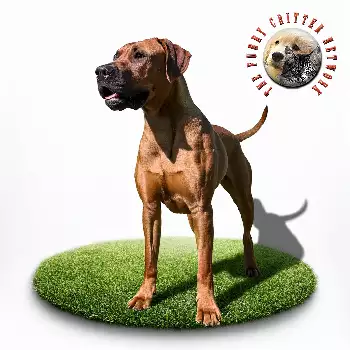
The coat is short, fine, and lies flat against the body. Color runs in shades of fawn, from a pale Isabella tone through golden yellow to a deep red-fawn. White markings on the chest and tips of the toes are permissible under the standard. The mask is a defining visual element: it may be black, brown (referred to as red mask in some standards), or absent entirely. Black-masked dogs tend to have darker overall pigmentation; maskless dogs carry a softer, warmer appearance. The mask type is inherited separately from base coat color and does not affect temperament or structure.

The chest is broad and deep, reaching to the elbows. The topline is level with a slight rise over the loin. The tail is thick at the base and tapers to a point, carried low at rest and raised but not curled over the back in motion. The overall silhouette is low, wide, and powerful from any angle.

The forequarters are heavily boned and set wide apart, with the shoulders sloping into a chest that makes the dog look nearly as wide as it is tall when viewed head-on. The hindquarters are well developed and carry significant muscle mass. The gait is free and ground-covering despite the dog's weight -- it moves with a purposeful rolling motion at the walk that reflects the structure underneath. At a trot, the movement is surprisingly efficient. The bone throughout is heavy enough that the overall impression in motion is one of contained mass rather than lumbering heaviness.

Built into the breed standard is an acknowledgment that this is a dog whose physical form is inseparable from its function. The massive head, the heavy bone, the broad chest -- all of it traces back to what the dog was bred to do and the size and strength required to do it. The physical description of the Bordeauxdog is a functional document as much as an aesthetic one.

Affectionate With Family
The Bordeauxdog is deeply devoted to its people, forming bonds that run bone-deep. This is not a dog that tolerates distance from those it loves.
Good With Young Children
Gentle in temperament, but sheer size requires vigilance around small children. Supervision is essential, not optional, with a dog this massive.
Good With Other Dogs
Same-sex aggression and territorial instincts are common. Careful socialization early on can improve coexistence, but this breed prefers to be the only dog.
Shedding Level
The short coat sheds steadily through the year. Regular brushing keeps loose hair under control and keeps the coat looking clean.
Coat Grooming Frequency
Coat care is simple and infrequent. The real grooming commitment is the face -- wrinkles and the dewlap need regular attention to stay healthy.
Drooling Level
Abundant drool is simply part of life with this breed. Keep a towel nearby and accept it as part of the deal.
Coat Type
A single-layered short coat that lies flat against the body. Minimal grooming demands, maximum ease of care.
Openness To Strangers
This breed is naturally reserved with people it does not know. Proper socialization prevents standoffishness from hardening into suspicion.
Playfulness Level
There is a surprising playfulness underneath the serious exterior, especially with family members it trusts. It just prefers play on its own terms.
Watchdog/Protective Nature
Few breeds match the Bordeauxdog's instinct to protect home and family. The combination of size, loyalty, and calm authority makes it a formidable guardian.
Adaptability Level
This is a large, powerful dog that does best with space and a consistent routine. It does not adjust easily to cramped living or unpredictable environments.
Trainability Level
Intelligent but strong-willed. The Bordeauxdog responds to calm, consistent leadership. Harsh methods backfire; patience and clarity get results.

Bordeauxdog History & Development

The history of this breed stretches back to the Molossian dogs that spread through Europe with Roman expansion. The large, heavy-boned guardian types that Roman armies kept for warfare and estate protection left a genetic legacy across the continent, and southwestern France proved to be one of the places where that legacy took root most distinctly. The region around Bordeaux -- defined by its rivers, its wine-producing estates, and its cattle trade -- needed a dog capable of managing livestock, guarding property, and confronting threats at a scale that smaller breeds could not.

For much of the breed's early history, regional variation was significant. Dogs in the Aquitaine differed in type from those bred further north or in other parts of France, and the name Dogue de Bordeaux was applied inconsistently before any formal standard existed. The first organized breed show in France that included the type occurred in the late nineteenth century, and the work of standardization began in earnest from that point. The French professor and cynologist Pierre Meguin is credited with early work describing and defining the breed's characteristics, though the standard he helped develop would be revised and refined repeatedly over the following century.

The name Bordeauxdog in the Germanic compound form reflects the breed's spread into central European countries during the nineteenth and early twentieth centuries, a period when French breed types were being encountered, documented, and integrated into the kennel club frameworks developing across Europe. German breeders and registries encountered the breed through trade, sport, and the general circulation of livestock and working dogs across the continent. The compound form Bordeauxdogge appeared in German breed literature of this era as a natural linguistic adaptation.

The twentieth century brought significant disruption. Both World Wars nearly ended the breed, as large dog populations across Europe were decimated by food shortages, displacement, and the general collapse of the agricultural and estate economies that had sustained working breeds. French breeders working after World War II rebuilt the population from a very small founding group, and this bottleneck has left a genetic signature on the breed that still shows in health survey data today.

AKC recognition came in 2008, bringing North American breed infrastructure and health registry programs to a breed that had already been established in Europe for decades under FCI auspices.

The name Bordeauxdog, in its various continental spellings, survived all of this history intact. It appears in pre-war German breed catalogs, in post-war FCI documentation, and in the working vocabulary of European breeders who never stopped using it alongside the official French name. For a breed whose population came so close to disappearing, the persistence of its names -- all of them -- is a small piece of evidence of how seriously the people who cared about it took its preservation.

The post-war rebuilding effort concentrated the gene pool significantly, and that history is directly relevant to the health picture the breed carries today. Understanding where the breed has been is not just historical interest -- it explains why the health testing protocols exist in the form they do, and why compliance with those protocols matters more here than in breeds with broader founding populations.

Bordeauxdog Temperament & Personality

There is a quality to the Bordeauxdog's temperament that is easy to misread on first encounter. The dog is large, serious-faced, and undemonstrative with strangers -- which reads to some people as aggression or coldness. It is neither. What you are seeing is the settled confidence of a breed that has never needed to perform or prove itself through noise and display. The Bordeauxdog is calm because it has nothing to prove. The threat is self-evident.

With its own people, this dog is something else entirely. The devotion is deep and not especially subtle. This breed wants to be near its family, and it will arrange itself in whatever room you are in if given the choice. It is not a velcro dog in the anxious sense, but it is absolutely a companion dog in the truest sense -- it orients toward the people it loves and is noticeably affected by their emotional states. Some owners describe a sensitivity that surprises them given the dog's physical imposingness.

The protective instinct is genuine and does not require training to activate. This breed will position itself between its family and a perceived threat without being asked. That instinct needs to be channeled through socialization and clear communication rather than amplified through confrontational training methods. A Bordeauxdog that has been well socialized understands that most strangers are not threats. One that has been kept isolated or trained to distrust unfamiliar people is genuinely dangerous at this size and weight.

Children in the family are typically accepted with the same deep loyalty extended to adult members, but the breed's size requires consistent supervision around small children. This is not a dog that intends harm -- it is a dog that can cause harm accidentally through sheer mass during play or movement. With older children who understand how to interact with a large dog, the relationship is often warmly protective on the dog's side.

With other dogs, the picture is more complicated. Same-sex dog aggression is a documented tendency in the breed, and the territorial instinct is strong enough that introducing unfamiliar dogs requires careful management. Many Bordeauxdogs live successfully as only dogs, which suits both the dog's preference and the practical realities of managing an animal this size.

What the breed asks of its owner is not extraordinary athleticism or specialized experience -- it asks for consistency, for clear communication, and for someone willing to take the dog's nature seriously rather than casually. The Bordeauxdog is not a difficult dog for a prepared owner. It can be a genuinely dangerous one for an owner who underestimated what they were taking on.

The combination of size, protective instinct, and deep loyalty means this breed functions best as a full member of the household -- known, managed, and understood. Dogs that are ignored, under-socialized, or left to fill the role of yard ornament do not develop well. The Bordeauxdog's temperament is the product of relationship as much as genetics.

Bordeauxdog Family Life & Living Requirements

Life with a Bordeauxdog is organized around the dog's size, its need for proximity, and the practical realities of a short-lived breed to which you will become deeply attached. None of these things should be minimized going in, and all of them are worth understanding before you commit.

The size question is real. This dog needs space to move, a yard large enough to allow outdoor time, and a vehicle that can accommodate it comfortably. Indoor furniture takes a beating. The drool is significant and constant -- experienced owners describe it as a lifestyle adjustment rather than an inconvenience. A dedicated towel near the feeding station, another near the door, and a general acceptance of the situation are the practical adaptations most owners make.

The lifespan reality is the harder conversation. A median lifespan of five to eight years is short by any measure, and some dogs from lines with cardiac vulnerability fall at the lower end of that range. Owners who have loved a Bordeauxdog typically describe knowing this going in but finding that the depth of the bond makes the loss no less difficult. This breed earns a ferocious loyalty from the people it lives with.

For families with children, the breed's gentle nature and protective instinct make for a genuinely warm dynamic when the dog has been well socialized and the children are old enough to interact appropriately. Toddlers and very young children require supervision simply because of the size differential. The dog is not the risk -- the physics are.

Heat is a real concern. The brachycephalic structure that gives this breed its distinctive head also restricts airflow, making the dog vulnerable to overheating in warm weather. Outdoor time in summer should be scheduled for cooler morning or evening hours. Access to shade, fresh water, and cool indoor space is not optional in warm climates.

The reward for taking all of this seriously is a dog that is genuinely extraordinary in its loyalty and its presence. Owners consistently describe a quality of relationship with the Bordeauxdog that they struggle to compare to other breeds -- a combination of protectiveness, attentiveness, and warmth that fills a home in a way that smaller or more independent dogs simply do not.

The short lifespan means that time with this dog is finite in a way that feels more present than with longer-lived breeds. Most owners who have lived with one describe that awareness as sharpening their appreciation for the relationship while it lasts.

Bordeauxdog Training & Exercise Needs

Training a Bordeauxdog requires a clear head about what you are doing and why. This is a large, powerful dog with an independent streak and an ancestral history of making decisions in the field without waiting for instruction. It is not resistant to training -- it is selective about who it accepts as a credible leader. Earn that credibility through consistency, calm authority, and positive reinforcement, and the dog will work with you. Approach it as a battle of wills and you will lose, or worse, you will win at the cost of the trust that makes the dog reliable.

Early socialization is not optional with this breed. Exposure to different people, environments, sounds, and situations during puppyhood shapes how the dog reads the world as an adult. A well-socialized Bordeauxdog understands that a stranger at the door is not automatically a threat. A dog that has not been socialized adequately may default to treating any unfamiliar person or situation as a danger -- and at 110-plus pounds, that is a serious problem.

Obedience basics should start early and continue consistently. Sit, stay, recall, and leash manners are non-negotiable at this size. Leash pulling from a fully grown Bordeauxdog is not an annoyance -- it is a physical hazard. Getting these behaviors established while the dog is still a manageable puppy size is considerably easier than correcting them in a 120-pound adult.

Exercise needs are moderate. This is not a high-energy working dog that requires hours of vigorous activity. Daily walks, some outdoor exploration, and the occasional longer outing satisfy the breed's physical needs without requiring athletic commitment from the owner. In warm weather, exercise should be timed to avoid heat. The breed's breathing structure means that exertion in heat carries real risk, and the dog will not always self-regulate as reliably as you might expect.

Mental engagement matters alongside physical activity. This is a thinking breed that benefits from having a role, even a simple one -- a routine, a task, a reason to pay attention. Training sessions kept short and purposeful serve both the dog's need for mental work and the owner's need for a reliably responsive companion. Fifteen focused minutes is more valuable than an hour of going through the motions.

Socialization and basic obedience are not one-time investments. Maintaining them through the dog's life, especially during adolescence when compliance tends to slip, keeps the dog reliable at its full adult size. A Bordeauxdog that is a pleasure to handle at two years is almost always one that was consistently worked with from eight weeks onward.

Bordeauxdog Health Concerns

The Bordeauxdog carries a significant health burden that any prospective owner should understand clearly before acquiring one. The combination of a narrow genetic base, a brachycephalic structure, and documented cardiac vulnerability produces a breed with serious known health risks and a lifespan that is short by companion dog standards.

The cumulative picture is a breed that needs attentive veterinary care, a vet who knows the breed-specific risks, and an owner who is not surprised by any of this going in. None of it is disqualifying for the right home. All of it requires acknowledgment.

Common Health Issues

  • Dilated cardiomyopathy (DCM) - A progressive heart condition and leading cause of early death in the breed, requiring specialist cardiac screening
  • Subvalvular aortic stenosis (SAS) - A congenital heart defect involving narrowing below the aortic valve that restricts blood flow
  • Hip dysplasia - Malformation of the hip joint causing pain, lameness, and arthritis, common in large heavy breeds
  • Elbow dysplasia - Abnormal development of the elbow joint leading to forelimb lameness and degenerative joint disease
  • Shoulder osteochondritis dissecans (OCD) - A developmental cartilage defect in the shoulder joint requiring surgical intervention in severe cases
  • Gastric dilatation-volvulus (bloat/GDV) - A life-threatening emergency where the stomach fills with gas and rotates on its axis
  • Skin fold dermatitis - Bacterial and yeast infections in facial wrinkles and the dewlap caused by trapped moisture
  • Von Willebrand's disease - An inherited bleeding disorder affecting the blood's ability to clot properly
  • Lymphoma - A cancer of the lymphatic system documented at notable rates in the breed
  • Mast cell tumors - A common skin cancer in dogs that occurs at elevated rates in this breed

Preventive Care & Health Monitoring

  • Annual cardiac evaluation by a board-certified veterinary cardiologist - Not a general practitioner exam
  • OFA hip, elbow, and shoulder evaluations before breeding age to identify structural unsoundness early - OFA hip, elbow, and shoulder evaluations before breeding age to identify structural unsoundness early
  • Regular facial fold cleaning and drying every few days to prevent bacterial and yeast overgrowth - Regular facial fold cleaning and drying every few days to prevent bacterial and yeast overgrowth
  • Awareness of GDV symptoms including unproductive retching - Abdominal distension, and restlessness, with a 24-hour emergency vet contact established
  • Heat management through scheduled outdoor time during cooler hours and constant access to shade and fresh water - Heat management through scheduled outdoor time during cooler hours and constant access to shade and fresh water
  • Regular veterinary wellness exams with a veterinarian experienced with the Dogue de Bordeaux and its specific health risks - Regular veterinary wellness exams with a veterinarian experienced with the Dogue de Bordeaux and its specific health risks
  • CHIC health testing verification for both parents when acquiring a puppy - Confirmed independently at ofa.org

Bordeauxdog Grooming & Maintenance

The Bordeauxdog's coat is about as low-maintenance as a dog coat gets. It is short, smooth, and requires nothing more than a weekly going-over with a rubber curry brush or grooming mitt to remove loose hair and distribute skin oils. Bathing is needed only when the dog is genuinely dirty, and the short coat dries quickly. Shedding is moderate and consistent through the year rather than concentrated in seasonal blowouts.

The face is a different matter and requires genuine routine attention. The skin folds above and around the muzzle, and the dewlap along the throat, need to be cleaned and dried regularly -- ideally every few days, more often in warm weather. Moisture that accumulates in these folds creates conditions for bacterial and yeast overgrowth that produce odor, discomfort, and eventually infection if left unaddressed. A damp cloth followed by thorough drying, or a veterinarian-recommended fold cleaning wipe, handles the job. The goal is folds that are dry between cleanings.

Ears should be checked weekly and cleaned when wax or debris accumulates. The hanging ear conformation limits airflow, creating a slightly more favorable environment for ear infections than upright-eared breeds. Nails grow quickly at the dog's weight and should be trimmed regularly -- long nails on a heavy dog affect gait and joint stress over time. Dental care through brushing or dental chews completes a routine that, while more involved than the coat alone suggests, is manageable with consistency.

Starting all of this handling early, while the dog is a puppy, pays dividends throughout its life. A Bordeauxdog that is comfortable being touched, examined, and cleaned from a young age is a far easier dog to maintain than one that has developed resistance to handling as an adult.

Overall, the grooming commitment is modest relative to the dog's size. The coat is simple, the bathing infrequent. The ongoing commitment is the face, and owners who build that into a weekly routine find it takes minutes rather than effort. The maintenance calendar for this breed is forgiving -- it just requires consistency.