Berber Greyhound

Sloughi

Quick Facts

🐕 Breed Group
Hound Group
📏 Size Category
Medium to Large
📏 Height
Males: 26-29 inches, Females: 24-27 inches
⚖️ Weight
Males: 45-65 pounds, Females: 35-50 pounds
⏱️ Life Expectancy
12-15 years
🧣 Coat Type
Short, smooth, fine
🎨 Coat Colors
Light sand to mahogany red fawn, with or without black markings
😀 Temperament
Reserved, loyal, sensitive, noble
🏃 Exercise Needs
High
🎓 Training Difficulty
Moderate - independent thinker
👶 Good with Children
Yes, with calm older children
🐾 Good with Other Pets
Caution with small animals due to prey drive

Other Names & Breed Recognition

The Berber Greyhound is one of the oldest and most culturally layered names given to the breed the world now primarily knows as the Sloughi. The name connects the dog directly to the Berber peoples - the indigenous North African inhabitants of the Maghreb region, encompassing Morocco, Algeria, Tunisia, and Libya - who developed and relied upon this sighthound for centuries. Calling this dog a Berber Greyhound situates it firmly in its ethnographic and geographic origin, recognizing that the breed is not simply a regional variant but the product of a specific people and a specific landscape.

The greyhound portion of the name reflects how Europeans first interpreted the dog when they encountered it in North Africa during the 19th century. The lean, long-legged, deep-chested silhouette that defines all coursing sighthounds was the most immediate visual comparison available to European observers, so they reached for the closest familiar frame of reference. In truth, the Sloughi is not descended from the Greyhound and is genetically distinct from European sighthound lineages. The name Berber Greyhound is an impressionistic description coined by outsiders rather than a literal biological classification, but it persisted because it communicated something real about the dog's function and appearance.

The name Sloughi - derived from Arabic, likely from a word related to swift prey animals such as the gazelle - is the name used by the Berber peoples themselves and is the official designation adopted by all major kennel clubs. The American Kennel Club granted full recognition in 2016 under the name Sloughi. The FCI recognized the breed in 1935 as FCI breed number 188. The United Kennel Club recognized the Sloughi in 1995. In all registries, Sloughi is the official name and Berber Greyhound is an informal alternate used primarily in historical texts, travel literature, and general descriptions of North African hound types.

Other names for this breed include Arabian Greyhound, which similarly reflects the European tendency to compare unfamiliar sighthounds to the Greyhound, and is used loosely for several North African and Middle Eastern coursing hounds. The Maghrebi Greyhound is another variant with the same logic. In French colonial literature from the 19th and early 20th centuries, the breed often appeared simply as levrier nord-africain, meaning North African greyhound. These names all point to the same dog and reflect the same process: Europeans encountering an ancient, functionally related but genealogically distinct sighthound and reaching for familiar language to describe it. Anyone searching for the Berber Greyhound today is looking at the same dog as the Sloughi, and all breed standards, health requirements, and registration pathways apply under that primary name.

Berber Greyhound Organizations & Standards

The governing body for this breed in the United States is the American Sloughi Association (ASLA), founded in 1989. The ASLA serves as the AKC parent club for the breed and sets the health testing and breeding ethics standards that responsible breeders follow. Membership in the ASLA includes commitment to a Code of Ethics that requires health testing of all breeding stock, proper socialization of puppies, and responsible placement practices. The ASLA website at sloughi-international.com serves as the primary resource for prospective owners seeking reputable breeders or information about the breed's care and history.

The FCI standard, which governs the breed in its countries of origin and across most of Europe, describes the Sloughi as a medium-sized, smooth-coated, short-haired sighthound originating in North Africa. The standard emphasizes the breed's lean musculature, defined bony structure, and nearly straight topline blending into a gently sloping croup. The FCI standard specifically prohibits coats that are too long or that feature feathering on the tail or legs, preserving the clean desert-adapted appearance that defines the breed. Heights under the FCI standard range from 24 to 27 inches at the withers for females and 26 to 29 inches for males, though the standard notes that dietary differences have produced moderately taller dogs in Europe and America.

The UKC breed standard describes the same physical profile with particular emphasis on the expression - the large, dark, oval-to-almond eyes conveying a gentle, slightly melancholy look that Sloughi owners consistently cite as one of the breed's most distinctive and moving features. The UKC classifies the breed within its Sighthound and Pariah Group. Eye color should be dark brown to dark amber, with pigmented eye rims; light amber eyes or unpigmented eyelid areas are considered very serious faults.

For health testing, the ASLA and OFA CHIC program require cardiac evaluation by a board-certified cardiologist, OFA eye certification within 12 months before breeding, and DNA testing for progressive retinal atrophy (PRA-rcd1a). The DNA test for PRA has been widely adopted by responsible breeders and has dramatically reduced the incidence of this condition in the breeding population. Buyers should ask to see documentation of all three tests - cardiac, eye, and PRA DNA - before committing to a puppy from any breeder.

Kennel Club Recognition

  • American Kennel Club (AKC): Recognized in 2016, Hound Group
  • United Kennel Club (UKC): Recognized, Sighthound and Pariah Group
  • FCI: Recognized, Group 10 - Sighthounds
  • The Kennel Club (UK): Recognized, Hound Group

Berber Greyhound Physical Description

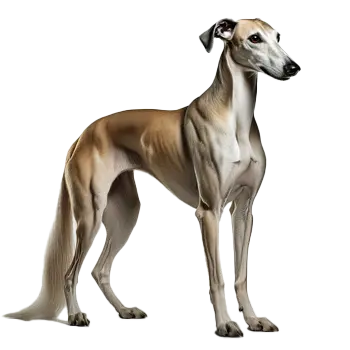
Stand next to one of these dogs and the first thing you notice is how little of them there is. Not in a fragile way - this is a genuinely athletic animal built to cover ground at speed across open desert terrain - but in the way that every unnecessary ounce has been eliminated over centuries of selection. The Berber Greyhound is all purpose, no padding. The coat is short and absolutely smooth, lying tight against defined musculature and visible bone structure in a way that makes the dog look almost sculpted. You can read this animal's architecture at a glance.

The head is a long wedge, clean in line, with a slightly domed skull that narrows evenly toward the nose. The muzzle is long and refined, not blunt or coarse. The ears sit high on the skull and lie close to the head when the dog is at rest, which contributes to the overall impression of smooth, uninterrupted line. When the dog is alert, the ears lift slightly, adding expressiveness to a face that already communicates plenty through those large, dark, distinctly melancholy eyes. That expression - watchful, intelligent, and carrying something that registers almost as sadness in a photograph - is one of the most recognized and discussed features among breed enthusiasts.

The neck is long and rises cleanly from well-laid shoulders, connecting a refined head to a body that is built for the mechanics of extended galloping. The chest is deep but does not reach the elbow - just deep enough to house the lung capacity needed for sustained speed without creating the barrel chest that would compromise the double-suspension gallop these dogs use. The underline curves evenly upward from a deep brisket to a pronounced abdominal tuck. This tucked-up belly, often misread by unfamiliar observers as starvation, is structural. A healthy, well-fed Berber Greyhound will show the last two or three ribs faintly through the skin and have a defined waist. If they look padded and round, they are overweight.

The topline is nearly level from the base of the neck to the loin, where it arches very slightly before blending into a bony, gently sloping croup. The tail is long, carried low with a subtle upward curve at the tip - not curled or carried high. The hindquarters provide the engine for this dog's speed: well-angulated, muscular, with long second thighs. The feet are lean and close-knit, suited to running on hard, uneven ground.

Coat colors range from light cream through all shades of sand to a deep mahogany red fawn. Black markings are permitted and occur in several patterns: a black mask on the face, black ears, a dark overlay that deepens the base color across the back, brindling across the body, and a black mantle that covers most of the back and sides. White markings are restricted - small patches on the chest or toes are tolerated, but large white areas or parti-color patterns are disqualifying under all major standards. The coat itself has a faintly glossy quality in good condition, and the overall impression standing still or in motion is one of effortless, spare elegance.

Sizes vary somewhat between regions, with European and American dogs tending toward the taller end of the standard range, attributed to differences in diet and lifestyle compared to dogs in the breed's North African homeland. Males typically stand 26 to 29 inches at the withers and weigh 45 to 65 pounds; females stand 24 to 27 inches and weigh somewhat less. The weight range reflects build rather than size: a tall Berber Greyhound in working condition will weigh considerably less than a dog of similar height in a breed with heavier bone structure.

Affectionate With Family
The Berber Greyhound bonds deeply with its household and shows genuine warmth toward people it trusts, though that affection is expressed quietly rather than with boisterous enthusiasm.
Good With Young Children
This dog does best with calm, older children who understand how to move and interact without startling a sensitive sighthound - rowdy toddler energy is not a good match for this reserved breed.
Good With Other Dogs
Generally tolerant of other dogs, particularly those it has been raised alongside, though its independent nature means it is rarely overtly social with unfamiliar canines.
Shedding Level
The short, tight coat produces minimal shedding compared to most breeds, making cleanup relatively easy for owners who stay on top of basic weekly maintenance.
Coat Grooming Frequency
Weekly brushing with a soft bristle brush or hound glove, occasional baths, and routine nail and ear care covers almost everything this low-maintenance coat requires.
Drooling Level
The Berber Greyhound is not a drooling breed - owners coming from guarding or retriever breeds are often pleasantly surprised by how tidy this sighthound is around the house.
Coat Type
A single smooth coat of short, fine hair lying tight against the body - no undercoat, no feathering, no trimming required, exactly as nature designed for hunting in desert heat.
Openness To Strangers
Aloof and reserved with strangers is the honest description - this is not a gregarious dog that warms up to everyone, and pushing for early interaction only increases its wariness.
Playfulness Level
Playful in short, intense bursts with familiar people, the Berber Greyhound can show real joy in running games and moments of speed, though it is not a persistently clownish companion.
Watchdog/Protective Nature
Alert to its surroundings and quick to signal the presence of strangers, though not an aggressive guarding breed - awareness and reserve are this dog's form of watchfulness.
Adaptability Level
Thrives in calm, predictable environments with ample space to move - this ancient desert hunter does not adjust easily to chaotic households, urban apartments, or highly variable routines.
Trainability Level
Intelligent and capable of learning, but the independent spirit that made this dog effective on the hunt means it will not respond the same way a biddable working breed might to repetitive drills.

Berber Greyhound History & Development

The name Berber Greyhound did not emerge from within the culture that produced the dog. It was coined from outside - by European travelers, colonial officers, and naturalists who encountered these sighthounds in North Africa during the 18th and 19th centuries and needed a way to describe them to audiences back home. The Berber people themselves had their own names for the dog, and the name that eventually reached the kennel club world - Sloughi - reflects Arabic and Berber linguistic roots rather than any European descriptor. Understanding the name Berber Greyhound means understanding it as an observer's label, not a native one.

The breed itself is ancient in ways that predate accurate record-keeping. Depictions of smooth-coated, lean sighthounds in North African art and artifacts suggest the type has existed in the region for thousands of years. The Berber peoples, who have inhabited the Maghreb since prehistoric times and whose presence there predates the Arab conquests of the 7th century, developed these dogs as essential working partners. Hunting in desert and semi-arid terrain required speed, endurance, and the visual acuity to spot and pursue fast-moving prey - gazelle, hare, desert fox, jackal - at distances where a scent hound would be useless. The Sloughi excelled at this work and was treated accordingly. Historical accounts describe the dogs being kept inside tents, sleeping alongside the family, and mourned at death in ways reserved for valued companions rather than working tools.

European awareness of the breed grew substantially through French colonial contact with North Africa beginning in the early 19th century. French officers and naturalists encountered the dogs in Algeria and Morocco and brought back both the animals and descriptions of them. The first Sloughis arrived in Europe in the late 19th century. The FCI granted official recognition in 1935, making the Sloughi one of the earlier non-European breeds to receive formal international recognition.

In North America, the breed arrived much later. The first documented importation to the United States took place in 1973, and a small but dedicated breeding community developed through the work of enthusiasts who recognized the breed's qualities and worked to establish it on the American continent. The American Sloughi Association was founded in 1989 to coordinate breed promotion and maintain health and breeding standards. AKC recognition came in 2016 after decades of the breed competing in the Miscellaneous Class and building the registration numbers required for full recognition.

The name Berber Greyhound remains in informal use in travel writing, ethnographic literature, and general descriptions of North African dog breeds, but it has no standing in any registry and does not appear in any official breed standard. It persists because it communicates something true about the dog - that this is a coursing sighthound developed by the Berber peoples of North Africa - but the name to search for in any registry, breed club directory, or health database is Sloughi. Anyone who knows this dog by its regional name will find the same animal waiting for them there.

Berber Greyhound Temperament & Personality

This is a breed where the word reserved gets used a lot, and it earns it. The Berber Greyhound is not cold - the people who have lived with these dogs consistently describe deep bonds and genuine affection - but it takes time and it happens on the dog's terms. Rush the process, try to force interaction before the dog is ready, bring strangers into the house and expect the dog to immediately warm up, and you will be disappointed. Respect the pace, let the dog come to you on its own schedule, and you end up with a companion whose loyalty feels genuinely earned rather than simply assumed.

The sensitivity that comes with this breed is real and it runs deep. Harsh corrections, loud voices, chaotic households, or inconsistent treatment creates anxiety that can take a long time to work through. These are not dogs that shake off a bad experience and move on quickly. They notice everything and they remember. This means the owner's job is to build an environment that feels predictable and safe, which pays enormous dividends in terms of the trust and calm the dog eventually shows. It also means this is not the right breed for someone who expects a dog to simply deal with whatever the household throws at it.

The prey drive is genuine and always present. A Berber Greyhound that catches movement in the yard - a squirrel, a rabbit, a cat, a bird - can go from still to full speed in a fraction of a second, and once the chase is on, recall becomes unreliable. Secure fencing is not optional with this breed; it is a baseline requirement. The fence needs to be solid and high enough that the dog cannot clear it, because a motivated sighthound at speed is capable of clearing obstacles that would stop most other breeds. Off-leash exercise should happen only in genuinely enclosed spaces.

With its own family, the Berber Greyhound shows a different face entirely. Gentle, attentive, and often physically affectionate in the quiet ways - leaning against you, following from room to room, settling near your feet - these dogs form close bonds with the people they have chosen to trust. They tend to do better in calmer households without young children who move erratically and loudly. Older children who have been taught to read a dog's body language and approach with patience can absolutely share a home with one of these dogs, but the loud, grabby unpredictability of toddlers is genuinely stressful for a breed this sensitive.

The independence in this breed is not stubbornness in the conventional sense. These dogs were not bred to take direction from a handler at close range - they were bred to make their own decisions at a dead run, far ahead of any human, in pursuit of prey that would change direction without warning. That autonomous decision-making is wired in. It means the Berber Greyhound will look at your request, assess it, and decide whether to comply based on its own evaluation of the situation. Training works, socialization works, patience works - but the dog is always a participant in the conversation rather than simply receiving instructions.

Berber Greyhound Family Life & Living Requirements

The Berber Greyhound needs more space than most apartments can offer, but the size of the yard matters less than the quality of the fencing. What this dog genuinely cannot do without is a secure enclosed area where it can move freely and occasionally open up into a run. A small, genuinely fenced yard works better than a large unfenced property. The lean body type of a sighthound means the dog has almost no insulating body fat, and cold weather can be a real issue - indoor living with appropriate bedding and, in harsh climates, a coat for outdoor excursions, is the baseline for this breed rather than an optional accommodation.

The same lean build that makes these dogs sensitive to cold also means they are uncomfortable on hard floors without padding. A good dog bed that the dog actually uses is worth the investment. Surfaces like hardwood or tile that might be fine for a heavier breed are cold and hard against hip bones that have nothing covering them. The physical comfort of the living environment is not pampering for this breed - it is functional care.

Household chemistry matters for this breed more than most. A calm, quieter household where the dog can find predictability in daily routines produces a relaxed, trusting companion. A household with a lot of unpredictable activity, frequent unfamiliar visitors, or young children who have not been taught to approach dogs respectfully creates ongoing stress for an animal that does not have the temperamental resilience to simply shrug it off. Families with experience with sighthounds or other sensitive breeds tend to make better matches than first-time dog owners who may not anticipate what "reserve" and "sensitivity" actually mean in daily life.

Other pets in the home require careful management. Other dogs, particularly those the Berber Greyhound has been raised alongside, are generally fine. Small animals - cats, rabbits, birds - are a much higher-risk proposition given the strength of the prey drive in a sighthound. Some individual dogs can live peacefully with cats they have been raised with from puppyhood; others cannot make that adjustment regardless of management attempts. The honest answer is that this breed should not be assumed safe around small animals without careful individual assessment and introduction.

Berber Greyhound Training & Exercise Needs

Exercise for this breed is not optional and cannot be managed by a short daily walk. The Berber Greyhound needs to move - really move - on a regular basis. The best solution is a securely fenced space where the dog can self-regulate and engage in the burst running that is built into its DNA. Lure coursing and oval racing, both organized through AKC and sighthound clubs, are excellent outlets that combine physical exercise with the instinctive behaviors the dog was bred for. A dog that gets to run regularly is markedly easier to live with than one that is underexercised - the pent-up energy does not produce the same destructive behaviors you might see in a working breed that is kept too sedentary, but it does produce restlessness and difficulty settling.

Training this breed requires letting go of the expectation that commands will be followed with the immediate, enthusiastic compliance you might get from a herding or sporting dog. The Berber Greyhound is intelligent and does learn, but it learns through positive experience and trust rather than through repetition and correction. Heavy-handed or punishment-based training methods damage the relationship and produce avoidance rather than compliance. Positive reinforcement, patience, and keeping sessions short enough that the dog does not mentally check out are the tools that work with this breed.

Socialization from puppyhood is genuinely important. This is a breed that defaults toward wariness of anything unfamiliar, and early positive exposure to a wide variety of people, environments, sounds, and experiences reduces the intensity of that wariness in adult life. A Sloughi puppy that is sheltered from the world during its critical developmental windows will grow into an adult that finds the world overwhelming. The goal is not to make the dog extroverted - that is not in the architecture - but to build enough positive reference points that the dog can move through the world with confidence rather than anxiety.

Recall is the training challenge that catches most owners off guard. In an enclosed space, a Berber Greyhound can learn a very reliable recall under most circumstances. On open ground, when the prey drive is activated by movement, that recall disappears. This is not a training failure - it is the breed's fundamental wiring. Accepting this reality and managing the dog's environment accordingly - leash in public, enclosed spaces for free running, never off-leash in unfenced areas regardless of training history - is the responsible path with a sighthound of this caliber.

Berber Greyhound Health Concerns

The Berber Greyhound is a generally healthy breed with a natural, unexaggerated structure that avoids many of the conformational health issues seen in breeds developed for extreme physical traits. Most of the documented health concerns in the Sloughi fall into two categories: a genetic eye disease with a reliable DNA test, and a cluster of autoimmune conditions that occur at low frequency but deserve owner awareness.

OFA health testing for the breed includes cardiac evaluation by a board-certified cardiologist, annual OFA eye certification, and the PRA DNA test. Buyers should request documentation of all three from any breeder before committing to a puppy.

Common Health Issues

  • Progressive Retinal Atrophy - PRA-rcd1a, : A genetic degenerative disease of the retina that causes gradual vision loss leading to blindness; a DNA test is available and responsible breeders test all breeding stock before producing litters.
  • Addison's Disease - Hypoadrenocorticism, : An autoimmune condition affecting the adrenal glands, resulting in insufficient production of cortisol and aldosterone; symptoms can be vague and episodic, including lethargy, weakness, and digestive upset.
  • Symmetrical Lupoid Onychodystrophy - SLO, : A painful autoimmune condition specific to the nail beds that causes progressive toenail loss; documented in the Sloughi as an uncommon but breed-associated autoimmune condition.
  • Anesthesia Sensitivity: The extremely low body fat percentage of sighthounds affects how they metabolize barbiturate-based anesthetics - Veterinarians should be informed the patient is a sighthound before any procedure requiring sedation.
  • Gastric Dilatation-Volvulus - GDV, : The deep chest conformation shared by sighthounds elevates GDV risk; this life-threatening condition requires immediate emergency veterinary care and owners should know the warning signs.

Preventive Care & Health Monitoring

  • PRA DNA Test - Rcd1a, : Required for all breeding dogs under the American Sloughi Association Code of Ethics; buyers should confirm clear status for both parents before purchasing a puppy.
  • OFA Eye Certification: Annual eye examination by a board-certified veterinary ophthalmologist, performed within 12 months before breeding - Results registered with OFA.
  • Cardiac Evaluation: Examination by a board-certified veterinary cardiologist - Required for CHIC certification in this breed.
  • Sighthound Anesthesia Protocol: Always inform your veterinarian that the Sloughi is a sighthound before any procedure - Standard barbiturate anesthetics can be dangerous, and sighthound-appropriate alternatives should be used.

Berber Greyhound Grooming & Maintenance

The short, smooth coat of the Berber Greyhound is one of the lowest-maintenance coats in the canine world, and it is worth appreciating that when you are comparison shopping between breeds. A once-weekly pass with a soft bristle brush or a rubber hound mitt removes loose hair, distributes skin oils, and keeps the coat lying flat and glossy. Bathing is needed only occasionally - a few times a year under normal circumstances, more if the dog has been rolling in something - and the coat dries very quickly given its lack of volume or undercoat. There is no trimming, no stripping, no clipping. What you see is what you maintain.

The trade-off for that low coat maintenance is the lack of insulation the coat provides. This dog will feel cold weather much more acutely than breeds with denser coats, and owners in northern climates should plan for a dog coat or sweater during winter outdoor sessions. The skin is also more directly exposed than in a dog with longer hair, which means any new lumps, bumps, or skin changes are visible immediately and easy to monitor. That visibility is genuinely useful from a health standpoint - owners of smooth-coated breeds often catch new skin changes earlier than owners of heavily coated dogs simply because there is nothing to look through.

Ear care requires regular attention because the drooping ears of a sighthound reduce airflow into the ear canal, creating conditions where moisture and debris can accumulate. Weekly inspection and gentle cleaning with a veterinarian-recommended ear cleaner prevents the kind of low-grade chronic ear infection that can otherwise develop quietly. Nails grow continuously and need trimming every two to three weeks; long nails alter the way the dog's feet land and put unnecessary stress on the toes and pasterns over time. Teeth benefit from regular brushing - several times a week is the gold standard - and dental chews can supplement but not replace brushing. A quick visual check of the eyes, feet, and coat condition during weekly grooming sessions keeps you ahead of minor issues before they become larger ones. Overall, the grooming commitment for this breed is genuinely light, and most owners find it takes less than 30 minutes a week to keep a Berber Greyhound looking its best.