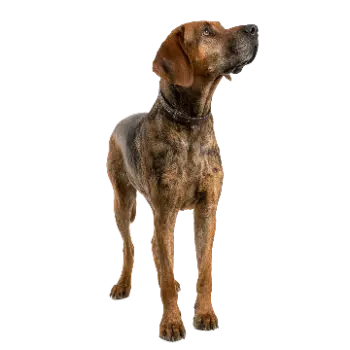

The Bavarian Mountain Scent Hound presents a distinctive appearance characterized by moderate size, athletic build, and balanced proportions creating an impression of functional efficiency and endurance. These well-muscled dogs display strong bone and substance appropriate for sustained work in challenging mountain terrain without appearing coarse or overly refined. The overall silhouette should convey capability for demanding physical work while maintaining agility and surefootedness necessary for navigating rocky, uneven ground. Every element of the Bavarian Mountain Scent Hound's physical structure serves practical purposes related to tracking wounded game across difficult terrain in variable weather conditions requiring both stamina and determination.
The head appears proportionate to body size with slightly domed skull and well-defined stop creating clear transition from skull to muzzle. The skull is moderately broad between the ears without excessive width, tapering slightly toward the muzzle. The muzzle length approximately equals skull length, creating balanced head proportions that combine strength with refinement. The muzzle should not appear snipey or excessively square, instead maintaining moderate width throughout its length and ending in a large nose with well-opened nostrils. Nose color is black or dark brown depending on coat color, with full pigmentation preferred for proper appearance and sun protection.
Eyes are medium-sized, oval in shape, and dark brown in color regardless of coat shade. The eyes should not appear prominent or sunken, instead sitting moderately in the skull with some brow protection. Eye placement provides good forward and peripheral vision necessary for navigating challenging terrain while following scent trails. The expression should convey calmness, intelligence, and determination appropriate for serious working dogs. A harsh, timid, or overly soft expression indicates temperament faults requiring correction through careful breeding selection. The steady, focused gaze characteristic of good tracking dogs should be evident in proper specimens.
Ears are one of the breed's distinctive features, set high on the skull and hanging close to the head without excessive weight or thickness. Ear length reaches approximately to the nose or slightly beyond when pulled forward, providing adequate length without being exaggerated. The ears are moderately broad at the base, tapering gradually to slightly rounded tips. Proper ear length and texture contribute to scenting ability by helping funnel scent molecules toward the nose during tracking work. The ears should be covered with short, fine hair and hang smoothly without excessive folding or wrinkling that might indicate improper ear structure.
The neck is of moderate length, strong and slightly arched, flowing smoothly into well-laid shoulders without abrupt transitions. The neck should be sufficiently long to allow comfortable tracking posture with nose to ground while maintaining balance during sustained movement across uneven terrain. Clean necklines show minimal dewlap or loose skin, maintaining the breed's overall athletic appearance. Proper neck length and structure facilitate efficient ground-scenting work that defines the breed's purpose. The muscular development reflects power necessary for sustained physical work while maintaining flexibility and range of motion.
Body structure emphasizes endurance and functionality with deep chest reaching approximately to the elbows, providing adequate heart and lung capacity for sustained tracking work over long distances. The chest is moderately wide without excessive breadth that would impede movement through dense vegetation or rocky passages. Well-sprung ribs create good internal volume while maintaining streamlined appearance. The back is strong and level, neither roached nor swayed, demonstrating proper spinal structure and muscular support necessary for sustained work. The loin is short and muscular, creating tight coupling between thorax and hindquarters for efficient power transfer.
The topline remains level or slopes slightly from withers to croup during standing and movement, demonstrating proper skeletal structure and muscular development. The croup is slightly sloped rather than flat, positioning the pelvis at angles facilitating efficient rear drive during sustained movement. The underline shows moderate tuck-up, creating clean body lines without the extreme tuck seen in sighthounds. This balanced body structure allows comfortable tracking work in various positions from nose-to-ground scenting to navigating obstacles, adapting to whatever the terrain requires while maintaining endurance.
Forequarters demonstrate strength and proper angulation necessary for surefootedness on rocky terrain and sustained tracking work. Shoulders are well-laid back at approximately 45-degree angles, providing reach necessary for efficient forward movement. The upper arm approximately equals the shoulder blade in length, creating balanced angulation. Elbows are set close to the body without being pinched or excessively loose. Forelegs are straight and parallel when viewed from front, with strong bone proportionate to body size without appearing coarse. The bone is oval in cross-section, providing strength without excessive weight.
Pasterns are slightly sloped rather than upright, providing necessary shock absorption during movement across uneven ground and rocky surfaces. This slight angulation distributes forces properly throughout the limb while maintaining strength for supporting the dog's weight during sustained work. Front feet are compact and well-arched with thick pads providing protection and traction on various surfaces. The feet should be neither too round and cat-like nor excessively long and hare-like, instead showing moderate proportions suited to mountain work. Proper foot structure and pad thickness prove essential for work on rocky, rough terrain encountered in alpine environments.
Hindquarters possess moderate angulation with well-developed muscles providing power for climbing steep terrain and sustained movement. The thighbone angles forward from the hip socket at appropriate angles creating the first angle of the hindquarter assembly. The stifle is well-bent without exaggeration, creating functional angulation appropriate for endurance work. The lower leg angles backward from stifle to hock, with hocks well-let-down and positioned for mechanical advantage. From hock to ground, the rear pastern is short and perpendicular, transferring power efficiently without energy loss through excessive flexion.
Musculation throughout the hindquarters appears strong and well-defined without excessive bulk that would impede endurance. The Bavarian Mountain Scent Hound displays athletic conditioning appropriate for sustained tracking work, neither too light nor too heavily muscled. Rear feet are compact and well-arched like front feet, with thick pads providing protection and traction. The entire hindquarter assembly should create powerful, efficient drive with minimal wasted motion during sustained movement. Proper rear structure is essential for the stamina and surefootedness required in challenging mountain hunting conditions.
The tail is of moderate length, reaching approximately to the hock joint, and set as a natural continuation of the topline. At rest, the tail hangs naturally with slight curve. During work or excitement, it may be carried higher but should not curl tightly over the back or deviate significantly to either side. The tail is well-covered with hair slightly longer than body coat, creating modest brush appearance. Proper tail carriage contributes to balance during movement and provides visual indicator of the dog's emotional state and level of engagement during work.
The coat consists of short, dense, harsh outer coat lying flat against the body with variable undercoat providing insulation and weather protection. The outer coat typically measures less than one inch in length over most of the body, slightly shorter on head and ears, and possibly slightly longer on tail and rear of thighs. The coat should feel harsh and slightly rough to touch rather than soft or silky. Skin is tight and relatively thick, providing protection from brush, rocks, and other hazards encountered during mountain work. The coat's natural weather resistance allows work in rain, snow, and cold conditions typical of alpine environments.
Coat color ranges from tan to deep reddish-brown with considerable variation in shade and intensity. Many dogs show darker shading on the back creating saddling effect, and a black mask on the face is common. The depth and richness of color can vary seasonally and with coat condition. Small white markings on chest or toes are acceptable but should remain minimal. The overall impression should be of a rich, clear coat color appropriate for the breed's working heritage. Color should not be so pale as to appear washed out or so dark as to appear black without proper red tones visible.
Affectionate with Family
★★★★★
The Bavarian Mountain Hound forms strong bonds with family members and demonstrates deep loyalty to their household. These devoted dogs show affection through attentiveness and desire to be near their people, though they express it more subtly than demonstrative breeds. They thrive on having close relationships with their handlers and families, enjoying participation in activities and companionship. Their affection manifests through quiet presence, following family members, and contentment when near loved ones during rest periods.
Good with Young Children
★★★★★
Bavarian Mountain Hounds can coexist successfully with children when properly socialized and supervised, though they suit homes with older, respectful children who understand appropriate dog interaction. Their calm demeanor and moderate size make them less likely to accidentally knock over young children, though their hunting drive requires management. They tolerate children's presence well when raised with them but may prefer adult companionship. Supervision and education about proper treatment ensure positive relationships between dogs and children in the household.
Good with Other Dogs
★★★★★
These hounds generally display appropriate social skills with other dogs when properly socialized, particularly when working alongside other dogs during hunts as traditionally done. Individual temperaments vary, with some enjoying canine companionship while others prefer being only dogs. Early socialization impacts their comfort level with other dogs throughout life. They typically show less dog-directed aggression than many breeds, making them suitable for multi-dog households with proper introductions. Same-sex dynamics may require more careful management than opposite-sex pairings.
Shedding Level
★★★★★
The Bavarian Mountain Hound sheds moderately throughout the year with increased shedding during seasonal coat changes in spring and fall. Their short, dense coat produces noticeable hair requiring regular removal from living spaces. Weekly brushing helps manage loose fur and reduces accumulation on furniture and floors. During heavy shedding periods, more frequent brushing becomes necessary to control hair loss. They are not suitable for people seeking minimal-shedding breeds, though their short coat makes management straightforward compared to longhaired breeds.
Coat Grooming Frequency
★★★★★
Grooming requirements remain moderate for this naturally low-maintenance breed with functional working coat. Weekly brushing with appropriate tools suffices during most of the year, removing loose hair and distributing natural oils that maintain coat health. The short coat resists matting and rarely requires professional grooming beyond occasional baths. Seasonal shedding periods may warrant more frequent brushing to manage increased hair loss. Their working heritage means they need practical, no-fuss coat care. Routine nail trimming, ear cleaning, and dental care complete basic maintenance.
Drooling Level
★★★★★
Bavarian Mountain Hounds are not drooling breeds under normal circumstances. Their jaw structure and lip conformation prevent excessive saliva production during typical activities. Owners can expect minimal to no drooling in daily life. Some individuals may show slight drooling when anticipating food or during extreme heat, but this remains negligible. Unusual drooling warrants veterinary attention as it may indicate health problems. This trait makes them suitable for households preferring clean, drool-free environments without constant moisture concerns.
Openness to Strangers
★★★★★
The Bavarian Mountain Hound displays natural reserve and caution toward unfamiliar people, reflecting their working heritage with close handler bonds. They typically assess strangers carefully before deciding whether to engage, maintaining polite distance until comfortable. This wariness doesn't usually manifest as aggression but rather as aloofness. Early socialization influences their confidence with new people significantly. They warm gradually to regular visitors but often remain somewhat reserved with people they rarely encounter. Their reserved nature makes them reliable watchdogs without excessive aggression.
Playfulness Level
★★★★★
These dogs possess moderate playfulness that emerges primarily during interactions with trusted family members and during appropriate activities. Bavarian Mountain Hounds appreciate games and activities that engage their tracking instincts and physical abilities. Their playfulness tends toward purposeful rather than frivolous, often incorporating elements of their working heritage. They maintain interest in play throughout adulthood when provided appropriate stimulation. Their play style reflects their serious working temperament, preferring structured activities to purely recreational games lacking purpose or challenge.
Watchdog/Protective Nature
★★★★★
The Bavarian Mountain Hound serves as a reasonably effective watchdog, alert to environmental changes and unusual activities around their territory. They typically announce visitors or unusual sounds with moderate vocalization, though they are not excessive barkers. Their protective instincts remain moderate, focused more on alerting than active guarding. They show loyalty to family and territory without the intense protectiveness seen in guardian breeds. This balanced approach makes them reliable for announcing arrivals while not being overly territorial or aggressive toward visitors.
Adaptability Level
★★★★★
Bavarian Mountain Hounds show moderate adaptability to various situations when their exercise, training, and mental stimulation needs are consistently met. They adjust reasonably to routine changes once established in secure environments with their families. These dogs handle different living situations including suburban homes when provided adequate space and activity. Their working heritage and strong tracking drive mean they adapt best to environments offering opportunities for mental and physical challenges. Urban apartment living proves more challenging without substantial outdoor access and exercise opportunities.
Trainability Level
★★★★★
The Bavarian Mountain Hound ranks as highly trainable, combining intelligence with strong work ethic and desire to partner with handlers. These dogs learn new commands and complex tasks readily when training emphasizes their natural tracking abilities and working instincts. They respond well to positive reinforcement and demonstrate focus during training sessions. Their intelligence means they need consistent, fair training to develop properly. They excel in scent work and tracking activities that utilize their exceptional noses and determination, making them outstanding working dogs when properly trained.
Energy Level
★★★★★
The Bavarian Mountain Hound possesses high energy levels requiring substantial daily exercise and mental stimulation. These athletic dogs were bred for sustained tracking across challenging mountain terrain and retain considerable stamina. They need at least 60 to 90 minutes of vigorous activity daily plus mental challenges to remain content and well-behaved. Without adequate outlets, they may develop behavioral problems including destructiveness or excessive vocalization. Their energy suits active individuals or families who enjoy outdoor activities and can provide consistent daily exercise opportunities.