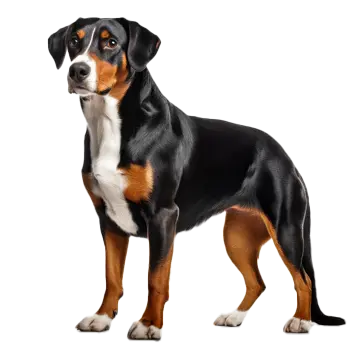

The Appenzell Treibhund carries several names that reflect its Swiss heritage and traditional working functions in the alpine regions where it developed. The name Treibhund translates to driving dog in German, directly referencing the breed's primary historical function of driving cattle to and from mountain pastures. This descriptive name emphasizes the active herding role these dogs fulfilled on Swiss farms, distinguishing them from breeds that primarily guard rather than move livestock.
The breed's official registered name is Appenzeller Sennenhund, with Sennenhund meaning herdsman's dog or dairy farmer's dog in the Swiss German dialect. This designation connects the breed to the Senn, the traditional Swiss alpine dairymen who relied on these dogs for their farming operations. The Appenzeller portion of the name references the Appenzell region of northeastern Switzerland where the breed is believed to have originated and developed its distinctive characteristics over centuries of selective breeding.
Among the four Swiss mountain dog breeds collectively known as Sennenhunds, the Appenzell Treibhund represents the medium-sized, more agile type specialized for cattle driving rather than the draft work associated with larger Swiss breeds. The four Sennenhund breeds include the Greater Swiss Mountain Dog, Bernese Mountain Dog, Appenzeller Sennenhund, and Entlebucher Mountain Dog, listed in descending order of size. Each developed in different Swiss regions for somewhat different purposes while sharing common ancestry and the characteristic tricolor markings.
The shortened name Appenzeller is commonly used by breed enthusiasts and owners in casual conversation, providing a convenient abbreviation of the longer official designation. In Switzerland and German-speaking countries, the breed may also be called Appenzeller Hirtenhund, with Hirtenhund meaning shepherd's dog, another reference to the pastoral heritage these dogs represent. These various names all describe the same breed, reflecting different aspects of its function and origin.
Recognition of the Appenzell Treibhund varies among international kennel clubs, with the breed registered under the name Appenzeller Sennenhund in most registries. The Fédération Cynologique Internationale recognizes the breed in Group 2, Section 3 as a Swiss Mountain and Cattle Dog. The United Kennel Club recognizes the breed in its Guardian Dog Group. The breed achieved American Kennel Club Foundation Stock Service registration in 2007 and has been recorded in the AKC's Herding Group. The Canadian Kennel Club also provides recognition for this Swiss breed.
The breed's status outside Switzerland remains relatively rare compared to more widely known Swiss breeds like the Bernese Mountain Dog. This rarity reflects both the Appenzell Treibhund's strong regional identity and the relatively small breeding population maintained primarily in Switzerland and neighboring European countries. Breed enthusiasts worldwide work to promote responsible breeding and placement while preserving the working characteristics that define this versatile Swiss mountain dog.