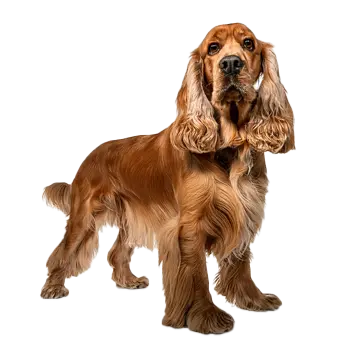
The American Cocker is a small dog with big presence. At 20 to 30 pounds and 13 to 15 inches at the withers, it carries itself with a dignity and grace that belies its modest dimensions. This is the smallest AKC sporting spaniel, but nothing about it reads as fragile or delicate. The underlying structure is solid, well-muscled, and built for the field work the breed was developed to do.
The head is the American Cocker's most distinctive feature and the clearest point of divergence from its English cousin. The skull is rounded and well-developed, with a pronounced stop - the step between the skull and the muzzle. The muzzle itself is broad and deep, with the lower jaw broadly rounding to give the face its characteristic soft, full expression. The lips are full and deep, contributing to the impression of depth in the muzzle. The nose is large and well-developed, with enough room for the working nose this dog carries from its spaniel heritage.
The eyes are what most people remember about the American Cocker. Large, round, and set to look directly forward, they come in shades of dark brown ranging to a warm amber in lighter-colored dogs. The expression they produce - soft, melting, and imploring - has made this breed one of the most immediately recognizable and popular in American culture. There is a reason the Cocker Spaniel became synonymous with sweetness in American iconography. Those eyes deliver a message of gentle affection that is completely consistent with the breed's actual temperament.
The ears are long, wide, and set at or below eye level, covered in long silky hair that flows down from the skull. They frame the face and contribute significantly to the breed's distinctive appearance. The neck is muscular and of sufficient length to allow the dog to work with its nose to the ground, flowing into clean shoulders and a compact, level topline. The chest is deep and broad enough for good lung capacity without being barrel-shaped.
The hindquarters show strong muscular development, particularly through the second thigh, giving the breed the driving power needed for hunting and vigorous play. The tail is docked in the United States, carried in line with the topline or slightly above when the dog is working or alert. In countries where docking is prohibited, the natural tail is moderate in length and carried with a slight upward curve.
The coat is the element that defines the American Cocker's visual identity most dramatically. The outer coat is silky, flat or slightly wavy, with a medium-length body coat that gives way to substantial feathering on the ears, chest, belly, and legs. At full length, the feathering can reach the ground, creating the glamorous silhouette the breed is known for. This coat requires considerable maintenance to remain healthy and beautiful - it mats readily without regular brushing and can become a welfare issue if neglected. The undercoat is dense enough to provide weather protection for a dog working in cool conditions.
Color within the breed is remarkably diverse. The black variety presents as a clean jet black, sometimes with small white markings on the chest. The ASCOB variety includes every solid color from light cream and buff through red and chocolate. The parti-color variety combines white with black, chocolate, or shades of red in patterns that vary from individual to individual. Roan patterns and merle appear occasionally in some lines, reflecting the genetic complexity of the breed's color inheritance.
The overall silhouette of the American Cocker in full coat is immediately distinctive - no other sporting breed presents quite this combination of compact athletic body, dramatic flowing coat, and large expressive eyes.
Affectionate With Family
★★★★★
The American Cocker is one of the most openly affectionate breeds in the sporting group - warm, demonstrative, and happiest when close to its people. This is a dog that wants physical contact and expresses love freely.
Good With Young Children
★★★★★
Patient, gentle, and genuinely fond of children, the American Cocker handles family chaos with grace. The breed's small size and soft temperament make it one of the better spaniel choices for households with young kids.
Good With Other Dogs
★★★★☆
Generally sociable with other dogs and comfortable in multi-dog households. The breed's merry, non-confrontational nature makes it an agreeable companion for dogs of varying sizes.
Shedding Level
★★★☆☆
Moderate shedding year-round with the silky coat releasing hair particularly in the feathered areas. Regular grooming significantly reduces the loose hair that ends up on furniture and clothing.
Coat Grooming Frequency
★★★★★
The American Cocker's legendary coat is high-maintenance. Without consistent brushing every few days and professional grooming every six to eight weeks, the coat mats rapidly and becomes uncomfortable for the dog.
Drooling Level
★☆☆☆☆
Minimal drooling - the American Cocker's muzzle structure does not produce excessive saliva under normal conditions.
Coat Type
★★★★★
Long, silky, and profuse with heavy feathering on the ears, chest, belly, and legs - the American Cocker carries one of the most dramatic coats in the sporting group.
Openness To Strangers
★★★★☆
Generally friendly and welcoming with new people, the American Cocker greets strangers with curiosity and warmth rather than suspicion. Early socialization produces confident, outgoing adults.
Playfulness Level
★★★★☆
Playful and spirited with genuine enthusiasm for games and outdoor activities. The sporting heritage gives this breed more energy and drive than its fluffy appearance might suggest.
Watchdog/Protective Nature
★★★☆☆
Alert enough to announce visitors but not inclined toward serious guarding behavior. The American Cocker will let you know someone is at the door without being aggressive about it.
Adaptability Level
★★★★☆
One of the more adaptable sporting breeds, the American Cocker manages apartment life reasonably well provided daily exercise is consistent. The relatively small size helps in urban settings.
Trainability Level
★★★★☆
Eager to please and responsive to positive methods, the American Cocker learns quickly. The breed is sensitive to tone and does not respond well to harsh corrections - patience and kindness produce the best results.