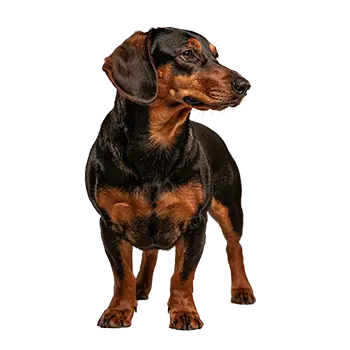
The Alpenlandische Dachsbracke is a compact, short-legged scenthound that immediately evokes comparison to the Dachshund, though the Dachsbracke is taller, heavier-boned, and more robustly built than its elongated cousin. Standing 34 to 42 centimeters at the withers and weighing approximately 15 to 18 kilograms, this breed presents a picture of dense, functional power packed into a low-slung frame. The body is noticeably longer than it is tall, adhering to the breed standard's specified 2:3 height-to-length ratio, a proportion that allows the dog to push through dense undergrowth and navigate steep, rocky terrain while maintaining a low center of gravity.
The head is proportionate to the body and reflects the breed's scenthound heritage. The skull is slightly arched with a well-pronounced furrow between the eyes and a barely prominent occiput. The stop is distinct, and the muzzle is strong and straight, approximately equal in length to the skull. The nose is broad with open nostrils, always black in color. The eyes are dark brown with close-fitting, black-pigmented lids that produce a lively and intelligent expression. The ears are medium-sized with slightly rounded tips, set high on the skull and hanging flat against the cheeks without folds or twists, an important detail that influences the breed's predisposition to ear health.
The body of the Alpenlandische Dachsbracke is strong and well-muscled, with a deep chest that extends approximately to the elbow and a pronounced forechest. The back is straight and firm, the loin well-muscled, and the croup moderately sloped. The legs are short but strong, with straight forelegs and well-angulated hindquarters that provide the propulsive power necessary for sustained work on steep terrain. The feet are round and compact with tight, arched toes, black toenails, and tough, durable pads suited to rocky mountain ground. The tail is long, set high, and carried slightly downward or horizontally during movement, with a moderate brush of longer hair on the underside.
The coat is the breed's primary defense against the harsh alpine climate and is specified as a dense double coat consisting of a thick, close-fitting topcoat and a substantial undercoat. The topcoat is smooth and approximately two to three centimeters in length, lying close to the body without standing off or curling. On the neck, back of the thighs, and underside of the tail, the hair is slightly longer and coarser. The undercoat is dense enough to provide effective insulation against cold, wet conditions while allowing the dog to work for extended hours in snow, rain, and freezing temperatures.
The accepted coat colors are clearly defined in the breed standard. The ideal color is dark deer red, which may appear with or without black-tipped hairs (intermingling). Black and tan coloring is also accepted, featuring a dark base coat with reddish-brown markings typically found above the eyes, on the muzzle, chest, legs, feet, and underside of the tail. A small white star on the chest is permitted but not required. The nose color is always black regardless of coat color, and pigmentation on the eye rims and lips should also be dark.
Affectionate With Family
★★★★☆
The Alpenlandische Dachsbracke bonds deeply with its family and demonstrates genuine warmth and devotion to its household members. This breed thrives on close companionship and prefers to remain near its people rather than spending time alone. While primarily developed as a working hunting dog, the Dachsbracke transitions easily into an affectionate home companion when given adequate exercise and mental stimulation, showing a gentle and loyal side that endears it to everyone in the household.
Good With Young Children
★★★★☆
The Alpenlandische Dachsbracke is widely regarded as excellent with children, demonstrating patience and a tolerant disposition that makes it a dependable family companion. Its sturdy build means it can handle the inadvertent rough handling that young children sometimes deliver without becoming snappy or defensive. The breed's playful energy also makes it a willing participant in children's games and outdoor activities, though as with all dogs, supervision is recommended with very young children.
Good With Other Dogs
★★★★☆
As a breed historically accustomed to working alongside other dogs in hunting contexts, the Alpenlandische Dachsbracke generally gets along well with canine companions. It is not typically dog-aggressive and can coexist peacefully in multi-dog households when properly introduced. The breed's pack-oriented mentality contributes to its sociability with other dogs, though individual temperament and early socialization experiences will influence the degree of acceptance shown toward unfamiliar dogs.
Shedding Level
★★★☆☆
The Alpenlandische Dachsbracke sheds moderately throughout the year, with more pronounced seasonal coat blows occurring in spring and autumn when the dense undercoat releases in larger quantities. During normal periods, weekly brushing keeps loose hair manageable and prevents accumulation on furniture and clothing. The breed's double coat is functional and weather-resistant, which means the undercoat renewal cycle is an essential part of the dog's natural temperature regulation.
Coat Grooming Frequency
★★☆☆☆
The Alpenlandische Dachsbracke's coat is remarkably low-maintenance, requiring only weekly brushing under normal conditions to remove loose hair and distribute natural oils. The coat's dense, close-fitting texture resists matting and sheds dirt readily, reducing the need for frequent bathing. During seasonal shedding periods, grooming frequency should increase to several sessions per week with an undercoat rake, but overall, this breed places minimal grooming demands on its owner.
Drooling Level
★☆☆☆☆
The Alpenlandische Dachsbracke is a clean, dry-mouthed breed that produces minimal drool under normal circumstances. Its well-fitted lips and moderate muzzle structure prevent the excessive salivation seen in looser-lipped hound breeds. Owners can expect a tidy companion that does not leave wet marks on furniture, clothing, or floors, with only minor drooling occurring around mealtimes or during intense physical exertion.
Coat Type
★★★☆☆
The breed carries a dense, close-fitting double coat consisting of a thick, smooth topcoat and a substantial undercoat that provides insulation against the extreme cold and variable weather conditions of the Austrian Alps. The topcoat is slightly longer and coarser on the neck, back, and the underside of the tail, while the rest of the body is covered in shorter, smoother hair. This practical coat serves as effective protection during work in brush, snow, and rocky terrain.
Openness To Strangers
★★★☆☆
The Alpenlandische Dachsbracke typically approaches unfamiliar people with calm interest rather than either overt friendliness or suspicion. While not as reserved as guardian breeds, it maintains a measured, observant attitude when meeting new people and warms up at its own pace. The breed is not typically aggressive toward strangers and does not display strong territorial guarding behavior, reflecting its heritage as a cooperative hunting companion rather than a watchdog.
Playfulness Level
★★★☆☆
The Alpenlandische Dachsbracke possesses a moderate and purposeful play drive that reflects its working heritage. It enjoys interactive games, particularly those that engage its nose and natural tracking instincts, such as scent-based searches and hide-and-seek activities. While not as exuberantly playful as some sporting breeds, the Dachsbracke maintains an energetic and willing attitude during play sessions, especially when activities provide mental stimulation alongside physical exertion.
Watchdog/Protective Nature
★★★☆☆
The Alpenlandische Dachsbracke is a vocal breed that will alert its owners to unusual activity or the approach of unfamiliar visitors, making it a capable alert dog. However, it was not bred for protective or guarding duties and should not be expected to confront intruders or display territorial aggression. Its voice is strong and carrying, a trait developed for communication during hunts across mountainous terrain, and some individuals may bark more than desired if not given adequate stimulation.
Adaptability Level
★★★☆☆
The Alpenlandische Dachsbracke can adapt to a variety of living situations, including homes without large yards, provided that its substantial exercise needs are met through daily outdoor activities. Its compact size makes it more manageable in smaller spaces than larger scenthound breeds. However, the breed does not thrive in sedentary environments and will develop behavioral problems if underexercised. It adapts best to active households, particularly those in rural settings or with access to open outdoor spaces.
Trainability Level
★★★☆☆
The Alpenlandische Dachsbracke is intelligent and eager to learn when training aligns with its natural instincts and provides clear purpose. Positive reinforcement methods produce the best results, as the breed can become stubborn and disengaged when subjected to repetitive drills or harsh corrections. Scent work, tracking exercises, and training that engages the nose produce enthusiastic participation. Basic obedience can be achieved with patience and consistency, though the breed's independent streak means that off-leash reliability in the presence of interesting scents remains a persistent challenge.