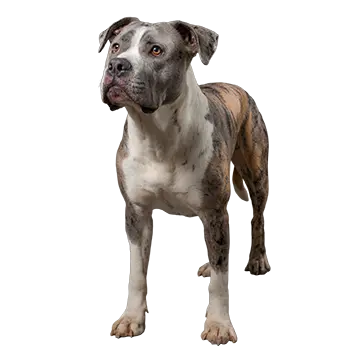
The Alapaha is a bulldog that actually looks like it could work. This distinction matters because the modern English Bulldog has drifted so far from its working origins in structure and function that the term bulldog no longer implies athletic capability for many people. The Alapaha is a different animal entirely - a broad, powerful, athletic medium-large dog built for the catch-dog work that originally defined the bulldog type in the American South.
The head is the breed's most immediately striking feature. It is large and broad, with a square profile and a prominent muzzle covered by somewhat loose upper lips. The skull is wide between the ears, the stop is defined, and the overall head impression is one of functional power rather than exaggerated compression. The eyes are set wide apart and can be brown, blue, or marbled - the glass eye (solid blue) and marble eye (blue and brown mixed in a single iris) are particularly prized in the breed. The expression is alert and intelligent, neither aggressive nor vacant.
The ears are natural drop ears of medium size with rounded tips, set at mid-skull height and falling naturally against the side of the face. They are never cropped or altered. The muzzle is sufficiently long to allow normal breathing - the Alapaha does not carry the respiratory compromise that affects many heavily brachycephalic bulldog breeds, and this is part of what makes it a genuinely athletic working dog rather than a companion animal limited by its own structure.
The neck is strong and moderately long. The chest is broad and deep, the back strong and level, and the topline is straight from withers to tail. The body is solidly muscled throughout without appearing blocky or overweight. Well-muscled hips are slightly narrower than the chest, giving the dog a characteristic tapering profile from shoulders to rear. The legs are straight and well-boned front and rear, with the feet compact and cat-like. The tail is natural and undocked, carried low or level when relaxed and rising when the dog is excited or alert.
The coat is short, glossy, and stiff to the touch - a single layer that lies flat against the body and requires minimal maintenance. The preferred coloring is at least fifty percent white with patches of color including blue merle, brown merle, red merle, brindle, or solid colors with white trim. The merle patterns are distinctive and visually striking, and the blue and marble eye colors that often accompany merle coat genetics add to the breed's unusual visual character.
Sexual dimorphism is clear. Males are heavier-boned, broader through the head and chest, and carry more overall mass than females. A well-bred male Alapaha projects an impression of substantial physical capability that a female of the same bloodline, while correct and athletic, does not quite match in scale. Both should look fit and functional - excess weight in either sex undermines the athletic quality that defines correct Alapaha type.
The Alapaha's movement reflects its athletic capability. The breed should move with purpose and power - a ground-covering trot that communicates functional capacity rather than the labored, rolling gait of more exaggerated bulldog builds. Watching an Alapaha move at an easy trot, you are watching a dog that could actually do the catch-dog work it was bred for: quick enough to close on livestock, strong enough to hold, and built well enough to sustain that effort without structural breakdown. That combination of size, strength, and athletic function is what distinguishes the Alapaha from more ornamental bulldog breeds that share the basic silhouette but have lost the capability underneath it.
Body condition matters enormously in evaluating whether an individual Alapaha is correct. This breed should be lean and muscular, not carrying extra weight that obscures its structure and undermines its athletic quality. A well-conditioned Alapaha at a healthy weight looks like the working dog it is designed to be.
Affectionate With Family
★★★★★
The Alapaha forms deep, lasting bonds with its family and shows a warmth that surprises people who judge the breed only by its muscular exterior. These dogs want to be involved in everything their family does.
Good With Young Children
★★★★☆
The Alapaha has a well-documented affinity for the children in its family, approaching them with patience and protectiveness. Interactions with unfamiliar children should be supervised given the breed's natural guardedness with strangers.
Good With Other Dogs
★★★☆☆
With proper early socialization the Alapaha can coexist with other dogs, but its dominant instincts and high prey drive mean off-leash introductions with unfamiliar dogs require careful management.
Shedding Level
★★★☆☆
The Alapaha sheds moderately year-round. The short coat makes the shed hair less visually dramatic than in longer-coated breeds, but regular brushing still reduces the amount that ends up on furniture.
Coat Grooming Frequency
★★☆☆☆
Weekly brushing with a rubber curry or natural bristle brush is sufficient for routine coat maintenance on the Alapaha. This is one of the lower-maintenance coats in the bulldog family.
Drooling Level
★★☆☆☆
The Alapaha drools less than many bulldog breeds - the muzzle is not as exaggerated as in the English Bulldog, and the lips are moderately tight. Occasional drool after eating or drinking is normal.
Coat Type
★☆☆☆☆
The Alapaha has a single, short, stiff coat that lies flat against the body. It is glossy in condition and requires minimal upkeep - a practical coat for a practical working breed.
Openness To Strangers
★★☆☆☆
The Alapaha reserves its warmth for the people it knows and approaches strangers with measured caution. Early and ongoing socialization shapes how broadly this caution extends in adult life.
Playfulness Level
★★★★☆
Athletic, active, and mentally engaged, the Alapaha enjoys physical play and interactive activities with its family. The breed's working heritage means it responds particularly well to tasks and games that have a clear purpose.
Watchdog/Protective Nature
★★★★★
Protection of family and territory is deeply wired into the Alapaha. This breed will fight to defend the people in its care and has the physical capability and conviction to back that instinct up.
Adaptability Level
★★★☆☆
The Alapaha adapts reasonably well to different living situations as long as its exercise needs, mental engagement, and connection with its family are met. It is not well-suited to being left alone for long periods.
Trainability Level
★★★★☆
Quick-learning and motivated to engage, the Alapaha responds well to consistent positive training. The breed's intelligence means it picks up on patterns rapidly - for better or worse, depending on what habits form first.