
Ainu-Ken

Hokkaido
Gallery coming soon

Furry Critter Network Etsy Shop

Quick Facts

🐕 Breed Group
Working
📏 Size Category
Medium
📏 Height
18 to 20 inches
⚖️ Weight
44 to 66 pounds
⏱️ Life Expectancy
12 to 15 years
🧥 Coat Type
Double coat, harsh outer, soft undercoat
🎨 Coat Colors
Red, White, Black, Black and Tan, Brindle, Sesame, Wolf Gray
😀 Temperament
Devoted, Courageous, Alert, Independent
🏃 Exercise Needs
High
🎓 Training Difficulty
Moderate
👶 Good with Children
Good with older children
🐾 Good with Other Pets
Requires supervision with small animals

Other Names & Breed Recognition

The Ainu-Ken carries a collection of names reflecting its ancient origins and profound connection to Japan's indigenous Ainu people who shaped this remarkable breed over countless generations. Understanding these various designations illuminates the breed's cultural significance and the ongoing efforts to preserve it as a living monument to Japanese heritage and the Ainu people's enduring relationship with their canine companions.

The name Ainu-Ken directly honors the indigenous Ainu people who developed this breed for hunting in the harsh northern wilderness of Hokkaido. In Japanese, ken translates as dog, making Ainu-Ken literally mean dog of the Ainu. British zoologist Thomas Blakiston first documented the breed for Western audiences in 1869, referring to these dogs as Ainu Ken after observing them during his studies of native species on Hokkaido island. His classification established this terminology in international breed literature.

The alternate designation Ainu Inu carries identical meaning, with inu being another Japanese word for dog. Both names acknowledge the breed's development by the Ainu people, who were pushed northward from mainland Japan centuries ago and brought their hunting dogs with them to Hokkaido. The interchangeable use of ken and inu reflects regional and stylistic preferences in Japanese naming rather than any meaningful distinction.

The official registered name Hokkaido references the northernmost main island of Japan where this breed developed in relative geographic isolation. When the Japanese government designated the breed as a Living Natural Monument in 1937, authorities officially changed the name from Ainu dog to Hokkaido Inu. This renaming shifted emphasis from the indigenous people to the geographic region, reflecting complex historical considerations regarding the Ainu people's status in Japanese society at that time.

Most Japanese speakers today refer to the breed as Hokkaido Ken rather than Hokkaido Inu, a preference arising from subtle grammatical considerations that make the ken suffix sound more natural following the place name Hokkaido. The abbreviated form Do-ken also appears informally among Japanese breed enthusiasts. The name Seta represents yet another historical designation found in some older references.

Regional variations within Hokkaido historically produced dogs with distinctive characteristics suited to local conditions and hunting requirements. The Chitose line was known for smaller white dogs with small ears and broad foreheads, while the Atsumi line featured brindle coloring and more pointed muzzles. These regional varieties contributed genetic diversity preserved in the modern standardized breed, though today the Chitose line is considered the only remaining true line with other dogs representing mixtures of original varieties.

International recognition has expanded as the breed gains attention beyond Japan. The United Kennel Club recognized the breed in 1996 initially as Ainu before updating to Hokkaido in 2008. The Fédération Cynologique Internationale includes the Hokkaido within Group 5 covering Asian Spitz and related breeds. The American Kennel Club admitted the Hokkaido to its Foundation Stock Service in 2016, allowing pedigree recording while the breed progresses toward full recognition.

Within Japan, multiple organizations maintain registries and standards. The Hokkaido Ken Hozonkai (DOKENHO) focuses specifically on preserving the Hokkaido breed and conducts bear instinct testing to evaluate hunting aptitude. The Nihon Ken Hozonkai (NIPPO) serves as the primary registration service for all six native Japanese spitz breeds. The Hokkaido Ken Kyokai provides additional registry services for breeders and owners.

The Hokkaido Association of North America (HANA) serves as the primary breed club in the United States and Canada, establishing breeding guidelines and supporting health initiatives. Similar organizations in Europe and other regions work to promote responsible breeding and ownership of this rare breed outside its homeland.

Ainu-Ken Organizations & Standards

The Ainu-Ken benefits from dedicated organizations in Japan and internationally working to preserve this ancient breed's distinctive characteristics while promoting responsible breeding and ownership. These organizations maintain detailed breed standards defining the ideal Ainu-Ken in terms of physical structure, temperament, and working capability, ensuring essential qualities developed over millennia remain intact for future generations.

Within Japan, the Hokkaido Ken Hozonkai (DOKENHO) serves as the primary organization dedicated specifically to preserving the Hokkaido breed. This preservation society maintains exacting standards and conducts regular shows evaluating breeding stock against comprehensive breed criteria. Uniquely among breed organizations worldwide, DOKENHO sanctions bear instinct tests where dogs are exposed to live bears and evaluated on their reaction, movement, and hunting drive. These distinctive tests ensure the breed's legendary courage and hunting ability persist across generations.

The Nihon Ken Hozonkai, known internationally as NIPPO, provides registry services for all six native Japanese spitz breeds including the Hokkaido alongside the Shiba, Akita, Shikoku, Kishu, and Kai. Founded to preserve Japan's indigenous dog breeds, NIPPO maintains comprehensive standards and sponsors shows throughout Japan. NIPPO registration establishes official pedigree documentation serving as the foundation for international breed recognition.

The Hokkaido Ken Kyokai (Hokkaido Dog Association) represents another Japanese organization registering the breed, providing alternative registry options. Together with DOKENHO and NIPPO, these organizations work to maintain healthy breed populations and promote responsible stewardship of this national treasure protected as a Living Natural Monument since 1937.

Internationally, the Fédération Cynologique Internationale provides breed recognition within its classification system, placing the Hokkaido in Group 5, Section 5, covering Asian Spitz and related breeds. The FCI standard specifies detailed requirements for physical characteristics including precise height measurements, body proportions, coat qualities, and accepted colors. The standard emphasizes balanced spitz proportions, sturdy build, and essential temperament traits including faithfulness, docility, alertness, boldness, endurance, and dignity.

The United Kennel Club granted recognition in 1996, initially registering the breed as Ainu before updating the name to Hokkaido in 2008. UKC classification places the breed within the Northern Breed group, acknowledging its spitz-type heritage and cold-climate adaptation. UKC recognition provides registration services and competitive opportunities for owners internationally.

The American Kennel Club accepted the Hokkaido into its Foundation Stock Service program in January 2016. This preliminary recognition allows pedigree recording and participation in certain companion events while the breed works toward full AKC recognition. Progress requires meeting population thresholds and establishing a national parent club meeting AKC requirements.

The Hokkaido Association of North America (HANA) serves as the primary breed club in the United States and Canada, promoting responsible ownership, establishing breeding guidelines, and supporting breed health initiatives. HANA mandates specific health testing for all breeding dogs including OFA cardiac examinations and recommends additional screenings for hip dysplasia and eye conditions including Collie Eye Anomaly. The organization maintains a code of ethics and provides educational resources for prospective owners.

The British Association of Hokkaido Ken (BAHK) serves breed enthusiasts in the United Kingdom, providing information, support, and guidance for owners of this rare breed. Similar organizations across Europe work to establish breeding populations and promote responsible ownership outside Japan.

Breed standards across organizations share core elements while reflecting organizational priorities. All standards describe the Ainu-Ken as a medium-sized, well-balanced spitz-type dog with sturdy construction, erect triangular ears, and characteristic curved tail. Standards specify the double coat with harsh outer guard hairs over soft, dense undercoat developed for survival in Hokkaido's severe winters. Accepted colors include red, white, black, black and tan, brindle, sesame, and wolf gray.

Temperament requirements appear prominently across all breed standards, emphasizing the combination of boldness and loyalty defining the Ainu-Ken character. Standards describe the ideal dog as dignified, alert, and faithful to family while displaying courage necessary for confronting large game. These temperament specifications preserve essential character developed through centuries of selection by Ainu hunters who depended on their dogs for survival.

Kennel Club Recognition

  • American Kennel Club (AKC): Foundation Stock Service
  • United Kennel Club (UKC): Recognized - Northern Breed Group
  • Canadian Kennel Club (CKC): Not currently recognized
  • Fédération Cynologique Internationale (FCI): Recognized - Group 5, Section 5
  • The Kennel Club (UK): Recognized

Ainu-Ken Physical Description

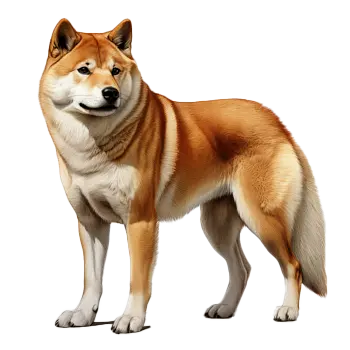
The Ainu-Ken presents a striking appearance reflecting its development as a rugged hunting dog capable of surviving and working in the harsh conditions of northern Japan. This medium-sized spitz-type breed combines power and agility in a compact, well-balanced frame designed for pursuing dangerous game through snow-covered mountains and dense forests. Every physical characteristic traces to functional requirements that ensured survival and hunting success across millennia.

Size standards place the Ainu-Ken in the medium range, with males standing approximately 48.5 to 51.5 centimeters at the withers and females slightly smaller at 45.5 to 48.5 centimeters. Weight typically ranges from 44 to 66 pounds for dogs in proper working condition. The body structure is slightly longer than tall, with height to length ratio approximately 10 to 11, creating balanced proportions facilitating efficient movement through rough terrain.

The head presents classic spitz configuration with a broad skull tapering toward the muzzle. The forehead is flat with a defined stop transitioning to a straight nasal bridge. The muzzle is wedge-shaped and proportionate to the skull, ending in a nose that is black or liver-colored depending on coat color. Strong jaws with complete scissors bite reflect the breed's hunting heritage and ability to grip prey effectively. Many Ainu-Ken display blue-black tongue markings, suggesting possible ancient connections to breeds like the Chow Chow or Shar-Pei.

The eyes are relatively small, triangular in shape, and set well apart on the face, creating an intense gaze reflecting keen awareness essential for detecting prey and danger. Eye color is dark brown, contributing to the alert, intelligent expression characteristic of the breed. The distinctive triangular eye shape differentiates the Ainu-Ken from rounder-eyed breeds and contributes to its primitive appearance.

Ears are small, triangular, and carried firmly erect, positioned at a right angle to the brow. This pricked ear carriage contributes to the alert expression and served the practical purpose of directing sound for detecting game in dense vegetation. Ears are thick with dense fur providing protection against extreme cold temperatures.

The neck is strong and muscular, carried proudly and flowing smoothly into well-developed shoulders. This sturdy neck structure supported the breed's ability to grip and hold large prey during hunting. The topline is level and strong, with deep, moderately broad chest providing ample lung capacity for sustained activity at altitude in thin mountain air.

The double coat represents one of the Ainu-Ken's most distinctive features, developed for survival in Hokkaido's severe winters where temperatures plunge far below freezing. The outer coat consists of harsh, straight guard hairs approximately 2 to 2.5 inches in length, providing weather resistance and protection from brush. Beneath lies a dense, soft undercoat that traps body heat and provides insulation against extreme cold. The coat is somewhat shorter on the head, ears, and legs, with the tail featuring longer, stand-off hair creating its plume-like appearance.

Accepted coat colors include red, white, black, black and tan, brindle, sesame, and wolf gray. Red varies from deep rust to lighter fawn shades, while sesame describes red coats with black-tipped hairs creating distinctive overlay effect. Wolf gray presents an unusual appearance reminiscent of wild canids. White with red tipping and other variations occur but may be considered less desirable in some breeding programs. Natural markings including urajiro, the cream to white ventral coloring common in Japanese breeds, appear in many individuals.

The tail is high-set and thick, carried in a sickle curve or forming a curl over the back. When relaxed, the tail may lower but returns to characteristic carriage when the dog is alert or moving. The tail serves as an expressive indicator of the dog's emotional state and adds to the breed's distinctive silhouette.

Legs are straight and well-boned with compact, rounded feet featuring thick pads serving as shock absorbers on rocky terrain. The large paw structure provided traction in snow and stability on uneven ground during mountain hunting expeditions. Movement should appear light, agile, and efficient, with good reach and drive reflecting the breed's considerable athletic capability.

Overall, the Ainu-Ken presents an impression of primitive strength, endurance, and dignity. The breed should appear capable of demanding physical work while maintaining the balance and proportion defining the Japanese spitz breeds. Nothing should suggest exaggeration or deviation from the functional form that served Ainu hunters for thousands of years.

Adaptability
The Ainu-Ken adapts to various living situations when provided adequate exercise and mental stimulation. This breed does best in homes with access to outdoor space but can adjust to apartment living if daily exercise needs are consistently fulfilled.
Affection Level
The Ainu-Ken bonds extraordinarily deeply with family members and displays unwavering devotion to those it loves. This breed craves constant companionship and follows its owners throughout the home, wanting involvement in all activities.
Barking
The Ainu-Ken is remarkably vocal and communicates through diverse sounds including howls, grumbles, and unique vocalizations. This breed enthusiastically announces visitors and may vocally protest commands it disagrees with.
Child Friendly
The Ainu-Ken does best with older children who understand respectful dog interaction. This breed can form strong bonds with family children when properly introduced and supervised, though it requires careful management with younger children.
Dog Friendly
The Ainu-Ken may be challenging with other dogs, particularly intact males displaying same-sex aggression. Early socialization helps, but this breed often does best with dogs of similar size raised together from puppyhood.
Energy Level
The Ainu-Ken possesses substantial energy and stamina inherited from ancestors who hunted large game for days. This athletic breed requires significant daily exercise and mental engagement to maintain good behavior indoors.
Grooming
The Ainu-Ken requires regular brushing to maintain its weatherproof double coat and manage seasonal shedding. Heavy coat blowing occurs twice yearly requiring intensive grooming, though routine care is manageable.
Health
The Ainu-Ken is generally healthy but has significant predisposition to Collie Eye Anomaly affecting a large portion of the breed population. Hip dysplasia and cardiac conditions also occur, making health testing essential.
Intelligence
The Ainu-Ken displays sharp intelligence and impressive problem-solving abilities developed through generations of independent hunting. This breed thinks autonomously and learns rapidly, though it may selectively choose when to apply knowledge.
Playfulness
The Ainu-Ken maintains playful enthusiasm throughout life and enjoys interactive games with family. This breed approaches play energetically and creatively, particularly favoring activities engaging natural hunting instincts.
Stranger Friendly
The Ainu-Ken tends toward suspicion with unfamiliar people and requires time before accepting strangers. Early socialization moderates excessive wariness, though natural reserve around newcomers typically persists throughout life.
Trainability
The Ainu-Ken is intelligent and capable but displays the independent nature characteristic of primitive breeds. This breed responds best to positive reinforcement from handlers who understand and respect its strong-willed personality.

Ainu-Ken History & Development

The Ainu-Ken's history extends back thousands of years, making it one of the most ancient dog breeds still existing and arguably the most primitive of all Japanese native breeds. Understanding this breed's development requires looking beyond written records into archaeological and genetic evidence connecting modern dogs to distant ancestors who accompanied the earliest human inhabitants of Japan.

Dogs are believed to have arrived in Japan during the Jomon Period, traditionally dated between approximately 14,000 and 300 BCE, accompanying humans who would become Japan's earliest settled population. These ancient dogs, adapted to the Japanese archipelago over millennia, became ancestors of native breeds recognized today. The Ainu-Ken shows particularly strong genetic connections to these Jomon-period dogs, having developed in relative isolation on the northern island where outside influences remained minimal compared to mainland Japan.

Research has shown that the Ainu-Ken shares DNA with the Ryukyu Ken of Okinawa, both breeds thought to carry more genes from original Jomon-period dogs than other Japanese breeds. This genetic evidence confirms the Ainu-Ken's status as one of the most genetically primitive domestic dog breeds in existence, representing a living link to canine prehistory.

Recorded history begins between 300 and 710 CE when the indigenous Ainu people, along with their hunting dogs, were pushed northward from the main island of Honshu by the expanding Yamato people. The Ainu migrated to Hokkaido, the northernmost island of Japan, taking their dogs with them. This geographic isolation proved crucial for preserving the breed's primitive characteristics while mainland Japanese dogs experienced greater admixture with dogs brought from the Asian continent.

On Hokkaido, the Ainu people and their dogs adapted to survive severe winter climate and rugged landscape. The dogs interbred with some native Matagi Ken and Jomon dogs already present on the island, but isolation helped preserve core genetic characteristics. Natural selection in this harsh environment favored dogs with thick weatherproof coats, large paws for snow travel, small ears resistant to frostbite, powerful chests, strong jaws, and robust overall construction.

The Ainu people revered their dogs for qualities essential to survival in the northern wilderness. These dogs served as bear and deer hunters, roles requiring extraordinary courage, intelligence, and physical capability. Ainu hunting culture depended on dogs capable of tracking, cornering, and holding large game until hunters arrived. Dogs demonstrating the greatest courage, hunting ability, and loyalty were selected for breeding, intensifying these traits across generations.

The Ainu selected the strongest, hardiest, smartest, and most courageous puppies from each litter, creating new generations surpassing their parents. This careful selection over thousands of years produced the remarkable breed characteristics that define the Ainu-Ken today. There was nothing artificial in this process—just rigorous selection for survival and hunting success in demanding conditions.

Western documentation of the breed began in 1869 when British zoologist Thomas Blakiston visited Hokkaido to study population genetics among native species. Blakiston classified the native dogs as Ainu Ken after the tribes who developed them, establishing the first formal Western recognition of the breed.

The late nineteenth and early twentieth centuries brought challenges. Pet merchants from mainland Japan arrived seeking to purchase dogs, creating demand that threatened to deplete the native population. Commercial pressure combined with crossbreeding with imported dogs endangered the breed's purity and survival.

Recognition of cultural and historical significance led to protective action. In 1937, the Japanese government designated the Hokkaido as a Living Natural Monument, providing legal protection and formal recognition as a national treasure. The official name changed from Ainu dog to Hokkaido Inu, and systematic preservation and standardization efforts began. The breed became subject to preservation laws administered by the Japanese Ministry of Education.

In 1902, Ainu-Ken demonstrated their capabilities during a search operation for survivors of a military expedition caught in mountain blizzards. Their performance in locating survivors established their reputation for intelligence, endurance, and reliability, leading to military applications during World War II including message delivery and enemy detection.

The breed achieved unexpected celebrity in 2007 when a white Hokkaido named Otosan appeared in commercials for Japanese telecom company SoftBank, playing a talking dog patriarch. This award-winning advertising campaign introduced millions of viewers to the breed, sparking renewed interest and awareness.

Today, the Ainu-Ken remains rare outside Japan but has established dedicated breeding populations in North America, Europe, and other regions. Preservation efforts continue through breed clubs committed to maintaining health, type, and essential character. The breed's ancient heritage and cultural significance ensure ongoing attention to its preservation as a living connection to Japan's indigenous history and the remarkable Ainu people who shaped it.

Ainu-Ken Temperament & Personality

The Ainu-Ken possesses a temperament forged through thousands of years of selection for hunting dangerous game in harsh conditions, producing a dog of remarkable courage, fierce loyalty, and independent thinking. This primitive breed retains characteristics setting it apart from more recently developed companion breeds, requiring owners who appreciate and can appropriately channel its strong personality. Understanding the Ainu-Ken temperament helps prospective owners evaluate whether this demanding but rewarding breed suits their lifestyle.

Loyalty defines the Ainu-Ken personality more profoundly than perhaps any other trait. These dogs form extraordinarily deep bonds with their families and demonstrate devotion that borders on the absolute. An Ainu-Ken follows its owner from room to room, positioning itself to observe and participate in whatever activity is underway. This intense attachment creates dogs that live for their families but also predisposes the breed to separation anxiety when isolated from loved ones.

The breed's devotion makes rehoming older Ainu-Ken particularly challenging, as these dogs struggle to transfer their profound loyalty to new families. Once bonded, an Ainu-Ken considers its family permanent, and breaking that bond causes significant emotional distress. This characteristic demands commitment to the dog for its entire lifetime before bringing one home.

Courage represents another defining characteristic, developed through generations of confronting bears and other dangerous game. The Ainu-Ken approaches challenges fearlessly, a trait manifesting as boldness verging on recklessness when the dog perceives threats to its family. This courage makes the breed an excellent watchdog but requires management to prevent confrontations with larger dogs or other perceived threats.

Alertness keeps the Ainu-Ken constantly aware of its environment, essential for detecting prey and danger in the wilderness. These dogs notice everything happening around them and respond vocally to unusual sounds, visitors, and perceived intrusions. The breed's vigilance makes it an effective alarm system but can become problematic if barking and vocalization are not appropriately managed.

The Ainu-Ken is notably vocal, communicating through an impressive range of sounds beyond typical barking. These dogs howl, grumble, groan, and produce unique vocalizations that owners describe as talking or singing. Arriving home typically triggers enthusiastic vocal greetings that can be quite loud and extended. The breed also vocalizes in protest when given commands it prefers not to follow, expressing its independent opinion quite clearly.

Independence characterizes the Ainu-Ken's approach to life, reflecting heritage as a hunting dog that made decisions far from human guidance. These dogs think for themselves and evaluate situations according to their own judgment before deciding whether to comply with requests. This independence can frustrate owners expecting immediate obedience but appeals to those who appreciate canine autonomy and intelligence.

The breed's intelligence manifests as quick learning and impressive problem-solving ability. Ainu-Ken figure out how to open doors, escape enclosures, and achieve goals that challenge less clever breeds. This intelligence requires channeling through training, activities, and mental stimulation, as bored Ainu-Ken may apply their problem-solving skills to undesirable pursuits.

Wariness toward strangers reflects the breed's protective instincts and primitive nature. Ainu-Ken do not automatically welcome unfamiliar people and typically require time and repeated positive exposure before accepting newcomers. Early socialization helps prevent this natural caution from developing into problematic fearfulness or aggression, but some reserve usually remains throughout life.

Relationships with other dogs require careful management. Dog aggression, particularly between intact males, occurs with notable frequency. Same-sex combinations often prove problematic, and introductions to unfamiliar dogs should proceed cautiously. The breed typically does best with dogs raised together from an early age.

Small animal aggression reflects strong prey drive developed through generations of hunting. Cats, rabbits, and other small pets may trigger pursuit instincts that training cannot fully suppress. Even dogs raised with small animals may not be trustworthy, as prey drive can override familiarity when triggered.

Family relationships tend toward intense involvement rather than casual companionship. The Ainu-Ken wants to participate in everything its family does and struggles when excluded or left behind. This breed thrives when treated as a full family member with daily involvement in household activities rather than being relegated to peripheral status.

Despite its serious hunting heritage, the Ainu-Ken displays playfulness and occasional clownish behavior that surprises those seeing only its dignified exterior. These moments of silliness endear the breed to owners and reveal joy beneath the reserved surface.

Ainu-Ken Family Life & Living Requirements

Living with an Ainu-Ken requires understanding and accommodating the breed's specific needs, from exercise requirements to its intense need for companionship. This primitive hunting breed brings both remarkable rewards and significant demands that prospective owners must carefully consider. Successfully integrating an Ainu-Ken into family life requires preparation, realistic expectations, and dedication to meeting the breed's physical and emotional needs.

Space requirements reflect the breed's active nature and need for regular exercise. While the breed can adapt to apartment living when exercise needs are consistently met, homes with securely fenced yards provide advantages for daily activity and safe off-leash time. The breed's intelligence and problem-solving ability mean fencing must be thoroughly secure, as Ainu-Ken can become skilled escape artists when motivated to explore beyond boundaries.

Exercise needs are substantial and non-negotiable for Ainu-Ken health and behavior. These athletic dogs developed for sustained hunting activity in challenging terrain retain stamina and drive making their ancestors effective hunters. Daily exercise should include vigorous activity challenging both body and mind. Without adequate physical outlet, Ainu-Ken may develop behavioral problems including destructiveness, excessive vocalization, and anxiety.

The breed's relationship with children depends on specific individuals and supervision quality. Ainu-Ken typically do well with older children who understand respectful interaction with dogs and can participate in training and exercise routines. Younger children require careful supervision, as the breed may not tolerate rough handling or unpredictable behavior. Teaching children appropriate dog interaction and maintaining oversight helps prevent negative incidents.

Multiple-dog households require careful management given the breed's tendency toward dog aggression, particularly between intact males. Success with other dogs is most likely when dogs are raised together from puppyhood, when opposite-sex pairings are chosen, and when careful supervision prevents conflicts from escalating. The breed may do best as an only dog or with one carefully selected companion of complementary temperament.

Small pets present significant challenges due to the breed's strong prey drive. Cats, rabbits, birds, and other small animals may trigger hunting instincts that training cannot fully suppress. Even dogs raised with small animals should never be left unsupervised together. Some Ainu-Ken can never be safely trusted around small animals regardless of upbringing or training efforts.

Separation from family creates significant distress for this intensely devoted breed. Ainu-Ken want to be with their people constantly and may develop separation anxiety when regularly left alone for extended periods. Compulsive behaviors observed in the breed, including psychogenic polydipsia and pica, may relate to anxiety and insufficient mental stimulation. Families where someone is home most of the time or where arrangements can be made for companionship during absences suit the breed best.

The breed's vocalization tendencies require consideration, particularly for those living near neighbors. Ainu-Ken communicate frequently and loudly through various sounds, and arrival-home greetings can be particularly exuberant and extended. While training can help manage excessive vocalization, the breed's talkative nature is inherent and should be expected.

Climate preferences favor cooler temperatures, as the breed developed in Hokkaido's cold northern climate. The thick double coat provides excellent cold weather protection but can cause discomfort during hot summer months. Access to climate-controlled indoor space and careful management of activity during heat are essential for Ainu-Ken living in warmer regions.

Daily routines typically include substantial exercise sessions, training activities, grooming maintenance, and abundant quality time with family. This breed does not thrive when treated as a low-maintenance pet relegated to the background of family life. The Ainu-Ken expects and requires active involvement in household activities and close companionship with its people.

Travel is facilitated by the breed's devotion to family, as these dogs prefer accompanying owners to being left behind. Most Ainu-Ken adapt well to car travel and enjoy exploring new environments with their people. However, wariness toward strangers means adjusting to new situations may take time.

Financial commitment includes acquisition costs that may be substantial given the breed's rarity, plus ongoing expenses for quality food, regular veterinary care including health screenings, and potentially professional training assistance for this challenging breed.

Ainu-Ken Training & Exercise Needs

Training an Ainu-Ken presents both opportunities and challenges stemming from the breed's intelligence, independence, and primitive nature. This is not a breed for owners seeking instant compliance or automatic obedience, but those who appreciate canine autonomy and are willing to build cooperative relationships find the Ainu-Ken responsive and capable. Understanding the breed's learning style helps trainers develop effective approaches respecting the dog's essential character.

Positive reinforcement methods represent the only appropriate approach for Ainu-Ken training. This sensitive breed responds very poorly to harsh corrections, physical punishment, or intimidating handling. Aversive training methods damage trust essential to successful relationships and may create lasting wariness or defensive behavior. High-value food rewards, genuine praise, and play provide motivation for cooperation that force-based methods cannot achieve.

The breed's intelligence facilitates quick learning when training engages the dog's interest and provides clear motivation. Ainu-Ken grasp new concepts rapidly and remember what they learn. However, this intelligence also means the breed evaluates whether cooperation serves its interests before deciding whether to comply. Training making obedience rewarding produces better results than approaches expecting compliance for its own sake.

Short, engaging training sessions maintain attention better than extended practices allowing boredom to develop. Sessions of ten to fifteen minutes work well, ending on positive notes preserving enthusiasm for future training. Variety in training content helps maintain interest, as Ainu-Ken may lose motivation for repetitive exercises once demonstrating understanding.

Early socialization profoundly influences adult behavior and should begin as soon as puppies are safely vaccinated. Exposure to wide varieties of people, environments, sounds, and experiences during critical developmental windows helps prevent excessive wariness developing in undersocialized primitive breeds. Socialization should continue throughout life, as skills fade without ongoing positive exposure.

Basic obedience commands provide essential tools for safe management. Teaching sit, down, stay, come, and leave it establishes communication between dog and owner while creating practical skills for daily life. The recall command deserves particular attention, as Ainu-Ken with unreliable recalls cannot safely enjoy off-leash freedom given prey drive and independent tendencies.

Housetraining typically proceeds smoothly given consistent scheduling and appropriate management. The breed's natural cleanliness and intelligence support housetraining when owners provide regular outdoor access and clear expectations. Crate training facilitates housetraining while providing secure space.

Leash manners require attention given the breed's strength and potential for sudden lunges toward interesting sights or potential prey. Teaching loose-leash walking from the beginning proves easier than correcting established pulling habits. The breed's prey drive makes sudden directional changes likely when triggers appear, requiring handlers to maintain awareness and control.

Exercise needs are substantial, reflecting development as an endurance hunter capable of working all day in challenging conditions. Daily exercise should total at least an hour of vigorous activity, ideally split between morning and evening sessions. The breed excels at hiking, jogging, and endurance activities challenging considerable stamina.

Mental stimulation proves equally important as physical exercise for this intelligent breed. Puzzle feeders, scent games, training sessions, and interactive toys help satisfy need for cognitive engagement. A bored Ainu-Ken with insufficient mental outlet may develop behavioral problems or apply problem-solving abilities to undesirable activities.

Advanced training and dog sports provide excellent outlets for energy and intelligence. The breed excels at activities engaging natural abilities including lure coursing, barn hunt, tracking, and scent work. Agility appeals to some Ainu-Ken, though independent nature may limit interest in precision required for competitive performance. Trick training and creative activities can be particularly enjoyable.

Consistency from all family members supports training success with this perceptive breed. Ainu-Ken quickly identify inconsistencies in rules, learning to exploit gaps between handlers enforcing standards differently. Establishing household rules and ensuring consistent application helps dogs understand expectations clearly.

Patience remains essential throughout the training journey. This primitive breed will not transform into automatically obedient companion regardless of training investment. Success means developing cooperative relationship with a dog retaining autonomous judgment while choosing to work with its handler in most situations.

Ainu-Ken Health Concerns

The Ainu-Ken generally enjoys good health with proper care, typically living twelve to fifteen years when obtained from responsible breeders prioritizing health testing and sound breeding practices. However, the breed has notable predispositions to certain conditions that owners should understand and monitor. The relatively small gene pool presents challenges that responsible breeding practices work to address through testing and careful selection.

Collie Eye Anomaly represents the most prevale

Common Health Issues

  • The Ainu-Ken generally enjoys good health with proper care, typically living twelve to fifteen years when obtained from responsible breeders prioritizing health testing and sound breeding practices.
  • The relatively small gene pool presents challenges that responsible breeding practices work to address through testing and careful selection.
  • Hip dysplasia occurs in the Ainu-Ken population and causes abnormal development of the hip joint leading to pain and arthritis.
  • Heart murmurs have been identified in some Ainu-Ken, with breed organizations mandating cardiac examinations for breeding dogs.
  • Heart murmurs represent sounds produced by abnormal blood flow and can indicate various underlying conditions.
  • Regular cardiac screening allows early identification and appropriate management.

Preventive Care & Health Monitoring

  • The Ainu-Ken generally enjoys good health with proper care, typically living twelve to fifteen years when obtained from responsible breeders prioritizing health testing and sound breeding practices.
  • Maintaining healthy weight helps manage mild cases.
  • Regular veterinary check-ups at least annually, with increased frequency for senior dogs, allow early detection of developing health problems before they become serious or difficult to manage.
  • Dental care including regular tooth brushing and professional cleanings as needed prevents periodontal disease, which can affect overall health if bacteria from infected gums enter the bloodstream.

With appropriate preventive care, attention to breed-specific health concerns, and prompt veterinary attention when problems arise, many Ainu-Ken live long, healthy lives as active companions. Building relationships with veterinarians familiar with the breed provides the foundation for comprehensive health management throughout life.

Ainu-Ken Grooming & Maintenance

Maintaining the Ainu-Ken's double coat and overall condition requires regular attention and proper technique, though the breed proves less demanding than many other thick-coated breeds. The harsh outer coat and dense undercoat that enabled survival in Hokkaido's severe climate possess natural weather resistance and self-cleaning properties reducing grooming frequency. Understanding appropriate care helps owners maintain health and appearance.

Brushing once or twice weekly during normal periods removes loose hair, prevents matting, and distributes natural oils throughout the coat. A pin brush and metal comb work well for routine maintenance, working through the coat systematically to reach the dense undercoat beneath harsh outer guard hairs. Particular attention to areas prone to matting, including behind the ears, around the neck, and on the hindquarters, prevents tangles from developing into problematic mats.

Seasonal shedding occurs twice yearly, typically in spring and fall, when the Ainu-Ken blows its undercoat dramatically. During these heavy shedding periods, daily brushing becomes necessary to manage enormous volume of loose fur. A deshedding tool helps remove dead undercoat efficiently. The shedding process may last several weeks, requiring consistent attention throughout.

Bathing requirements are minimal due to the coat's natural properties. The harsh outer coat resists dirt and debris, while natural oils provide weather resistance that frequent bathing would strip away. Most Ainu-Ken need bathing only a few times yearly unless unusually dirty. When bathing is necessary, using mild dog shampoo and ensuring thorough rinsing prevents residue that could irritate skin.

Drying after bathing requires patience given the coat's density. The thick undercoat holds moisture and takes considerable time to dry completely. Thorough drying prevents skin issues that can develop when moisture remains trapped against skin. Many owners find the breed's dislike of bathing makes the process challenging, encouraging minimal bathing approach the coat naturally allows.

Ear care prevents infections that can develop in the small, pricked ears. Weekly inspection allows early detection of problems, while gentle cleaning with appropriate solutions removes wax and debris before accumulation becomes problematic. The upright ear carriage provides good air circulation reducing infection risk compared to drop-eared breeds.

Dental hygiene contributes to overall health and prevents periodontal disease. Daily tooth brushing with canine-appropriate toothpaste provides optimal dental care, though even weekly brushing helps maintain oral health. Dental chews and regular veterinary dental examinations support home care efforts.

Nail care keeps the Ainu-Ken comfortable and prevents foot problems from overgrown nails. Weekly nail checks allow trimming as needed, typically every two to three weeks. The breed's large paws with thick pads require attention to ensure nails do not interfere with proper movement.

Coat trimming is not required or recommended. The natural coat should be maintained in its original form without sculpting, shaping, or shortening. The harsh texture and natural proportions should be preserved. Trimming around paws for neatness and between paw pads to prevent debris accumulation represents appropriate maintenance without altering natural appearance.

Seasonal considerations affect grooming routines. The thick coat provides excellent cold weather protection, allowing the breed to thrive in winter. However, summer heat can cause discomfort, making it important to provide cool environments and avoid strenuous activity during hottest parts of the day. Never shave the double coat, as this damages coat structure and eliminates natural insulation helping regulate temperature in both hot and cold conditions.

Establishing regular grooming routines from puppyhood helps dogs accept handling and makes maintenance easier throughout life. The investment of time in proper grooming supports health while preserving the natural appearance defining this ancient Japanese breed.