The Zebra Finch, scientifically classified as Taeniopygia guttata, derives its common name from the distinctive black and white zebra-like striped pattern on the throat and upper breast of males, creating bold horizontal bars reminiscent of zebra stripes. This striking marking immediately identifies male Zebra Finches and distinguishes them from females, which lack this pattern. The name Zebra Finch is universally used throughout aviculture worldwide and has become synonymous with beginner finch keeping, as this is often the first finch species people encounter. In Australia, where the species is native and abundant, Zebra Finches are sometimes colloquially called Chestnut-eared Finches, referencing another distinctive feature - the bright chestnut-orange ear patches (cheek patches) displayed by males. However, this name is less commonly used internationally where Zebra Finch remains standard. Australian ornithological literature uses Zebra Finch as the official common name. The scientific name Taeniopygia guttata places this species in the genus Taeniopygia, which it shares with the Owl Finch (Taeniopygia bichenovii), reflecting their close evolutionary relationship as Australian grass finches. The genus name Taeniopygia derives from Greek roots meaning banded or striped rump, referencing the barred rump pattern visible in flight. The species name guttata means spotted or speckled, referring to the white spots on the flanks of males that appear against the chestnut-orange background coloring. In aviculture and among finch enthusiasts, Zebra Finches are sometimes simply abbreviated as Zebs or ZF in written communications and online forums. This informal shorthand is widely understood in finch-keeping communities. The species' popularity and long history in aviculture means it requires no elaborate descriptive names - Zebra Finch alone is sufficient for immediate recognition worldwide. Two subspecies of Taeniopygia guttata are recognized based on geographic distribution and subtle morphological differences. The nominate subspecies, Taeniopygia guttata guttata, occurs across mainland Australia and is the subspecies most commonly kept in aviculture. Taeniopygia guttata castanotis from the Lesser Sunda Islands of Indonesia shows subtle differences in size and coloration intensity. However, these subspecies distinctions are rarely maintained in aviculture, with most captive birds being the Australian subspecies or mixed ancestry. Some taxonomic authorities have suggested elevating the Timor subspecies to full species status, though this remains debated. Color mutations developed through selective breeding in captivity have resulted in numerous varieties that are often named descriptively. These include White Zebra Finch (leucistic birds with reduced pigment), Fawn Zebra Finch (diluted brown coloring), Cream Zebra Finch, Pied Zebra Finch (white patches combined with normal coloring), Silver Zebra Finch, and many others. Some mutations affect the pattern, such as Penguin Zebra Finch showing inverted coloring. These mutations are properly considered color varieties of the single species rather than separate species. The normal wild-type gray coloring with orange cheeks and zebra throat stripes remains the most common and arguably most attractive variety. The species' widespread popularity and availability in aviculture worldwide, combined with their ease of breeding, has made Zebra Finches one of the most commonly kept and studied finch species. They are extensively used in scientific research, particularly studies of vocal learning, neuroscience, and behavior, making them one of the most scientifically important model organisms among birds.
Quick Facts
Zebra Finch - Names & Recognition
Zebra Finch Physical Description
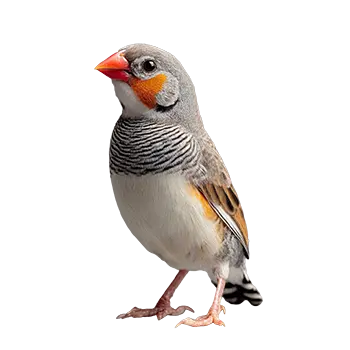
The Zebra Finch is a small, compact finch measuring approximately 4 to 4.5 inches (10 to 11.5 centimeters) in total length from bill tip to tail end. The tail accounts for roughly one-third of the total length. Adults typically weigh between 11 to 17 grams (approximately 0.4 to 0.6 ounces), making them lightweight, delicate birds requiring gentle handling if handling becomes necessary. Their build is stocky and well-proportioned with a relatively large head, full breast, and active, alert posture. Unlike many finch species where males and females appear identical, Zebra Finches display clear sexual dimorphism allowing reliable visual sexing of adult birds. Males are significantly more colorful and boldly marked than females, making sex determination straightforward once birds achieve adult plumage. This visible dimorphism is one of the species' attractive characteristics for breeders and keepers who want to know the sex of their birds. Male Zebra Finches in normal wild-type coloration display striking, complex plumage patterns. The head shows blue-gray coloring on the crown and nape. The most distinctive facial feature is the bright chestnut-orange ear patch (cheek patch) on each side of the head, creating bold splashes of warm color. These orange cheek patches are outlined by thin black lines, enhancing their visibility. The area around the eyes and the throat are white or pale gray, providing contrast. The throat features the characteristic black and white zebra stripes - fine horizontal black bars against a white background creating the distinctive pattern giving the species its common name. These zebra throat stripes extend from the chin to the upper breast. The upper breast below the zebra stripes shows a broad black band crossing horizontally, separating the throat pattern from the lower body. The lower breast and belly are white to cream-buff, relatively plain. The most striking feature of the underparts is the flanks, which display bright chestnut-orange coloring heavily spotted with round white dots creating a polka-dot pattern. This combination of orange background with white spots is distinctive and beautiful. The undertail coverts are white with fine black barring. The upperparts including the back and wings are gray-brown, creating subtle, natural coloring. The rump and uppertail coverts show fine black and white barring, the feature referenced in the genus name. The tail is black with white spots on the central tail feathers, visible when the tail is spread. The wings show darker flight feathers and subtle barring on the coverts. Female Zebra Finches are much plainer than males, lacking all the bright orange coloring and bold patterns. Females show uniform gray-brown coloring on the upperparts matching males. However, the underparts are plain pale gray-buff without any zebra stripes, black breast band, orange flanks, or white spots. The face lacks the orange cheek patches, showing only uniform gray-brown. A distinctive feature of females is a black tear-drop mark extending downward from the eye, creating a subtle but identifiable marking. Overall, females appear understated and camouflaged compared to the flashy males, reflecting their different reproductive roles where males must advertise to attract mates while females benefit from cryptic coloring during nesting. Both sexes possess bright coral-red to orange-red bills, one of the most distinctive features of the species and visible from considerable distances. The bill is conical and relatively large for the bird's size, adapted for crushing seeds. The bright bill color is particularly striking against the plumage. The eyes are dark brown to black. The legs and feet are pale orange to coral, matching the bill color, creating a coordinated appearance. Juvenile Zebra Finches of both sexes initially resemble adult females, showing plain gray-brown coloring with pale underparts and lacking adult male markings. Young birds have black bills that gradually change to adult orange-red over several weeks. As young males mature, they undergo molt acquiring adult male plumage including orange cheek patches, zebra throat stripes, black breast band, and spotted flanks. This transition typically occurs between 8-12 weeks of age, allowing breeders to sex young birds as they develop adult characteristics. Young females retain the plain plumage pattern but develop coral-red bills and other adult features. Color mutations developed in captivity show remarkable variety while maintaining the same basic sexual dimorphism pattern. White Zebra Finches (leucistic) lack melanin pigment, showing white plumage but retaining the orange-red bills and feet. Males still show slightly more distinct markings than females even in white varieties. Fawn mutations show diluted brown coloring with males displaying the same pattern as wild-type but in softer tones. Pied varieties combine white patches with normal or mutant coloring in endless combinations. Despite the numerous mutations, wild-type gray remains most common and displays the species' natural beauty most fully.
Natural Habitat & Range
The Zebra Finch is native to Australia and the Lesser Sunda Islands of Indonesia, with the Australian population representing the vast majority of the species' range and numbers. In Australia, Zebra Finches occur across virtually the entire continent except for the far northern tropical regions and the far southwest corner, making them one of the most widespread and abundant bird species on the continent. Their distribution extends from coastal regions to the arid interior, demonstrating remarkable adaptability to diverse environmental conditions. This extensive range and adaptability have contributed to the species' success both in the wild and in captivity. In their natural habitat, Zebra Finches occupy open grasslands, savanna woodlands, scrublands, agricultural areas, pastoral lands, watercourse vegetation, and even urban parks and gardens throughout their range. They show strong preference for open or semi-open habitats with grass seed availability and access to water. The species has adapted extremely well to human-modified landscapes and often thrives in agricultural areas, ranches, towns, and cities where water and food sources are predictable. They are among Australia's most familiar and commonly seen birds, often observed in large flocks at waterholes, parks, and along roadsides. The climate throughout the Zebra Finch's Australian range varies from tropical in northern populations to semi-arid and arid across much of their distribution, with temperate conditions in southern regions. Most populations experience hot, dry conditions with seasonal rainfall patterns and significant annual variation in precipitation. Zebra Finches are adapted to heat and aridity, possessing physiological mechanisms for water conservation and thermoregulation allowing them to survive in areas with limited water availability. However, unlike some desert species, Zebra Finches require regular access to drinking water and are usually found within flying distance of water sources. Wild Zebra Finches are highly social, gregarious birds living in flocks ranging from small groups of 10-20 individuals to enormous aggregations of hundreds or even thousands of birds at particularly favorable locations like reliable waterholes during dry periods. Flocking is constant and essential to their survival strategy, providing protection from predators through collective vigilance and sharing information about resource locations. They often associate with other small finch species including Long-tailed Finches, Double-barred Finches, and various other Australian grass finches in mixed-species flocks that provide mutual benefits through increased vigilance and resource discovery. Daily activity patterns begin shortly after dawn when flocks become active at roosting sites, often engaging in social interactions and preening before departing for water sources. Morning visits to waterholes are essential, with birds drinking quickly then departing for feeding areas. Zebra Finches are primarily ground feeders, foraging on bare ground or in low grasses for small grass seeds which form the dietary staple. They move through habitat in coordinated flocks, maintaining contact through constant calling. During the hottest midday hours, particularly in summer, flocks rest in shaded vegetation, becoming relatively inactive while temperatures peak. Late afternoon brings renewed feeding activity before flocks return to traditional roosting sites with characteristic noisy calling. Roosting sites in dense bushes, shrubs, or trees may be used consistently by the same flock for extended periods. Foraging behavior focuses almost exclusively on small grass seeds from various native and introduced grass species. Their conical bills are perfectly adapted for husking and consuming tiny seeds. In agricultural areas, they readily consume seeds from pasture grasses and occasionally spilled grain, though they rarely cause significant crop damage due to their small individual consumption. They typically feed on or very near the ground, picking seeds from grass heads, searching through leaf litter, or gleaning from bare ground. Water is essential, with birds requiring daily drinking particularly in hot weather. Social behaviors in wild Zebra Finches are complex and constant. Flocks maintain cohesion through frequent vocalizations including contact calls that allow individuals to track flock members' locations. Males sing frequently, particularly during breeding season, producing their characteristic buzzing, beeping songs while performing courtship displays to females. Pairs form within flocks and maintain strong bonds through mutual preening, synchronized movements, and constant proximity. The species is notably peaceful with minimal aggressive interactions even in large flocks. Breeding in wild Zebra Finches is highly opportunistic, occurring year-round in response to rainfall and grass seed availability rather than following a fixed seasonal schedule. This opportunistic breeding strategy allows Zebra Finches to respond rapidly to favorable conditions, producing multiple broods when resources are abundant. Pairs construct dome-shaped nests with side entrances using grass stems, placing them in shrubs, small trees, or occasionally in cavities. Both sexes participate in nest building, incubation, and chick rearing. Females typically lay 4-6 white eggs and both parents share incubation over approximately 12-14 days. Both parents feed chicks, which fledge at approximately 17-21 days but remain dependent on parents for an additional 1-2 weeks. Zebra Finches can begin breeding at just 3-4 months of age, remarkably early compared to most birds, contributing to their breeding success. The conservation status of the Zebra Finch is listed as Least Concern by the IUCN Red List, reflecting their enormous population, extensive range, and adaptability to human-modified landscapes. Zebra Finches are among Australia's most abundant birds with populations estimated in the millions. They have benefited from agricultural development, livestock water point creation, and habitat modifications that have increased suitable habitat and water availability. No significant conservation threats affect the species, and populations appear stable or possibly increasing. Their extraordinary success in both wild and captive environments makes them one of the world's most successful small bird species. The abundance of wild populations means aviculture has no conservation impact, with all captive birds being bred from established captive populations.
Temperament
Zebra Finches possess lively, active, and social temperaments making them entertaining and engaging pets while remaining hands-off birds appropriate for observation rather than interaction. These energetic little birds are constantly in motion, engaging in busy activities that make them fascinating to watch. Their temperament combines hardiness and adaptability with clear social needs and natural shyness around humans, requiring understanding of their nature as non-interactive observational pets. Activity and energy levels define Zebra Finch temperament above all other characteristics. These are among the most active and energetic finch species, perpetually in motion throughout daylight hours. They are constantly flying between perches, hopping around their enclosure, foraging on cage floors, engaging in social interactions with cage mates, males singing and displaying, birds preening, and engaging in nest-related activities. Watching Zebra Finches is like watching a busy, bustling society in constant motion. They rarely sit still except during brief midday rest periods or at night. This constant activity is natural, healthy, and one of the species' most entertaining characteristics. Inactive or lethargic Zebra Finches warrant concern as potential illness indicators. Social bonding and flock dynamics are essential to Zebra Finch temperament. These highly social birds form devoted, lifelong pair bonds that are touching to observe. Bonded pairs remain in constant proximity, engaging in mutual preening (allopreening), soft contact calling, synchronized movements, and obvious distress when separated. Males court females through elaborate displays including singing, hopping, and bowing while presenting nesting material. Once pairs form, they remain monogamous and cooperative in all activities including nest building, incubation, and chick rearing. Beyond pair bonds, Zebra Finches are flock-oriented birds that thrive in colonies where multiple pairs coexist peacefully. The social dynamics within groups are fascinating to observe, with constant interactions, some squabbling over preferred perches or nest sites, but generally peaceful coexistence. Solitary Zebra Finches are stressed and miserable, requiring companionship of their own species as an absolute necessity. Vocal behavior in Zebra Finches is more prominent than in many other small finch species. Males are particularly vocal, producing their characteristic song frequently throughout the day. The male Zebra Finch song consists of buzzing, beeping, and trilling sounds described as sounding like a child's toy or electronic device. The song is distinctive and recognizable, though opinions vary on its musicality - some find it charming while others consider it monotonous. Males sing during courtship, territorial displays, and seemingly just because they feel like singing. Females also vocalize with soft contact calls and begging calls. The overall noise level is moderate - not loud enough to be problematic in most situations but noticeable and constant in a way that might bother very noise-sensitive individuals. They are more vocal than species like Owl Finches or Society Finches but far quieter than parrots. Shyness and timidity around humans characterize Zebra Finches despite their long history in aviculture. These birds remain naturally cautious of people, viewing humans as potential threats rather than companions. New birds may be quite nervous initially, though they adjust to captive conditions relatively quickly compared to wild-caught species. With consistent, quiet care, they become comfortable enough to continue normal activities while their keeper is present, but they never truly tame or seek human interaction. They do not form bonds with people and do not enjoy handling. They are strictly observational pets whose appeal lies in watching their busy, social lives rather than any interactive relationship with humans. Breeding readiness and reproductive behavior are prominent aspects of Zebra Finch temperament, as these are among the most prolific and easy-breeding finch species in aviculture. Pairs often attempt to breed continuously if conditions permit, with females capable of laying clutch after clutch year-round. This breeding enthusiasm makes them popular for people interested in finch breeding but can be problematic for those not wanting constant reproduction. Males spend considerable time courting, singing, and displaying. Both sexes engage in nest-building behaviors even without suitable nest sites, carrying materials and attempting construction. Controlling breeding requires removing nest sites and materials, though pairs may still attempt breeding behaviors. Curiosity and environmental engagement are moderate in Zebra Finches. They investigate new items in their cage with some initial caution but adapt relatively quickly to changes. They are not as boldly curious as some species but will explore their environment actively. Providing varied perches, different cage levels, safe plants, and environmental complexity encourages natural exploratory behaviors and prevents boredom. Territorial behavior is minimal in Zebra Finches compared to many bird species, contributing to their suitability for colony keeping. While breeding males may show subtle territorial defense near nest sites, they rarely engage in serious aggression. Some squabbling over favorite perches occurs but rarely escalates beyond mild chasing or posturing. This generally peaceful nature makes them excellent community birds compatible with other gentle finch species in mixed aviaries. Hardiness and adaptability contribute to Zebra Finches' reputation as ideal beginner finches. They tolerate reasonable variations in temperature and humidity, adapt to various cage setups and diets, and generally maintain good health with basic care. They are forgiving of beginner mistakes, recovering well from minor husbandry lapses that might prove problematic with more delicate species. This resilience combined with their entertaining behavior makes them perfect for people learning finch care.
Care Requirements
Proper housing and care for Zebra Finches is straightforward and undemanding compared to parrots or many other pet birds, making them ideal for beginners or anyone wanting attractive, entertaining, low-maintenance avian companions. Their hardy nature, adaptability, and forgiving disposition mean they thrive with basic appropriate care consistently applied throughout their 5-7 year lifespan, with many individuals living longer under optimal conditions. Cage size for Zebra Finches must prioritize horizontal flight space rather than vertical height, as these are horizontal fliers benefiting from flying back and forth across their enclosure rather than climbing vertically like parrots. For a pair, the absolute minimum cage dimensions should be 24 inches long by 18 inches wide by 18 inches high, though larger cages measuring 30-36 inches or more in length are strongly recommended and more appropriate for their extremely active nature and high energy levels. The critical dimension is length, providing adequate horizontal flight distance for these energetic birds. For colonies of 4-8 birds, provide proportionally larger cages or small indoor aviaries. Flight cages specifically designed for finches and canaries work excellently for Zebra Finches, emphasizing length over height. Bar spacing must be appropriate for small finches, typically 0.375 to 0.5 inches (approximately 10-13mm) apart, preventing escapes and head entrapment. Wider spacing allows these tiny birds to slip through easily, while very narrow spacing can trap delicate feet or toes. Horizontal bars facilitate climbing though Zebra Finches are not particularly acrobatic climbers like parrots. Cage construction should be powder-coated metal or stainless steel for easy cleaning and disinfection and long-term durability. Avoid decorative cages with ornate features difficult to clean or potentially hazardous. Cage placement requires consideration of their active, social nature and moderate vocalizations. Position the cage in a moderately active area where birds can observe household activities without being in the center of constant chaos. Living rooms or family rooms often work well, though bedrooms may not be ideal due to the males' persistent singing beginning at dawn. The cage should be elevated to table height or higher, as finches feel more secure when not at vulnerable ground level. Provide good lighting but avoid direct continuous sunlight causing overheating. Keep cages away from drafts from windows, doors, or air conditioning vents, and away from kitchens due to toxic cooking fumes particularly from non-stick cookware containing PTFE/Teflon which releases instantly fatal fumes. Perch selection and placement is important for foot health and flight opportunities. Provide multiple natural wood perches of varying diameters from approximately 0.25 to 0.375 inches to exercise different foot muscles and prevent pressure sores from uniform perches. Position perches at different heights and spacing encouraging flight between them rather than only hopping, maximizing the horizontal flight space. Include at least one grooming perch with slightly abrasive texture for natural nail maintenance. Avoid sandpaper-covered perches causing foot injuries and abrasions. Natural branches from safe trees like apple, willow, or birch provide varied diameters and textures that are better for foot health than uniform dowel perches. Replace perches regularly as they become soiled. Substrate options for cage bottoms include newspaper, paper towels, corn cob bedding, or commercial cage liners changed daily or every other day. Avoid cedar or pine shavings which release aromatic oils potentially toxic to birds. Some keepers prefer bare cage trays for easiest cleaning and observation of droppings which provide important health indicators. Maintaining substrate cleanliness prevents bacterial growth and parasitic infections. Food and water dish placement requires providing multiple locations to ensure all birds can access resources, particularly important in colonies. Use small dishes appropriately sized for finches, positioned away from perches where droppings could contaminate them. Provide at least two seed dishes and two water sources in different cage locations. Replace food daily by removing dishes, blowing away empty seed hulls that finches leave while eating (a critical step as birds can starve with dishes full of only empty shells), and refilling with fresh seed mix. Replace water daily at minimum, more often if soiled by droppings or bathing. Use ceramic, stainless steel, or sturdy plastic dishes easily cleaned and disinfected. Bathing opportunities should be provided daily or at least several times weekly, as Zebra Finches are enthusiastic bathers. Offer shallow dishes of clean water (maximum 0.5 inches deep) placed on cage floors or attached finch baths hung on cage doors. Most will bathe vigorously, splashing and fluttering wings creating quite a spectacle. Remove bath dishes after bathing to prevent drinking of dirty water. Nesting accommodations for breeding pairs include providing finch nest boxes, wicker nests, or other enclosed nesting sites if breeding is desired. Provide nesting materials including coconut fiber, dried grasses, feathers, and soft materials. Zebra Finches are enthusiastic builders constructing elaborate dome-shaped nests. However, if breeding is not desired, simply don't provide nesting sites or materials, though determined pairs may attempt nests with any available materials including shed feathers and hay from perches. Controlling breeding in Zebra Finches requires vigilance as they will breed prolifically if given any opportunity. Environmental enrichment for Zebra Finches includes providing natural branches with safe foliage for exploration, varying perch positions periodically to maintain interest, offering spray millet as occasional treats providing foraging enrichment, including safe non-toxic potted plants if space allows, and maintaining pairs or small colonies rather than just single pairs when possible as they enjoy social dynamics. They are not toy-oriented like parrots but appreciate environmental complexity and variety. Temperature requirements for Zebra Finches are flexible due to their Australian origin and adaptability. They are comfortable at room temperatures from 65-80°F and tolerate reasonable variations outside this range. Protect them from drafts, sudden temperature changes, and prolonged temperatures below 55°F or above 90°F. Humidity levels are relatively unimportant as they adapt to typical indoor conditions, though avoid extremely low humidity below 30% or very high humidity above 70%. Lighting requirements include 12-14 hours of light and 10-12 hours of darkness daily mimicking natural photoperiods. Natural daylight is ideal, supplemented with artificial lighting if needed. Avoid continuous 24-hour lighting which disrupts natural circadian rhythms and can trigger excessive breeding. Cover cages at night if household lighting might disturb sleeping birds, ensuring they receive adequate darkness for proper rest. Cleaning protocols involve daily spot-cleaning of obvious droppings and spilled food, daily substrate changes if using paper, fresh food and water daily without exception with proper hull removal from seed dishes, weekly thorough cleaning of entire cage including all surfaces, perches, and dishes with bird-safe disinfectant followed by complete rinsing and drying, and monthly deep cleaning including soaking and scrubbing all cage components. Maintaining cleanliness prevents disease and creates healthy, pleasant environments for both birds and keepers.
Feeding & Nutrition
Proper nutrition for Zebra Finches follows the straightforward dietary pattern appropriate for small Australian grass finches. These primarily granivorous birds thrive on seed-based diets supplemented with fresh foods and appropriate supplements, making their nutritional requirements relatively easy to meet with attention to variety and quality throughout their 5-7 year lifespan. The foundation of a captive Zebra Finch diet should be a high-quality finch seed mix containing various small grass seeds appropriate for small finches. Commercial finch mixes typically include white millet, yellow millet, panicum millet, Japanese millet, canary seed, and various other small grass seeds. Choose premium mixes from reputable manufacturers, avoiding products with excessive dust, debris, filler seeds, or stale ingredients indicating age or poor storage. An ideal mix for Zebra Finches emphasizes the smaller millet varieties while limiting higher-fat canary seed to prevent obesity. The seed mix should constitute approximately 70-80% of daily food intake. Store seed in airtight containers in cool, dry locations to prevent spoilage, insect infestation, and mold growth. Check stored seed regularly for signs of deterioration including musty odors, webbing indicating insect infestation, or visible mold. Fresh greens should be offered daily as essential vitamin and mineral sources, particularly vitamin A which is critical for finch health. Appropriate greens include chickweed (a particular favorite of most finches), dandelion greens, lettuce (dark leafy varieties like romaine or red leaf, never nutritionally poor iceberg), spinach in moderation due to oxalate content, kale, Swiss chard, fresh grass seedheads when available, and sprouted seeds which are highly nutritious. Wash all greens thoroughly to remove pesticides, fertilizers, and other contaminants. Offer fresh greens in separate dishes or clip them to cage bars. Remove wilted or uneaten greens after a few hours to prevent spoilage and bacterial growth that could cause illness. Protein supplementation becomes particularly important during breeding season when parents require additional nutrition for egg production and feeding growing chicks. Provide hard-boiled eggs finely chopped including crushed shell for calcium, commercial egg food formulated specifically for finches, or live foods like fruit flies, micro crickets, or very small mealworms if available. During non-breeding periods, offer protein sources once or twice weekly as supplementation maintaining good condition. Breeding pairs actively feeding chicks require daily protein supplementation to support the rapid growth of young birds. Calcium supplementation is absolutely essential, particularly for breeding females requiring substantial calcium for egg shell formation. Provide cuttlebone, mineral block, or crushed oyster shell available at all times in the cage. Females will instinctively increase calcium consumption when preparing to lay eggs, and adequate calcium availability is critical for preventing soft-shelled eggs, egg binding, and death. Many keepers provide multiple calcium sources ensuring constant availability. Calcium deficiency is one of the most serious nutritional problems affecting breeding finches. Iodine supplementation is important for Zebra Finches, as seed-based diets are often deficient in this essential trace mineral. Iodine deficiency can lead to goiter development causing thyroid enlargement and respiratory problems. Provide iodine through commercial iodine blocks designed for finches, iodine supplements added to drinking water according to package directions, or commercial finch supplements containing iodine. Regular iodine supplementation prevents deficiency problems. Grit provision remains debated in finch care. Some experts recommend providing small amounts of soluble grit (crushed oyster shell) which provides calcium while potentially aiding digestion, while others suggest seed-eating finches do not require grit. If offering grit, provide it in a separate small dish allowing birds to self-regulate consumption rather than mixing it throughout substrate. Never provide large amounts of insoluble grit which can cause crop impaction, a potentially fatal condition. Water must be fresh, clean, and available at all times without exception. Change water at least once daily, more frequently if soiled by droppings, bathing, or food debris. Use clean water (tap water is generally acceptable if not heavily chlorinated; allow standing for a few hours to dissipate chlorine, or use filtered water). Provide water in multiple small dishes or water bottles positioned where all birds can access them without competition. Clean water containers daily with hot water and weekly with bird-safe disinfectant followed by thorough rinsing to prevent bacterial growth. Foods requiring complete avoidance include avocado (highly toxic to all birds), chocolate, caffeine, alcohol, excessive salt, sugar, onions, garlic, and any spoiled or moldy foods. Avoid seed mixes containing large seeds inappropriate for tiny finches like sunflower seeds or safflower which they cannot crack and which only create waste. Never offer stale, musty-smelling, or visibly moldy seed which can cause serious respiratory and digestive illness or death. Treats and supplements for Zebra Finches include spray millet, which they absolutely love and which provides excellent foraging enrichment, offered 2-3 times weekly in limited amounts to prevent obesity and ensure birds don't fill up on treats instead of nutritious foods. Occasional tiny seeds like poppy, sesame, or chia provide variety. Commercial finch vitamin supplements can be added to water following package directions, though healthy finches eating varied diets with fresh greens typically don't require additional supplementation. Avoid over-supplementation which can be as harmful as deficiency. Feeding schedule and routine involves checking seed dishes daily by removing dishes, blowing away empty seed hulls that Zebra Finches leave while eating (this daily hull removal is absolutely critical as birds can literally starve to death with dishes that appear full but contain only empty shells), and refilling with fresh seed mix. This is the most important daily feeding task and the one most commonly neglected by beginners. Fresh greens should be offered daily and removed after a few hours to prevent spoilage. Water should be changed daily at minimum, more often if needed. Consistent daily feeding routines help maintain good health and breeding condition. Weight monitoring in small finches is challenging without a gram scale but can be assessed through body condition observation. Healthy Zebra Finches should have slightly rounded breasts with keel bones just barely palpable but not sharply prominent. Very prominent, sharp keels indicate underweight condition requiring increased food quantity or quality and veterinary evaluation for illness. Completely obscured keels suggest obesity requiring dietary adjustment through reduced fatty seeds and increased exercise opportunities through larger flight space.
Zebra Finch Health & Lifespan
Zebra Finches are generally hardy, robust birds maintaining good health with proper care, regularly achieving lifespans of 5-7 years in captivity with some individuals living 8-10 years under optimal conditions. Their adaptability and hardiness inherited from wild Australian ancestors living in challenging environments contributes to their reputation as beginner-friendly, resilient birds. However, their small size and delicate physiology make them vulnerable to certain health conditions requiring vigilant observation and prompt intervention when problems arise. Air sac mites, microscopic parasites infesting the respiratory system, can affect Zebra Finches causing respiratory symptoms including open-mouth breathing, clicking or wheezing sounds during respiration, tail bobbing with each breath, voice changes or loss, and progressive weakness if untreated, requiring antiparasitic medications containing ivermectin or similar avermectins administered by avian veterinarians. Scaly face and leg mites caused by Knemidokoptes parasites create crusty, proliferative, scaly growths on the beak, cere, legs, feet, and occasionally around eyes and vent, causing discomfort, potential beak deformities, and disfigurement without treatment, requiring ivermectin or similar antiparasitic therapy applied topically or systemically. Bacterial infections particularly enteritis causing digestive tract inflammation occur in finches kept in unsanitary conditions, presenting with diarrhea, watery or discolored droppings, fluffed feathers, lethargy, sitting on cage floors, and weight loss, requiring veterinary diagnosis through fecal cultures and appropriate antibiotic therapy based on sensitivity testing. Egg binding, where a female cannot expel a formed egg, can affect breeding female Zebra Finches particularly those with calcium deficiency, obesity, oversized eggs, very young or old females, or inadequate nesting conditions, representing a life-threatening emergency requiring immediate veterinary intervention with supportive care, warmth, calcium administration, lubrication, and sometimes manual extraction. Overgrown nails and beaks develop in captive finches without adequate abrasive surfaces for natural wear, requiring careful trimming by experienced handlers or veterinarians to prevent injury to these delicate birds. Goiter can develop in finches fed seed-only diets deficient in iodine, causing thyroid enlargement visible as swelling in the neck region and respiratory difficulties, requiring dietary supplementation with iodine and improved nutrition. Obesity occurs in Zebra Finches provided with excessive fatty seeds particularly white millet and canary seed without adequate flight exercise space, predisposing to fatty liver disease and other serious complications. Preventive care forms the essential foundation for maintaining Zebra Finch health throughout their lives. Regular observation and daily monitoring for subtle illness signs including fluffed feathers, reduced activity, changes in droppings, decreased appetite, respiratory symptoms, voice changes in singing males, or altered behavior allows early detection before conditions progress to critical stages where intervention is often unsuccessful. Proper diet and nutrition with quality finch seed mixes emphasizing smaller millet varieties over fatty canary seed, daily fresh greens providing essential vitamins particularly vitamin A and calcium, calcium supplementation through cuttlebone or mineral blocks especially critical for breeding females, occasional protein sources particularly during breeding season, iodine supplementation through commercial supplements or iodine blocks, and fresh water prevents nutritional deficiencies supporting immune function and overall health. Cage cleanliness with daily removal of waste and spoiled food, weekly thorough cleaning and disinfection of entire cage including all surfaces, perches, and accessories, and appropriate substrate management prevents bacterial, parasitic, and fungal infections flourishing in unsanitary conditions. Environmental management including protection from drafts and temperature extremes, appropriate temperature maintenance between 65-80°F, adequate ventilation preventing respiratory problems, and moderate humidity supports respiratory health and prevents stress-related illness. Quarantine protocols for new birds with minimum 30-day isolation before introducing to established collections prevents disease transmission to healthy birds and allows health monitoring and veterinary clearance if concerns arise. Annual wellness examinations with avian veterinarians experienced with finches, while uncommon for inexpensive birds, can detect subclinical problems early through physical examination, weight monitoring, and potentially blood work. The critical importance of early illness recognition in small finches cannot be overstated. The rapid metabolism of these tiny birds means they deteriorate quickly when sick, often progressing from apparently healthy to critical condition within hours. Any bird showing fluffed feathers, lethargy, sitting on cage floors, labored breathing, or other illness signs requires immediate veterinary attention without delay. The common avicultural saying 'a sick finch is a dead finch by tomorrow' reflects the harsh reality that delayed treatment often proves fatal due to their minimal physiological reserves. With consistent appropriate care including proper housing emphasizing adequate flight space, balanced diet with variety beyond seeds alone, clean environment maintained through regular cleaning protocols, protection from temperature extremes and predators, and prompt attention to any health concerns, Zebra Finches typically enjoy good health throughout their 5-7 year average lifespan with many individuals living longer. Their hardiness makes them relatively forgiving of minor care lapses, though this resilience should not excuse poor husbandry practices.
Common Health Issues
- Air sac mites, microscopic parasites infesting the respiratory system, can affect Zebra Finches causing respiratory symptoms including open-mouth breathing, clicking or wheezing sounds during respiration, tail bobbing with each breath, voice changes or loss, and progressive weakness if untreated, requiring antiparasitic medications containing ivermectin or similar avermectins administered by avian veterinarians.
- Scaly face and leg mites caused by Knemidokoptes parasites create crusty, proliferative, scaly growths on the beak, cere, legs, feet, and occasionally around eyes and vent, causing discomfort, potential beak deformities, and disfigurement without treatment, requiring ivermectin or similar antiparasitic therapy applied topically or systemically.
- Egg binding, where a female cannot expel a formed egg, can affect breeding female Zebra Finches particularly those with calcium deficiency, obesity, oversized eggs, very young or old females, or inadequate nesting conditions, representing a life-threatening emergency requiring immediate veterinary intervention with supportive care, warmth, calcium administration, lubrication, and sometimes manual extraction.
- Goiter can develop in finches fed seed-only diets deficient in iodine, causing thyroid enlargement visible as swelling in the neck region and respiratory difficulties, requiring dietary supplementation with iodine and improved nutrition.
- Obesity occurs in Zebra Finches provided with excessive fatty seeds particularly white millet and canary seed without adequate flight exercise space, predisposing to fatty liver disease and other serious complications.
- Regular observation and daily monitoring for subtle illness signs including fluffed feathers, reduced activity, changes in droppings, decreased appetite, respiratory symptoms, voice changes in singing males, or altered behavior allows early detection before conditions progress to critical stages where intervention is often unsuccessful.
- Environmental management including protection from drafts and temperature extremes, appropriate temperature maintenance between 65-80°F, adequate ventilation preventing respiratory problems, and moderate humidity supports respiratory health and prevents stress-related illness.
Preventive Care & Health Monitoring
- Egg binding, where a female cannot expel a formed egg, can affect breeding female Zebra Finches particularly those with calcium deficiency, obesity, oversized eggs, very young or old females, or inadequate nesting conditions, representing a life-threatening emergency requiring immediate veterinary intervention with supportive care, warmth, calcium administration, lubrication, and sometimes manual extraction.
- Goiter can develop in finches fed seed-only diets deficient in iodine, causing thyroid enlargement visible as swelling in the neck region and respiratory difficulties, requiring dietary supplementation with iodine and improved nutrition.
- Proper diet and nutrition with quality finch seed mixes emphasizing smaller millet varieties over fatty canary seed, daily fresh greens providing essential vitamins particularly vitamin A and calcium, calcium supplementation through cuttlebone or mineral blocks especially critical for breeding females, occasional protein sources particularly during breeding season, iodine supplementation through commercial supplements or iodine blocks, and fresh water prevents nutritional deficiencies supporting immune function and overall health.
- Cage cleanliness with daily removal of waste and spoiled food, weekly thorough cleaning and disinfection of entire cage including all surfaces, perches, and accessories, and appropriate substrate management prevents bacterial, parasitic, and fungal infections flourishing in unsanitary conditions.
- Annual wellness examinations with avian veterinarians experienced with finches, while uncommon for inexpensive birds, can detect subclinical problems early through physical examination, weight monitoring, and potentially blood work.
Zebra Finches are generally hardy, robust birds maintaining good health with proper care, regularly achieving lifespans of 5-7 years in captivity with some individuals living 8-10 years under optimal conditions. Their adaptability and hardiness inherited from wild Australian ancestors living in challenging environments contributes to their reputation as beginner-friendly, resilient birds. However, their small size and delicate physiology make them vulnerable to certain health conditions requiring vigilant observation and prompt intervention when problems arise. Air sac mites, microscopic parasites infesting the respiratory system, can affect Zebra Finches causing respiratory symptoms including open-mouth breathing, clicking or wheezing sounds during respiration, tail bobbing with each breath, voice changes or loss, and progressive weakness if untreated, requiring antiparasitic medications containing ivermectin or similar avermectins administered by avian veterinarians. Scaly face and leg mites caused by Knemidokoptes parasites create crusty, proliferative, scaly growths on the beak, cere, legs, feet, and occasionally around eyes and vent, causing discomfort, potential beak deformities, and disfigurement without treatment, requiring ivermectin or similar antiparasitic therapy applied topically or systemically. Bacterial infections particularly enteritis causing digestive tract inflammation occur in finches kept in unsanitary conditions, presenting with diarrhea, watery or discolored droppings, fluffed feathers, lethargy, sitting on cage floors, and weight loss, requiring veterinary diagnosis through fecal cultures and appropriate antibiotic therapy based on sensitivity testing. Egg binding, where a female cannot expel a formed egg, can affect breeding female Zebra Finches particularly those with calcium deficiency, obesity, oversized eggs, very young or old females, or inadequate nesting conditions, representing a life-threatening emergency requiring immediate veterinary intervention with supportive care, warmth, calcium administration, lubrication, and sometimes manual extraction. Overgrown nails and beaks develop in captive finches without adequate abrasive surfaces for natural wear, requiring careful trimming by experienced handlers or veterinarians to prevent injury to these delicate birds. Goiter can develop in finches fed seed-only diets deficient in iodine, causing thyroid enlargement visible as swelling in the neck region and respiratory difficulties, requiring dietary supplementation with iodine and improved nutrition. Obesity occurs in Zebra Finches provided with excessive fatty seeds particularly white millet and canary seed without adequate flight exercise space, predisposing to fatty liver disease and other serious complications. Preventive care forms the essential foundation for maintaining Zebra Finch health throughout their lives. Regular observation and daily monitoring for subtle illness signs including fluffed feathers, reduced activity, changes in droppings, decreased appetite, respiratory symptoms, voice changes in singing males, or altered behavior allows early detection before conditions progress to critical stages where intervention is often unsuccessful. Proper diet and nutrition with quality finch seed mixes emphasizing smaller millet varieties over fatty canary seed, daily fresh greens providing essential vitamins particularly vitamin A and calcium, calcium supplementation through cuttlebone or mineral blocks especially critical for breeding females, occasional protein sources particularly during breeding season, iodine supplementation through commercial supplements or iodine blocks, and fresh water prevents nutritional deficiencies supporting immune function and overall health. Cage cleanliness with daily removal of waste and spoiled food, weekly thorough cleaning and disinfection of entire cage including all surfaces, perches, and accessories, and appropriate substrate management prevents bacterial, parasitic, and fungal infections flourishing in unsanitary conditions. Environmental management including protection from drafts and temperature extremes, appropriate temperature maintenance between 65-80°F, adequate ventilation preventing respiratory problems, and moderate humidity supports respiratory health and prevents stress-related illness. Quarantine protocols for new birds with minimum 30-day isolation before introducing to established collections prevents disease transmission to healthy birds and allows health monitoring and veterinary clearance if concerns arise. Annual wellness examinations with avian veterinarians experienced with finches, while uncommon for inexpensive birds, can detect subclinical problems early through physical examination, weight monitoring, and potentially blood work. The critical importance of early illness recognition in small finches cannot be overstated. The rapid metabolism of these tiny birds means they deteriorate quickly when sick, often progressing from apparently healthy to critical condition within hours. Any bird showing fluffed feathers, lethargy, sitting on cage floors, labored breathing, or other illness signs requires immediate veterinary attention without delay. The common avicultural saying 'a sick finch is a dead finch by tomorrow' reflects the harsh reality that delayed treatment often proves fatal due to their minimal physiological reserves. With consistent appropriate care including proper housing emphasizing adequate flight space, balanced diet with variety beyond seeds alone, clean environment maintained through regular cleaning protocols, protection from temperature extremes and predators, and prompt attention to any health concerns, Zebra Finches typically enjoy good health throughout their 5-7 year average lifespan with many individuals living longer. Their hardiness makes them relatively forgiving of minor care lapses, though this resilience should not excuse poor husbandry practices.

Training & Vocalization
Training Zebra Finches in any traditional sense practiced with parrots is neither practical nor appropriate, as these tiny, naturally shy birds are strictly hands-off pets meant to be observed and appreciated rather than handled or trained. Understanding this fundamental characteristic and maintaining appropriate expectations ensures enjoyment of these lively, entertaining birds for what they are rather than disappointment from unrealistic hopes for interactive companionship. The concept of training - teaching tricks, commands, or step-up behaviors - simply does not apply to Zebra Finches or other small finches. These birds do not bond with humans, do not desire or enjoy interaction with people, and become stressed by handling attempts. They are observational pets whose considerable appeal lies in their lively, active behaviors, constant social interactions with cage mates, entertaining courtship displays, and for those interested, their ready breeding. Attempting to tame or train Zebra Finches causes unnecessary stress and is completely inappropriate to their nature as hands-off birds. Acclimation and adjustment to captivity occurs relatively readily in captive-bred Zebra Finches, as they are accustomed to human presence from hatching. With patient, consistent care, they gradually become comfortable in their environment and with their keeper's presence, though they never truly tame. This acclimation involves moving slowly and speaking softly around their cage, avoiding sudden movements or loud noises that startle them, performing care tasks at consistent times establishing routine they can learn and anticipate, never attempting to grab, chase, or handle birds except in genuine emergencies, and allowing them to observe and adjust to household routines at their own pace. Over days to weeks, acclimated Zebra Finches will continue their normal activities while their keeper performs nearby care tasks rather than freezing in fear or attempting to escape, though they remain fundamentally shy and non-interactive. Handling Zebra Finches should be avoided except when absolutely necessary for health checks, moving birds between enclosures, or emergency situations. When handling becomes unavoidable, use proper technique for small finches: gently cup the bird in your palm with the head protruding between your index and middle fingers, supporting the tiny body without applying pressure to the chest which would restrict breathing. Hold only for the minimum time necessary and return birds to their cage immediately. Excessive or improper handling causes severe stress, can cause injury including broken bones in these delicate creatures, and may result in death from stress or trauma. Many successful Zebra Finch keepers maintain birds for years without ever handling them. Vocalizations of Zebra Finches are more prominent and distinctive than many other small finch species, representing both an appealing characteristic and a consideration for noise-sensitive situations. Male Zebra Finches are particularly vocal, producing their characteristic courtship song frequently throughout the day, especially during breeding season but often year-round. The male Zebra Finch song is instantly recognizable, consisting of buzzing, beeping sounds combined with trills and repeated phrases. The song structure includes multiple elements produced in sequence, and individual males develop slight variations making their songs individually recognizable. The song sounds somewhat like a child's electronic toy or video game, with buzzing and beeping tones that some find charming and others consider monotonous. Males sing during courtship displays directed at females, during territorial interactions with other males, and seemingly spontaneously throughout the day. Males often begin singing at first light, which can be problematic for light sleepers if cages are kept in bedrooms. Contact calls consist of soft to moderately loud chirps, beeps, and peeps that both sexes use to maintain pair bonds and flock cohesion. These calls occur constantly throughout the day as birds communicate with cage mates. The calls are more noticeable than those of very quiet species like Owl Finches or Society Finches but nowhere near as loud as parrots. Female Zebra Finches also produce begging calls when soliciting feeding from mates, characterized by rapid, high-pitched peeping sounds. Alarm calls given when birds perceive threats are sharper and more urgent than normal contact calls, alerting flock members to potential danger. All birds in a colony will typically respond to one individual's alarm call, becoming alert and vigilant or flying to safe perches. The overall noise level of Zebra Finches is moderate - noticeably more vocal than some very quiet finch species but far quieter than parrots, cockatiels, or even canaries. Their vocalizations are generally acceptable for most living situations including apartments, though very noise-sensitive individuals or situations requiring complete quiet may find the constant, repetitive male singing annoying. They are not appropriate for bedrooms of light sleepers due to early morning singing. However, most people find their vocalizations pleasant background sounds that add life and interest without being truly disruptive. Song learning in Zebra Finches is a fascinating aspect of their vocal behavior. Young male Zebra Finches learn their songs by listening to and imitating adult male tutors, typically their fathers. This vocal learning process has made Zebra Finches important model organisms in neuroscience research studying the neural mechanisms of learning and memory. Young males go through a babbling phase similar to human infant language acquisition before crystallizing their adult song. This song learning creates slight individual and regional variations in song structure among different populations. The key to enjoying Zebra Finches is appreciating them as lively, active, entertaining birds providing visual pleasure and characteristic vocalizations through their natural behaviors rather than through interaction or trained behaviors. They represent small, energetic avian companions adding life, movement, and sound to rooms without the demands or complexity of parrot companionship.
Children & Other Pets
Zebra Finches can be excellent pets for families with children when age-appropriateness, realistic expectations, and proper supervision are carefully considered. These observational pets provide valuable educational opportunities while requiring manageable care compared to more demanding animals, making them suitable first birds for responsible children learning basic animal care and appreciation for wildlife. Children under 8 years old generally lack the understanding and impulse control necessary to appreciate hands-off observational pets like Zebra Finches. Young children naturally want to touch and actively interact with pets, which is completely inappropriate and stressful for these tiny, shy finches. Additionally, young children can frighten birds with sudden movements, loud voices, or tapping on cages. However, Zebra Finches can still provide valuable experiences for young children when adults maintain complete responsibility while allowing supervised observation of the birds' fascinating activities, learning about bird behaviors, and developing appreciation for nature through watching rather than touching. The constant activity and entertaining behaviors of Zebra Finches capture children's attention better than less active species. Children aged 8-16 years can enjoy, learn from, and actively participate in Zebra Finch care with appropriate education and supervision. This age group can understand observational pet concepts, appreciate the birds' lively behaviors and entertaining social interactions, and take responsibility for daily care tasks including providing fresh food and water with proper hull removal from seed dishes, maintaining cage cleanliness, offering fresh greens, and monitoring bird health under adult guidance. Zebra Finches provide excellent educational opportunities teaching responsibility, patience, observation skills, natural science, life cycles if breeding occurs, and animal care basics. They make outstanding first birds for children interested in aviculture, providing foundation experience with basic bird care without the complexity and demands of parrots or more challenging species. Their ready breeding also provides amazing opportunities for children to observe nest building, egg laying, hatching, and chick development if parents permit breeding. Educating children about proper Zebra Finch care involves explaining these are hands-off observational birds that become stressed by handling attempts or excessive interaction, teaching them to move slowly and speak quietly near cages to avoid frightening birds, showing them how to observe natural behaviors including foraging, bathing, preening, male courtship displays with singing and dancing, nest building if permitted, and social interactions between pairs and colony members, instructing them never to put hands in cages except during supervised care tasks, and emphasizing the critical importance of consistent daily care routines particularly the essential task of removing empty seed hulls. Making children responsible for age-appropriate care tasks builds investment in the birds' wellbeing and teaches responsibility. Cage positioning for families with children should allow comfortable observation from seated or standing positions while ensuring cages won't be bumped, shaken, or knocked over during active play. Quiet bedrooms (though not rooms where light sleepers need complete quiet), studies, or family rooms work better than busy playrooms or kitchens. Locations should enable children to watch the birds' constant activities without the birds being in the center of household chaos. Supervision remains important even with older children to ensure feeding schedules are maintained, proper seed dish maintenance with hull removal is performed correctly, cages stay clean, health issues are noticed promptly, and appropriate care standards are consistently met. Adults should regularly inspect cages, observe birds, and monitor care routines ensuring proper maintenance. However, Zebra Finches' straightforward care requirements and hardy nature make them forgiving of minor lapses that might prove problematic with more delicate finch species. Interactions between Zebra Finches and other household pets, particularly predatory species, require extreme caution and strict separation protocols maintained without exception. Cats, dogs, ferrets, and other predatory pets pose lethal threats to these tiny, defenseless finches. Even normally gentle, well-behaved pets may display prey drive toward small birds, and a single moment of contact results in death or serious injury. Strict separation is absolutely mandatory at all times. The birds' cage must be positioned where predatory pets cannot access it under any circumstances, ideally in rooms where such pets are never allowed or in locations physically inaccessible to cats and dogs. The cage should be sturdy enough that jumping or climbing cats cannot knock it over and secure enough that pets cannot reach through bars to grab birds. Many finch keepers maintain bird rooms completely off-limits to cats and dogs, ensuring absolute safety through physical separation. Even a cat or dog sitting quietly watching the cage causes extreme stress to finches, which recognize predators and respond with fear. Direct supervision or preferably complete separation must be maintained whenever predatory pets are in the same room as finch cages. Never assume safety based on past peaceful coexistence, as prey drive can activate suddenly and unexpectedly. The tragedy of preventable pet-related deaths is heartbreakingly common among finch keepers who became complacent about safety protocols. Other pet birds including larger finches, canaries, budgies, or other small species may be highly compatible with Zebra Finches in mixed-species aviaries with important considerations. Zebra Finches are generally peaceful and social, making them good community birds. They coexist well with other similarly gentle species including Society Finches, Owl Finches, Gouldian Finches, Star Finches, and various other small grass finches, waxbills, and mannikins. However, they are more active and sometimes more assertive than very shy species, potentially intimidating extremely timid birds. They must not be housed with aggressive species that would bully or injure them, nor with very delicate species that might be stressed by their constant activity and vocalizations. Introducing new birds should occur gradually with careful observation for compatibility. Provide adequate space, multiple feeding stations, and sufficient perches preventing competition and ensuring all individuals can access resources. Monitor for aggression, bullying, or stress, remaining prepared to separate incompatible individuals. Zebra Finches can become somewhat territorial near nest sites during breeding, potentially harassing other species attempting to nest nearby. Providing multiple nest sites in different cage areas helps prevent conflicts. With appropriate species selection and adequate space, Zebra Finches thrive in mixed collections. Overall, Zebra Finches work excellently in family settings with proper education, realistic expectations, and appropriate supervision. Their lively nature, entertaining behaviors, ease of care, hardiness, educational value, and potential for observing breeding make them ideal family birds when appreciated as observational pets rather than interactive companions. Their constant activity keeps children interested and engaged in ways that more sedentary finch species might not.

