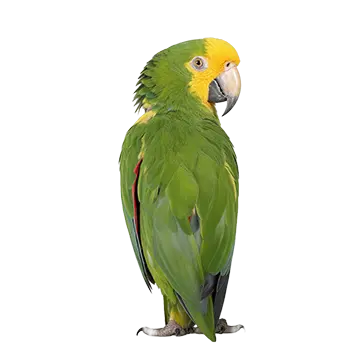
Training a Yellow-Crowned Amazon is simultaneously one of the most rewarding and challenging experiences in parrot ownership. These highly intelligent, strong-willed, opinionated birds are capable of learning extensive vocabularies, complex trick sequences, sophisticated behaviors, and nuanced communication with their owners, but they are also stubborn, manipulative, and occasionally uncooperative. Success requires substantial patience, unwavering consistency, deep understanding of avian behavior and learning theory, and recognition that you are training an intelligent individual with distinct preferences, moods, and personality rather than programming a robot. Starting training early with young, hand-raised birds yields optimal results, as young parrots are more receptive to new experiences, less set in established behavior patterns, and more easily socialized, though even older, previously unsocialized adults can learn new behaviors with appropriate techniques, realistic expectations, and persistent effort.
The foundation of all effective training must be built on trust and positive reinforcement rather than punishment, force, or coercion. Yellow-Crowned Amazons respond enthusiastically to food rewards, verbal praise, and activities they enjoy, but they become defensive, fearful, or aggressively resistant when punished, yelled at, sprayed with water, or handled roughly. Never hit, shake, spray with water as punishment, or use other aversive methods, as these destroy the trust fundamental to successful human-parrot relationships and create long-term behavioral problems including aggression, fearfulness, and unwillingness to cooperate. Instead, reward desired behaviors immediately and generously using high-value food treats like small pieces of nut, favorite fruits, or preferred seeds. Timing is absolutely critical—rewards must occur within 1-2 seconds of the desired behavior for the parrot to make the association between behavior and reward.
Basic training begins with the step-up command, the most fundamental and important skill for any pet parrot regardless of species. Place your hand or a handheld perch just above the bird's feet at mid-chest level while saying 'step up' in a calm, consistent tone using the exact same phrase every time. Gently press against the lower chest/upper belly to encourage the bird to step forward onto your hand or the perch. Reward successful steps immediately with enthusiastic verbal praise and a small food treat. Practice this exercise multiple times daily in brief 5-10 minute sessions until the bird steps up reliably and promptly on command without hesitation. Establishing solid, reliable step-up response provides the foundation for all future training and gives owners a safe, predictable way to move the bird when necessary for cage cleaning, veterinary visits, or other situations requiring handling.
Trick training possibilities with Yellow-Crowned Amazons are virtually limitless, as these birds genuinely enjoy learning new skills and showing off their abilities for audience approval and treats. Popular tricks that these parrots excel at include waving on command by raising one foot, turning in circles or 'dancing' to music, retrieving specific objects and bringing them to hand, playing basketball by picking up small balls and dropping them in miniature hoops, ringing bells or pushing buttons on cue, climbing ladders or navigating obstacle courses, spreading wings for wing checks allowing visual health inspection, allowing nail trimming and other husbandry behaviors through desensitization training, and countless other creative behaviors limited only by imagination, patience, and the individual bird's interests and physical capabilities. Break complex tricks into small, successive approximations using shaping techniques, rewarding progress at each incremental step rather than expecting perfect performance immediately. Keep training sessions relatively short (5-15 minutes) to maintain the bird's interest and enthusiasm, and always end sessions on a positive note even if that means returning to an easier, fully mastered behavior for the final repetition.
Yellow-Crowned Amazons can be remarkably stubborn during training sessions, sometimes refusing to perform known behaviors perfectly well within their capabilities if they simply don't feel like cooperating. This is completely normal behavior reflecting their intelligent, independent nature and should not frustrate owners unduly. These are not dogs bred for thousands of generations to eagerly please humans—they are wild animals with strong personalities and their own agendas. Don't force the issue, become visibly frustrated, or punish refusal. Instead, try again later when the bird is more receptive and motivated. Understanding that these birds have moods, preferences, good days and bad days helps maintain realistic expectations and prevents training frustration.
Talking ability and mimicry in Yellow-Crowned Amazons is truly excellent, ranking among the very best talking parrot species in the world alongside African Greys, Double Yellow-Headed Amazons, and Yellow-Naped Amazons. Many individuals develop impressive vocabularies of 100-300+ words and phrases with dedicated exposure to language, speaking with remarkable clarity, good enunciation, and often with contextually appropriate use that suggests genuine understanding. Their voice quality is characteristically loud and somewhat nasal but generally clear with excellent intelligibility that makes their words easily understandable even to unfamiliar listeners. They excel at mimicking not just individual words but entire phrases, vocal inflections, emotional tones, singing songs with accurate melody and often lyrics, and even specific individuals' voices, sometimes sounding remarkably like particular family members.
Males and females both demonstrate excellent talking ability, with individual variation based more on personality, exposure to language, and motivation than sex-related differences. What particularly distinguishes Yellow-Crowned Amazons from mere vocal mimics is their apparent understanding of context and meaning. Many birds learn to use words and phrases with striking appropriateness, saying greetings like 'hello' or 'good morning' when people enter rooms, bidding farewell with 'goodbye' or 'see you later' when people leave, requesting specific foods by name when hungry or during meal preparation, commenting 'that's good' or 'yummy' when eating particularly enjoyed foods, asking 'what are you doing?' when curious about owner activities, and engaging in back-and-forth conversational exchanges with remarkable coherence that can surprise and delight visitors unfamiliar with parrot intelligence.
These natural mimics absorb new words, phrases, songs, and environmental sounds from daily exposure to household conversation, television, music, and ambient sounds with minimal formal training required. Their ability to learn complete songs is particularly impressive, with many individuals singing entire melodies accurately including lyrics. However, this impressive talking ability comes with significant caveats that prospective owners must carefully consider. These birds are extremely loud talkers, with their voice easily carrying throughout entire houses and potentially disturbing neighbors even at considerable distances. They practice new words and favorite phrases repetitively, often at maximum volume and sometimes at inconvenient times like early morning. They indiscriminately pick up words and sounds you may not want repeated, including profanity, arguments, telephone rings, smoke alarm beeps, and other household sounds. Once learned, vocalizations are permanent—you cannot unteach words or sounds the bird has acquired.
Noise levels throughout the day in Yellow-Crowned Amazons are extreme and represent one of the most significant challenges and potential deal-breakers for prospective owners. These parrots engage in natural, instinctive contact calling at dawn and dusk, producing ear-piercing screams, squawks, and loud vocalizations that can easily exceed 110-120 decibels—comparable to rock concerts, chainsaws, or commercial jet engines at close range. This dawn and dusk calling behavior is deeply instinctive, evolved over millions of years to maintain contact with flock members across distances in dense tropical forests, and cannot be eliminated, significantly reduced, or trained away. Morning calling typically begins at first light or shortly after the bird wakes, lasting 20-60 minutes as birds greet the day and vocally check in with their flock members. Evening calling occurs in the hour or so before settling for the night, with similar duration and intensity.
Beyond natural dawn and dusk calling, many Yellow-Crowned Amazons also vocalize loudly and frequently throughout the day when excited, seeking attention, hearing interesting sounds they want to mimic, communicating across the house to locate family members, or simply expressing themselves emotionally. While training can reduce excessive attention-seeking screaming through behavior modification, natural dawn and dusk calling is normal, healthy, species-appropriate behavior that should never be suppressed or punished. Prospective owners must honestly and realistically assess whether they can tolerate this extreme noise level for 50-60+ years before acquiring a Yellow-Crowned Amazon.
Socialization importance for Yellow-Crowned Amazons cannot be overstated, as these parrots commonly develop intense one-person bonds and may become aggressive, territorial, or fearful toward other family members if not properly socialized to accept multiple people from a young age. From the earliest possible age, deliberately expose the bird to various family members, friends, and visitors in positive, reward-based contexts. Have different people offer favorite treats, perform training sessions, provide out-of-cage interaction time, and engage in play activities. Bring the bird to different rooms throughout the house, introduce varied sounds and experiences, and create positive associations with novelty, change, and unfamiliar situations.
Bonding techniques specific to Yellow-Crowned Amazons should respect their intelligence and strong personalities while fostering positive relationships based on mutual trust and respect. These birds bond through interaction, conversation, shared activities, and inclusion in daily routines rather than exclusively through physical contact. Spend time talking to your bird throughout the day, share meals by offering bird-safe foods, watch television together, and include the bird in household routines and activities. Many Amazons particularly enjoy singing, dancing, and showing off, responding enthusiastically to music and applause. Always respect boundaries—if the bird shows disinterest in interaction through body language or moving away, don't force continued interaction.
Behavioral challenges in Yellow-Crowned Amazons are significant and prospective owners must understand potential problems before acquiring these demanding parrots. Hormonal aggression is common, particularly during breeding season when even well-socialized birds may become unpredictably aggressive. One-person bonding and jealous aggression create serious household tensions. Screaming beyond natural calling can develop if inadvertently reinforced. Positive reinforcement methods remain the cornerstone of effective training. Always reward desired behaviors immediately, completely ignore or calmly redirect unwanted behaviors, maintain patience and consistency, and approach training as a partnership respecting your bird's intelligence and personality while providing clear, consistent guidance on household rules and acceptable behaviors.