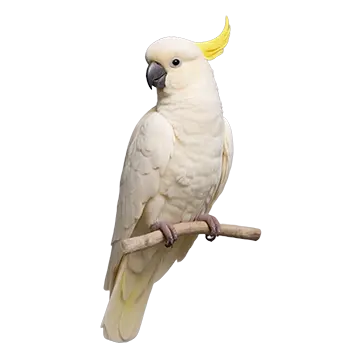
The Sulphur-Crested Cockatoo possesses an extraordinarily complex, challenging, and demanding temperament that combines remarkable intelligence, intense emotional needs, and powerful, sometimes destructive behaviors. Understanding the temperament of these magnificent but difficult birds is absolutely essential before considering ownership, as their behavioral characteristics have resulted in countless tragic rehoming situations where both birds and unprepared owners suffer profoundly. Sulphur-Crested Cockatoos are categorically unsuitable for novice bird owners and challenging even for experienced parrot keepers.
The defining characteristic of Sulphur-Crested Cockatoo temperament is their intense, almost pathological need for attention and interaction with their bonded humans. These birds form extraordinarily strong attachments and demand near-constant companionship, becoming severely distressed when separated from their people or when their insatiable need for attention goes unmet. A Sulphur-Crested Cockatoo wants to be involved in every aspect of their bonded person's life, accompanying them throughout the house, participating in all activities, and demanding constant physical contact through cuddling, preening, and simply being touched. This level of neediness far exceeds that of most other companion animals and creates enormous challenges for owners who must balance the bird's demands with work, relationships, and other life responsibilities.
When a Sulphur-Crested Cockatoo's attention needs are not met continuously and completely, behavioral problems develop rapidly and often become severe. Persistent, ear-splitting screaming is perhaps the most common and challenging problem, with birds developing habits of screaming for hours daily to demand attention, express frustration, or simply because they have learned that screaming gets responses from their owners. The volume of these screams is truly deafening, exceeding 120 decibels and causing physical discomfort, potential hearing damage, and serious problems with neighbors that can result in housing issues, complaints, and even legal action. Many owners report that the screaming becomes so unbearable that they feel like prisoners in their own homes.
Feather destructive behavior including plucking, self-mutilation, and barbering is extremely common in captive Sulphur-Crested Cockatoos, with some estimates suggesting 30-50% or more of captive individuals develop some degree of feather destruction. This devastating behavioral disorder stems from the species' inability to cope with captive conditions even when owners provide what seems like excellent care. The psychological stress of captivity, combined with inadequate flock interaction, boredom, and inability to express natural behaviors, manifests as compulsive feather destruction that can progress to severe self-mutilation requiring medical intervention. Once established, feather plucking is extremely difficult to resolve and often becomes a chronic, lifelong problem despite owners' devoted efforts.
Aggression is another significant behavioral characteristic of Sulphur-Crested Cockatoos, manifesting in multiple forms and contexts. Many individuals become territorially aggressive around their cages or chosen people, lunging, biting, or attacking anyone who approaches. Hormonal aggression during breeding season (typically spring) can transform even previously gentle birds into unpredictable, dangerous animals capable of inflicting serious injuries with their powerful beaks. Bites from Sulphur-Crested Cockatoos cause severe lacerations, crushed fingers, broken bones, and permanent scarring, with documented cases of facial injuries and eye damage. The aggression can be directed toward the bonded person as well as others, and some birds become so aggressive that safe handling becomes impossible.
Possessiveness and jealousy are pronounced in Sulphur-Crested Cockatoos, who often become extremely protective of their chosen person and aggressive toward anyone they perceive as competition. This creates serious relationship problems in households where the bird bonds with one partner while attacking the other, or where the bird becomes aggressive toward children, visitors, or other pets. Many marriages and relationships have been severely strained or ended due to Sulphur-Crested Cockatoo behavioral problems, and countless birds are rehomed when new babies arrive or relationships change because the bird's aggression becomes dangerous.
Destructive behavior is inherent in Sulphur-Crested Cockatoos, who possess beaks capable of reducing wooden furniture, door frames, walls, books, electronics, and virtually any other household item to splinters within minutes. This is not malicious behavior but rather natural chewing and exploring instincts that cannot be eliminated, only redirected. Even with appropriate toys and supervision, owners must accept that property damage is inevitable. Many Sulphur-Crested Cockatoos cause thousands of dollars in damage throughout their lives, destroying furniture, renovating kitchens, and remodeling bathrooms by stripping wallpaper, chewing baseboards, and dismantling cabinets.
Intelligence in Sulphur-Crested Cockatoos is exceptional, comparable to that of African Greys, large macaws, and other highly cognitive parrot species. They quickly learn routines, understand cause and effect, solve complex problems, manipulate locks and latches, and demonstrate reasoning abilities that continually amaze observers. However, this intelligence is a double-edged sword. Bored Sulphur-Crested Cockatoos are destructive, noisy, and develop behavioral problems rapidly. Their intelligence also makes them expert manipulators who train their owners more effectively than owners train them, learning exactly which behaviors get responses and using this knowledge ruthlessly.
Playfulness and curiosity are present in Sulphur-Crested Cockatoos but are often overshadowed by their behavioral challenges. When content and properly stimulated, they can be entertaining, engaging, and delightful companions who enjoy toys, games, and interactive play. They love to dismantle objects, solve puzzles, and investigate their environment. However, their play often involves destruction, and their definition of "fun" may include demolishing expensive items or creating chaos.
Talking ability in Sulphur-Crested Cockatoos is generally classified as limited to moderate, with most individuals learning 10-50 words and simple phrases. Their voices are harsh, raspy, and less clear than African Greys or some Amazon parrots. Some birds develop reasonable vocabularies while others barely talk at all. However, they are supremely vocal in other ways, producing a cacophony of cockatoo vocalizations including screams, squawks, whistles, and various other sounds at ear-splitting volumes.
Prospective owners must understand with complete clarity that Sulphur-Crested Cockatoos represent one of the most challenging companion parrot species available. They are absolutely unsuitable for first-time bird owners, families with young children, people who work full-time outside the home, anyone living in apartments or with close neighbors, or those seeking a pet that can be left alone for periods. Even experienced cockatoo owners find Sulphur-Crested Cockatoos exceptionally demanding. Rehoming rates are tragically high, with many birds experiencing multiple homes and severe psychological trauma. Only individuals who fully comprehend and accept the extreme challenges, can provide 6-8+ hours daily of devoted attention, have backup care arrangements, and maintain realistic expectations should consider this species.