Racing Homer Pigeon

Racing Homer Pigeon
📸 Photo Gallery Coming Soon

Furry Critter Network Etsy Shop

Quick Facts

🔬 Scientific Name
Columba livia domestica
🦜 Bird Type
Pigeon
📊 Care Level
Intermediate to Advanced
😊 Temperament
Intelligent, Loyal, Athletic
📏 Adult Size
12-14 inches
⏱️ Lifespan
5-10 years (up to 15-20 years with exceptional care)
🔊 Noise Level
Low to Moderate
🗣️ Talking Ability
None
🍽️ Diet Type
Seed-based with pellets
🌍 Origin
Belgium and England (19th century)
🏠 Min Cage Size
Loft housing required - minimum 4 sq ft per bird
📐 Size
Medium

Racing Homer Pigeon - Names & Recognition

The Racing Homer Pigeon is known by several names that reflect its exceptional abilities and historical uses. Most commonly called Racing Homers or simply Homers, these birds are also referred to as Homing Pigeons when discussing their navigational abilities, though technically all racing pigeons are homing pigeons, but not all homing pigeons are bred to racing standards. The term Carrier Pigeon is frequently but incorrectly applied to Racing Homers—while they can carry messages, true Carrier Pigeons (English Carriers) are a distinct fancy pigeon breed. Modern Racing Homers do have English Carrier blood in their lineage, which contributed to their long-distance homing abilities, but they are separate breeds with different purposes.

In competitive circles, these birds are simply called Racers or Race Birds by pigeon fanciers who compete in organized racing events. The term Messenger Pigeon or Mail Pigeon reflects their historical military and commercial use for carrying messages before telecommunication technology made pigeon post obsolete. During wartime, they were specifically called War Pigeons and served with distinction in both World Wars, delivering critical messages across battlefields and saving countless lives. Some birds were even awarded medals for their heroic service.

The scientific classification places Racing Homer Pigeons as Columba livia domestica, the domestic pigeon, which is derived from the wild Rock Dove (Columba livia). All domestic pigeon breeds, including Racing Homers, share this scientific name as they are all descended from the same wild ancestor through thousands of years of selective breeding. The wild Rock Dove possesses an innate homing ability using magnetoreception and other navigational cues, which provided the genetic foundation that human breeders enhanced through selective breeding to create the modern Racing Homer.

The breed was developed in Belgium and England during the 19th century through careful crossing of several older pigeon breeds, each contributing specific desirable traits. The English Carrier contributed the exceptional ability to find home from great distances and strong navigational instincts. The high-flying French Cumulet provided endurance and the remarkable ability to fly for hours without tiring. The Dragoon breed contributed size and strength. The Smerle added speed and agility. The Horseman breed, now extinct, also played a role in the development, though its specific contribution is lost to history. Modern Racing Homers represent the culmination of generations of selective breeding focused on three primary traits: speed, endurance, and homing instinct. Today's birds are capable of finding their way home from distances exceeding 1,600 kilometers and flying at speeds over 130 kilometers per hour with favorable winds, though average racing speeds are typically 60-100 kilometers per hour depending on distance and conditions.

Racing Homer Pigeon Physical Description

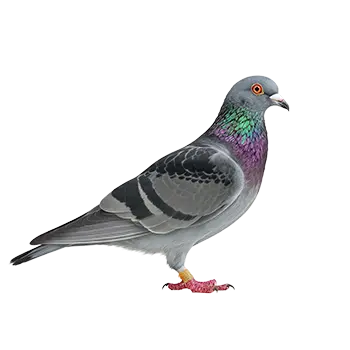
The Racing Homer Pigeon is a medium-sized domestic pigeon measuring approximately 12 to 14 inches in length from beak to tail, with a body weight typically ranging from 300 to 500 grams (10.5 to 17.5 ounces), though ideal racing weight varies by individual bird and distance raced. These birds have been selectively bred for athletic performance, resulting in a streamlined, muscular body designed for efficiency and endurance in flight. Every aspect of their physique reflects their purpose as avian athletes optimized for competitive racing.

The body structure of Racing Homers is notably muscular and compact, with a deep, broad breast that houses powerful flight muscles essential for sustained high-speed flight over long distances. The chest muscles, particularly the pectoralis major, are exceptionally well-developed and can represent up to 30% of the bird's total body weight in peak condition. This massive breast muscle provides the power for wing beats that propel the bird through the air at remarkable speeds for hours on end. The body tapers smoothly from the broad chest to a more streamlined rear, creating an aerodynamic profile that minimizes air resistance during flight.

The wings are the Racing Homer's most critical feature, being long, powerful, and exceptionally well-developed for sustained flight. Wing length and structure are carefully evaluated in breeding selection, as proper wing conformation directly correlates with racing success. The primary flight feathers are long and strong, while the wing muscles are conditioned through extensive training to provide both power and endurance. When fully extended, the wings create a large surface area for lift generation while maintaining aerodynamic efficiency. Wing condition is paramount, and any damage to flight feathers can end a racing season.

The tail is short to medium in length and well-balanced for aerodynamics, serving as a critical rudder during flight that allows precise directional control at high speeds. The tail feathers work in concert with wing movements to provide stability and maneuverability, particularly important during landing approaches and navigating challenging weather conditions. A properly balanced tail contributes to the bird's overall flight efficiency and speed.

The head is smooth, well-proportioned, and streamlined to reduce air resistance during flight. Racing Homers have a distinctly intelligent appearance with bright, alert eyes that are typically orange or pearl-colored, though eye color can vary with different color varieties. The eyes are large and positioned to provide excellent vision, essential for navigation using visual landmarks and celestial cues. The head should be neat and refined without the exaggerated features seen in fancy pigeon breeds.

The beak is medium-length, strong, and well-formed with a prominent cere (the soft, fleshy tissue at the base of the beak). The cere is typically white or pale colored and quite pronounced in mature birds. The beak must be strong enough for efficient seed consumption and for nest building activities. Beak alignment and condition are monitored as indicators of overall health.

Racing Homers come in a remarkable variety of colors and patterns, as color is not a factor in racing performance and breeders focus primarily on flying ability rather than appearance. Common colors include blue (gray), black, white, red, yellow, dun, and checkered patterns. Pied markings combining white with other colors are also popular. Some birds are solid colored while others display complex patterns. Despite this color variety, the breed maintains consistency in body type and structure, with all birds sharing the athletic build essential for racing success.

Sexual dimorphism is relatively subtle in Racing Homers. Males tend to be slightly larger and more robust than females, with broader heads, thicker necks, and more prominent ceres. Males also display more energetic courtship behaviors including cooing, bowing displays, and chasing females. Experienced fanciers can sex birds by observation of behavior and subtle physical differences, but DNA sexing provides definitive results when behavioral cues are unclear. Both sexes are capable racers, though some fanciers prefer one sex over the other for specific racing strategies.

Physical condition varies dramatically based on training status and time of year. Racing Homers in peak condition for competition appear lean, muscular, and energetic with bright eyes, smooth plumage, and powerful breast muscles. Off-season birds may carry slightly more weight and have a more relaxed appearance. Molting occurs annually when birds shed and replace flight feathers, during which time racing performance is impossible. The molting schedule is carefully managed by fanciers using light manipulation and breeding timing to ensure birds have complete, fresh plumage for racing season. A bird in full feather with perfect plumage condition has a distinct competitive advantage over one with damaged or molting feathers.

Affection Level
Racing Homers form strong bonds with their owners and loft, showing remarkable loyalty and attachment. They recognize their caretakers and respond positively to regular interaction. Their deep bond to home is what drives their exceptional homing abilities, making them devoted companions that always return to those who care for them.
Sociability
These pigeons are highly social birds that thrive in loft environments with other pigeons. They establish social hierarchies, pair bond for life, and work cooperatively in raising young. Racing Homers do best when kept in groups and enjoy the companionship of their flock, making them ideal for pigeon fanciers maintaining racing lofts.
Vocalization
Racing Homers are relatively quiet birds compared to many other species. They produce soft cooing sounds during courtship and communication but are not loud or disruptive. Their vocalizations are gentle and pleasant, making them suitable for residential areas. Males coo more frequently than females, especially during breeding season.
Intelligence
Racing Homers are extraordinarily intelligent birds with exceptional navigational abilities. They possess remarkable spatial memory, can learn complex routes, use multiple navigation cues including the sun, stars, Earth's magnetic field, and visual landmarks. Their problem-solving abilities and capacity to remember home locations from vast distances demonstrate exceptional cognitive function.
Exercise Needs
These are elite athletes requiring extensive daily exercise. Racing Homers need minimum one hour of daily loft flying, regular road training sessions, and systematic exercise programs to maintain racing condition. Their high exercise demands are non-negotiable for birds in active training, making them unsuitable for owners unable to commit to rigorous conditioning schedules.
Maintenance Level
Racing Homers require significant maintenance including specialized loft facilities, carefully managed nutrition programs, regular training schedules, health monitoring, and racing preparation. Their care is more demanding than pet birds, requiring knowledge of pigeon racing protocols, conditioning methods, and performance nutrition. This is a serious commitment for dedicated fanciers.
Trainability
Racing Homers are highly trainable birds that respond exceptionally well to systematic training programs. From young age, they learn to navigate home from increasing distances, enter trap doors on command, and respond to feeding whistles. Their intelligence and strong homing instinct make training relatively straightforward for experienced handlers using proper methods.
Independence
Racing Homers balance independence with strong attachment to home. While capable of flying hundreds of kilometers independently, they are deeply bonded to their loft and will always return. They require less hands-on attention than pet birds but need proper loft management, feeding schedules, and training routines to thrive as racing athletes.

Natural Habitat & Range

The Racing Homer Pigeon, as a domestic breed derived from the wild Rock Dove (Columba livia), has no natural habitat in the traditional sense. However, understanding the natural habitat preferences of its wild ancestor provides important context for proper care and housing of these domesticated birds. Wild Rock Doves, from which all domestic pigeons descend, are native to Europe, North Africa, and South Asia, inhabiting coastal cliffs, rocky outcrops, mountainous regions, and eventually adapting to urban environments where buildings provide cliff-like nesting sites.

Wild Rock Doves demonstrate the innate homing ability that humans selectively enhanced to create modern Racing Homers. In nature, Rock Doves establish home territories centered on cliff faces or suitable nesting sites and range outward to forage, always returning to their established home location. This natural behavior provided the foundation for pigeon domestication that began over 5,000 years ago, making pigeons one of the oldest domesticated bird species. Ancient civilizations including the Greeks, Romans, and Egyptians recognized and utilized pigeons' homing abilities for communication purposes, with documented use of pigeons for carrying messages in Olympic games and military campaigns.

The development of Racing Homers as a specialized breed occurred primarily in Belgium and England during the 19th century, coinciding with the growing popularity of pigeon racing as an organized sport. Belgium, in particular, became the epicenter of racing pigeon breeding, and Belgian-bred birds are still considered among the fastest and most successful racing pigeons worldwide. The sport spread rapidly across Europe and eventually to North America, Asia, and other continents, with each region developing slightly different breeding lines optimized for their specific racing conditions and distances.

Today, Racing Homers are maintained entirely in domestic loft environments specifically designed for their training and racing needs. These lofts are carefully located and oriented to facilitate training and racing success. Fanciers typically position lofts with landing boards and trap doors facing south in the Northern Hemisphere to maximize sunlight exposure and provide clear flight approaches. Lofts should be situated away from trees, tall buildings, and other obstructions that could interfere with training flights or racing returns. Urban rooftops, rural farmlands, and suburban backyards all host racing lofts, though each location presents unique challenges and advantages.

The competitive range of Racing Homers is truly extraordinary. In organized races, birds compete over carefully measured courses ranging from approximately 100 kilometers (62 miles) for sprint races to over 1,000 kilometers (620 miles) for marathon events. Some exceptional birds have completed flights exceeding 1,600 kilometers (990 miles), though these extreme distances are rare and extremely demanding. Despite these impressive distances, races can be won or lost by mere seconds, requiring precise timing equipment to determine winners.

Racing Homers navigate using multiple cues depending on distance and environmental conditions. For shorter distances, they rely heavily on visual landmarks and learned routes, memorizing key features of the landscape they've flown over during training. For longer distances beyond visual range of home, they employ a sophisticated navigation system using the sun's position during day flights and star patterns for evening releases. They can detect Earth's magnetic field and use it as a compass, with different bloodlines showing varying reliance on magnetic cues. Recent research suggests they may also respond to gravitational anomalies, infrasound, and olfactory cues from their home loft carried on prevailing winds.

Historically, Racing Homers served critical military and commercial functions. During World Wars I and II, pigeons delivered thousands of messages across battlefields where radio communication was impossible or compromised. Birds flew through enemy fire, poison gas, and severe weather conditions, with many receiving military decorations for their service. Cher Ami, perhaps the most famous war pigeon, saved nearly 200 soldiers despite being severely wounded while delivering a critical message during World War I. Pigeons continued in military service until the late 20th century, with the Swiss army maintaining pigeon units until 1994.

Commercially, pigeon post services operated worldwide, with Reuters news agency founder Paul Reuter using over 45 pigeons to deliver news and stock prices between Brussels and Aachen in 1860. During the Franco-Prussian War, pigeons provided the only communication link between besieged Paris and unoccupied French territory, carrying microfilm messages. Some remote police departments in India continued using pigeon messenger services into the early 21st century for emergency communication following natural disasters, only retiring the system as internet infrastructure expanded. Today's Racing Homers are maintained almost exclusively for the sport of racing, which remains popular worldwide with thousands of active racing clubs and millions of dollars in prize money awarded annually in major competitions.

Temperament

The Racing Homer Pigeon possesses a temperament ideally suited for its role as an athletic competitor, combining intelligence, loyalty, determination, and strong social bonds. These birds demonstrate calm, gentle demeanor around familiar handlers while displaying remarkable drive and focus when released for training or racing. Their personality reflects generations of selective breeding not just for physical performance but also for tractable temperament that facilitates training, handling, and loft management essential for competitive racing success.

Intelligence is perhaps the most defining characteristic of Racing Homer temperament. These birds display extraordinary cognitive abilities, particularly in spatial memory, navigation, and route learning. They remember complex flight paths over hundreds of kilometers, distinguish between multiple routes home from the same starting point, and adapt their navigation strategy based on weather conditions, time of day, and previous experience. Research has demonstrated that Racing Homers can learn to associate specific visual cues with food rewards, solve basic problems, and even recognize individual human handlers. This intelligence makes them highly trainable and responsive to systematic conditioning programs.

The bond Racing Homers form with their home loft and their owner is profound and represents the core of their homing instinct. They develop a deep attachment to the specific location they identify as home, creating a mental map with home as the central reference point. This bond drives their remarkable determination to return home from vast distances despite exhaustion, adverse weather, or obstacles. Fanciers who handle their birds regularly, feed them personally, and spend time in the loft build strong individual relationships with their racers. Birds learn to recognize their caretaker's voice, respond to feeding calls, and may even eat from their handler's hand—particularly when offered favored treats like peanuts.

Racing Homers are notably gentle and docile birds that rarely display aggression toward humans. Unlike some defensive bird species, they tolerate necessary handling for banding, health checks, basketing for races, and training purposes without excessive stress or resistance. This tractable nature is essential for race day procedures where birds must be handled by race officials, transported to release points, and processed through timing systems. Well-socialized Racing Homers remain calm in these potentially stressful situations, a temperamental advantage that can influence race performance.

Social behavior among Racing Homers follows typical pigeon patterns of flock living with established hierarchies. In loft settings, birds develop social structures with dominant individuals claiming preferred perching spots and nest boxes. Aggression within the flock is generally limited to posturing, pushing, and occasional pecking to establish or maintain position, rarely resulting in serious injury. Paired birds form strong, lifelong bonds and show touching devotion to their mates through mutual preening, nest building cooperation, and shared parenting responsibilities. Males perform elaborate courtship displays including puffing up chest feathers, spreading tail feathers, cooing persistently, and bowing repeatedly to attract or maintain pair bonds with females.

The athletic drive of Racing Homers is remarkable and sets them apart from purely ornamental pigeon breeds. These birds demonstrate an intense desire to fly, spending hours daily on the wing during loft flight sessions. Young birds learning to fly show visible enthusiasm, often performing aerial acrobatics and testing their capabilities with dives, turns, and speed bursts. This natural flying drive means Racing Homers require and actively seek substantial exercise—they are not suited for life in small cages or situations where flight opportunities are limited. Suppressing their flying instinct causes frustration and can lead to behavioral problems or health issues.

Determination and persistence characterize Racing Homer behavior during competition. Once released from a race point, they orient toward home and fly with single-minded focus despite fatigue, hunger, thirst, adverse weather, or predator threats. This drive to return home has survival roots in the wild Rock Dove's need to return to nest sites, but selective breeding has intensified this instinct to exceptional levels. Birds have been documented flying through storms, navigating in fog, and arriving home exhausted but determined, sometimes landing and immediately searching for food and water before resting.

Stress responses in Racing Homers are generally moderate. While they startle at sudden loud noises or rapid movements, they recover quickly and adapt to regular loft routines. Transportation to races, basketing with other birds, and release at unfamiliar locations are potentially stressful but well-conditioned birds handle these experiences calmly. However, poor training methods, inadequate socialization, or rough handling can create fearful birds that perform poorly in racing. Successful fanciers prioritize gentle, consistent handling that builds confidence and trust.

Motivation to return home is influenced by several factors that experienced fanciers manipulate to enhance racing performance. The widowhood system, used extensively in racing, separates paired males from their mates before races, then allows brief reunions upon return, leveraging the male's powerful drive to return to his mate. Natural system racing allows pairs to raise young, capitalizing on parental instinct to return to nest and offspring. Both methods work because they tap into the bird's deep social bonds and reproductive drives.

Adaptability is another temperamental strength of Racing Homers. They adjust well to various loft conditions from urban rooftops to rural barns, tolerate different climates with appropriate shelter, and handle changing training schedules and race distances. This flexibility makes them suitable for fanciers across diverse geographic locations and racing programs. However, they do require consistency in feeding schedules, loft management, and training routines to maintain peak condition and performance readiness.

Care Requirements

Proper housing for Racing Homer Pigeons requires specialized loft facilities specifically designed to support training, racing, breeding, and the birds' overall welfare. Unlike pet birds kept in cages, Racing Homers must be housed in purpose-built lofts that provide adequate space, proper ventilation, security from predators, and features supporting the unique management needs of racing pigeons. The loft represents the central focus of the pigeon racing hobby and its design, construction, and maintenance directly impact racing success and bird health.

Loft size depends on the number of birds maintained, but minimum standards require approximately 4 square feet of floor space per bird to prevent overcrowding and associated health problems. A typical racing loft housing 20-30 birds should provide at least 80-120 square feet of interior space. Lofts are commonly constructed as separate structures in backyards or on rooftops, though some fanciers convert garages, sheds, or other buildings. Loft dimensions typically range from 8x10 feet for small operations to much larger structures for serious racing operations with 50+ birds. Ceiling height should be sufficient to allow comfortable human access for cleaning and bird handling, typically 6-7 feet minimum.

Loft orientation is critical for training and racing success. The entrance, landing board, and trap door system should face south in the Northern Hemisphere to maximize sunlight exposure and provide clear approaches for returning birds. Positioning the loft away from trees, tall buildings, power lines, and other obstructions prevents collisions and provides clear flight paths. Some fanciers build elevated lofts on platforms or poles to improve visibility for returning birds and reduce ground predator access.

Ventilation is arguably the most important loft design element, as poor air quality causes respiratory disease that devastates racing performance. Lofts require substantial ventilation providing complete air exchange multiple times daily while avoiding direct drafts that chill birds. Well-designed lofts incorporate adjustable vents near the roof peak for hot air exhaust and lower vents for fresh air intake. Wire mesh panels in walls or roof areas enhance airflow while preventing predator entry. Ventilation must keep the loft dry, as moisture promotes mold, fungal spores, and bacterial growth that cause respiratory infections. Lofts should never smell strongly of ammonia, which indicates inadequate ventilation and excessive moisture from droppings.

Lighting serves multiple critical functions in racing loft management. Natural daylight entering through windows allows birds to maintain normal circadian rhythms and provides essential UV exposure for vitamin D synthesis. However, many fanciers use artificial lighting systems to manipulate day length, controlling molting schedules and breeding timing. Light manipulation can advance or delay molt, ensuring birds complete feather replacement before racing season begins. Adequate lighting also facilitates evening feeding and loft work when necessary.

The trap door system is essential infrastructure allowing birds to return home and enter the loft while preventing exit except during controlled flight sessions. Traditional bob-wire traps consist of vertical wires that pivot when birds land and push through but swing back to prevent exit. Modern electronic timing systems use RFID or electronic band scanners integrated with trap entrances to automatically record arrival times with hundredth-of-second precision. Trap doors should be positioned where returning birds can easily locate them, typically above the landing board.

Perching and roosting areas must accommodate all birds comfortably without overcrowding. V-shaped perches, flat shelves, or box perches allow birds to rest while minimizing contact with droppings below. Perch placement should prevent dominant birds from monopolizing preferred locations. Adequate perching space reduces aggression and ensures all birds rest properly. Some fanciers provide individual nest boxes for each pair, while others use communal nest boxes for widowhood racing where males return to designated boxes.

Nest boxes are required for breeding operations, with one box per breeding pair. Boxes should be approximately 24 inches wide, 18 inches deep, and 18-24 inches high, equipped with removable nest bowls and perches. Some systems use double nest boxes allowing pairs to start a second round while still feeding the first round of young. Nest boxes should be easily accessible for cleaning, egg checking, and young bird monitoring.

Flooring material and design affect cleaning efficiency and hygiene. Concrete floors are durable, easy to clean, and can be sloped toward drains for hosing. Wire or slat flooring allows droppings to fall through to collection areas below but requires careful design to prevent foot injuries. Some fanciers use removable dropping boards under perches for easy cleaning. Whatever flooring system is used, daily dropping removal is essential for maintaining loft hygiene and preventing disease.

Substrate materials vary by fancier preference. Clean straw, wood shavings, or sand can be used on floors or in nest boxes, but must be changed regularly to prevent mold and parasite buildup. Many racing lofts use minimal substrate or bare floors that are scraped and swept daily. Nest bowls typically use straw, tobacco stems, or pine needles as nesting material.

Water and feeding systems must provide constant access to fresh, clean water and properly portioned food. Automatic waterers with reservoirs minimize labor but require weekly cleaning to prevent bacterial biofilm. Feed containers should be designed to minimize waste and prevent contamination with droppings. Multiple feeding stations reduce competition and ensure all birds access adequate food.

Bathing facilities are essential for feather maintenance and bird enjoyment. Shallow bathing pans or automatic bath systems should be provided several times weekly, particularly before races. Birds bathing regularly maintain better feather condition. Some fanciers use misting systems during hot weather.

Security from predators is critical. Lofts must be predator-proof against cats, rats, hawks, owls, and other threats. All openings should be covered with sturdy wire mesh small enough to exclude predators. Secure locks prevent human intruders and vandalism. Some lofts incorporate predator guards on support posts to prevent climbing access.

Climate control depends on geographic location. In moderate climates, well-ventilated lofts without supplemental heating maintain adequate conditions. In very cold climates, some fanciers provide minimal heating to prevent water freezing and maintain birds above critical temperatures, though Racing Homers tolerate cold well if kept dry and draft-free. In hot climates, shade, ventilation, and possibly evaporative cooling prevent heat stress.

Feeding & Nutrition

Proper nutrition for Racing Homer Pigeons is a sophisticated science that directly determines racing success, breeding productivity, and overall health. Unlike feeding pet birds, racing pigeon nutrition requires carefully balanced mixes adjusted for different life stages, activity levels, and racing schedules. The dietary needs of a bird in peak racing condition differ dramatically from those of a breeding pair or a bird molting, requiring knowledgeable fanciers to adjust feeding programs strategically throughout the year.

The foundation of Racing Homer nutrition is a high-quality seed-based mixture, though modern fanciers increasingly incorporate pelleted feeds for nutritional completeness. Traditional racing mixes contain various grains and legumes selected for specific nutritional properties. Corn provides high energy and fat, essential for sustained flight. Wheat and barley offer good general conditioning energy. Milo and sorghum are excellent during training phases. Peas, lentils, vetch, and beans supply protein crucial for muscle recovery and growth. Safflower seeds contribute beneficial oils. Each component serves a purpose, and the mixture proportions are adjusted based on the bird's current needs.

Protein requirements vary significantly by life stage. During breeding season and after races when muscle recovery is critical, protein levels should be 15-18% of the diet. Peas, beans, and other legumes provide this protein boost. During maintenance periods when birds are not racing or breeding, protein levels can be reduced to 12% to avoid stressing kidneys. Excessive protein exceeding nutritional requirements increases kidney workload and can cause fatal kidney failure, as documented in cases where birds were fed inappropriate high-protein feeds like turkey pellets (30% protein) long-term.

Fat content is equally critical for racing success. Racing pigeons require approximately 4% fat in their standard diet, but this increases during active racing when birds need substantial energy reserves for long-distance flights. Fat provides 9 calories per gram compared to 4 calories per gram from carbohydrates or protein, making it essential fuel for marathon races. Many successful fanciers add safflower oil or peanut oil to racing mixes 2-3 days before races to ensure adequate energy reserves. However, excessive fat causes obesity and poor racing form, requiring careful balance.

Feeding quantities must be precisely managed. A general guideline is one standard 400-420 gram tin of quality seed mix per ten racing birds daily, adjusted based on individual consumption, body condition, and activity level. Birds should be fed enough to maintain lean, muscular condition without excess fat. Experienced fanciers monitor individual birds' breast muscle condition by feel, adjusting feeding to maintain optimal racing weight. Underfeeding causes weight loss, poor growth, and reduced disease resistance. Overfeeding causes obesity and dramatically impairs flying performance.

Peanuts deserve special mention as an extremely valuable supplement in racing pigeon nutrition. Raw, unsalted peanuts halves provide concentrated energy with 5.7 grams of peanuts equaling 10 grams of ordinary mixture in caloric value. Fanciers feed peanuts individually to birds as special treats, which serves multiple purposes: building strong bonds between bird and handler, encouraging birds to return quickly to loft for peanut rewards, providing concentrated energy before races, and supporting breeding pairs feeding hungry young. Peanuts should be introduced gradually and fed in moderation due to their high energy content.

Vitamin and mineral supplementation is essential for optimal performance. Complete water-soluble multivitamin supplements like Multi-vite Plus are administered regularly, particularly during racing season, molting, and breeding. These prevent deficiencies caused by nutrient loss in stored seeds and ensure birds receive all micronutrients essential for health. Pink mineral blocks or loose mineral supplements should be constantly available, providing calcium, phosphorus, trace minerals, and electrolytes. Grit containing both digestible calcium sources and small stones for crop grinding must be continuously accessible in separate containers.

Calcium supplementation is particularly critical for breeding pairs, as females require abundant calcium for strong eggshell formation. Oyster shell, cuttlebone, crushed baked eggshell, and mineral blocks should always be available. Calcium deficiency in breeding females can cause soft-shelled eggs, egg binding, and metabolic bone disease. Growing young birds also require adequate calcium for proper bone development.

Fresh vegetables and greens provide valuable micronutrients and variety. Chopped romaine lettuce, endive, dandelion greens, kale, and other leafy greens can be offered several times weekly. Shredded carrots, peas, corn, and other vegetables provide additional vitamins. However, fresh foods should supplement rather than replace the balanced seed mixture. Remove uneaten vegetables promptly to prevent spoilage.

Water quality and availability are absolutely critical. Racing Homers drink frequently and require constant access to fresh, clean water. Dehydration impairs performance and can be fatal during races. Water containers must be cleaned daily to prevent bacterial biofilm buildup. Some fanciers add apple cider vinegar to water (1 tablespoon per gallon) to support digestive health and provide beneficial acids. Electrolyte supplements can be added to water before and after races to support recovery. During hot weather, water consumption increases dramatically and multiple water stations may be necessary.

Feeding schedules vary by management system. Most fanciers feed twice daily—morning and evening—with amounts adjusted to ensure birds consume all feed offered. This prevents selective feeding where birds pick favorite seeds and leave others, creating nutritional imbalances. Some fanciers feed ad libitum (free choice), while others restrict feed to specific quantities, claiming this keeps birds keener and more motivated to return quickly from races. Feeding upon return from training or racing provides positive reinforcement.

Seasonal dietary adjustments are essential. During racing season, high-energy racing mixes with increased fat and carbohydrates fuel intensive flying. After races, protein is increased to support muscle recovery. During molting when birds grow new feathers, protein and mineral supplements support feather development. In winter off-season, lighter maintenance mixes prevent obesity while maintaining condition. Breeding season requires increased protein, calcium, and overall calories to support egg production and feeding young.

Foods to avoid include anything moldy or rancid, as spoiled feed causes disease. Salt, sugar, chocolate, caffeine, alcohol, and avocado are toxic. Human processed foods are inappropriate. Feed should be stored in cool, dry, sealed containers to preserve nutritional quality and prevent insect infestation or mold growth. Seed can lose vitamins through oxidation over time, so supplementation helps compensate for nutrient degradation in older stored feed.

Racing Homer Pigeon Health & Lifespan

Racing Homer Pigeons require exceptional health to perform at competitive levels, making health management one of the most critical aspects of successful racing loft operation. With proper care, Racing Homers typically live 5 to 10 years, though some individuals can reach 15 to 20 years with exceptional husbandry. However, the intense physical demands of racing, exposure during training and competition, and loft housing with many birds create health challenges that conscientious fanciers must address through preventive care and vigilant monitoring. Respiratory infections represent the most common and serious health challenges in Racing Homer lofts. Respiratory diseases spread rapidly in loft environments where many birds live in close proximity, making prevention through proper ventilation absolutely critical. Aspergillosis, a fungal infection caused by inhaling Aspergillus spores from moldy feed, damp bedding, or poorly ventilated lofts, causes severe respiratory distress, loss of racing form, and can be fatal if untreated. Mycoplasma and Chlamydia infections cause chronic respiratory disease with symptoms including nasal discharge, conjunctivitis, breathing difficulties, and poor racing performance. Ornithosis (Chlamydophilosis, also called pigeon fever) is particularly concerning as it is zoonotic and can cause serious illness in humans, requiring fanciers to practice good hygiene including wearing N95 masks when cleaning lofts.

Common Health Issues

  • Respiratory diseases spread rapidly in loft environments where many birds live in close proximity, making prevention through proper ventilation absolutely critical.
  • Aspergillosis, a fungal infection caused by inhaling Aspergillus spores from moldy feed, damp bedding, or poorly ventilated lofts, causes severe respiratory distress, loss of racing form, and can be fatal if untreated.
  • Mycoplasma and Chlamydia infections cause chronic respiratory disease with symptoms including nasal discharge, conjunctivitis, breathing difficulties, and poor racing performance.
  • Routine fecal examinations performed by avian veterinarians and strategic deworming programs maintain intestinal health without disrupting racing condition.\n\nPsittacosis (parrot fever), caused by Chlamydia psittaci bacteria, affects all bird species including pigeons and is zoonotic, transmitting to humans where it causes flu-like symptoms that can become severe.
  • Infected birds show respiratory symptoms, eye discharge, lethargy, diarrhea, and poor appetite.
  • Proper hygiene including hand washing after handling birds or cleaning lofts, wearing dust masks during loft cleaning, and maintaining well-ventilated, dry lofts help prevent transmission to humans.\n\nFeather plucking is uncommon in Racing Homers but poor feather condition from nutritional deficiencies, parasites, or stress can occur.
  • Calcium deficiency causes weak bones, poor eggshell quality in breeding females, and increased risk of egg binding.
  • Daily dropping removal, weekly thorough loft cleaning, and monthly disinfection minimize disease transmission and maintain respiratory health.

Preventive Care & Health Monitoring

  • Regular veterinary checkups help catch infections early and determine appropriate treatment protocols.\n\nParasitic infestations pose ongoing threats to Racing Homer health and performance.
  • Proper hygiene including hand washing after handling birds or cleaning lofts, wearing dust masks during loft cleaning, and maintaining well-ventilated, dry lofts help prevent transmission to humans.\n\nFeather plucking is uncommon in Racing Homers but poor feather condition from nutritional deficiencies, parasites, or stress can occur.
  • The annual molt is carefully managed using lighting systems and breeding schedules to ensure birds complete molt and grow fresh, strong flight feathers before racing season.\n\nNutritional deficiencies can devastate racing performance even before clinical signs appear.
  • Calcium deficiency causes weak bones, poor eggshell quality in breeding females, and increased risk of egg binding.
  • Vitamin deficiencies including vitamin A, vitamin E, and B-complex vitamins compromise immune function, muscle recovery, and energy metabolism essential for racing.
  • Mineral imbalances particularly involving electrolytes can cause cramping, dehydration, and collapse during races.\n\nRegular veterinary checkups with avian veterinarians experienced with racing pigeons are essential for maintaining loft health and optimizing performance.

Nutritional deficiencies can devastate racing performance even before clinical signs appear. Calcium deficiency causes weak bones, poor eggshell quality in breeding females, and increased risk of egg binding. Vitamin deficiencies including vitamin A, vitamin E, and B-complex vitamins compromise immune function, muscle recovery, and energy metabolism essential for racing. Protein deficiency impairs muscle development and recovery after races. Conversely, excessive protein levels increase kidney workload and can cause fatal kidney failure. Fat excess causes obesity and poor racing form, while insufficient fat results in inadequate energy reserves for long-distance races. Mineral imbalances particularly involving electrolytes can cause cramping, dehydration, and collapse during races. Regular veterinary checkups with avian veterinarians experienced with racing pigeons are essential for maintaining loft health and optimizing performance. Pre-season health screening identifies subclinical infections that could compromise racing form. Fecal examinations detect intestinal parasites before they impair performance. Blood testing can assess organ function and nutritional status. Proper diet and nutrition including carefully balanced racing mixes, protein supplementation during breeding and recovery periods, vitamin and mineral supplementation particularly during racing season, and constant access to pink mineral or grit support immune system health and racing performance. Environmental enrichment through adequate loft space, proper perching, bathing facilities, and flying opportunities prevents stress-related health problems. Cage cleanliness is absolutely critical as Racing Homers housed in dirty lofts face constant disease pressure. Daily dropping removal, weekly thorough loft cleaning, and monthly disinfection minimize disease transmission and maintain respiratory health. UV lighting benefits vitamin D synthesis essential for calcium absorption and bone health, particularly important for breeding pairs and growing young birds. Biosecurity protocols including visitor restrictions, footbaths, hand washing, and quarantine procedures for new birds protect loft health from outside disease introduction. With attentive preventive care, systematic health monitoring, optimal nutrition, and immediate treatment of problems, Racing Homers can maintain the exceptional health required for competitive racing success while enjoying long, productive lives.

Training & Vocalization

Training Racing Homer Pigeons is the cornerstone of competitive pigeon racing, transforming birds with innate homing abilities into precision athletes capable of navigating home from hundreds of kilometers at racing speeds. Proper training requires systematic progression, patience, understanding of pigeon behavior and navigation, and commitment to regular training schedules. The training process begins when birds are young and continues throughout their racing careers, with methods refined over generations by successful fanciers worldwide.

Training begins with loft conditioning, establishing the loft as home in young birds' minds. Weaned youngsters are moved to the racing loft at approximately 4 weeks of age, where they learn to associate the loft with food, water, safety, and social bonds with loft mates. Fanciers train birds to enter the loft through trap doors using feeding whistles and shaking feed cans, creating strong associations between the loft, the feeding call, and food reward. This foundation ensures birds will eagerly enter the loft upon return from races.

Loft flying begins at approximately 6 weeks of age when young birds are first allowed outside. Aviary doors open about an hour before evening feeding, allowing birds to venture out for first flights around the loft. These initial flights are cautious—birds first flap wings while remaining on the roof, then make short flights landing quickly, gradually extending flight duration as confidence grows. This early period is particularly dangerous due to hawk predation, requiring vigilant monitoring. Over several weeks, young birds develop flight skills, flying in groups and learning to navigate around obstacles. By 8-10 weeks, most birds confidently fly around the loft for extended periods, building strength and endurance.

Road training introduces distance navigation, the defining skill of Racing Homers. Training typically begins around 10-12 weeks of age with very short tosses from just a few hundred yards from the loft, allowing birds to experience release in unfamiliar territory and navigate home visually. Distance increases gradually—first to half a mile, then one mile, two miles, five miles, ten miles, and so on. Progression follows the cardinal rule: never increase distance faster than birds demonstrate confident, direct returns at current distances. Rushing training causes lost birds and undermines confidence.

Training flights are typically conducted early morning when weather is favorable. Birds are basketed in specially designed crates allowing airflow and minimizing stress. Transportation to release points occurs by vehicle, with birds released together as a flock. Initial flights from short distances often result in birds circling, orienting, then flying directly home. As distance increases, birds take longer to orient and may circle higher before setting course for home. Fanciers time returns, noting any birds returning late or appearing stressed, adjusting future training accordingly.

Toss frequency balances training benefit against overtraining risk. Young birds benefit from frequent short tosses building confidence and route learning—perhaps 2-3 times weekly during training season. As distances increase, tosses become less frequent but more deliberate. Overtraining can exhaust birds, damage motivation, and cause birds to become "loft sour" where they lose enthusiasm for racing. Experienced fanciers carefully observe their birds' condition, enthusiasm, and performance to gauge optimal training frequency and distance.

Direction variation teaches birds navigation rather than simple route memorization. Training tosses from multiple directions force birds to navigate using celestial and magnetic cues rather than relying on memorized landmarks. However, some fanciers advocate training primarily in the race direction to optimize performance for specific racing distances and routes.

Widowhood system training capitalizes on birds' breeding drives to enhance racing motivation. In this system, males are paired with females then separated before races. Males are shown their mates briefly before basketing for races, creating intense motivation to return home quickly to reunite with mates. Upon return, widowhood males are allowed brief reunion with females before separation again. This system requires careful management to maintain motivation without exhausting birds through constant breeding drive.

Natural system training allows pairs to raise young, using parental instinct to drive returns. Birds racing on natural system are typically sent when feeding young, creating powerful motivation to return home to offspring. Natural system is considered less stressful but requires precise timing to send birds at optimal points in the breeding cycle.

Common training problems include birds "breaking away" from the flock and taking alternate routes or getting lost, birds landing before reaching home, and birds becoming loft-bound and refusing to leave. Solutions include training with experienced birds that lead young birds home, adjusting training distances, and ensuring birds are properly motivated through feeding schedules and management systems.

Vocalization in Racing Homers is relatively quiet compared to many bird species. Their soft cooing sounds serve communication and courtship functions but are not loud or disruptive. Males coo more frequently than females, particularly during breeding season when attracting or maintaining pair bonds. The cooing sound is a gentle, repetitive "coo-roo-coo" pattern that is pleasant and unobtrusive. Racing Homers also produce wing clapping sounds during flight displays, particularly during courtship when males perform aerial shows for females. These sounds are natural bird communication and should not concern owners in residential areas. The birds have no talking or mimicry ability and their vocalizations remain limited to species-typical cooing patterns. Overall, Racing Homers are quiet birds that rarely disturb neighbors, making them suitable for suburban and even some urban locations where properly managed lofts comply with local regulations.

Children & Other Pets

Racing Homer Pigeons can coexist in family environments with children and other pets, though this requires careful management, education, and understanding that racing pigeons are working athletes rather than traditional pets. The hobby of pigeon racing can provide tremendous educational benefits for children, teaching responsibility, animal husbandry, geography, navigation science, and the values of dedication and patient effort toward long-term goals. However, successful integration requires age-appropriate involvement, adult supervision, and clear boundaries protecting both birds and children.

For families with children, pigeon racing offers unique advantages as a family hobby. Children aged 10 and older can participate meaningfully in loft care, learning to feed birds, clean lofts, observe bird behavior, and assist with training under adult supervision. The systematic nature of racing pigeon care—daily feeding and watering, regular loft cleaning, scheduled training tosses—teaches valuable lessons about routine, responsibility, and how consistent care affects outcomes. Watching young birds develop from squabs to trained racers provides tangible rewards for dedicated effort.

Teenagers often excel in pigeon racing, with many competitive racing clubs welcoming young fanciers and providing mentorship from experienced racers. Teen fanciers can manage most aspects of loft care and training independently while learning advanced concepts including genetics, breeding selection, nutrition management, and race strategy. The competitive aspect appeals to teenagers' developing interests in achievement and rivalry, while the sport provides healthy outdoor activity and social connections through racing club membership. Many lifelong pigeon fanciers began their involvement as teenagers.

However, young children require careful supervision around racing lofts. Birds must be handled gently and correctly to prevent injury to their delicate wings and feathers. Children must understand that rough handling, chasing birds, or interfering with training can damage expensive racing stock and end competitive seasons. Teaching children proper catching and holding techniques prevents bird stress and injury. Children should learn to approach birds calmly, move slowly in the loft to avoid startling birds into panic flights that cause feather damage, and wash hands thoroughly after loft work due to zoonotic disease risks.

Age recommendations suggest children under 8 should participate only through observation and very limited supervised interaction. Children 8-12 can assist with feeding, watering, and basic cleaning under direct supervision. Children 12 and older can begin learning handling, training assistance, and more complex care tasks with proper instruction. Adult supervision remains essential for all ages when working with birds, as even well-intentioned children can accidentally harm birds through incorrect handling.

Educational opportunities abound in pigeon racing. Children learn biology through observing breeding, hatching, and development. Geography comes alive as they follow races across distances and learn about navigation. Mathematics is practiced calculating race speeds, averaging velocities, and managing breeding records. Animal behavior science is taught through observation of social hierarchies, courtship, and parenting behaviors. Meteorology becomes relevant as weather conditions dramatically affect race outcomes. These practical applications make abstract concepts tangible and memorable.

Compatibility with other household pets requires careful consideration. Racing Homers can successfully share property with dogs and cats but require complete separation to prevent predation. Dogs may view pigeons as prey or exciting things to chase, either of which is unacceptable. Cats are natural predators of birds and should never have access to lofts or birds. Even indoor cats watching birds through windows can cause chronic stress. All loft structures must be absolutely secure against dogs, cats, and wild predators including hawks, owls, raccoons, rats, and snakes.

If dogs or cats are present, loft security becomes paramount. Lofts should be positioned where dogs cannot access landing boards or frighten returning birds. Fencing may be necessary to exclude dogs from loft areas. Cats are more difficult to exclude and may ambush birds during loft flights or returns from training. Some fanciers successfully manage households with cats by keeping cats strictly indoors and ensuring lofts are cat-proof. However, serious racing operations often require property free from pet predators.

Racing Homers themselves live communally in loft settings, coexisting peacefully with loft mates when properly managed. Adequate space, proper sex ratios, and sufficient nest boxes minimize aggression. Birds from the same loft generally do not attack each other seriously, though dominance displays and minor squabbles occur. Introducing strange birds requires quarantine and careful monitoring to prevent disease introduction and ensure peaceful integration.

The time commitment required for racing pigeon care should be honestly assessed before involving children or families. Daily feeding, watering, and loft cleaning require 30-60 minutes minimum. Training sessions require several hours including travel time, basketing, releasing, and awaiting returns. Race weekends involve early morning basketing at club stations, waiting for returns, and potential late nights if birds return after dark. Breeding season requires nest monitoring, young bird care, and increased feeding. Molt management requires monitoring feather condition. This time commitment competes with other family activities, school, work, and recreational pursuits.

Family discussions should address realistic expectations before beginning pigeon racing. Will all family members participate or is this primarily one person's hobby? How will loft care be managed during vacations, illness, or schedule conflicts? What happens to the birds if interest wanes? Who manages the financial costs of feed, veterinary care, race fees, and equipment? These conversations prevent misunderstandings and ensure long-term commitment.

Zoonotic disease risks including psittacosis (parrot fever), salmonella, and avian influenza require proper hygiene protocols. Family members should wash hands thoroughly with soap and water after handling birds or loft work. Wearing dust masks during loft cleaning prevents inhalation of dried droppings dust that can transmit disease. Children with compromised immune systems should avoid direct bird contact. Pregnant women should exercise caution as some avian diseases pose risks. These precautions allow safe enjoyment of pigeon racing while minimizing health risks to family members.