Plum-Headed Parakeet

Plum-Headed Parakeet
📸 Photo Gallery Coming Soon

Furry Critter Network Etsy Shop

Quick Facts

🔬 Scientific Name
Psittacula cyanocephala
🦜 Bird Type
Parakeet
📊 Care Level
Moderate
😊 Temperament
Gentle, Calm, Sweet-natured
📏 Adult Size
12-14 inches
⏱️ Lifespan
15-20 years
🔊 Noise Level
Low to Moderate
🗣️ Talking Ability
Limited to Moderate
🍽️ Diet Type
Pellet-based
🌍 Origin
Indian Subcontinent (India, Pakistan, Sri Lanka)
🏠 Min Cage Size
24x24x30 inches
📐 Size
Medium

Plum-Headed Parakeet - Names & Recognition

The Plum-Headed Parakeet, scientifically designated as Psittacula cyanocephala, derives its common name from the spectacular plum-purple to reddish-purple coloration adorning the heads of mature males. The scientific name reflects this coloration: "Psittacula" refers to the genus of Asian parakeets, while "cyanocephala" comes from Greek roots meaning "blue-headed," though this more accurately describes the blue-tinged plumage visible in certain lighting rather than the overall plum appearance.

This species is known by several alternate names across different regions and among aviculturists. In India, it's commonly called the "Blossom-Headed Parakeet," emphasizing the flower-like beauty of the male's colorful head. Some references use "Plum-Headed Parrot" though "parakeet" is more accurate given the species' long tail structure. Regional names in India include "Thuti Kili" in Tamil-speaking areas and various local names in Hindi, Bengali, and other Indian languages. The species is sometimes confused with the closely related Blossom-Headed Parakeet (Psittacula roseata), which is actually a separate species despite the naming overlap.

Two subspecies of Psittacula cyanocephala are recognized: P. c. cyanocephala (the nominate subspecies) ranging across most of the species' distribution, and P. c. bengalensis (sometimes considered a synonym) from eastern regions, though subspecies designation remains somewhat debated among ornithologists. The differences between these forms are subtle, primarily involving slight size variations and minor plumage tone differences that can be difficult to distinguish even for experienced observers.

In aviculture, color mutations remain extremely rare compared to more commonly bred species like Budgerigars or Indian Ringnecks. The wild-type coloration—brilliant plum heads in males, gray-blue heads in females, and emerald green bodies—remains overwhelmingly dominant in captive breeding programs. Occasional lutino mutations (yellow birds with red eyes) and blue mutations (lacking yellow pigmentation) have been reported but are exceptionally uncommon. Most breeders and enthusiasts prefer maintaining the natural coloration that makes this species so visually distinctive and appealing.

Plum-Headed Parakeet Physical Description

The Plum-Headed Parakeet is a medium-sized parakeet measuring 12 to 14 inches in total length, with approximately half this measurement comprising the elegant, graduated tail. Adults typically weigh between 60 to 85 grams, making them noticeably smaller and more delicate than their larger relatives, the Alexandrine Parakeets, yet larger than the smaller Indian Ringneck Parakeets. Their graceful proportions and beautiful coloration make them among the most visually appealing members of the Psittacula genus.

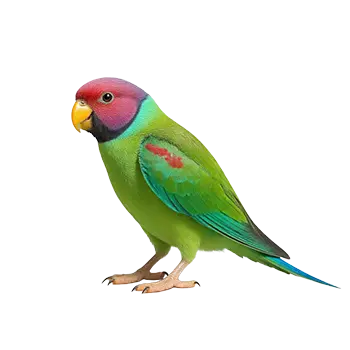
Mature males display spectacular coloration featuring a brilliant plum-purple to reddish-purple head and face, creating the distinctive appearance that gives the species its common name. This plum coloration extends from the crown down through the cheeks, though the intensity can vary slightly among individuals and may appear more purple or more reddish depending on lighting conditions. A narrow black collar separates the plum head from the bright emerald green body, creating a striking color contrast. The neck shows a subtle bluish-green sheen visible in good lighting.

The body plumage of males is predominantly bright emerald green on the back and wings, with the breast and underparts showing a slightly yellowish-green tone. The shoulder area displays a distinctive maroon-red patch on the wing coverts, providing another identifying field mark. The tail is blue-green above with yellowish undertones visible from below, long and graduated in the typical parakeet fashion. The flight feathers show darker green-blue coloration. Males possess bright red upper mandibles with yellowish tips and darker lower mandibles, creating a striking two-toned beak appearance.

Sexual dimorphism is pronounced in adult Plum-Headed Parakeets, making visual sexing straightforward once birds mature. Females display overall duller coloration with gray-blue heads instead of the male's plum-purple, creating an elegant but subdued appearance. Female heads may show subtle purplish tinges in certain lighting but never achieve the brilliant plum of males. Their beaks are entirely pale yellow to dull orange rather than the bright red of males. Females lack the black neck collar and show less pronounced maroon shoulder patches. The body remains green but typically appears slightly duller than males.

Juvenile Plum-Headed Parakeets resemble adult females but display even duller overall coloration. Young birds have entirely green heads initially, with males beginning to develop plum coloration around 15-18 months of age. The transition to adult plumage occurs gradually over several months, with young males showing progressively more purple on the head and developing the black neck collar as they mature. Full adult coloration may not be complete until birds reach 24-30 months of age. Juveniles have lighter-colored beaks than adults and shorter tail feathers that grow to full length with maturity.

The eyes are pale yellow to cream-colored, surrounded by narrow gray-white eye rings that create an alert, expressive appearance. The legs and feet are gray-green and proportionate to the bird's size. The overall impression is one of elegance and beauty, with the male's plum head creating a focal point that immediately draws attention and admiration from observers.

Affection Level
Plum-Headed Parakeets are moderately affectionate birds that bond well with their owners when hand-raised and socialized. They enjoy gentle interaction and head scratches but are not overly demanding of constant physical contact. With patient handling, they develop trusting relationships and will seek out their favorite people for companionship and attention.
Sociability
These parakeets are moderately social, enjoying interaction with their human family while maintaining some independence. They appreciate being part of household activities and can do well as single pets with adequate attention or in same-species pairs. They're less demanding than some parrot species but still require daily social engagement to thrive.
Vocalization
Plum-Headed Parakeets are among the quieter members of the Psittacula genus with pleasant, melodious calls rather than harsh screams. Their vocalizations are softer and less frequent than Indian Ringnecks or Alexandrines, making them suitable for apartments. They can learn to mimic some words and whistles but are not prolific talkers.
Intelligence
These parakeets demonstrate impressive intelligence with good problem-solving abilities and quick learning. They can master tricks, understand routines, and work through foraging puzzles. Their intelligence requires regular mental stimulation through training, toys, and enrichment activities to prevent boredom and maintain psychological wellbeing.
Exercise Needs
Plum-Headed Parakeets are active birds requiring substantial daily exercise and flight opportunities. They need minimum 2-3 hours of supervised out-of-cage time for flying, climbing, and exploring. Their graceful flight and natural agility mean they benefit greatly from space to exercise, helping maintain physical fitness and mental health.
Maintenance Level
These parakeets are relatively low-maintenance compared to larger parrots. They produce moderate mess, require standard cage cleaning, and have straightforward dietary needs. Regular nail trims and occasional baths suffice for grooming. Their calmer temperament and smaller size make daily care manageable for most bird owners with reasonable time availability.
Trainability
Plum-Headed Parakeets are highly trainable when approached with patience and positive reinforcement. They respond well to target training, can learn various tricks, and some individuals develop small vocabularies. Their gentle nature makes training sessions pleasant, though they may be initially shy and require confidence-building before progressing to complex behaviors.
Independence
These parakeets balance independence with social needs effectively. They can entertain themselves with toys for reasonable periods but still prefer having their people nearby. They're less clingy than cockatoos or caiques but need more interaction than truly independent species, making them suitable for working owners who provide quality morning and evening time.

Natural Habitat & Range

The Plum-Headed Parakeet inhabits a relatively concentrated range across the Indian subcontinent, including India, Pakistan, Bangladesh, Nepal, Bhutan, and Sri Lanka. Their distribution extends from the foothills of the Himalayas in the north, across the Indian plains, and into Sri Lanka in the south. They occupy elevations from lowlands up to approximately 1,500 meters in hilly and submontane regions, though they're most common in mid-elevation areas between 300-900 meters.

These parakeets inhabit various forest types including deciduous forests, mixed forests, open woodlands, and wooded agricultural areas. They show strong preference for forest edges, secondary growth, and cultivated landscapes with scattered trees rather than dense primary forest. Agricultural areas with fruit orchards, grain fields, and tree plantations interspersed with natural woodland provide ideal habitat combining abundant food sources with nesting and roosting sites. They readily adapt to human-modified landscapes including parks, gardens, and rural villages with mature trees.

In their natural environment, Plum-Headed Parakeets are encountered in small flocks of 4-20 birds during most of the year, with larger aggregations forming at abundant food sources or communal roosting sites. During breeding season, pairs separate from flocks and establish territories around nest sites, becoming more defensive of their immediate area. These parakeets are less gregarious than some other Psittacula species, preferring smaller, tighter social groups. They're diurnal and most active during early morning and late afternoon hours.

Daily activity patterns follow predictable rhythms. Early morning brings departure from communal roosts with moderate calling and vocalization, though they're notably quieter than their Alexandrine and Indian Ringneck relatives. Small flocks disperse to feeding areas within their home range, which may extend several kilometers. They feed actively during cooler morning hours, taking advantage of ripening fruits, seeds, and flowers. The hottest midday period sees birds resting in shaded tree canopies, preening, and socializing quietly. Late afternoon brings renewed feeding activity before evening return flights to established roosting sites.

The natural diet consists primarily of fruits, berries, seeds, nuts, flower buds, nectar, and leaf shoots. They show particular fondness for various figs, berries, guava, mango, and agricultural crops including corn, sunflower seeds, and grain. Their feeding behavior is generally less destructive than larger parakeets, though they can still cause crop damage when flocks concentrate in agricultural areas. They feed in tree canopies and rarely descend to ground level, using their strong beaks to manipulate food items and extract seeds from pods and fruits.

Breeding occurs primarily from December to April, varying by region and elevation. Pairs select natural tree cavities, often in dead or dying trees, at moderate to considerable heights. The female typically lays 4-6 white eggs which she incubates for approximately 23-24 days while the male provides food. Both parents feed the nestlings, which fledge at about 6-7 weeks but continue receiving parental care for several additional weeks while learning to forage independently. Pairs may produce two clutches in favorable years.

Conservation status for Plum-Headed Parakeets is currently listed as Least Concern by the IUCN, as they maintain stable populations across much of their range. However, they face ongoing pressures from habitat loss through deforestation, agricultural intensification, and urbanization. Trapping for the pet trade, while reduced by CITES Appendix II regulations and domestic protections in India, historically impacted local populations. Their adaptability to modified landscapes and cultivation areas provides some resilience against habitat changes. Regional populations in heavily developed areas have declined, but the species remains relatively common across much of its historical range. Continued habitat protection and enforcement of trade regulations remain important for long-term conservation.

Temperament

Plum-Headed Parakeets are widely regarded as among the gentlest and most even-tempered members of the Psittacula genus, making them particularly appealing to bird enthusiasts seeking a calmer, less demanding companion than some larger or more vocal parrot species. Their temperament is best characterized as sweet-natured, gentle, moderately social, and pleasantly quiet, offering a refreshing alternative to more boisterous parrots while still providing engaging companionship and beauty.

These parakeets bond well with their primary caretakers when hand-raised and consistently socialized, though their bonding style tends to be gentler and less intense than some parrot species. They enjoy spending time with their favorite people and will seek out attention, but they're rarely demanding or insistent about constant interaction. Hand-raised individuals become quite tame and accepting of handling, enjoying head scratches, shoulder rides, and participation in household activities. However, they maintain a degree of independence and don't typically become overly attached or possessive of their owners.

Affection displays in Plum-Headed Parakeets include soliciting gentle head scratches by lowering their heads and fluffing neck feathers, sitting contentedly near their owners, soft chirping and calling to favored people, and following their person from perch to perch within their play area. They may preen their owner's hair or eyebrows gently, showing trust and bonding. Unlike more intense species, they rarely become aggressive or territorial even during hormonal periods, maintaining their gentle nature year-round. This makes them particularly suitable for first-time bird owners or those seeking a more mellow companion.

Intelligence is evident in their quick learning, problem-solving abilities, and capacity for understanding household routines. They observe family activities carefully and learn to anticipate regular events like feeding times, owner arrivals and departures, and play sessions. This intelligence requires appropriate mental stimulation through varied toys, foraging opportunities, training sessions, and environmental enrichment. Bored Plum-Headed Parakeets may become withdrawn or develop mild behavioral issues, though they're less prone to destructive behaviors than some higher-energy species.

Vocally, Plum-Headed Parakeets are among the quieter members of their genus, producing pleasant, melodious calls rather than harsh screams or shrieks. Their natural vocalizations include soft chirps, tweets, and gentle contact calls that are rarely objectionable even in apartment settings. Morning and evening calling periods are brief and moderate in volume compared to Indian Ringnecks or Alexandrines. They can learn to mimic some words, whistles, and household sounds, though their talking ability is generally limited to moderate, with most individuals developing small vocabularies of 5-20 words if any. Their voices tend to be soft and may lack the clarity of better-known talking species, but some individuals surprise their owners with clear mimicry.

Playfulness in Plum-Headed Parakeets is moderate and gentle rather than wildly acrobatic. They enjoy manipulating toys, solving simple puzzles, swinging on perches, and climbing around their cages and play areas. Their play style tends to be quieter and more methodical than hyperactive species like caiques. They appreciate shreddable toys, foraging activities, and items they can manipulate with their beaks and feet. Regular toy rotation maintains interest and provides necessary enrichment.

Socially, these parakeets can be kept successfully as single pets with adequate human interaction or in same-species pairs. Pairs often form strong bonds with each other while remaining reasonably tame and interactive with their owners, particularly if both birds were hand-raised. Unlike some species where pairing dramatically reduces human interaction, Plum-Headed pairs often maintain friendly relationships with their caretakers. They're generally peaceful toward other birds of similar or larger size when housed separately, showing less aggression than many parakeet species.

With other household members, properly socialized Plum-Headed Parakeets typically accept multiple people, though they may show preferences for certain individuals. They rarely become aggressively territorial or protective, making them suitable for families. However, they can be initially shy with strangers and may require time to warm up to new people. Gradual introductions and positive experiences help them accept visitors and new family members.

Their gentle, calm nature combined with moderate noise levels, smaller size, and relatively low-maintenance requirements make Plum-Headed Parakeets excellent choices for apartment dwellers, first-time bird owners, or those seeking a beautiful, engaging companion without the demands and challenges of larger, louder, or more intense parrot species. They offer the beauty and intelligence of parrots in a more manageable, peaceful package.

Care Requirements

Plum-Headed Parakeets require appropriately sized housing accommodating their medium size and active nature. The minimum cage dimensions should be 24 inches long x 24 inches wide x 30 inches tall, though larger cages are always preferable for these active birds. Many experienced keepers recommend cages measuring at least 30x24x36 inches or larger, particularly for birds spending significant time caged during work hours. Flight cages providing horizontal space for flying are ideal. Bar spacing should be ½ to ¾ inch to prevent escape or head entrapment while allowing comfortable climbing and exercise.

Cage construction materials must be durable and non-toxic. Powder-coated steel or stainless steel cages are recommended, as Plum-Headed Parakeets, while not as destructive as some larger parrots, can still damage inferior materials over time. Avoid galvanized cages unless properly sealed and cured, as zinc toxicity can result from birds chewing untreated galvanized surfaces. The cage should feature some horizontal bars to facilitate climbing, a natural and frequent behavior. Ensure the cage has a removable bottom tray for easy cleaning and adequate door openings for safe bird handling.

Cage placement significantly affects your bird's psychological wellbeing and comfort. Position the cage in a room where family activities occur so your parakeet feels included in daily household life, but avoid extremely high-traffic areas where constant movement might cause stress. Never place cages in kitchens where cooking fumes, particularly from non-stick cookware, can prove fatal to birds. Avoid drafty locations near windows, doors, air conditioning vents, or heating registers. Position cages at approximately eye level, as excessive height can encourage territorial behavior while very low placement may cause insecurity. Ensure the location receives natural daylight without constant direct sunlight that could cause overheating.

Perch variety is essential for foot health, exercise, and preventing arthritis. Provide natural wood branches of varying diameters (½ inch to 1 inch thick) to exercise foot muscles and prevent pressure sores. Excellent wood choices include manzanita, java wood, and safe fruit tree branches like apple, pear, or willow. Include different textures such as rope perches (monitoring for fraying and replacing when necessary), calcium or pumice perches for natural beak maintenance, and varying heights encouraging climbing and movement. Avoid sandpaper-covered perches which can cause painful foot abrasions. Replace perches as they become heavily soiled or damaged. Position perches at different levels so droppings don't contaminate food and water dishes below.

Toy selection and rotation prevent boredom in these intelligent birds. Plum-Headed Parakeets need varied toys for chewing, foraging, climbing, and manipulating. Provide shreddable toys (paper, palm leaves, balsa wood, cardboard), foraging toys hiding treats inside, acrylic toys for manipulation, rope toys for climbing, and bells or noise-making toys. Ensure all toys are appropriately sized for medium parakeets without small detachable parts risking ingestion. Rotate toys weekly to maintain novelty and interest. Many Plum-Headed Parakeets particularly enjoy gentle swings and toys they can shred methodically. Foraging toys requiring problem-solving to access hidden food provide excellent mental stimulation.

Out-of-cage time is essential for these active birds. Plum-Headed Parakeets require minimum 2-3 hours daily of supervised exercise time in a bird-proofed area. Their graceful flight capabilities mean they benefit tremendously from safe flight opportunities. Create a designated play gym or play area featuring perches at various heights, ladders, swings, and toys where your parakeet can exercise, explore, and interact with you. Supervision remains essential as curious birds can encounter dangerous situations quickly.

Bird-proofing involves covering windows with curtains or blinds to prevent collision injuries, removing or securing toxic plants (many common houseplants are poisonous to birds), covering or removing electrical cords, eliminating standing water sources where birds might drown, ensuring ceiling fans are off during free-flight time, and removing potential hazards including candles, hot surfaces, and other pets. Plum-Headed Parakeets are less bold than some species but can still get into trouble.

Safety hazards to avoid include toxic fumes from non-stick cookware (Teflon/PTFE), air fresheners, scented candles, cleaning products, and aerosol sprays which cause rapid death in birds. Other household pets, particularly cats with predatory instincts, pose serious danger even during seemingly friendly interactions. Toxic foods including avocado, chocolate, caffeine, and alcohol must be kept away from curious beaks. Heavy metals from galvanized wire, lead weights, or old paint can cause poisoning. Small objects risking ingestion or entrapment require removal from play areas.

Environmental enrichment extends beyond physical toys. Provide foraging opportunities by hiding food in paper bags, wrapping treats in paper, or using commercial foraging toys. Play soft music or nature sounds when you're away. Offer regular bathing opportunities through gentle misting, shallow dishes, or specially designed bird baths, as Plum-Headed Parakeets enjoy water activities and bathing helps maintain feather condition. Some owners provide fresh branches with leaves for exploration and chewing.

Temperature and humidity needs are moderate. Plum-Headed Parakeets tolerate household temperatures between 65-80°F comfortably, though they prefer slightly cooler conditions than some tropical species. Avoid sudden temperature changes, drafts, and extreme heat or cold. Maintain humidity levels between 40-60% if possible through regular bathing opportunities, though they adapt to typical household humidity levels. Ensure good air circulation without direct drafts.

Lighting requirements include 10-12 hours of uninterrupted sleep in a quiet, darkened area for proper rest and hormonal regulation. Cover the cage at night if necessary to block light and reduce noise disturbances. Full-spectrum UV lighting or supervised outdoor time in appropriate weather (in a secure cage or on a harness) supports vitamin D synthesis, calcium metabolism, and overall wellbeing. Establish consistent daily routines for waking, feeding, play time, and sleep, providing security and structure that birds find comforting and that helps regulate their natural circadian rhythms.

Feeding & Nutrition

Proper nutrition is absolutely fundamental to Plum-Headed Parakeet health, longevity, feather quality, and overall vitality. In their natural habitat, wild Plum-Headed Parakeets consume a diverse diet consisting of fruits, berries, seeds, nuts, flower buds, nectar, and leaf shoots, constantly foraging throughout their territory for varied food sources. Captive diets should replicate this nutritional variety while providing complete, balanced nutrition that prevents the deficiencies commonly seen in improperly fed birds.

The foundation of a healthy Plum-Headed Parakeet diet should be high-quality pellets specifically formulated for medium-sized parakeets or small parrots, comprising 60-70% of total daily intake. Premium pellet brands provide scientifically balanced macronutrients, essential vitamins, minerals, and amino acids in appropriate ratios, preventing the selective eating and nutritional imbalances inherent in seed-based diets. Pellets eliminate deficiencies occurring when birds pick out favorite seeds while ignoring less palatable but nutritionally important items. When converting seed-eating birds to pellets, introduce them gradually by mixing increasing pellet amounts with decreasing seed amounts over several weeks while carefully monitoring weight to ensure adequate consumption.

The seeds versus pellets debate continues in aviculture, but avian veterinarians and nutritionists overwhelmingly recommend pellet-based diets for optimal health. Seeds are high in fat and deficient in numerous essential nutrients, particularly vitamin A, calcium, certain amino acids, and various trace minerals critical for health. An all-seed diet inevitably leads to malnutrition, obesity, fatty liver disease, poor feather quality, and significantly shortened lifespan. However, seeds can comprise 5-10% of the diet as treats, training rewards, or variety. Offer limited amounts of canary seed, millet, safflower seeds, and very limited sunflower seeds. Avoid seed mixes containing dried corn which can harbor dangerous aflatoxin-producing molds causing liver damage and death.

Fresh vegetables should comprise 20-30% of the daily diet, offered fresh daily in abundant variety. Excellent vegetable choices include dark leafy greens (kale, collard greens, mustard greens, dandelion greens, turnip greens, Swiss chard), carrots, sweet potato, butternut squash, bell peppers in all colors, broccoli, cauliflower, snap peas, green beans, and Brussels sprouts. Chop vegetables into appropriate sizes for easy handling or offer whole for foraging enrichment. Rotate vegetables regularly providing nutritional variety and preventing dietary boredom. Lightly steam hard vegetables like sweet potato, squash, and carrots to improve digestibility and palatability, though many can be offered raw for maximum nutrition.

Fruits should comprise 5-10% of the diet due to high natural sugar content that can contribute to obesity and other health problems if overfed. Offer fruits as treats, training rewards, or occasional additions rather than unlimited amounts. Good fruit options include berries (blueberries, strawberries, raspberries, blackberries), papaya, mango, apple (with seeds removed), pear, pomegranate, melon, grapes, and small amounts of banana. Always remove pits and seeds from stone fruits (cherries, apricots, peaches, plums) which contain cyanogenic compounds that are toxic to birds. Citrus fruits can be offered occasionally.

Foods to strictly avoid include avocado which is highly toxic to all birds causing rapid cardiac and respiratory failure even in small amounts, chocolate containing theobromine which is poisonous, caffeine in any form causing cardiac problems, alcohol causing organ damage and death, and anything containing excessive salt, sugar, or artificial sweeteners. Onions and garlic in large amounts can cause hemolytic anemia. Rhubarb leaves contain toxic oxalic acid. Uncooked dry beans contain hemagglutinin lectin and must be thoroughly cooked before offering. Junk food, processed human foods, and anything high in fat, salt, or sugar should never be offered. While small amounts of well-cooked lean chicken or scrambled eggs can provide supplemental protein occasionally, avoid dairy products as birds are lactose intolerant.

Treats and supplements should be used judiciously and strategically. Nuts make excellent training rewards but are extremely high in fat—offer almonds, walnuts, and pecans in very limited quantities as special treats. Avoid peanuts unless specifically certified aflatoxin-free due to contamination risks causing liver damage. Whole grain pasta, brown rice, quinoa, and thoroughly cooked legumes can be offered occasionally for dietary variety. Most Plum-Headed Parakeets on balanced pellet and fresh food diets don't require additional vitamin supplementation, though avian veterinarians may recommend specific supplements if deficiencies are identified through blood testing.

Calcium and mineral needs are particularly critical, especially for breeding females at risk of egg binding and calcium-related complications. Provide cuttlebone, mineral blocks, or veterinarian-recommended calcium supplements ensuring adequate intake. Vitamin D3 is absolutely essential for calcium absorption and bone health, synthesized through UV light exposure or obtained through properly fortified diet. Full-spectrum lighting or supervised outdoor time in appropriate weather helps maintain adequate vitamin D levels. Dark leafy greens also provide calcium and should be offered regularly as part of the daily vegetable portion.

Water requirements are simple but absolutely critical—provide fresh, clean water daily in a secure bowl that cannot be easily tipped or heavily contaminated. Change water at least once daily, more frequently if visibly soiled with food particles or droppings. Some owners offer filtered or bottled water to avoid chlorine, heavy metals, and other municipal water contaminants, though most tap water is safe. Never medicate water unless specifically directed by a veterinarian, as this alters taste and may reduce consumption leading to dehydration. Clean water dishes thoroughly during daily cage maintenance using hot water and mild soap to prevent bacterial growth and biofilm formation.

Foraging opportunities enrich feeding time and provide essential mental stimulation preventing boredom. Hide food items in paper bags requiring tearing open, wrap treats in paper or leaves requiring unwrapping, use commercial foraging toys requiring problem-solving to access contents, or scatter food among safe bedding material encouraging natural searching behaviors. Offer whole vegetables requiring effort to consume rather than pre-chopped pieces. Vary presentation methods keeping meals interesting and encouraging natural foraging behaviors that extend meal times and provide mental engagement. Plum-Headed Parakeets are intelligent problem-solvers who enjoy the challenge of accessing hidden foods, so regularly change foraging challenges maintaining engagement. This mimics natural wild behaviors where birds spend considerable time searching for and accessing diverse food sources throughout their habitat range.

Plum-Headed Parakeet Health & Lifespan

Plum-Headed Parakeets are generally hardy birds when provided with proper care, appropriate nutrition, and suitable environmental conditions. With excellent husbandry practices and regular veterinary oversight, captive Plum-Headed Parakeets typically live 15-20 years, with some well-cared-for individuals reaching 25 years or more, representing a significant long-term commitment for prospective owners. Despite their overall hardiness, Plum-Headed Parakeets remain susceptible to various health conditions requiring vigilant monitoring. Psittacosis, a bacterial infection caused by Chlamydia psittaci affecting the respiratory system, can be transmitted between birds and to humans, requiring immediate veterinary attention if respiratory symptoms, nasal discharge, or lethargy develops. Aspergillosis, a fungal respiratory infection, develops in birds housed in damp, poorly ventilated environments or exposed to moldy food, bedding, or cage materials, manifesting as respiratory distress, open-mouth breathing, and exercise intolerance. Polyomavirus poses particular risks to young birds, potentially causing sudden death in nestlings or chronic health issues in survivors, emphasizing the importance of purchasing birds from reputable breeders who test their breeding stock regularly. Psittacine Beak and Feather Disease (PBFD), a viral infection affecting the immune system, feathers, and beak tissue, remains incurable and fatal, making quarantine protocols essential when introducing new birds to existing collections.

Common Health Issues

  • Psittacosis, a bacterial infection caused by Chlamydia psittaci affecting the respiratory system, can be transmitted between birds and to humans, requiring immediate veterinary attention if respiratory symptoms, nasal discharge, or lethargy develops.
  • Aspergillosis, a fungal respiratory infection, develops in birds housed in damp, poorly ventilated environments or exposed to moldy food, bedding, or cage materials, manifesting as respiratory distress, open-mouth breathing, and exercise intolerance.
  • Polyomavirus poses particular risks to young birds, potentially causing sudden death in nestlings or chronic health issues in survivors, emphasizing the importance of purchasing birds from reputable breeders who test their breeding stock regularly.
  • Psittacine Beak and Feather Disease (PBFD), a viral infection affecting the immune system, feathers, and beak tissue, remains incurable and fatal, making quarantine protocols essential when introducing new birds to existing collections.\n\nBehavioral and nutritional health problems can significantly impact Plum-Headed Parakeets despite their generally calm temperament.
  • Feather plucking, while less common in this species than in some parrots, can occur in birds experiencing chronic stress, inadequate mental stimulation, poor diet, loneliness, or underlying medical conditions, requiring comprehensive veterinary evaluation and environmental assessment to identify root causes.
  • Fatty liver disease develops in birds fed high-fat, seed-heavy diets without adequate vegetables, fruits, and pellets, progressively damaging liver function and potentially proving fatal without dietary intervention and supportive care.
  • Vitamin A deficiency commonly results from seed-only diets lacking fresh vegetables, leading to respiratory problems, vision issues, skin abnormalities, and compromised immune function.\n\nReproductive issues primarily affect breeding females.
  • Egg binding, where a female cannot pass an egg, constitutes a life-threatening emergency requiring immediate veterinary intervention, with risk factors including calcium deficiency, inadequate nutrition, obesity, young age, and first-time layers.

Preventive Care & Health Monitoring

  • Plum-Headed Parakeets are generally hardy birds when provided with proper care, appropriate nutrition, and suitable environmental conditions.
  • With excellent husbandry practices and regular veterinary oversight, captive Plum-Headed Parakeets typically live 15-20 years, with some well-cared-for individuals reaching 25 years or more, representing a significant long-term commitment for prospective owners.\n\nDespite their overall hardiness, Plum-Headed Parakeets remain susceptible to various health conditions requiring vigilant monitoring.
  • Psittacine Beak and Feather Disease (PBFD), a viral infection affecting the immune system, feathers, and beak tissue, remains incurable and fatal, making quarantine protocols essential when introducing new birds to existing collections.\n\nBehavioral and nutritional health problems can significantly impact Plum-Headed Parakeets despite their generally calm temperament.
  • Vitamin A deficiency commonly results from seed-only diets lacking fresh vegetables, leading to respiratory problems, vision issues, skin abnormalities, and compromised immune function.\n\nReproductive issues primarily affect breeding females.
  • Egg binding, where a female cannot pass an egg, constitutes a life-threatening emergency requiring immediate veterinary intervention, with risk factors including calcium deficiency, inadequate nutrition, obesity, young age, and first-time layers.
  • Regular veterinary checkups with an experienced avian veterinarian, performed annually at minimum and semi-annually for older birds, enable early detection of developing problems before they become critical emergencies, with examinations including thorough physical assessment, weight monitoring, feather and skin evaluation, and fecal examination.

Preventive care forms the cornerstone of maintaining Plum-Headed Parakeet health throughout their lives. Regular veterinary checkups with an experienced avian veterinarian, performed annually at minimum and semi-annually for older birds, enable early detection of developing problems before they become critical emergencies, with examinations including thorough physical assessment, weight monitoring, feather and skin evaluation, and fecal examination. Proper diet and nutrition providing high-quality pellets as the dietary foundation, abundant fresh vegetables, limited fruits, and minimal seeds supports robust immune system function, maintains healthy weight, prevents nutritional deficiencies, and promotes longevity. Environmental enrichment through varied toys, regular foraging opportunities, training sessions, social interaction, and adequate supervised out-of-cage flight time prevents boredom-related behavioral problems and maintains both physical fitness and psychological wellbeing. Cage cleanliness with daily spot cleaning of food dishes, water bowls, and soiled perches, combined with thorough weekly cage disinfection, reduces exposure to harmful bacteria, fungi, and parasites that thrive in unsanitary conditions. UV lighting through full-spectrum bulbs designed for avian use or supervised outdoor time in appropriate weather supports crucial vitamin D synthesis essential for calcium absorption, bone health, and overall vitality. Annual wellness exams including complete blood count, blood chemistry panel, and fecal testing for parasites establish baseline health values for individual birds and detect subtle changes indicating developing problems requiring intervention. Early illness recognition is absolutely critical as birds instinctively hide signs of weakness until disease is significantly advanced. Warning signs requiring immediate veterinary consultation include changes in droppings (color, consistency, volume, frequency), decreased appetite or food consumption, fluffed feathers and lethargy beyond normal rest periods, respiratory symptoms including labored breathing, tail bobbing, or open-mouth breathing, discharge from eyes, nostrils, or mouth, changes in voice quality or vocalization patterns, inability to perch properly or lameness, and any behavioral changes from established normal patterns. With dedicated care, appropriate nutrition, mental and physical stimulation, safe environment, and proactive veterinary partnership, Plum-Headed Parakeets can thrive for many years as beautiful, gentle companions bringing daily joy to their devoted owners.

Training & Vocalization

Plum-Headed Parakeets are intelligent birds that respond well to positive reinforcement training methods, making them rewarding subjects for owners willing to invest patient, consistent effort in their education. Their gentle temperament, moderate intelligence, and calm demeanor create favorable conditions for successful training, though their sometimes shy nature means they may require extra confidence-building before progressing to complex behaviors. Early training beginning as soon as you bring your Plum-Headed Parakeet home establishes good behaviors, builds confidence, and prevents problem developments.

Basic training should start with step-up commands, the fundamental foundation of safe, cooperative bird handling. Use a consistent verbal cue such as "step up" while presenting your hand or a wooden perch for the bird to step onto. Immediately reward successful compliance with gentle verbal praise and a small favored treat. Practice step-up training multiple times daily in brief, positive sessions until it becomes automatic and reliable. This command is absolutely essential for safe handling, veterinary exams, cage cleaning, and establishing leadership in a gentle, non-threatening way. Progress to step-down commands, teaching your parakeet to willingly leave your hand onto designated perches or play stands without resistance or fear.

Trick training capabilities in Plum-Headed Parakeets are good due to their intelligence and problem-solving abilities, though their gentle nature means training should always be patient and pressure-free. They can learn to wave, turn around, retrieve small objects, navigate simple obstacle courses, and perform behavior chains combining multiple actions in sequence. Target training, where the bird learns to touch a designated stick to its beak, forms an excellent foundation for teaching more elaborate behaviors and building confidence. Use the target stick to guide your parakeet through desired movements, immediately rewarding each correct response. Training sessions should be brief (5-10 minutes) but can occur several times daily to maintain engagement without overwhelming attention spans or causing stress.

Talking ability and vocal mimicry in Plum-Headed Parakeets is generally limited to moderate, with individual variation being significant. While not renowned as prolific talkers like African Greys or Indian Ringnecks, some individuals develop small vocabularies of 5-20 words or short phrases with patient, consistent teaching. Their voices tend to be soft and may lack the clarity of better-known talking species, but some birds surprise their owners with occasional clear mimicry. Males typically show stronger talking tendencies than females, though exceptions occur. They excel at mimicking whistles, simple tunes, and certain household sounds. Begin speech training early using consistent repetition of desired words during times when your bird is alert and receptive. Reward all verbal attempts, even imperfect ones, to encourage continued efforts.

Noise levels throughout the day are pleasantly low to moderate compared to many parakeet species, making Plum-Headed Parakeets particularly suitable for apartment living or noise-sensitive environments. Their natural vocalizations include soft chirps, pleasant tweets, and gentle contact calls that are rarely objectionable. They're notably quieter than their Indian Ringneck and Alexandrine relatives, lacking the harsh screams and loud calls typical of those species. Morning and evening calling periods are brief and moderate in volume. Contact calling when separated from their person can occur but is typically soft and infrequent. Some individuals are nearly silent except for gentle chirping. This quiet nature is one of the species' most appealing characteristics for many bird owners.

Managing any vocalization issues that do arise involves understanding natural communication needs. Contact calling when you leave the room is normal flock behavior and should be accepted within reason. Never yell at or punish a calling bird, as this provides attention reinforcing the behavior you want to discourage. Instead, reward quiet behavior with attention and treats, teaching that silence earns interaction. Ensure your parakeet receives adequate exercise, mental stimulation, social interaction, and environmental enrichment preventing boredom-induced calling. Establish predictable daily routines providing security and reducing anxiety-driven vocalizations. However, given this species' naturally quiet disposition, excessive screaming is rarely a significant problem.

Socialization importance cannot be overstated for developing confident, well-adjusted Plum-Headed Parakeets. These birds can be naturally shy or timid, particularly when young, making early positive experiences crucial. Expose young birds to different people, environments, gentle sounds, and varied experiences while they're most receptive to novelty. Handle your parakeet regularly and gently, touching wings, feet, and beak to desensitize for veterinary exams and grooming. Introduce your bird to various toys, perches, foods, and situations building confidence and preventing fearfulness. Socialize your parakeet with multiple calm family members preventing over-bonding to one person and encouraging acceptance of various people.

Bonding techniques include spending quality one-on-one time daily through gentle training sessions, offering favored treats from your hand, talking softly to your bird, or simply sitting quietly nearby allowing your parakeet to approach on their own terms. Respect body language signals—if your bird wants space, allow it without forcing interaction which erodes trust. Offer gentle head scratches and petting in areas your bird enjoys, typically around the head, neck, and cheeks. Move slowly and predictably around shy birds to avoid startling them. Share mealtimes by eating bird-safe foods together, as eating together strengthens social bonds. Take your parakeet to different rooms on your hand, allowing participation in household activities increasing their sense of security and inclusion.

Behavioral challenges in Plum-Headed Parakeets are typically minimal compared to more assertive species, though shyness or fearfulness can occur in under-socialized birds. Biting is rare in this gentle species but can result from fear or territorial behavior during hormonal periods. Address any nipping by identifying triggers and removing them when possible. Never physically punish a bird—this destroys trust and increases fear. Learn to read body language: ruffled feathers, leaning away, or rapid breathing indicate stress or fear requiring you to back off and proceed more slowly.

Positive reinforcement methods are the only appropriate approach for training Plum-Headed Parakeets. Reward desired behaviors immediately (within 1-2 seconds) with treats, gentle verbal praise, or brief head scratches. Use high-value treats like small pieces of nuts, millet, or favorite fruits exclusively for training to maintain motivation. Never use punishment, negative reinforcement, or any form of physical correction—these damage trust, increase fearfulness, and can create anxious or aggressive birds. Timing is absolutely critical; rewards must occur immediately after desired behaviors for the bird to make correct associations. Be extraordinarily patient, consistent, and gentle, as learning requires repetition, time, and confidence-building. Celebrate small successes and maintain realistic expectations. With dedicated, patient training efforts, Plum-Headed Parakeets can become confident, well-behaved companions that bring years of quiet enjoyment to their devoted owners.

Children & Other Pets

Plum-Headed Parakeets can make suitable family pets in households with children due to their generally gentle, calm temperament and smaller size compared to larger parrots. However, their suitability still depends significantly on children's ages, maturity levels, ability to handle birds gently, and the individual bird's temperament and socialization history. These medium-sized parakeets possess moderately strong beaks capable of delivering bites if frightened or provoked, though they're notably less aggressive than many other parakeet species. Families considering a Plum-Headed Parakeet should evaluate whether this gentle but sometimes shy species aligns with their household dynamics.

Age recommendations for child interaction suggest that children under 8 years old should never be left unsupervised with a Plum-Headed Parakeet. Young children's unpredictable movements, loud noises, sudden gestures, and grabbing tendencies can frighten these sometimes timid birds, potentially leading to defensive biting or causing the bird significant stress. Children aged 8-12 can participate in supervised care activities including preparing food, cleaning water dishes, observing training sessions from a respectful distance, and learning appropriate gentle interaction techniques under constant adult supervision. Teenagers capable of understanding subtle bird communication signals, moving calmly, and speaking softly can develop excellent relationships with Plum-Headed Parakeets, often becoming the bird's primary caretaker and trusted companion.

Supervision requirements remain absolute for all child-parakeet interactions regardless of children's ages or previous bird experience. Adults must stay present and vigilant, ready to intervene if the bird shows stress signals (leaning away, ruffled feathers, rapid breathing, attempts to fly away) or if children handle the bird inappropriately with excessive force, sudden movements, or loud voices. Never allow children to carry Plum-Headed Parakeets around the house, chase them, reach into cages without permission, or interact during times when the bird is eating, molting, or showing any signs of stress. Teach children to observe body language carefully and respect when the bird wants distance or solitude. Consistent supervision prevents injuries to both children and birds while teaching children valuable lessons about respecting animal boundaries.

Educating children about proper bird care builds respect, understanding, empathy, and responsibility. Teach children that birds are delicate living creatures requiring extremely gentle, patient, respectful handling, not toys for entertainment. Explain that Plum-Headed Parakeets can be shy and need quiet, calm approaches rather than loud voices or quick movements. Demonstrate proper hand-washing before and after bird interaction preventing disease transmission. Show children how to offer treats correctly by placing food in an open, flat palm rather than holding between fingers to prevent accidental bites. Involve children in age-appropriate care tasks including food preparation, toy selection, and basic observation to build investment in the bird's wellbeing while teaching responsibility and compassion for animals.

Plum-Headed Parakeets interact unpredictably with other household pets, requiring extreme caution and constant supervision during any contact. These small to medium birds can be seriously injured or killed by seemingly friendly interactions with larger animals. Dogs and cats possess natural predatory instincts that can activate unexpectedly, even in animals with no previous history of aggression toward other pets. A Plum-Headed Parakeet's sudden movements, vocalizations, and attractive coloring may trigger predatory responses. Never allow direct unsupervised contact between Plum-Headed Parakeets and mammals under any circumstances. Birds must be secured in cages with doors latched when dogs or cats have unsupervised household access.

Interactions with other bird species require careful evaluation based on size compatibility, temperament matching, and individual personalities. Plum-Headed Parakeets are generally less aggressive than many parakeet species and can sometimes coexist peacefully with other gentle birds of similar or larger size when housed in separate cages with supervised interaction times. However, they can still show territorial behavior or become stressed by more aggressive species. Never house Plum-Headed Parakeets with significantly smaller birds like budgies, parrotlets, or finches, as size differences can result in accidental injury. Some Plum-Heads are intimidated by larger, more assertive parrots and may become stressed or fearful.

Introducing new birds requires slow, careful acclimation through adjacent caging allowing visual and vocal contact without physical interaction for several weeks. Observe carefully for signs of aggression (charging cage bars, aggressive posturing, excessive calling) or stress (cowering, loss of appetite, excessive feather fluffing, lethargy). Supervised out-of-cage meetings should only occur after extended successful adjacent housing, in neutral territory neither bird considers their own territory, with multiple escape routes available and ready human intervention if any aggression or excessive fear develops. Some birds never accept companions despite gradual introduction efforts and prefer solitary living.

Pair bonding possibilities exist for compatible Plum-Headed Parakeets, particularly same-sex pairs or carefully managed opposite-sex pairs if breeding is not desired. Successfully bonded pairs provide each other with natural social enrichment, companionship, entertainment, and security. Interestingly, Plum-Headed Parakeet pairs often remain reasonably interactive with human caretakers, particularly if both birds were hand-raised and properly socialized, unlike some species where pairing dramatically reduces human interaction. However, paired birds typically become somewhat less dependent on human companionship. Carefully consider whether single or paired arrangements better suit your expectations, available time, and interaction goals.

Safety protocols for mixed households include maintaining strict physical separation between birds and other pets through secure caging with reliable locks, supervising all interactions with unwavering vigilance, creating dedicated bird-safe rooms where Plum-Headed Parakeets can exercise without other animal access, and educating all family members about potential dangers and appropriate emergency responses. Position cages well out of reach of jumping cats or large dogs. Never leave birds unattended during out-of-cage time if other pets have any household access. Install secure cage locks as some intelligent parakeets can learn to manipulate simple latches. Remember that accidents happen instantaneously—prevention through consistent separation remains the only truly safe approach.

Ultimately, Plum-Headed Parakeets can thrive in family environments with responsible, gentle older children who understand and respect birds' needs, boundaries, and sometimes shy nature. Their calm temperament, moderate size, gentle disposition, and quieter vocalizations make them more suitable for families than louder, more aggressive species. However, prospective owners must honestly assess their family dynamics, children's maturity levels and ability to interact gently, available supervision time, and household activity levels to determine if a Plum-Headed Parakeet represents an appropriate, sustainable addition to their home providing a good quality of life for both the bird and the family.