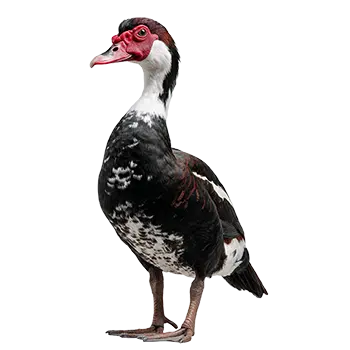
While Muscovy Ducks are not traditionally thought of as trainable like parrots or other companion birds, they are intelligent enough to learn basic behaviors and respond to consistent training approaches. Their calm temperament and food motivation make them surprisingly receptive to positive reinforcement methods. Patience and regular, short training sessions yield better results than sporadic, lengthy attempts. Young ducks tame more readily than adults, though even older birds can learn to trust and respond to patient handlers.
Basic behaviors that Muscovy Ducks can learn include coming when called, particularly when associated with feeding time. Many owners establish a specific call or sound that signals food availability, and ducks quickly learn to respond. They can learn to return to their coop or pen at dusk, especially when this routine is reinforced with treats or feed. Some individuals learn to accept gentle handling, stepping onto a hand or arm, though most never enjoy prolonged restraint. With time, they can recognize their caretaker's vehicle, voices, or daily routines and anticipate interactions.
Trick training is possible but limited compared to more intelligent bird species. Some Muscovy Ducks learn to navigate simple obstacles for food rewards, recognize different colored containers, or respond to hand signals. Their natural foraging instincts can be channeled into enrichment games like finding hidden treats. Swimming and diving behaviors can be encouraged with floating treats or toys. Individual personality greatly affects training success, with some ducks showing more interest and aptitude than others.
Vocalization in Muscovy Ducks is notably different from typical duck species and is one of their most valued characteristics. Instead of loud quacking, Muscovies produce quiet, breathy sounds. Males make a low, whispery hiss that sounds like forced breathing or a soft wheeze. This can occur during courtship displays, territorial behaviors, or as gentle communication. Females are even quieter, producing occasional soft chirps or hisses, but often remaining completely silent. Ducklings peep softly, much quieter than the loud peeping of other ducklings.
The quiet nature of Muscovy Duck vocalizations is a primary reason for their popularity in suburban and urban settings. They do not create the noise issues associated with other duck breeds. There are no dawn choruses of loud quacking, no persistent calling throughout the day, and minimal disturbance to neighbors. This makes them suitable for small farms, backyard flocks, and situations where noise ordinances might prohibit louder waterfowl.
Noise levels throughout the day remain consistently low. During breeding season, males may become slightly more vocal with their hissing calls during courtship, but even these sounds are barely audible at any distance. Females brooding nests are essentially silent. The quietest times are typically midday when ducks are resting, while early morning and evening when they are more active may feature slightly more communication sounds, but nothing approaching the volume of other duck species.
Socialization importance cannot be overstated for raising friendly, tractable Muscovy Ducks. Ducklings that receive daily gentle handling become much tamer than those raised with minimal human contact. Early exposure to various stimuli, people, and environments produces more confident, adaptable adults. However, even unsocialized adults often accept their caretakers over time, learning to associate humans with food, safety, and positive experiences.
Bonding techniques include hand-feeding treats, speaking calmly and consistently, moving slowly and predictably around the birds, and spending time simply being present in their space without forcing interaction. Muscovy Ducks remember both positive and negative experiences, so building trust requires patience and gentle consistency. Respecting their boundaries and not forcing unwanted contact helps develop mutual trust over time.
Behavioral challenges in Muscovy Ducks are relatively minor compared to many other bird species. Some males become territorial during breeding season and may hiss or posture at perceived threats, but serious aggression is uncommon. Over-breeding by males can stress females in flocks with improper male-to-female ratios, ideally maintained at one drake per four to five females. Escape attempts may occur if birds can fly and housing is inadequate, though most well-fed, well-housed Muscovies show strong site fidelity.
Positive reinforcement methods work best with these birds. Rewarding desired behaviors with preferred treats, gentle praise, and favorite activities builds cooperative relationships. Punishment or harsh handling damages trust and is ineffective. Consistency in routine, gentle persistence in training, and respect for individual personalities produce the best results. While Muscovy Ducks will never match parrots in trainability or communication ability, their intelligence and calm temperament make them rewarding birds to work with for patient owners who appreciate their unique qualities.