Mandarin Duck

Mandarin Duck
📸 Photo Gallery Coming Soon

Furry Critter Network Etsy Shop

Quick Facts

🔬 Scientific Name
Aix galericulata
🩜 Bird Type
Waterfowl
📊 Care Level
Intermediate
😊 Temperament
Gentle, Shy
📏 Adult Size
16-19 inches
⏱ Lifespan
10-12 years in captivity
🔊 Noise Level
Quiet
đŸ—Łïž Talking Ability
None
đŸœïž Diet Type
Omnivore
🌍 Origin
East Asia (China, Japan, Korea)
🏠 Min Cage Size
Pond/Aviary - 100+ sq ft
📐 Size
Medium

Mandarin Duck - Names & Recognition

The Mandarin Duck (Aix galericulata) derives its common name from the brightly colored robes worn by Chinese Mandarins, reflecting the male's spectacular breeding plumage. In Chinese, it is known as Yuan-yang (鮛鮩), a term that has become synonymous with affection and conjugal fidelity in Chinese culture, as these ducks were traditionally believed to mate for life. The scientific name Aix galericulata combines the Greek word for a diving bird with the Latin term for a small weasel, though the etymology is somewhat obscure.

In Japan, the species is called Oshidori (ă‚Șă‚·ăƒ‰ăƒȘ), and pairs of Mandarin Ducks similarly symbolize conjugal happiness and marital fidelity in Japanese tradition. Korean names include Won-ang or Gachangori, reflecting the species' native presence across the Korean peninsula. Historical European accounts sometimes referred to them as Chinese Teal or Japanese Wood Duck, though these names are now obsolete.

The species belongs to the genus Aix, which includes only one other species, the North American Wood Duck (Aix sponsa). These two species are remarkably similar in behavior and ecology despite their geographic separation. Within Aix galericulata, no distinct subspecies are currently recognized, though some minor regional variations in size and coloration have been noted across the species' range. The taxonomic classification places Mandarin Ducks in the family Anatidae, subfamily Anatinae, making them true ducks rather than geese or swans. Their closest relatives include the Wood Duck and various perching ducks that nest in tree cavities.

Mandarin Duck Physical Description

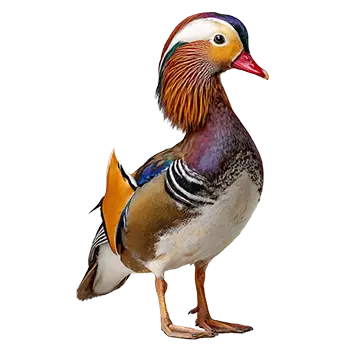
The male Mandarin Duck in breeding plumage is considered one of the most visually striking waterfowl species in the world. The head features a prominent red bill, white eye-ring, and a glossy green and copper crest that sweeps backward. The facial pattern includes a white stripe extending from above the eye to the back of the head, contrasting sharply with the iridescent green and purple coloring on the crown and nape. A distinctive orange ruff frames the lower face and neck, creating a mane-like appearance.

The breast is adorned with two vertical white bars bordered by black, while the flanks display elaborate orange-bronze upright feathers that resemble sails, known as sail fins. These unique modified tertial feathers stand erect and are perhaps the most distinctive feature of the species. The back and rump are dark green and purple with intricate scalloping, while the tail is dark with white undertail coverts. The overall effect is a masterpiece of color and pattern that has inspired centuries of Asian art.

Females and eclipse males present a dramatically different appearance with cryptic plumage designed for camouflage during nesting. Females are predominantly brownish-grey with white spectacles around the eyes, a thin white eye-ring, and white throat. The breast is spotted, and the flanks are mottled brown and grey. A distinct pale spot at the base of the bill helps identify females of this species. Eclipse males retain the red bill but otherwise resemble females during their non-breeding molt period.

Adult Mandarin Ducks measure 16-19 inches in length with a wingspan of 26-30 inches. Males typically weigh between 1.2-1.5 pounds while females are slightly lighter at 1-1.3 pounds. Ducklings hatch with yellow and brown down plumage and develop juvenile feathers within weeks. Males do not acquire full breeding plumage until their second year, though first-year males show intermediate patterns. The species exhibits marked sexual dimorphism, with males substantially more colorful while females maintain year-round camouflage coloring appropriate for nesting duties.

Affection Level
★ ★ ★ ★ ★
Mandarin Ducks are generally shy and prefer minimal direct handling. They may become accustomed to their caretakers over time but do not seek physical affection like companion birds. Hand-raised individuals show more tolerance but remain naturally wary and independent in temperament.
Sociability
★ ★ ★ ★ ★
These ducks are highly social with their own kind and thrive in pairs or small groups. Males and females form seasonal pair bonds. They coexist peacefully with other waterfowl species of similar temperament and enjoy the company of their flock members throughout the day.
Vocalization
★ ★ ★ ★ ★
Mandarin Ducks are relatively quiet compared to many domestic duck breeds. Males produce soft whistling calls while females make gentle quacking sounds. Their vocalizations are infrequent and pleasant, making them suitable for suburban settings where noise may be a concern for neighbors.
Intelligence
★ ★ ★ ★ ★
Mandarin Ducks demonstrate moderate intelligence typical of waterfowl. They quickly learn feeding routines, recognize their caretakers, and navigate their environment skillfully. They show problem-solving abilities when foraging and can adapt to various habitat conditions with appropriate acclimatization periods.
Exercise Needs
★ ★ ★ ★ ★
These active ducks require substantial space for swimming, diving, and land exploration. They need access to water for several hours daily to maintain health and natural behaviors. Flight-capable birds benefit from larger aviaries that allow short flights and wing exercise essential for muscle development.
Maintenance Level
★ ★ ★ ★ ★
Mandarin Ducks require moderate maintenance including daily water changes, feeding twice daily, and regular pond cleaning. Their shelter needs daily inspection and seasonal winterization in cold climates. Pinioning or wing clipping may be necessary if free-ranging. Overall care is manageable for experienced waterfowl keepers.
Trainability
★ ★ ★ ★ ★
Mandarin Ducks have limited trainability compared to companion birds. They can learn to come for feeding and recognize routines but do not perform tricks. Hand-raised ducks may be somewhat tame but retain strong natural instincts. Training focuses primarily on management and husbandry rather than behavioral commands.
Independence
★ ★ ★ ★ ★
Mandarin Ducks are highly independent and self-sufficient once established in their environment. They require minimal direct interaction with humans and entertain themselves through natural behaviors like foraging, swimming, and preening. They are ideal for keepers who prefer observation over hands-on interaction with their birds.

Natural Habitat & Range

The Mandarin Duck is native to East Asia, with its historical range centered in eastern China, the Russian Far East, Japan, and Korea. The species naturally inhabits wooded areas near rivers, streams, ponds, and lakes, showing a strong preference for habitats that combine water access with dense forest cover. In the wild, they favor mountainous and hilly regions where deciduous and mixed forests border freshwater bodies. Elevation ranges from sea level to approximately 8,000 feet in suitable habitat.

Their breeding range extends through northeastern China, the Amur River basin in Russia, North and South Korea, and the Japanese islands of Honshu and Kyushu. Historically, populations were also found in Taiwan and southern China, though these have been greatly reduced. The species is partially migratory, with northern populations moving south during winter to more temperate regions of eastern China, southern Japan, and sometimes Taiwan. Winter flocks can number dozens of individuals gathering on suitable waterbodies.

In their natural habitat, Mandarin Ducks occupy ecological niches similar to North American Wood Ducks. They nest in tree cavities, often quite high above ground and sometimes considerable distances from water. Oak forests are particularly favored as acorns form an important part of their diet. The ducks utilize both slow-moving rivers and still ponds, preferring water bodies with overhanging vegetation, fallen logs, and aquatic plants that provide cover and foraging opportunities.

Interesting populations of feral or introduced Mandarin Ducks have established themselves outside their native range, most notably in Great Britain where a breeding population descended from escapes and releases now numbers several thousand individuals. Smaller feral populations exist in Ireland, parts of continental Europe, and isolated locations in North America. These introduced birds demonstrate the species' adaptability to various temperate climates with suitable habitat. The conservation status of wild populations is classified as Least Concern by the IUCN, though the species has experienced population declines in parts of its native range due to habitat loss and hunting pressure. Conservation efforts in China, Russia, and Korea focus on protecting forested wetland habitats and establishing nature reserves where the species can thrive. In Japan, the species is legally protected and has stable populations in suitable habitat areas.

Temperament

Mandarin Ducks are generally gentle and peaceful waterfowl, though they maintain a naturally shy and wary disposition toward humans. Unlike domesticated duck breeds, they retain strong wild instincts and typically prefer to observe humans from a safe distance rather than seek interaction. This independent temperament makes them fascinating subjects for observation but less suitable for those seeking hands-on companion birds. Their beauty is best appreciated from respectful distances that allow them to engage in natural behaviors without stress.

Pair bonding is central to Mandarin Duck social behavior during the breeding season. Males perform elaborate courtship displays that include head-bobbing, wing-raising, and swimming in circles around prospective mates. Once paired, males are attentive to their partners, swimming together and remaining in close proximity. However, contrary to romantic symbolism in Asian culture, pair bonds typically last only a single breeding season rather than for life. Males remain with females during egg-laying but depart before ducklings hatch to undergo their eclipse molt in seclusion.

Social dynamics among Mandarin Ducks are generally peaceful, though males may engage in competitive displays during breeding season when establishing territories around preferred nesting sites. These disputes rarely result in physical combat, instead resolved through ritualized displays of their colorful plumage and posturing. Outside breeding season, Mandarin Ducks often gather in small flocks where social hierarchies are subtle and aggression is minimal. They coexist well with other peaceful waterfowl species of similar size.

Activity patterns follow typical duck behavior with most active feeding periods occurring during early morning and late afternoon. Midday hours are often spent resting on shore or in shallow water, preening and maintaining their intricate plumage. Mandarin Ducks are accomplished swimmers who navigate water with grace and can dive when necessary, though they feed primarily at the water's surface or in shallow areas. They are also capable fliers despite their ornate appearance, taking flight quickly when startled.

Noise levels are considerably lower than many domestic duck breeds. Males produce soft whistling calls, particularly during courtship, while females make quiet quacking sounds that rarely disturb neighbors. This relative quietness, combined with their visual appeal, contributes to their popularity among waterfowl enthusiasts in suburban and urban environments where noise restrictions may apply. Their vocalizations increase slightly during breeding season but remain unobtrusive compared to more vocal waterfowl species.

Captive Mandarin Ducks may become somewhat accustomed to regular human caretakers, especially when hand-raised from ducklings. They can learn to associate specific people with feeding times and may approach when their keeper appears with food. However, even hand-raised individuals typically retain a preference for maintaining personal space and rarely enjoy handling or petting. This temperament should be respected, as forcing interaction causes unnecessary stress and may lead to aggressive defensive behaviors when cornered.

Care Requirements

Housing Mandarin Ducks requires significant space and appropriate water access to support their natural behaviors and physical health. A minimum pond or water feature of at least 100 square feet is essential, with larger areas strongly preferred for maintaining multiple pairs. The water should be at least 18 inches deep to allow diving and full body submersion for bathing and feather maintenance. A filtration system or frequent water changes are necessary to maintain water quality, as ducks produce significant waste that can quickly foul small water features.

Land areas surrounding the pond should provide shelter, shade, and security from predators. A covered shelter or duck house offering at least 4 square feet per bird is required for nighttime housing and protection from weather extremes. The shelter should be predator-proof with secure latches, elevated floors, and adequate ventilation while remaining draft-free. Bedding materials such as straw or wood shavings should be kept dry and changed regularly to prevent respiratory issues and parasites. During winter in cold climates, heated shelters or pond de-icers may be necessary to prevent hypothermia and ensure continuous water access.

Nesting accommodations are crucial for breeding pairs. Mandarin Ducks are cavity nesters requiring elevated nest boxes placed 5-15 feet high on trees or posts near the water. Boxes should measure approximately 12x12x24 inches with a 4-inch entrance hole and be filled with wood shavings or similar nesting material. Multiple boxes should be provided if housing multiple pairs, as competition for prime nesting sites can lead to conflicts. Boxes should be cleaned and refreshed annually before breeding season begins in early spring.

Fencing and predator protection are critical considerations for waterfowl safety. Secure fencing at least 6 feet high, preferably with covered tops, protects against aerial predators like hawks and owls while preventing escape of flight-capable birds. Electric fencing or hardware cloth buried at least 12 inches below ground level prevents digging predators such as foxes and raccoons from accessing the enclosure. Night housing should be especially secure as most predator attacks occur during darkness when ducks are most vulnerable.

Environmental enrichment enhances wellbeing and natural behavior expression. Floating platforms, logs, and rocks provide resting areas and varied terrain. Aquatic plants offer hiding spots and foraging opportunities while improving water quality. Safe vegetation around the pond perimeter creates shade and security. Fallen logs and brush piles on land create cover and encourage natural exploration. For flight-capable birds, larger aviaries allowing short flights support exercise and muscle development important for overall health and longevity.

Temperature considerations vary by climate and season. Mandarin Ducks tolerate cold winters well if provided with appropriate shelter and access to unfrozen water. However, they are less heat-tolerant and require shade, cool water, and possibly supplemental cooling during hot summer weather. Adequate humidity is naturally maintained around water features, but shelter areas should have good air circulation to prevent respiratory issues associated with stagnant, humid air.

Feeding & Nutrition

In their natural habitat, Mandarin Ducks are omnivorous foragers consuming a varied diet that changes seasonally. Wild birds feed primarily on plant materials including seeds, acorns, aquatic vegetation, grains, and rice in agricultural areas. During breeding season and when feeding young, they increase protein intake by consuming aquatic insects, small fish, snails, worms, and other invertebrates found in and around their water habitat. This diverse natural diet provides nutritional balance that captive diets should attempt to replicate.

The foundation of a captive Mandarin Duck diet should be high-quality commercial waterfowl feed formulated for their specific life stage. Breeder or layer pellets are appropriate for adult ducks, particularly during breeding season when calcium demands increase for egg production. Growing ducklings require starter feed with higher protein content (18-20%) to support rapid growth, transitioning to grower feed and eventually maintenance feed as they mature. Pellets are preferable to crumbles or mash as they reduce waste and selective feeding behaviors.

Fresh vegetables should comprise 20-30% of the daily diet, providing essential vitamins and enrichment. Suitable vegetables include chopped leafy greens such as romaine lettuce, spinach, kale, and Swiss chard. Peas (fresh or thawed frozen), corn, green beans, and chopped carrots are readily accepted. Aquatic plants like duckweed, water lettuce, and water hyacinth provide natural foraging opportunities when available. Vegetables should be fresh, thoroughly washed, and appropriately sized to prevent choking hazards.

Fruits can be offered in moderation as treats, though they should not exceed 10% of total diet due to high sugar content. Berries, chopped apples, grapes (cut in half), and melon pieces are popular choices. Mandarin Ducks are particularly fond of berries which mirror foods available in their wild habitat. Overfeeding fruits can lead to obesity and nutritional imbalances, so portion control is important.

Protein supplementation is especially important during breeding season, molting periods, and for growing ducklings. Mealworms, crickets, earthworms, and small quantities of high-quality fish provide natural protein sources that stimulate foraging behavior. Commercially available dried insects offer convenient supplementation when fresh invertebrates are unavailable. Some keepers provide limited quantities of cooked eggs or fish during high-demand periods, though these should be offered sparingly.

Grains and seeds can supplement the diet but should not constitute the primary food source. Cracked corn, oats, wheat, and millet are appropriate in small quantities. Whole corn, especially in winter, provides energy and helps maintain body condition in cold weather. However, grain-heavy diets may lead to nutritional deficiencies and obesity, so commercial feed should remain the staple. Wild bird seeds are generally inappropriate as they often contain high fat content unsuitable for waterfowl.

Foods that are toxic or harmful to Mandarin Ducks must be strictly avoided. Bread and baked goods lack nutritional value and cause malnutrition and environmental pollution. Avocado is toxic to birds and must never be fed. Chocolate, caffeine, alcohol, salt, and foods containing xylitol are also poisonous. Onions, garlic, and other alliums may cause digestive upset and should be avoided. Moldy or spoiled feed of any type can cause fatal botulism or aspergillosis and must be discarded immediately.

Fresh, clean water must be available at all times for drinking and bathing. Waterfowl require water access while eating to properly swallow and digest their food. Water containers for drinking should be deep enough for ducks to submerge their entire bills and nostrils for cleaning, which prevents bacterial infections. Grit or small pebbles should be available to aid digestion, as waterfowl lack teeth and use grit in their gizzards to grind food.

Mandarin Duck Health & Lifespan

Mandarin Ducks are generally hardy waterfowl when provided with proper care, clean water, and appropriate nutrition. Like other waterfowl species, they can be susceptible to various health issues that vigilant owners should monitor. Avian botulism poses a serious risk in stagnant water environments where bacterial toxins can develop, causing progressive paralysis and death if untreated. Duck viral enteritis, also known as duck plague, is a highly contagious herpesvirus that can devastate waterfowl collections, causing hemorrhaging and high mortality rates. Aspergillosis, a fungal respiratory infection, may develop in birds housed in damp conditions with moldy bedding or feed, leading to chronic respiratory distress. External parasites including feather lice and mites can infest birds kept in crowded or unsanitary conditions, causing feather damage and irritation. Angel wing deformity can occur in growing ducklings fed excessively high-protein diets, resulting in permanent wing deformities that prevent flight. Bumblefoot infections develop when birds are housed on abrasive or hard surfaces without access to soft bedding, creating painful lesions on their feet. Proper preventive care is essential for maintaining healthy waterfowl. Regular veterinary checkups with an avian veterinarian experienced in waterfowl medicine help identify problems before they become serious. Providing clean, fresh water daily prevents bacterial and parasitic infections while supporting overall health. Maintaining proper diet and nutrition with commercial waterfowl feed appropriate to life stage prevents nutritional deficiencies and developmental problems. Ensuring clean housing with dry shelter protects birds from respiratory infections and parasites that thrive in damp environments. Predator-proof enclosures prevent injuries and stress from predator attacks which can compromise immune function. Routine observation of droppings, behavior, and appetite allows early detection of health changes requiring veterinary attention. Mandarin Ducks can live 10-12 years in captivity with attentive care, and proper management practices significantly extend both lifespan and quality of life for these beautiful ornamental waterfowl.

Common Health Issues

  • Aspergillosis, a fungal respiratory infection, may develop in birds housed in damp conditions with moldy bedding or feed, leading to chronic respiratory distress.
  • Ensuring clean housing with dry shelter protects birds from respiratory infections and parasites that thrive in damp environments.

Preventive Care & Health Monitoring

  • Mandarin Ducks are generally hardy waterfowl when provided with proper care, clean water, and appropriate nutrition.
  • Regular veterinary checkups with an avian veterinarian experienced in waterfowl medicine help identify problems before they become serious.
  • Maintaining proper diet and nutrition with commercial waterfowl feed appropriate to life stage prevents nutritional deficiencies and developmental problems.

Mandarin Ducks are generally hardy waterfowl when provided with proper care, clean water, and appropriate nutrition. Like other waterfowl species, they can be susceptible to various health issues that vigilant owners should monitor. Avian botulism poses a serious risk in stagnant water environments where bacterial toxins can develop, causing progressive paralysis and death if untreated. Duck viral enteritis, also known as duck plague, is a highly contagious herpesvirus that can devastate waterfowl collections, causing hemorrhaging and high mortality rates. Aspergillosis, a fungal respiratory infection, may develop in birds housed in damp conditions with moldy bedding or feed, leading to chronic respiratory distress. External parasites including feather lice and mites can infest birds kept in crowded or unsanitary conditions, causing feather damage and irritation. Angel wing deformity can occur in growing ducklings fed excessively high-protein diets, resulting in permanent wing deformities that prevent flight. Bumblefoot infections develop when birds are housed on abrasive or hard surfaces without access to soft bedding, creating painful lesions on their feet. Proper preventive care is essential for maintaining healthy waterfowl. Regular veterinary checkups with an avian veterinarian experienced in waterfowl medicine help identify problems before they become serious. Providing clean, fresh water daily prevents bacterial and parasitic infections while supporting overall health. Maintaining proper diet and nutrition with commercial waterfowl feed appropriate to life stage prevents nutritional deficiencies and developmental problems. Ensuring clean housing with dry shelter protects birds from respiratory infections and parasites that thrive in damp environments. Predator-proof enclosures prevent injuries and stress from predator attacks which can compromise immune function. Routine observation of droppings, behavior, and appetite allows early detection of health changes requiring veterinary attention. Mandarin Ducks can live 10-12 years in captivity with attentive care, and proper management practices significantly extend both lifespan and quality of life for these beautiful ornamental waterfowl.

Training & Vocalization

Training Mandarin Ducks presents unique challenges due to their independent nature and strong wild instincts. Unlike companion bird species bred for centuries of human interaction, Mandarin Ducks retain the wariness and autonomy of wild waterfowl. Training expectations should be modest and focused primarily on management and husbandry rather than tricks or commands. The primary training goals involve teaching ducks to tolerate necessary handling, return to secure housing at night, and accept routine care without excessive stress.

Imprinting and early socialization significantly influence trainability and human tolerance. Ducklings raised by human caretakers from hatching become considerably tamer than parent-raised birds, though they never achieve the tameness of truly domesticated species. Hand-raised ducks may approach familiar caretakers for food and tolerate closer observation, but most retain preference for maintaining personal space. Socialization during the critical first few weeks of life establishes the foundation for future human-duck interactions and determines adult temperament to a significant degree.

Feeding routines provide the best training opportunities. Mandarin Ducks quickly learn to associate specific times, sounds, or visual cues with feeding. Using consistent feeding calls or appearing at regular times teaches ducks to approach their keeper at designated feeding areas. This conditioned response proves valuable for daily management, health checks, and returning ducks to secure housing when necessary. Positive reinforcement through food rewards remains the most effective training method, as these birds show little motivation to please humans beyond food acquisition.

Recall training from water to land or into nighttime housing works best when established early and practiced consistently. Beginning with short distances and immediate food rewards, keepers can gradually increase recall distances as ducks learn the behavior pattern. However, flight-capable birds may simply fly away if motivation is insufficient, and wingspans clipped or pinioned birds have limited mobility affecting their response. Patience and consistency over weeks or months establish reliable patterns, though individual variation is significant.

Handling tolerance training benefits both bird and keeper by reducing stress during necessary procedures like health examinations, banded applications, or veterinary care. Gradual desensitization beginning with brief, gentle handling sessions and immediate release helps birds accept necessary contact. However, Mandarin Ducks generally never enjoy handling and should only be restrained when genuinely necessary for their care. Excessive handling causes chronic stress potentially impacting health and reproductive success.

Vocalizations in Mandarin Ducks are considerably less varied and complex than parrot species. Males produce distinctive soft whistling calls, particularly during courtship displays and when communicating with mates. These whistles are pleasant, musical sounds that do not carry long distances or create noise disturbances. Females make quiet, breathy quacking sounds that differ notably from the loud quacks of domestic duck breeds. Both sexes may produce alarm calls when startled or threatened, but these vocalizations remain relatively subdued.

The species demonstrates no talking ability or capacity for vocal mimicry. Unlike psittacines with specialized vocal anatomy enabling speech, waterfowl lack the physiological structures necessary for complex vocal learning. Their communication repertoire serves entirely natural purposes related to mating, territorial defense, and flock coordination. Keepers seeking talkative pet birds should consider parrot species rather than waterfowl.

Behavioral enrichment, while not traditional training, enhances welfare and provides mental stimulation for captive Mandarin Ducks. Scatter feeding encourages natural foraging behaviors as ducks search for food items distributed around their enclosure. Floating treats in water stimulate diving and surface dabbling behaviors. Novel objects like floating toys, safe mirrors, or hanging vegetation provide environmental novelty and investigation opportunities. Seasonal enrichment matching natural behavior cycles, such as nesting materials in spring, supports natural behavioral rhythms and psychological wellbeing.

Children & Other Pets

Mandarin Ducks can coexist in households with children, though they are not ideal pets for hands-on interaction with young family members. Their shy, independent nature means they do not seek attention from children and may become stressed by enthusiastic approaches or attempts at handling. These are primarily observation birds whose beauty is best appreciated from respectful distances rather than through direct physical interaction. Families seeking interactive pet birds should consider domesticated species with more amenable temperaments.

For families who do keep Mandarin Ducks, appropriate supervision and education are essential. Children must learn that these birds are wild by nature and require space and respect. Quiet observation from appropriate distances allows children to appreciate the ducks' beauty and behavior without causing stress. Children old enough to understand and follow rules, typically age 10 and older, can participate in basic care activities like feeding under adult supervision. Very young children lack the impulse control necessary for appropriate interaction and should be kept separate from duck enclosures.

Teaching children proper waterfowl etiquette includes explaining why chasing, loud noises, and sudden movements frighten the birds and should be avoided. Children can learn valuable lessons about respecting wildlife and observing animals in their natural behaviors rather than forcing interaction. Photography and nature journaling offer engaging ways for children to connect with Mandarin Ducks while maintaining appropriate boundaries. Educational opportunities abound as children observe courtship behaviors, nesting activities, and seasonal plumage changes.

Potential risks to children primarily involve water safety rather than aggressive behavior from the ducks. Ponds and water features required for duck keeping present drowning hazards for young children who should never be left unsupervised near water. Secure fencing around duck enclosures prevents unauthorized access by young children. Additionally, ducks can carry bacteria like Salmonella that may transmit to humans through contact. Children should wash hands thoroughly after any duck-related activities and never put hands in mouths while in duck areas.

Mandarin Ducks generally coexist peacefully with other waterfowl species when properly introduced and housed with adequate space. They do well with other small to medium-sized ducks including Wood Ducks, Teal species, Carolina Ducks, and Ringed Teal. Peaceful swan species and smaller geese may also share habitat successfully. However, aggressive waterfowl species like Muscovy Ducks or territorial large geese may harass or injure Mandarin Ducks, so compatibility should be carefully evaluated before mixing species.

Poultry integration presents more challenges as chickens and domestic ducks may bully the smaller, more timid Mandarin Ducks. If housing together, ensure multiple feeding stations, ample space, and hiding spots where Mandarin Ducks can retreat from more assertive birds. Monitoring interactions closely, especially during initial introductions, prevents injuries. Some keepers successfully house Mandarin Ducks with bantam chicken breeds or peaceful domestic ducks, while others prefer species-specific housing to eliminate competition and stress.

Predator species including dogs and cats present serious dangers to Mandarin Ducks and should never have unsupervised access to waterfowl enclosures. Even well-trained dogs may retain prey drive that triggers chasing behaviors, causing extreme stress or fatal injuries. Cats are natural hunters capable of killing ducklings and injuring adults. Households with dogs or outdoor cats must maintain secure separation between pets and ducks at all times. Indoor-only cats pose minimal risk, though close contact should still be avoided.

Small mammals like rabbits and guinea pigs can potentially share outdoor spaces with Mandarin Ducks if enclosure design prevents direct contact while allowing each species appropriate habitat. However, shared housing complicates cleaning, disease prevention, and individual species care. Most keepers find species-separate housing simpler and safer for all animals involved. The most successful multi-species situations involve large, naturalistic enclosures where different animals occupy distinct niches and avoid competition for resources or space.