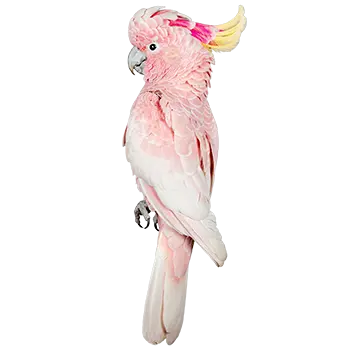
The Major Mitchell's Cockatoo possesses one of the most complex, demanding, and challenging temperaments among companion parrots, combining extraordinary beauty with psychological characteristics that make them suitable only for the most experienced, dedicated, and realistic parrot owners. Understanding the temperament of these magnificent but difficult birds is absolutely essential before considering ownership, as their behavioral challenges have resulted in countless rehoming situations and heartbreak for both birds and unprepared owners.
The defining characteristic of Major Mitchell's Cockatoo temperament is their tendency toward extreme, obsessive bonding with a single person combined with aggression, jealousy, and hostility toward others. While all cockatoos are known for strong bonding, Major Mitchell's take this to an extreme level that frequently becomes pathological and unmanageable. A Major Mitchell's typically selects one person as their mate substitute and becomes utterly devoted to this individual while simultaneously becoming viciously aggressive toward anyone else who approaches, including spouses, children, and other household members. This one-person bonding is not merely preferential but often borders on dangerous, with well-documented cases of Major Mitchell's inflicting severe, unprovoked attacks on family members or visitors who the bird perceives as rivals or threats.
This extreme territoriality and mate-guarding behavior stems from the species' natural history where bonded pairs maintain exclusive territories and defend these aggressively from intruders. In captivity, the bonded human becomes the bird's mate and territory, resulting in ferocious defense of this bond. The problem is exacerbated because Major Mitchell's Cockatoos are exceptionally intelligent and cunning, sometimes attacking without warning when they perceive an opportunity, making them genuinely dangerous to household members not favored by the bird. Attempts to socialize Major Mitchell's with multiple people often fail despite best efforts, and many individuals remain stubbornly one-person birds regardless of training approaches.
The affection displayed toward the chosen person is equally extreme, with Major Mitchell's demanding near-constant physical contact, cuddling, preening, and attention. They want to be on or touching their bonded person essentially all waking hours, becoming distressed and potentially destructive or aggressive when separated. This neediness far exceeds that of most other cockatoo species and approaches levels seen in the most demanding individuals. A Major Mitchell's will scream persistently, self-mutilate, destroy property, or attack household members when their demands for attention from their chosen person are not met continuously throughout the day.
Emotional sensitivity and complexity in Major Mitchell's Cockatoos is profound, making them psychologically sophisticated but also prone to developing severe neuroses and behavioral disorders. They are acutely aware of household dynamics, perceive subtle changes in routines or relationships, and react dramatically to anything they interpret as threatening their bond with their person. Jealousy is intense and can be triggered by the bonded person paying attention to other people, pets, activities, or even inanimate objects. A Major Mitchell's may attack a spouse for embracing their bonded person, destroy a computer or phone that occupies their person's attention, or mutilate themselves in apparent emotional distress.
Screaming is a particularly severe problem in Major Mitchell's Cockatoos, with this species producing some of the loudest, most persistent, and most difficult to manage vocalizations among all parrots. Morning and evening calling sessions can last 30-60+ minutes with ear-splitting volume exceeding 120 decibels. Many Major Mitchell's develop persistent screaming habits throughout the day, particularly when their constant demands for attention are not met immediately. Unlike some species where proper management can reduce excessive screaming, Major Mitchell's often continue problematic screaming despite best efforts, and the volume and persistence have led to neighbor complaints, housing problems, and even legal issues for owners.
Feather destructive behavior including plucking, self-mutilation, and barbering is extremely common in captive Major Mitchell's Cockatoos, with estimates suggesting 50% or more of captive individuals develop some degree of feather destruction. This devastating behavioral disorder stems from the species' intense emotional needs, sensitivity to stress, and inability to cope with captive conditions even when owners try their best. Once established, feather plucking is extremely difficult to resolve and often progresses to severe self-mutilation requiring medical intervention. Many Major Mitchell's become chronically feather-plucked despite owners' devoted efforts.
Playfulness and curiosity exist in Major Mitchell's Cockatoos but are overshadowed by their intense emotional demands and behavioral challenges. When content and secure, they can be entertaining and engaging, enjoying toys and interactive play. However, their play often depends entirely on their mood and relationship dynamics with their bonded person. They may refuse to play when jealous, upset, or attention-seeking, using behavioral withdrawal as manipulation.
Talking ability in Major Mitchell's Cockatoos is generally limited, with most individuals learning few words or phrases. Their voices are harsh and less clear than African Greys or some Amazon parrots. However, they are extremely vocal in other ways, producing a wide range of cockatoo vocalizations including whistles, squawks, screams, and other sounds. Many owners report that their Major Mitchell's vocalize more than talk.
Prospective owners must understand that Major Mitchell's Cockatoos represent perhaps the most challenging and demanding companion parrot species available. They are categorically unsuitable for first-time bird owners, families with children, working individuals who cannot provide 6-8+ hours daily of devoted one-on-one attention, anyone living in apartments or with close neighbors, or those expecting a bird that will bond with multiple family members. Even experienced cockatoo owners find Major Mitchell's exceptionally difficult, and rehoming rates are tragically high. Only individuals who fully understand and accept the extreme behavioral challenges, can provide near-constant companionship, and have backup plans for the bird's care should seriously consider this species.