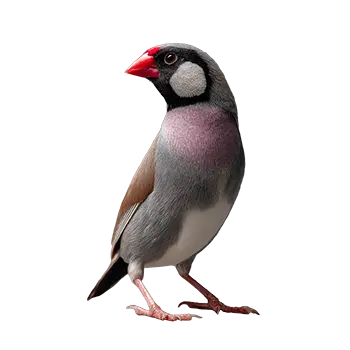
Java Sparrows possess delightful temperaments characterized by gentle, calm, social dispositions that make them excellent choices for bird enthusiasts seeking attractive, low-maintenance, entertaining companions that do not demand constant human interaction. Unlike parrots requiring extensive daily handling and training, Java Sparrows are content being observed and appreciated for their natural behaviors, social interactions with other birds, pleasant vocalizations, and elegant appearance. Understanding Java Sparrow temperament requires recognizing that these are flock birds whose primary social needs are met by other Java Sparrows rather than humans, making them fundamentally different from parrots in terms of human-bird interaction expectations.
The most important aspect of Java Sparrow temperament is their absolute need for companionship of other Java Sparrows. These highly social, gregarious finches should never be kept as solitary birds, as isolation causes severe psychological distress, depression, behavioral problems, and can contribute to health issues and shortened lifespan. They are happiest and healthiest in pairs (minimum) or small groups where they can engage in natural flock behaviors. A bonded pair of Java Sparrows will spend their days together, sitting close with bodies touching, mutually preening each other's head and neck feathers, coordinating movements as they hop and fly in synchrony, and producing soft contact calls maintaining their pair bond. This strong attachment to conspecifics is deeply ingrained and cannot be replaced by human companionship.
Java Sparrows are notably calm and gentle birds, rarely displaying aggression toward either their companions or their human caretakers. Unlike territorial parrot species that may bite viciously, Java Sparrows are non-aggressive and pose no bite risk as their small, seed-adapted bills are incapable of causing injury to humans. Even during breeding season when many birds become territorial and aggressive, Java Sparrows typically remain relatively docile, though they may show some defensiveness of nest sites. This gentle nature makes them safe around children (with appropriate supervision) and suitable for households seeking birds without aggression concerns.
The activity level of Java Sparrows is notably high, with these energetic finches in constant motion throughout waking hours. They spend their days hopping between perches with quick, precise movements, flying short distances across the cage demonstrating their aerial agility, foraging actively by sorting through seed, scratching in substrate, and manipulating food items, engaging in vigorous bathing when water is provided, and participating in social grooming and interaction with companions. This constant activity is entertaining to observe and indicative of good health and appropriate environmental conditions. Bored or stressed Java Sparrows show reduced activity and lethargy, making activity level a good indicator of wellbeing.
Social behaviors within Java Sparrow flocks or pairs provide endless entertainment for observers. Bonded pairs display obvious affection through mutual preening sessions where birds carefully groom each other's head feathers, sitting pressed closely together with bodies touching for extended periods, and engaging in courtship behaviors including males singing to females, hopping displays, and beak touching. Even in larger groups, Java Sparrows maintain social harmony through frequent gentle interactions, coordinated movements showing flock cohesion, and minimal conflict or aggression beyond occasional brief disputes over preferred perches or food items.
Vocalizations in Java Sparrows are pleasant and unobtrusive, consisting primarily of soft chirps, peeps, and gentle contact calls that create pleasant background ambiance without the harsh screaming or loud calls of many pet bird species. Males produce simple, repetitive songs particularly during breeding season - these songs are melodious, relatively quiet, and generally considered pleasant rather than annoying. The overall noise level is low enough for apartment living and households where quiet is important, though birds are not silent and do produce regular gentle vocalizations throughout the day, particularly during active morning and evening periods.
Java Sparrows' interaction with humans is fundamentally different from parrots. They do not seek human attention, do not enjoy being handled or touched, cannot be trained to perform tricks or speak, and generally prefer to observe humans from a distance rather than interacting directly. They can become accustomed to their owner's presence and routine, learning to associate humans with feeding time and remaining calm when people approach their cage for maintenance, but they do not form the types of interactive bonds that parrots develop. This independence from human interaction is actually advantageous for people who want attractive, active, entertaining birds to observe without the demanding social needs and daily handling requirements of parrots.
Attempts to hand-tame Java Sparrows are generally unsuccessful and stressful for the birds. While occasionally individuals raised from very young ages may tolerate brief handling, most Java Sparrows remain flighty and fearful of hands, perceiving attempts at handling as threatening predator-like behavior. Unlike parrots that can learn to enjoy or at least tolerate handling, Java Sparrows' instincts and temperament make them unsuited to hands-on interaction. Respecting this aspect of their nature and appreciating them as observation birds rather than hands-on pets is essential for their wellbeing and owner satisfaction.
Breeding behavior in Java Sparrows is relatively straightforward compared to challenging parrot breeding. Established pairs in appropriate conditions often breed readily, showing increased activity, nest-building behaviors, and male singing. Females may lay eggs even without male presence, though these will be infertile. Many keepers who house opposite-sex pairs successfully raise young, though managing breeding requires appropriate nest boxes, understanding of breeding cycles, and willingness to care for chicks or find appropriate homes for offspring.
Environmental sensitivity in Java Sparrows is moderate - they adapt well to varied household conditions but require stable temperatures (avoiding drafts and sudden temperature changes), adequate humidity (being tropical birds, they suffer in very dry conditions), protection from toxic fumes and household hazards, and appropriate light-dark cycles. They are less sensitive than many parrots but still require attentive care ensuring appropriate conditions.
Java Sparrows require owners who understand and appreciate finches as observation birds rather than interactive companions, can provide companionship of at least one other Java Sparrow (pairs minimum), can supply appropriate cage size allowing flight, are willing to maintain clean environment through regular maintenance, and desire attractive, active, gentle birds with pleasant vocalizations and minimal demands for direct human interaction. They are inappropriate for people seeking birds to handle, train, or interact with extensively, those wanting talking birds or complex companion animals, or anyone expecting parrot-like behaviors and bonding. However, for people understanding their needs and appreciating them for what they are - elegant, social, gentle finches perfect for observation - Java Sparrows provide years of enjoyment with relatively minimal demands, making them ideal for beginners, families, apartment dwellers, and anyone seeking lower-maintenance birds than parrots offer.