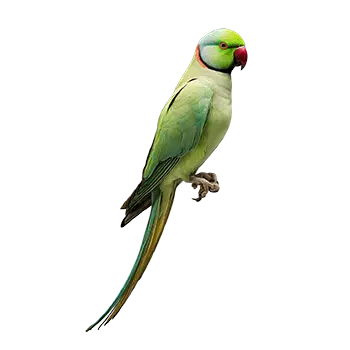
Indian Ringneck Parakeets demonstrate exceptional training potential, ranking among the most trainable parrot species due to their outstanding intelligence, excellent memory, and food motivation. They respond enthusiastically to positive reinforcement methods and genuinely seem to enjoy training sessions. Their capacity for learning speech, tricks, and complex behaviors rivals much larger parrots. Begin training early with young birds for optimal results, though older ringnecks can learn new behaviors with appropriate methods. Keep training sessions relatively short (10-15 minutes) but frequent (2-3 times daily) to maintain interest and enthusiasm.
Fundamental commands every Indian Ringneck should master include "step up," the essential basic command where the bird steps onto an offered hand or perch. This behavior is crucial for handling, cage cleaning, and safety. Practice step-up multiple times daily during routine interactions, rewarding compliance with praise and favorite treats. "Step down" teaches the bird to step from your hand onto perches or surfaces when requested. Both commands establish communication and gentle leadership. Recall training, where the bird flies to you on command, is particularly important for ringnecks who are excellent fliers. Start recall in a small, enclosed space with very short distances, using high-value treats and gradually increasing distance as reliability improves.
Advanced trick training provides essential mental stimulation for these intelligent birds. Indian Ringnecks excel at learning to wave, turn in circles or spin, retrieve objects and return them to hand, place objects in specific containers, navigate obstacle courses, ring bells on command, target specific objects with a pointer, perform acrobatic tricks on stands, and learn sequences of multiple tricks performed in order. Break complex behaviors into small, manageable steps, rewarding incremental progress. Use a clicker or verbal marker ("yes" or "good") to precisely mark desired behaviors at the exact moment they occur, immediately followed by a treat reward. This clear feedback accelerates learning dramatically.
Talking ability in Indian Ringneck Parakeets is exceptional, ranking among the best talking birds alongside African Greys, Amazons, and Eclectus parrots. They can develop extensive vocabularies of 100+ words and phrases, with clear, pleasant pronunciation that sounds distinctly like human speech rather than mimicked squawks. Males typically show more talking ability and inclination than females, though many females also become excellent talkers. Their voices are clear, relatively high-pitched, and pleasant, without the mechanical quality of some talkers.
Teaching speech requires consistent repetition, enthusiasm, and patience. Begin with simple, distinct words like the bird's name, "hello," "goodbye," and "pretty bird." Repeat words frequently during appropriate contexts—say "hello" when entering the room, "goodbye" when leaving. Use enthusiastic, animated delivery to capture the bird's attention and interest. Many ringnecks learn words and phrases simply from household conversation without specific training. They often pick up frequently heard phrases, pet names, phone ringtones, and household sounds. Recording yourself repeating target words can provide practice during times you're away, though live interaction is most effective.
Noise levels in Indian Ringneck Parakeets are moderate and generally apartment-friendly. Their natural contact calls are less piercing than conures or macaws, with typical sounds including pleasant chirps, whistles, squawks, and chatter. While capable of loud calls, particularly during morning and evening activity peaks, they're generally quieter than many popular parrot species. Their talking voice is clear and pleasant. Morning greetings and evening settling calls are typical but manageable. Overall, their noise level is one of the species' advantages for apartment or neighborhood living.
Managing vocalization requires accepting baseline communication as normal, healthy behavior while reducing excessive screaming. Natural morning and evening calls are brief and typical. Contact calling when the bird cannot see its person is normal communication. However, attention-seeking screaming can be reduced: ignore all screaming completely, providing absolutely no response. Reward quiet behavior and appropriate vocalizations (including talking) immediately with attention and treats. Teach the bird to use learned words or phrases to request attention instead of screaming. Ensure adequate mental stimulation and exercise, as under-stimulated ringnecks may vocalize excessively from boredom.
Socialization importance cannot be overstated, particularly given ringnecks' tendency toward one-person bonding and the challenging bluffing stage. Expose young birds to various people of all ages, genders, and appearances, preventing the development of one-person aggression. Handle frequently and by multiple family members or friends. Introduce new environments, sounds, experiences, and objects gradually and positively. Well-socialized ringnecks remain more flexible, confident, and friendly throughout their lives. Continue socialization throughout life, particularly during and after the bluffing stage, to maintain social skills and prevent the development of rigid preferences or fears.
Bonding techniques that strengthen your relationship include spending dedicated interaction time daily that the bird initiates and enjoys, offering favorite treats from your hand during training, talking to your bird frequently throughout the day (they love conversation), teaching new words and tricks regularly, including the bird in appropriate family activities at safe distances, respecting when the bird wants space rather than forcing interaction, and learning to read body language and respond appropriately. Trust with ringnecks develops through respecting their independent nature while providing consistent, positive interaction.
Behavioral challenges in Indian Ringnecks center primarily on the bluffing stage and potential one-person aggression. The bluffing stage typically occurs between 6 months and 2 years, particularly around sexual maturity. Previously gentle birds may become nippy, aggressive, and unpredictable. Consistent, patient handling using positive reinforcement while avoiding dramatic reactions to biting helps birds through this phase. Most ringnecks emerge as well-adjusted adults, though some retain more attitude. One-person bonding can lead to aggression toward others; prevent this through consistent handling by multiple people from a young age.
Positive reinforcement methods form the exclusive foundation of effective training. Reward desired behaviors immediately with favorite treats, enthusiastic verbal praise, or head scratches if the bird enjoys them. Ignore unwanted behaviors when safely possible. Never physically punish, hit, spray with water, shake, yell at, or intimidate your ringneck. These methods damage trust, increase fear and aggression, and are completely ineffective. Indian Ringnecks respond beautifully to positive methods and can become defensive and aggressive with punishment-based approaches. Their intelligence and memory mean they remember both positive and negative interactions, making gentle, patient training essential.