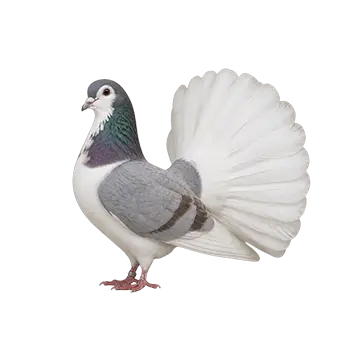

The Fantail Pigeon derives its descriptive common name from its most spectacular and defining feature: the magnificent fan-shaped tail display that distinguishes it from all other pigeon breeds. The tail, when fully spread during courtship or territorial displays, creates a dramatic fan or peacock-like appearance containing 30 to 40 or even more tail feathers compared to the normal 12-14 tail feathers in typical pigeons. This extraordinary modification through selective breeding creates one of the most visually striking domestic pigeon varieties, instantly recognizable and universally admired. The name "Fantail" is used worldwide in pigeon fancy communities, making it the standard designation for the breed.
Alternate names are limited, with the breed universally known as Fantail or Fantail Pigeon. Occasionally, specific varieties are designated by color combined with Fantail (White Fantail, Black Fantail, etc.), but the breed itself is simply "Fantail." In some regions, particularly where English is not the primary language, translated equivalents of "fan-tail" or "peacock pigeon" may be used, but international pigeon fancy communities predominantly use "Fantail."
Taxonomically, Fantail Pigeons are domesticated varieties of the Rock Dove or Rock Pigeon (Columba livia), the species from which all domestic pigeons descend through thousands of years of selective breeding. As such, they are classified as Columba livia domestica, the domesticated form. All domestic pigeon breeds including Fantails, Jacobins, Pouters, Tumblers, Racing Homers, and hundreds of others share this scientific classification, representing artificially selected varieties rather than distinct biological species. The remarkable diversity among pigeon breeds rivals that of domestic dogs, demonstrating the extraordinary phenotypic plasticity of the ancestral Rock Dove and the creativity of pigeon breeders across millennia.
The Fantail Pigeon belongs to the "fancy pigeon" category within domestic pigeon classification, specifically bred for ornamental appearance and show exhibition rather than utility (meat production), performance (racing, flying ability), or other functions. Fancy pigeons emphasize specific aesthetic characteristics including unusual feather structures, colors, body shapes, or behaviors, with Fantails representing one of the most popular and widely recognized fancy breeds worldwide.
The breed's origins trace to the Indian subcontinent, particularly India and Pakistan, where Fantail Pigeons were developed centuries ago, possibly as early as the 1400s-1600s. Historical accounts from European travelers to India describe pigeons with extraordinary tails, indicating the breed was well-established by the time Europeans encountered them. The Fantail spread from India to Europe during colonial periods, arriving in Britain by the 1700s where British fanciers further refined and standardized the breed. From Europe, Fantails spread worldwide, becoming one of the most popular fancy pigeon breeds globally.
Within the Fantail breed, numerous recognized varieties exist based primarily on color, marking patterns, and tail development. Standard recognized varieties include White (pure white plumage), Black (solid black), Blue (blue-grey), Red (rich red-brown), Yellow (golden-buff), Saddle varieties (white with colored saddle marking on back), and many others. Standards also recognize different feather types including clean-legged (no feathers on legs) versus muffed (feathered legs). Show standards maintained by pigeon organizations including the National Pigeon Association in the US and similar bodies worldwide specify precise requirements for ideal Fantails including tail feather count, carriage, body conformation, and color standards.
In pigeon fancy and among aviculturists, Fantail Pigeons are recognized as classic ornamental birds, extremely popular for show exhibition and backyard collections. They are among the most commonly kept fancy pigeons, second perhaps only to breeds like Jacobins or Racing Homers in overall popularity. Their spectacular appearance combined with gentle temperament, relatively easy care, and successful breeding in captivity makes them enduring favorites. Exhibition Fantails from champion bloodlines command premium prices at shows and through specialized breeders, though pet-quality birds are affordable and readily available.