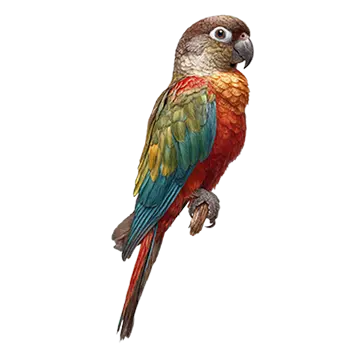
Crimson-Bellied Conure

Crimson-Bellied Conure
📸 Photo Gallery Coming Soon

Furry Critter Network Etsy Shop

Quick Facts

πŸ”¬ Scientific Name
Pyrrhura perlata
🦜 Bird Type
Parrot
πŸ“Š Care Level
Moderate
😊 Temperament
Gentle, Affectionate, Playful
πŸ“ Adult Size
9-10 inches
⏱️ Lifespan
20-25 years
πŸ”Š Noise Level
Moderate
πŸ—£οΈ Talking Ability
Limited
🍽️ Diet Type
Pellet-based
🌍 Origin
Brazil (Amazon Basin)
🏠 Min Cage Size
24x24x24 inches
πŸ“ Size
Small

Crimson-Bellied Conure - Names & Recognition

The Crimson-Bellied Conure is scientifically classified as Pyrrhura perlata, belonging to the genus Pyrrhura which encompasses numerous small South American parrot species. The species name "perlata" derives from Latin meaning "pearled" or "adorned with pearls," likely referring to the scalloped or pearled appearance of the chest feathers found in many Pyrrhura species. This bird was first described scientifically in 1818, and while its taxonomic classification has remained relatively stable, understanding of its relationship to other Pyrrhura species has evolved with genetic research.

Common names for this species include Crimson-Bellied Conure, Crimson-Bellied Parakeet, and Pearly Conure, with the first being most widely used in aviculture and ornithology. In Brazil, its native range, the bird is known as "tiriba-de-barriga-vermelha" (red-bellied parakeet) in Portuguese. Regional variations in common names exist, though they all reference the bird's most distinctive feature: the brilliant crimson-red coloring on the belly and lower breast.

Three subspecies of Pyrrhura perlata are currently recognized by most taxonomic authorities. The nominate subspecies, P. p. perlata, inhabits the eastern portion of the range and is the form most commonly encountered in aviculture. P. p. coerulescens occurs in the western range and shows slightly more blue in the plumage. P. p. anerythra, sometimes considered a distinct species, displays reduced or absent red coloring on the belly. However, some ornithologists question whether these variations represent true subspecies or merely regional color variations, with ongoing research examining genetic differentiation.

In aviculture, the Crimson-Bellied Conure is sometimes confused with the closely related Pearly Conure (Pyrrhura lepida), which shares similar scalloped chest patterns but has different belly coloration. The Crimson-Bellied's distinctive deep red belly easily distinguishes it from most other Pyrrhura species. Unlike some conure species where color mutations have been extensively bred, the Crimson-Bellied Conure is primarily available in its natural wild-type coloration, with breeders focusing on maintaining the species' natural beauty rather than developing mutations. This contributes to their somewhat limited availability compared to more common conure species.

Crimson-Bellied Conure Physical Description

The Crimson-Bellied Conure is a compact parrot measuring 9 to 10 inches in total length from beak to tail tip, with an average weight ranging from 55 to 70 grams. Their body is well-proportioned with a relatively long, graduated tail comprising approximately half their total length. The overall impression is of a sleek, elegant bird with graceful proportions and stunning coloration that makes them highly desirable among conure enthusiasts.

The species' most striking and distinctive feature is the brilliant crimson-red coloring on the belly and lower breast, giving the bird its common name. This vibrant red patch extends from the lower chest through the abdomen, creating a dramatic contrast with the surrounding plumage. The intensity of the red coloring varies among individuals, with some showing deep, rich crimson while others display slightly lighter or more orange-tinted red. This belly patch is the quickest identification feature distinguishing Crimson-Bellied Conures from other Pyrrhura species.

The head displays complex, beautiful coloring typical of Pyrrhura conures. The crown and nape are greenish-brown with subtle bluish edging on some feathers. The cheeks and ear coverts show blue-green coloration, while the throat area displays lighter, scalloped feathering in pale gray-green with darker edging. The upper breast shows a distinctive scalloped or scaled pattern created by feathers with pale centers and darker edges, giving a pearled appearance that extends the "perlata" scientific name reference.

The back, wings, and tail are predominantly green, with the upperparts showing rich grass-green coloration. The primary flight feathers are blue, visible as flashes of color during flight when the wings are fully extended. The tail is primarily maroon-red on top with blue-tipped outer feathers, and olive-brown underneath. The bend of the wing (carpal edge) shows some red feathering, adding another accent of color. The undertail coverts are red, matching the belly coloration.

The Crimson-Bellied Conure has a white to pale gray eye-ring formed by bare skin surrounding the eye, giving the bird an alert, bright-eyed expression characteristic of Pyrrhura species. The iris is dark brown in adults. The beak is gray-black to horn-colored, relatively small but strong for cracking seeds and nuts. The legs and feet are gray with the typical parrot zygodactyl toe arrangement of two toes pointing forward and two backward, providing excellent grip for climbing and perching.

Sexual dimorphism in Crimson-Bellied Conures is absent or minimal, making visual sexing unreliable to impossible. Males and females appear virtually identical in size, coloration, and markings. Some breeders claim males may have slightly larger heads or more extensive red on the belly, but these differences are inconsistent and subtle at best. Definitive sex determination requires DNA testing through blood or feather samples, which is routinely performed by breeders and recommended before purchasing a bird if gender is important to the buyer.

Juvenile Crimson-Bellied Conures can be distinguished from adults by their generally duller plumage with less vibrant coloring overall. Young birds display less extensive and less intense red on the belly, sometimes showing orange rather than deep crimson. The green plumage appears less rich, and the scalloping on the breast may be less distinct. The beak of juveniles often shows more black coloring, particularly on the upper mandible. As birds mature through their first molt around 6 to 12 months of age, the adult coloration intensifies, with the crimson belly reaching full brilliance by 12 to 18 months.

Affection Level
β˜… β˜… β˜… β˜… β˜…
Crimson-Bellied Conures are exceptionally affectionate and form deep bonds with their owners. They love cuddling, nestling into clothing, and receiving gentle head scratches. These sweet-natured birds actively seek physical contact and thrive on close interaction with their favorite people, making them ideal for owners wanting a truly devoted companion.
Sociability
β˜… β˜… β˜… β˜… β˜…
Highly social birds requiring substantial daily interaction to maintain mental health and happiness. They do well as single pets with dedicated owners or in bonded pairs. Crimson-Bellies enjoy being part of household activities and can become depressed or develop behavioral issues without adequate social engagement and companionship.
Vocalization
β˜… β˜… β˜… β˜… β˜…
Quieter than most conure species, making them more suitable for apartments and noise-sensitive environments. They produce pleasant chirps and occasional squawks but lack the piercing screams of Sun Conures or larger species. Morning and evening vocalizations are typical but manageable. Their moderate noise level is a significant advantage for many owners.
Intelligence
β˜… β˜… β˜… β˜… β˜…
Intelligent problem-solvers capable of learning tricks, understanding routines, and figuring out puzzle toys. They demonstrate strong cognitive abilities and can learn to associate words with actions. Their intelligence requires regular mental stimulation through training, foraging opportunities, and environmental enrichment to prevent boredom and maintain psychological health.
Exercise Needs
β˜… β˜… β˜… β˜… β˜…
Active birds requiring several hours of out-of-cage time daily for flight, climbing, and exploration. They are agile flyers who benefit from flight exercise and need space to move freely. Regular physical activity prevents obesity, maintains muscle tone, and provides essential mental stimulation. Inadequate exercise leads to behavioral and health problems.
Maintenance Level
β˜… β˜… β˜… β˜… β˜…
Moderate maintenance including daily cage spot-cleaning, weekly thorough cleaning, and regular toy rotation. They are tidier eaters than some larger species but still scatter food. Their smaller size makes daily care more manageable. Minimal grooming required beyond occasional nail trims and bathing opportunities. Overall care demands are reasonable for dedicated owners.
Trainability
β˜… β˜… β˜… β˜… β˜…
Highly trainable with positive reinforcement methods, responding well to gentle, patient training. They can learn step-up, recall, and various tricks. Food-motivated and eager to please, they excel with clicker training. Their gentle nature makes training sessions enjoyable and productive when approached with consistency and positive methods.
Independence
β˜… β˜… β˜… β˜… β˜…
Low independence with significant daily attention requirements. Crimson-Bellied Conures form strong attachments and can develop separation anxiety without adequate interaction. They prefer constant companionship and may become distressed when left alone for extended periods. Best suited for owners who can provide several hours of daily interaction or who work from home.

Natural Habitat & Range

The Crimson-Bellied Conure inhabits the eastern Amazon Basin of Brazil, with its range concentrated primarily in the Brazilian states of ParΓ‘ and northern MaranhΓ£o. This relatively restricted distribution makes the species more geographically limited than many other conure species. The range extends along the eastern bank of the Tocantins River and the western bank of the lower Xingu River, occupying lowland tropical forests in this region. Different subspecies occupy distinct areas within this broader Amazonian range.

These conures inhabit humid tropical lowland forests, forest edges, and terra firme forests (forests on well-drained upland soils not subject to seasonal flooding). They show a preference for primary rainforest with tall canopy trees but can adapt to secondary growth forests and partially disturbed areas. Crimson-Bellied Conures are typically found at elevations below 900 meters, inhabiting the characteristic Amazonian lowland environment with its dense vegetation, high humidity, and warm temperatures year-round.

The Amazonian habitat provides the rich, biodiverse environment these conures depend on for survival. The forest canopy offers abundant food sources including fruiting trees, flowering plants, and seed-bearing species that vary seasonally. The dense vegetation provides protection from predators such as hawks, snakes, and arboreal mammals. Natural tree cavities in large trees serve as nesting and roosting sites, essential for breeding and nighttime shelter. The complex forest structure allows for the species' social behaviors and flock dynamics.

In their natural environment, Crimson-Bellied Conures are social birds living in small flocks typically numbering 6 to 20 individuals, though larger groups may congregate at abundant food sources or communal roosting sites. These flocks maintain cohesion through vocal communication, with birds calling frequently to maintain contact while foraging in the dense canopy where visual contact is limited. The social structure provides protection through increased vigilance, with multiple birds watching for threats while others feed. Pairs within the flock form strong, apparently monogamous bonds that persist across breeding seasons.

Daily activity patterns follow typical parrot behaviors. Flocks become active shortly after dawn, with birds stretching, preening, and vocalizing before departing roosting sites to forage. Morning feeding continues for several hours in the forest canopy, with birds moving between fruiting and flowering trees. During the hottest midday hours, activity decreases as birds rest in shaded areas of the canopy, engaging in social preening and quiet foraging. Late afternoon brings renewed feeding activity before the flock returns to roosting sites at dusk, settling with vocal exchanges before sleeping.

Wild Crimson-Bellied Conures feed on a diverse diet reflecting seasonal availability in their rainforest habitat. Primary food sources include seeds from various forest trees, fruits and berries, flowers and flower buds, nuts, and occasionally insects. They show particular preference for certain fruiting trees when available, adjusting their diet as different species come into season. Their feeding behavior includes both canopy foraging and descending to lower vegetation or even ground level for fallen fruits or specific food sources. This dietary flexibility helps them survive through seasonal variations in food availability.

The conservation status of the Crimson-Bellied Conure is currently listed as Least Concern by the IUCN, though this designation requires careful interpretation. While the species is not currently considered threatened, its relatively restricted range in the Brazilian Amazon makes it vulnerable to habitat loss. Deforestation in the Amazon Basin for logging, agriculture, and development poses the primary long-term threat. The species' dependence on primary or mature secondary forest makes it sensitive to habitat degradation. Population trends are difficult to assess due to the remote, inaccessible nature of much of their range.

Historically, the pet trade impacted wild populations through trapping, but international regulations and the development of successful captive breeding programs have reduced this pressure. Most Crimson-Bellied Conures in aviculture today are captive-bred, though illegal trapping continues in some areas. The species' relatively limited availability in the pet trade compared to more common conures partly reflects both conservation concerns and the challenges of breeding this somewhat less common species. Ongoing monitoring of wild populations and habitat protection remain important for ensuring the species' long-term survival.

Temperament

Crimson-Bellied Conures are renowned for their gentle, sweet-natured temperament that makes them beloved companions among those fortunate enough to own them. They are generally calmer and more laid-back than many other conure species, with a less frenetic energy level and more docile disposition. This gentle nature, combined with their stunning appearance, makes them highly desirable for bird enthusiasts seeking a beautiful, affectionate companion without the intensity of more demanding species.

These conures display exceptional affection toward their bonded humans, often becoming devoted, cuddly companions. They love physical contact, frequently burrowing into their owner's clothing, nestling against necks, or simply sitting contentedly in a warm hand. Many Crimson-Bellied Conures enjoy head and neck scratches, often lowering their heads and fluffing their feathers to request petting. This cuddly nature is more pronounced than in many parrot species and represents one of the breed's most endearing qualities. They typically bond strongly with one or two favorite people but can remain friendly toward other household members with proper socialization.

Social interaction is essential for Crimson-Bellied Conures' psychological wellbeing. These birds evolved in social flocks and require several hours of daily interaction to remain happy and mentally healthy. They enjoy being part of household activities, perching nearby while their owners work, cook (at a safe distance), or relax. Many individuals enjoy watching television with their families or observing household activities from a favorite perch. Without adequate social interaction, they can become depressed, withdrawn, or develop behavioral problems including excessive vocalization and feather plucking.

Playfulness in Crimson-Bellied Conures manifests differently than in more high-energy species like Sun Conures or Caiques. While certainly playful and enjoying toys, climbing, and exploration, they tend toward gentler, less frenetic play. They enjoy manipulating objects, solving puzzle toys, and exploring their environment, but typically at a more measured, deliberate pace. This calmer play style makes them easier to manage for owners who find the constant high energy of some species overwhelming. They remain active and need stimulation but in a more controlled, manageable way.

Vocalization levels in Crimson-Bellied Conures are moderate, significantly quieter than many other conure species, which is a major advantage for apartment dwellers or those in noise-sensitive situations. Their typical calls consist of pleasant chirps, chattering, and soft contact calls. While they can produce louder calls when excited or seeking attention, they lack the piercing screams characteristic of Sun Conures, Jenday Conures, or larger species. Morning and evening vocalizations occur as the bird greets the day and settles for sleep, but these are generally manageable. Overall, their moderate noise level makes them one of the more apartment-friendly conure species.

Crimson-Bellied Conures communicate through body language that owners should learn to interpret. Relaxed, content birds display smooth feathers, calm movements, and soft vocalizations. Interest and curiosity show through head tilting, eye pinning (rapid pupil contraction and dilation), and focused attention. Fear or stress manifests through fluffed feathers, backing away, freezing, or rapid breathing. Aggressive warnings include pinned eyes, raised wings, open beak, and lunging postures. Learning to read these signals prevents bites and strengthens the bond through appropriate responses to the bird's emotional state.

The temperament of Crimson-Bellied Conures makes them suitable for a range of owners, from experienced bird keepers to dedicated first-time parrot owners willing to learn. Their gentler nature is more forgiving of handling mistakes than more reactive species, though they still require respect and proper care. They adapt well to various household situations including families with older children, couples, or individuals. Their moderate noise level, manageable size, and affectionate temperament create an appealing package for those seeking a true companion bird.

Hormonal behaviors emerge as Crimson-Bellied Conures reach sexual maturity around 2 to 3 years of age. During breeding season (often spring, though indoor birds may show hormonal behavior year-round or at different times), both males and females may exhibit increased territoriality, nesting behaviors, and occasional mood changes. They may become more possessive of favorite people or locations. Managing hormonal behavior includes limiting daylight hours to 10-12 hours, removing potential nesting sites or materials, restricting petting to head and neck areas only, and maintaining consistent routines. These behaviors typically intensify seasonally and decrease outside breeding periods.

Activity levels in Crimson-Bellied Conures are moderate compared to many parrot species. They follow diurnal patterns with peak activity in early morning and late afternoon to evening. Morning brings stretching, preening, eating, and vocal activity. Midday often involves quieter periods with napping, gentle play, and observation. Evening brings renewed energy before settling at dusk. While they need regular exercise and stimulation, they are less demanding in this regard than high-energy species, making them manageable for owners with moderate activity lifestyles who can still provide adequate attention and interaction.

Care Requirements

Proper housing is fundamental to a Crimson-Bellied Conure's physical and psychological wellbeing. The minimum cage size for a single bird is 24x24x24 inches, though larger is always better and highly recommended. Ideally, provide a cage at least 30-36 inches wide to allow for wing stretching, short flights, and adequate space for multiple perches and toys. For pairs, minimum dimensions should be 36x24x30 inches or larger. Bar spacing should be 1/2 to 3/4 inch to prevent escape or head entrapment while allowing climbing. Choose powder-coated or stainless steel cages, avoiding zinc, lead, or rust-prone materials that can cause heavy metal poisoning.

Cage location significantly impacts your bird's quality of life and behavior. Place the cage in the main family living area where household activities occur, allowing the bird to feel included in the flock. Avoid kitchens due to cooking fumes, particularly from non-stick cookware containing PTFE (Teflon), which releases deadly fumes when heated and can kill birds within minutes. Position the cage away from direct sunlight, drafts, heating or cooling vents, and exterior doors or windows where temperature fluctuations occur. The cage should be at approximately chest to eye level; positioning too high may encourage dominance behaviors, while too low can increase stress and vulnerability feelings. Ensure at least one side is against a wall, providing security and reducing stress.

Perch variety promotes foot health and prevents pressure sores, arthritis, and bumblefoot. Provide natural wood branches in varying diameters from 1/2 to 3/4 inch, forcing feet to exercise different muscles and preventing repetitive stress on the same pressure points. Excellent natural wood choices include manzanita, java wood, and safe fruit tree branches (apple, pear). Include different materials such as rope perches, mineral or calcium perches for beak conditioning, and therapeutic perches with varying textures. Position perches at various heights throughout the cage, ensuring food and water dishes are not directly beneath perches to prevent fecal contamination. Avoid sandpaper perches as primary perches, though one concrete perch placed away from sleeping areas can help with natural nail maintenance.

Toys are essential for mental stimulation and preventing boredom-related behaviors in these intelligent birds. Provide destructible toys made from wood, cardboard, palm leaves, and paper that the bird can shred and destroy, satisfying natural foraging and destructive instincts. Include foraging toys requiring manipulation to access treats, puzzle toys that challenge problem-solving abilities, swings and hanging toys for play, bells and noise-making toys, and chewing toys made from safe materials. Rotate toys weekly or biweekly to maintain novelty and interest. Ensure all toys are bird-safe, avoiding zinc hardware, lead weights, toxic dyes, frayed rope that could entangle toes, and small parts that could be swallowed.

Out-of-cage time is essential for Crimson-Bellied Conures. These active birds require a minimum of 3-4 hours daily outside their cage in a bird-proofed area, allowing flight exercise, social interaction, and mental stimulation. This supervised time prevents cage-bound behaviors, maintains physical fitness, and strengthens the human-bird bond. Create a bird-safe area by covering windows and mirrors to prevent collision injuries, securing or removing electrical cords, removing toxic plants from the area, closing toilet lids and covering aquariums, turning off ceiling fans, keeping other pets separated during bird time, and removing or protecting items the bird could damage or that could harm the bird.

Safety hazards requiring vigilance include non-stick cookware fumes (PTFE/Teflon) which cause rapid death, scented products including candles, air fresheners, essential oil diffusers, and aerosol sprays, toxic plants such as avocado, chocolate, caffeine, and many common houseplants (research before introducing new plants), heavy metals from old paint, costume jewelry, stained glass, or galvanized hardware, standing water sources where birds can drown, and small spaces where birds can become trapped or injured. Maintain constant vigilance regarding household hazards.

Environmental enrichment extends beyond basic cage setup. Provide regular bathing opportunities through shallow dishes, misting bottles, or under gently running tap water, as most Crimson-Bellied Conures enjoy water. Offer varied foraging opportunities by hiding treats in paper bags, wrapping nuts in paper for unwrapping, scattering pellets in shredded paper for searching, using puzzle feeders, or skewering vegetables on kabob holders. Create exploration opportunities with play gyms, T-stands, and multiple perching locations outside the cage in safe areas. Some birds enjoy television, music, or videos designed for birds, providing mental stimulation during quieter times.

Temperature and humidity requirements are moderate, with Crimson-Bellied Conures comfortable in household temperatures of 65-80Β°F. Avoid sudden temperature changes, drafts, or prolonged exposure to temperature extremes. They tolerate brief variations but suffer in sustained heat or cold. Humidity should be maintained at 40-60%, typical in most homes. During dry winter months, a humidifier near (not directly on) the cage may benefit respiratory health and feather condition, particularly important for these rainforest-adapted birds.

Lighting plays important roles in health and behavioral regulation. Provide 10-12 hours of darkness nightly for adequate sleep, essential for immune function, hormone regulation, and preventing behavioral problems. Maintain consistent sleep and wake schedules that mimic natural day-night cycles, covering the cage if necessary to block light and noise during sleep hours. Full-spectrum UV lighting benefits vitamin D synthesis, particularly important for birds without regular access to unfiltered natural sunlight (window glass blocks beneficial UV rays). Position UV lights 12-18 inches from favorite perching areas, replacing bulbs according to manufacturer recommendations as UV output diminishes before visible light fails.

Feeding & Nutrition

In their natural Amazonian habitat, Crimson-Bellied Conures consume a diverse diet of seeds, fruits, nuts, berries, flowers, blossoms, and occasional insects, with specific items varying seasonally based on rainforest productivity cycles. This varied wild diet provides balanced nutrition and demonstrates their adaptability as opportunistic feeders within their forest ecosystem. Replicating this diversity in captivity ensures optimal health, longevity, vibrant plumage, and disease resistance.

The foundation of a captive Crimson-Bellied Conure's diet should be high-quality, organic pellets specifically formulated for small to medium parrots, comprising 60-70% of daily food intake. Pellets are nutritionally balanced and scientifically formulated to prevent the selective eating that occurs with seed-based diets, where birds consume only favorite (often least nutritious and highest fat) items. Choose organic, dye-free pellets when possible to minimize exposure to pesticides and artificial additives. Reputable brands include Harrison's, TOPS, Roudybush, and Zupreem Natural. Transitioning from seed-based diets to pellets requires patience, gradually mixing increasing pellet amounts with decreasing seed amounts over several weeks to months, as birds often initially resist change.

The seeds versus pellets debate in avian nutrition has largely settled in favor of pellet-based diets among avian veterinarians and nutritionists. All-seed diets are excessively high in fat, deficient in calcium and vitamin A, lack adequate protein quality, and allow selective eating where birds consume only preferred seeds (typically the fattiest like sunflower seeds). This leads to obesity, fatty liver disease, malnutrition, shortened lifespans, and increased disease susceptibility. If feeding seeds, strictly limit them to 10-15% of the diet as occasional treats or training rewards, offering quality mixes rather than sunflower seeds alone.

Fresh vegetables should comprise 20-30% of daily intake, providing essential vitamins, minerals, antioxidants, and variety. Excellent vegetable choices include dark leafy greens like kale, collard greens, mustard greens, turnip greens, and dandelion greens, which are rich in calcium, vitamin A, and other nutrients. Orange and red vegetables such as carrots, sweet potato, butternut squash, and red bell peppers provide beta-carotene (vitamin A precursor). Other beneficial vegetables include broccoli, cauliflower, green beans, peas, snap peas, zucchini, and sprouted seeds or legumes. Rotate vegetable offerings daily to ensure nutritional diversity and prevent boredom. Offer vegetables in the morning when birds are hungriest, removing uneaten portions after 2-4 hours to prevent bacterial growth and spoilage.

Fruits should be limited to 5-10% of the diet due to high natural sugar content, though they provide valuable vitamins, antioxidants, and serve as healthy treats. Suitable fruits include berries (blueberries, strawberries, raspberries, blackberries), apple slices without seeds, grapes, mango, papaya, pomegranate, kiwi, melons, and banana in moderation. Always remove pits, seeds, and cores from apples, pears, cherries, peaches, apricots, and other stone fruits, as these contain cyanogenic compounds that release cyanide when digested. Never feed avocado, which contains persin, a compound highly toxic to birds even in very small amounts.

Foods requiring strict avoidance include chocolate containing toxic theobrobromine and caffeine, caffeine in any form (coffee, tea, energy drinks, soda), alcohol which is highly toxic to birds, high-salt foods including chips, crackers, and processed foods, high-sugar foods, avocado, onions and garlic, dried uncooked beans containing lectins and other toxins (properly cooked beans are safe), apple seeds and fruit pits, rhubarb leaves, mushrooms, and dairy products in excess. Birds lack enzymes to properly digest lactose, though small amounts of plain yogurt or cheese are occasionally tolerated. Additionally, non-stick cookware fumes are deadly and require elimination of PTFE-coated items from homes with birds.

Calcium and mineral needs are particularly important for female Crimson-Bellied Conures due to egg-laying risks but benefit all birds for bone health, metabolic function, and overall health. Provide cuttlebone or mineral blocks for supplemental calcium and beak conditioning. Dark leafy greens also supply significant dietary calcium. Breeding or egg-laying females require increased calcium supplementation to prevent egg binding, weak shells, and calcium depletion. Consult an avian veterinarian about appropriate calcium supplementation levels and methods.

Vitamin supplementation is generally unnecessary for birds consuming varied, pellet-based diets with adequate fresh foods. Over-supplementation can cause toxicity, particularly with fat-soluble vitamins A, D, E, and K that accumulate in body tissues rather than being excreted. If supplementing, use products specifically formulated for birds, following dosage instructions precisely. Birds maintained on seed-only diets require vitamin supplementation until successfully transitioned to pellets, as seeds lack many essential nutrients and balanced nutrition.

Water requirements include providing fresh, clean water in dishes thoroughly cleaned daily to prevent bacterial and algal growth. Change water at least once daily, more frequently if contaminated with food or droppings. Use stainless steel or ceramic water dishes rather than plastic, which harbors bacteria in scratches and is more difficult to properly sanitize. Most municipal tap water is safe unless it contains high chlorine, fluoride, heavy metals, or other contaminants; if concerned, use filtered or bottled water. Avoid distilled water for long-term exclusive use as it lacks essential minerals, though occasional use is safe.

Foraging opportunities enrich feeding time and provide critical mental stimulation for these intelligent rainforest birds. Hide vegetables in paper bags for unwrapping, wrap nuts in newspaper for shredding, scatter pellets in shredded paper or coconut fiber for searching, use commercially available puzzle feeders requiring manipulation, skewer vegetables on stainless steel kabob holders for hanging treats, hide treats in cardboard boxes or paper tubes, or create foraging layers in food dishes. Foraging mimics natural feeding behaviors where wild birds spend hours daily searching for food, preventing boredom, obesity, and associated behavioral problems. Dedicate at least 15-30 minutes daily to foraging activities, rotating different methods to maintain interest and appropriate challenge levels.

Crimson-Bellied Conure Health & Lifespan

Crimson-Bellied Conures are generally hardy birds capable of living 20 to 25 years or more with proper care, though their health depends significantly on diet, environmental conditions, and preventive veterinary attention. Like all parrots, they are susceptible to various health conditions, making awareness of common problems essential for responsible ownership and early intervention when issues arise. Psittacosis, caused by the bacterium Chlamydia psittaci, can affect Crimson-Bellied Conures and poses a zoonotic risk transmissible to humans. Symptoms include respiratory distress, nasal discharge, lethargy, and lime-green droppings, requiring prompt veterinary treatment with appropriate antibiotics. Respiratory infections from bacteria, viruses, or fungi are common in birds kept in poor ventilation, exposed to drafts, cigarette smoke, or airborne irritants. Aspergillosis, a fungal respiratory disease, is particularly dangerous and develops in environments with poor air circulation or exposure to moldy food, bedding, or environments, requiring aggressive treatment and environmental modification.

Common Health Issues

  • Like all parrots, they are susceptible to various health conditions, making awareness of common problems essential for responsible ownership and early intervention when issues arise.\n\nPsittacosis, caused by the bacterium Chlamydia psittaci, can affect Crimson-Bellied Conures and poses a zoonotic risk transmissible to humans.
  • Symptoms include respiratory distress, nasal discharge, lethargy, and lime-green droppings, requiring prompt veterinary treatment with appropriate antibiotics.
  • Respiratory infections from bacteria, viruses, or fungi are common in birds kept in poor ventilation, exposed to drafts, cigarette smoke, or airborne irritants.
  • Aspergillosis, a fungal respiratory disease, is particularly dangerous and develops in environments with poor air circulation or exposure to moldy food, bedding, or environments, requiring aggressive treatment and environmental modification.\n\nFeather plucking in Crimson-Bellied Conures often indicates underlying problems including psychological stress from inadequate social interaction, boredom, poor diet, medical conditions like infections or parasites, or environmental issues.
  • Once established, feather plucking becomes a difficult habit to break, making prevention through excellent care the best approach.
  • Polyomavirus primarily affects young birds and can cause sudden death in nestlings, though adult birds may be asymptomatic carriers capable of spreading infection.
  • Psittacine Beak and Feather Disease (PBFD), while less common in Pyrrhura species than in some other parrots, is a serious viral infection affecting feather development, beak growth, and immune function with no cure.\n\nFatty liver disease develops from high-fat, seed-heavy diets combined with insufficient exercise, leading to liver dysfunction and potentially fatal complications.
  • Female Crimson-Bellied Conures face particular risks from egg binding, especially if they are young, calcium-deficient, obese, over-bred, or stressed, with this condition requiring immediate emergency veterinary intervention.

Preventive Care & Health Monitoring

  • Female Crimson-Bellied Conures face particular risks from egg binding, especially if they are young, calcium-deficient, obese, over-bred, or stressed, with this condition requiring immediate emergency veterinary intervention.
  • Additional health concerns include vitamin A deficiency from poor diets, gout from excessive protein, internal parasites, and psittacine proventricular dilatation disease (PDD).\n\nPreventive care forms the foundation of maintaining your Crimson-Bellied Conure's health throughout its potentially decades-long life.
  • Regular veterinary checkups with an experienced avian veterinarian should occur at least annually for healthy adult birds, with new birds, breeding birds, or seniors requiring more frequent examinations.
  • Proper diet and nutrition based on high-quality pellets supplemented with fresh vegetables and limited fruits supports immune function, maintains healthy weight, and prevents nutrition-related diseases that shorten lifespans.\n\nEnvironmental enrichment through varied toys, foraging opportunities, flight exercise, and daily social interaction prevents psychological stress that can manifest as health problems including feather plucking, aggression, depression, and immune suppression.
  • Cage cleanliness, including daily spot-cleaning of droppings and food debris and weekly thorough cleaning and disinfection, reduces exposure to bacteria, fungi, and parasites that cause infections.
  • UV lighting benefits vitamin D synthesis necessary for calcium absorption and bone health, particularly important for breeding females and growing birds housed exclusively indoors without access to unfiltered natural sunlight.\n\nFresh, clean water changed daily prevents bacterial growth and ensures proper hydration essential for all bodily functions.

Fresh, clean water changed daily prevents bacterial growth and ensures proper hydration essential for all bodily functions. Use clean dishes and avoid contamination with droppings or food debris. Annual wellness exams should include weight checks, visual examinations of feathers, skin, beak, nails, and eyes, and potentially blood work to assess organ function, detect infections, and identify nutritional deficiencies. Fecal examinations check for parasites and digestive health. Establishing a relationship with a qualified avian veterinarian before emergencies arise ensures access to appropriate care when needed. Being observant to changes in your bird's behavior, appetite, droppings, or appearance enables prompt intervention when health problems develop. Warning signs requiring veterinary attention include changes in eating or drinking patterns, abnormal droppings (color, consistency, or frequency changes), labored breathing or tail bobbing, nasal or eye discharge, fluffed feathers with lethargy, loss of balance or coordination, sudden behavior changes including increased aggression or withdrawal, changes in vocalization patterns, and any visible injury or lameness. Many bird illnesses progress rapidly, making early intervention critical for successful outcomes. With attentive care, proper nutrition, mental stimulation, and regular veterinary oversight, Crimson-Bellied Conures typically enjoy long, healthy lives as cherished companions.

Training & Vocalization

Crimson-Bellied Conures demonstrate excellent training potential, responding well to gentle, positive reinforcement-based methods. Their intelligence, food motivation, and desire to please make them capable students when training is approached with patience and consistency. Their somewhat calmer temperament compared to more excitable species makes training sessions more focused and productive. Begin training early with hand-raised chicks for optimal results, though older, well-socialized birds can also learn new behaviors with appropriate methods. Keep training sessions short (5-10 minutes) but frequent (2-3 times daily) to maintain attention and enthusiasm without causing frustration or overwhelm.

Fundamental commands every Crimson-Bellied Conure should master include "step up," the most essential command where the bird steps onto an offered hand or perch. This basic behavior is crucial for safe handling, cage cleaning, and emergency situations. Practice step-up multiple times daily during routine interactions, rewarding compliance with praise and favorite treats. "Step down" teaches the bird to step from your hand onto a perch or surface when requested. Recall training, where the bird flies or walks to you on command, strengthens the bond and provides safety if the bird escapes or flies to dangerous locations. Start recall training with very short distances in a safe, enclosed space, gradually increasing distance as the bird gains confidence and reliability.

Advanced trick training provides mental stimulation, strengthens the bond, and showcases the species' intelligence. Crimson-Bellied Conures can learn to wave, turn in circles or spin, play dead, retrieve objects and return them to your hand, place objects in containers, navigate simple obstacle courses, ring bells on command, and target specific objects or locations with a pointer. Break complex behaviors into small, manageable steps, rewarding incremental progress rather than expecting immediate mastery. Use a clicker or verbal marker ("yes" or "good") to precisely mark the desired behavior at the exact moment it occurs, immediately followed by a food reward. This clear, immediate feedback accelerates learning and builds understanding.

Talking ability in Crimson-Bellied Conures is limited, with most individuals never developing extensive vocabularies. Some birds may learn a few words or short phrases, particularly if exposed to consistent repetition from a young age, but extensive speech is not characteristic of the species. Males may show slightly more inclination toward vocal mimicry than females, though individual variation is significant. Their voices, when they do speak, are generally clear and pleasant. However, they excel more at mimicking environmental sounds, whistles, and tone patterns than at speech. Owners should appreciate the bird's natural vocalizations and other qualities rather than expecting talking ability.

Noise levels in Crimson-Bellied Conures are moderate and significantly quieter than many other conure species, representing one of the breed's major advantages. Their typical calls consist of pleasant chirps, soft chattering, and gentle contact calls. While they can produce louder calls when excited, alarmed, or seeking attention, they lack the ear-piercing screams characteristic of Sun Conures, Jenday Conures, or larger species. Morning and evening represent peak vocal times, with birds greeting the day and settling for sleep with brief calling sessions that are generally manageable and not disturbing. Throughout the day, they maintain a pleasant background of soft vocalizations. This moderate noise level makes them suitable for apartments, condominiums, and noise-sensitive living situations where louder species would be inappropriate.

Managing the limited vocalization that does occur requires understanding and appropriate responses. Normal, healthy vocalizations include morning greetings, evening settling calls, contact calls to locate flock members, and general contentment sounds. These should be accepted and not discouraged. Excessive screaming for attention can be reduced through training: ignore screaming completely, providing absolutely no response, as even negative attention reinforces the behavior. Reward quiet behavior and appropriate vocalizations with immediate attention and treats. Teach alternative communication methods such as ringing a bell or using learned words to request attention.

Socialization importance cannot be overstated for developing a well-adjusted, confident Crimson-Bellied Conure. Expose young birds to various people of different ages, genders, ethnicities, and appearances, preventing the development of fear-based aggression toward unfamiliar people. Introduce new environments, sounds, experiences, and appropriate objects gradually and positively, rewarding calm behavior and building confidence in novel situations. Well-socialized birds are adaptable, confident, friendly, and less likely to develop phobias or rigid preferences. Continue socialization throughout the bird's life to maintain flexibility and social skills.

Bonding techniques that strengthen your relationship include spending dedicated one-on-one time daily without distractions or competing activities, offering favorite treats from your hand to build positive associations, providing gentle head and neck scratches when the bird requests them, talking softly and regularly to your bird in calm, pleasant tones, including the bird in appropriate family activities while maintaining safety, and learning to read and respond appropriately to body language and communication signals. Trust develops gradually through thousands of small, consistently positive interactions demonstrating you are safe, predictable, caring, and responsive to the bird's needs.

Behavioral challenges that may occasionally arise include biting or nipping, which often stems from fear, territorial behavior around the cage or favorite person, hormonal changes during breeding season, or boundary testing in young birds. Address biting by identifying and removing triggers, avoiding situations that provoke biting, using gentle distraction techniques, and never reinforcing biting with dramatic reactions or excessive attention. The "earthquake method" (gentle hand shaking that causes the bird to focus on balance rather than biting) can interrupt biting without frightening the bird. Territorial aggression can be managed by training the bird to step up before removing it from the cage rather than reaching in to grab it.

Positive reinforcement methods form the exclusive foundation of effective training with Crimson-Bellied Conures. Reward desired behaviors immediately with treats, enthusiastic verbal praise, or requested head scratches. Ignore unwanted behaviors when safely possible, as attention (even negative attention like scolding) can reinforce behaviors in birds seeking interaction. Never physically punish, hit, spray with water as punishment, shake the bird, or yell at your bird, as these methods damage trust, increase fear and aggression, create long-lasting psychological harm, and are completely ineffective for lasting behavior change. Redirect unwanted behaviors to appropriate alternatives and reward the bird for making better choices, teaching what to do rather than only what not to do.

Children & Other Pets

Crimson-Bellied Conures can make wonderful family pets when proper precautions, education, and supervision are consistently maintained. Their gentle temperament and moderate noise level make them more suitable for families than many other conure species. However, successful integration requires realistic expectations, clear rules, consistent supervision, and commitment from all family members to the bird's welfare and proper handling.

Suitability for families with children depends heavily on the children's ages, maturity levels, and ability to follow rules consistently without exception. Children under 5 years typically lack the impulse control, understanding of consequences, and fine motor skills necessary for safe bird interaction. Their sudden movements, loud voices, inability to read subtle body language, and tendency toward rough handling can frighten or provoke even gentle birds. Very young children can observe and learn about the bird from a safe distance under supervision but should not handle the bird directly.

Age recommendations for child interaction suggest children 6-10 years old can begin carefully supervised, limited interaction after receiving thorough instruction on gentle handling, recognizing stress and discomfort signals, and respecting the bird's space and moods. At this age, children can participate in feeding, basic care tasks under supervision, and brief, calm handling sessions. Children 10-15 years old can assume increased responsibility with continued supervision, potentially managing daily feeding, water changes, basic cage cleaning, and training activities. Teenagers can potentially serve as primary caregivers for Crimson-Bellied Conures if they consistently demonstrate responsibility, maturity, and genuine long-term commitment to the bird's welfare.

Supervision requirements are absolute and non-negotiable regardless of the child's age, the bird's gentle temperament, or the perceived safety of the situation. Never leave children alone with the bird, even momentarily, as situations can change instantly and unpredictably. Children's sudden movements, excited outbursts, or impulsive actions can startle birds, triggering defensive biting or escape attempts. Conversely, Crimson-Bellied Conures, while generally gentle, have strong beaks capable of causing painful injuries to small hands, fingers, and faces. Active supervision means watching interactions closely and continuously, ready to intervene immediately if either the child or bird shows stress, fear, or inappropriate behavior.

Teaching children proper bird handling begins with education about parrot body language, behavior, and communication. Explain that fluffed feathers with pinned eyes, raised or spread wings, open beak displays, or backing away indicates the bird wants space and should not be approached or touched. Relaxed posture, smooth feathers, soft vocalizations, and the bird actively approaching the child suggests comfort with interaction. Teach children to approach slowly and quietly, avoiding sudden gestures, loud noises, or quick movements. Demonstrate gentle petting limited strictly to the head and neck, explaining that touching the back, wings, tail, or body can trigger hormonal responses inappropriate in pet birds.

Family rules essential for both bird safety and child safety include always washing hands thoroughly before and after handling the bird (preventing disease transmission in both directions), never chasing, cornering, grabbing at, or startling the bird, maintaining calm voices and slow, deliberate movements around the bird, always asking permission from parents before removing the bird from its cage, never teasing, hitting, punishing, or frightening the bird, understanding that even gentle birds may bite if frightened, sick, or hormonal, and recognizing that the bird is a living creature deserving respect and gentle treatment. Establish clear, consistent consequences for rule violations to ensure compliance and protect both children and bird.

Benefits of bird ownership for children include learning responsibility through daily care tasks and routines, developing empathy through understanding the bird's needs, emotions, and perspectives, gaining knowledge about animal behavior, biology, ecology, and conservation, experiencing companionship and emotional connection with another species, learning patience through training and gradual trust-building, and developing respect for animal welfare and proper treatment. Children who grow up properly caring for birds often develop lifelong appreciation for animal welfare, environmental conservation, and responsible pet ownership.

Crimson-Bellied Conures with other pets require extreme caution, careful management, and should never be left unsupervised together under any circumstances, even if the pets seem disinterested or friendly. The bird's instinctive fear of predators causes significant stress even without direct contact. Dogs and cats retain natural predatory instincts; even a seemingly gentle interaction, playful swat, or curious grab can be fatal to a small bird through trauma, infection, or stress-induced shock.

Compatibility with dogs varies tremendously by individual dog breed, training history, prey drive, and individual temperament. Terriers, hounds, herding breeds, and hunting breeds often have strong, instinctive prey drives that no amount of training fully suppresses or eliminates. Some dogs peacefully coexist with birds, showing minimal interest or even gentle, protective behavior, while others become intensely focused on the bird as potential prey. If introducing a Crimson-Bellied Conure to a household with dogs, do so extremely gradually with the dog securely leashed and under complete control, reward exclusively calm, disinterested behavior, and never allow any unsupervised interaction. The bird should always have a secure room where dogs cannot enter and high, secure perching areas completely unreachable by even jumping dogs.

Compatibility with cats is generally more problematic and dangerous due to cats' strong, deeply instinctive hunting behaviors triggered by bird movements, sounds, and presence. Even well-fed, indoor cats retain complete hunting instincts. Even declawed cats carry deadly bacteria (Pasteurella multocida) in their saliva that causes rapidly fatal infections; a single minor scratch, bite, or even lick on broken skin can kill a bird within hours without immediate veterinary intervention. Cats are skilled, patient hunters capable of reaching seemingly secure locations through jumping, climbing, and problem-solving. If keeping cats and birds in the same household, maintain absolute separation with the bird in a secure room cats never access. Never allow the bird out of its cage when cats are present anywhere in the home.

Housing Crimson-Bellied Conures with other bird species requires careful compatibility assessment based on size, temperament, and social needs. They generally coexist peacefully with other Pyrrhura conures and similar-sized, gentle species, though introductions must be extremely gradual and carefully supervised until harmony is definitively established. They should not be housed with much larger birds like macaws, cockatoos, or large Amazons that could seriously injure or kill them, or with known aggressive species like lories or some Amazon parrots. Very small birds such as finches, canaries, or budgies may be bullied, injured, or killed by the larger Crimson-Bellied Conure despite their generally gentle nature. Even compatible species should have completely separate cages for sleeping, eating, and retreat, with supervised interaction only in neutral territory and only after successful, gradual introduction over weeks or months.