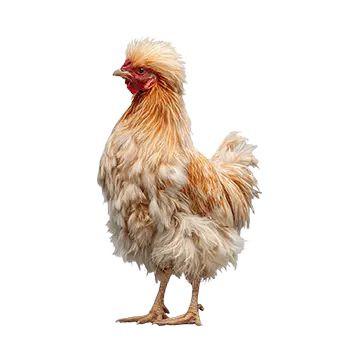
Cochin Bantams demonstrate relatively good trainability for chickens, responding well to consistent, patient training using positive reinforcement methods. While they lack the cognitive abilities of parrots or corvids, these intelligent birds can learn routines, recognize individuals, and respond to simple commands, particularly when food rewards are involved. Their calm temperament makes them ideal subjects for chicken training endeavors.
Basic recall training teaches Cochin Bantams to come when called. Start by establishing a consistent call sound or word (such as "here chick chick" or shaking a feed container) and immediately rewarding with high-value treats like mealworms when birds approach. Practice several times daily. Most Cochins learn reliable recall within one to two weeks, responding eagerly when called. This skill is practical for gathering free-range birds at dusk or during emergencies.
Target training using a stick or colored object teaches chickens to touch or follow a target. Hold a target stick near the chicken, reward with treats when they investigate it, and gradually require them to move toward or touch the target. This foundational skill can lead to more complex behaviors and makes chickens easier to guide during health checks or photography sessions.
Handling training begins in chick hood but can be taught to adults with patience. Regular, gentle handling sessions paired with treats help chickens accept being picked up and held. Approach calmly, pick up securely but gently, and hold briefly while offering treats. Gradually extend holding time. Many Cochin Bantams become so comfortable with handling that they'll sit contentedly in laps or on shoulders. This training is invaluable for routine health checks and nail trimming.
Clicker training can be applied to chicken training. The clicker marks desired behavior precisely, followed immediately by reward. Chickens quickly learn that click equals treat, allowing shaping of behaviors like stepping onto scales, entering carriers, or even simple tricks like jumping over small obstacles. Cochin Bantams' food motivation and calm demeanor make them excellent clicker training subjects.
Socialization is crucial for pet-quality Cochin Bantams. Regular positive interactions with multiple people, especially during young age, create confident, friendly adults. Chickens raised with children often become more tolerant of sudden movements and noise. Exposure to various environments, sounds, and experiences prevents fear responses and creates adaptable birds.
Routine training capitalizes on chickens' natural tendency to learn schedules. Establishing consistent feeding times, lockup routines, and daily activities teaches chickens to anticipate and cooperate with management tasks. Most Cochins quickly learn to return to the coop at dusk if training begins early and is reinforced with evening treats.
Vocalization in Cochin Bantams is typical of chickens but relatively quiet compared to many breeds. Hens produce a variety of clucks and murmurs during daily activities. Content foraging chickens emit soft, melodic clucking. The "egg song" occurs after laying, though Cochin Bantam hens sing more quietly than many breeds. This vocalization, a series of repetitive clucks sometimes shared by multiple hens, announces egg-laying success. Duration varies from thirty seconds to several minutes.
Alarm calls are distinctive loud clucks or squawks alerting the flock to potential threats. These occur when chickens spot predators, unfamiliar animals, or unexpected disturbances. The alarm call triggers defensive responses in other flock members. Different calls may indicate aerial versus ground threats, though research continues on the specificity of chicken alarm calls.
Roosters produce several distinct vocalizations. The crow, occurring multiple times daily but primarily at dawn, announces territory and flock ownership. Cochin Bantam roosters crow more quietly than standard breeds, with higher-pitched, shorter crows suitable for residential areas. Roosters also produce tidbitting calls, soft clucks with repeated beak movements on ground, inviting hens to food sources. These sweet vocalizations demonstrate roosters' social behavior.
During mating, roosters produce specific calls to signal intentions to hens. Contented roosters emit soft murmuring sounds. Roosters separate from their flock may call loudly seeking reunion. Overall, Cochin Bantam roosters are gentlemen, using vocalizations appropriately without excessive crowing that annoys neighbors.
Overall noise levels make Cochin Bantams suitable for urban and suburban chicken keeping. While not silent, their vocalizations are purposeful and relatively soft. Hens kept without roosters are particularly quiet, producing only gentle clucks and brief egg songs. With their trainability and reasonable vocalization patterns, Cochin Bantams represent an ideal choice for those wanting interactive, manageable pet chickens.